
Trademark Registration Timeline: 12-18 Month Roadmap
Navigate the USPTO trademark process: Understand timelines, steps, delays, and strategies for successful brand protection in 2026.
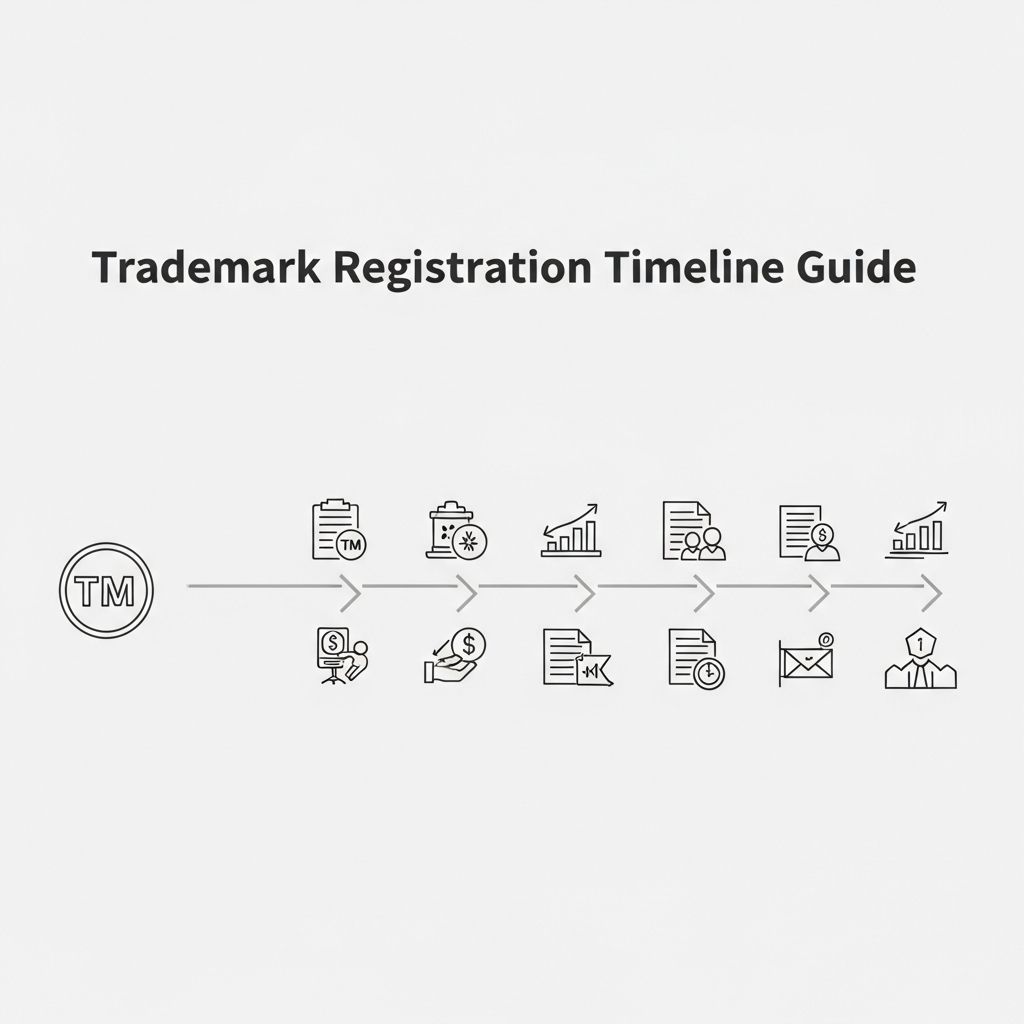
Federal trademark registration through the United States Patent and Trademark Office (USPTO) typically spans 12 to 18 months from application to final approval, though timelines vary based on application complexity, responding to office actions, and opposition periods. This process grants nationwide protection for your brand elements like names, logos, and slogans, essential for business growth and legal defense.
Pre-Filing Preparation: Laying the Foundation (1-3 Months)
Before submitting your application, invest time in thorough preparation to avoid costly rejections. This phase often takes 1 to 3 months and includes critical steps that directly impact your overall timeline.
- Identify Protectable Elements: Determine if you’re safeguarding a business name, logo, slogan, or trade dress. Ensure it’s distinctive and not generic or descriptive.
- Conduct Comprehensive Clearance Search: Use the USPTO’s Trademark Electronic Search System (TESS) to scan federal registrations, state marks, and common law uses. Professional searches by attorneys uncover hidden conflicts, reducing rejection risks by up to 70%.
- Classify Your Goods/Services: Select from 45 international classes (e.g., Class 9 for software, Class 25 for apparel). Accurate classification prevents procedural delays.
A rushed pre-filing stage leads to 40% of initial rejections, extending timelines unnecessarily. Budget for attorney assistance here to streamline the process.
Filing Your Application: The Official Start (Day 1)
Submit via the USPTO’s Trademark Electronic Application System (TEAS) or new Trademark Center. Choose between “use in commerce” (already using the mark) or “intent to use” (ITU) basis. Filing fees range from $250-$350 per class, depending on the form used.
| Filing Basis | Requirements | Timeline Impact |
|---|---|---|
| Use in Commerce | Specimen showing actual use | Faster path to registration post-approval |
| Intent to Use (ITU) | No specimen needed initially; Statement of Use later | Adds 3-6 months for SOU filing |
Upon submission, receive a serial number and filing receipt instantly. Track status via USPTO’s Trademark Status & Document Retrieval (TSDR) system.
USPTO Examination Phase: The First Major Hurdle (3-6 Months)
An examining attorney reviews your application within 3 months on average. They assess for conflicts, descriptiveness, and compliance. About 60% of applications receive an Office Action—a refusal letter requiring response within 6 months.
- Common Refusal Grounds: Likelihood of confusion with existing marks, ornamental use, or incomplete identifications.
- Response Strategy: Submit arguments, amendments, or evidence. Timely responses keep you on track; extensions cost extra fees.
If no issues, approval advances to publication. Delays here can push total time beyond 18 months.
Publication and Opposition Period: Public Scrutiny (2-3 Months)
Approved marks publish in the Trademark Official Gazette for 30 days, alerting potential opposers. If unchallenged, proceed to registration. Oppositions, filed by third parties claiming prior rights, occur in 5-10% of cases and can extend timelines by 6-12 months or more.
Monitor this period closely; unaddressed oppositions lead to abandonment. For ITU applications, file Statement of Use (SOU) within 6 months of Notice of Allowance, extendable up to 3 years with fees.
Registration Issuance and Maintenance: Securing Long-Term Protection
Use in Commerce: Receive Certificate of Registration ~2 months post-publication.
Intent to Use: After SOU approval, certificate issues in 2-4 months.
Protection isn’t perpetual. Maintain with:
- Years 5-6: Section 8 Declaration of Use.
- Years 9-10: Sections 8 & 9 Renewal.
- Every 10 years thereafter.
Failure to file maintains results in cancellation. Use USPTO reminders or attorney services for compliance.
Factors Influencing Your Specific Timeline
Average timelines assume smooth sailing, but variables alter pace:
| Factor | Average Delay | Mitigation Tip |
|---|---|---|
| Office Actions | 3-6 months | Hire experienced counsel for responses |
| Incorrect Class/Description | 2-4 months | Pre-filing class research |
| Opposition | 6-24 months | Thorough clearance search |
| Peak Filing Periods | 1-2 months | File off-peak (avoid Jan-Mar) |
2026 updates via Trademark Center aim to reduce examination times by 20%.
Cost Breakdown and Budgeting Tips
Beyond time, consider expenses:
- Filing: $250-$350/class.
- Search: $300-$1,000 (professional).
- Attorney: $1,000-$3,000 flat fee.
- Extensions/SOU: $125-$225 per class.
DIY saves money but risks delays costing more long-term. Small businesses qualify for reduced fees via TEAS Plus.
Common Pitfalls and How to Avoid Them
Avoid these to stay within 12 months:
- Skipping Search: Leads to 50% rejection rate.
- Poor Specimens: Must show real-world use, not mockups.
- Missing Deadlines: Results in abandonment; calendar all dates.
- Overly Broad Descriptions: Narrow to specifics for approval.
Frequently Asked Questions (FAQs)
Can I use my trademark before registration?
Yes, common law rights arise from use, but federal registration provides stronger nationwide protection and presumptive ownership.
What if my application is refused?
Respond to Office Action within 6 months. Appeals go to Trademark Trial and Appeal Board (TTAB).
How long does a trademark last?
Indefinitely with proper maintenance filings every 5-10 years.
Is state registration faster?
Often 3-6 months, but lacks national scope. Federal is preferable for growth.
Can I expedite the process?
No formal priority except for Madrid Protocol extensions. Clean applications process fastest.
Strategic Advice for 2026 Filers
With rising applications (over 700,000 annually), early action and expertise minimize delays. Integrate trademark strategy into business planning—protect before expansion. Consult USPTO resources or IP attorneys for personalized guidance. Successful registration fortifies your brand against copycats, enhancing market value.
References
- Trademark Registration Toolkit — USPTO. 2023. https://www.uspto.gov/sites/default/files/documents/TM-Registration-Toolkit.pdf
- How Do You Register a Trademark? Step-by-Step Guide — Jafari Law Group. 2024-10-15. https://jafarilawgroup.com/how-do-you-register-a-trademark-a-step-by-step-guide/
- The Trademark Registration Process: Step-by-Step Guide — Jaburg Wilk. 2024-05-20. https://www.jaburgwilk.com/news-publications/the-trademark-registration-process-guide
- Trademark Process — USPTO. 2025-01-10. https://www.uspto.gov/trademarks/basics/trademark-process
- Apply Online — USPTO. 2026-02-01. https://www.uspto.gov/trademarks/apply
Similar Articles








Read full bio of Sneha Tete


