
Tenant Liability for Break-In Damages Explained
Uncover who pays when burglars strike rentals: tenant duties, landlord obligations, and legal paths to resolution.
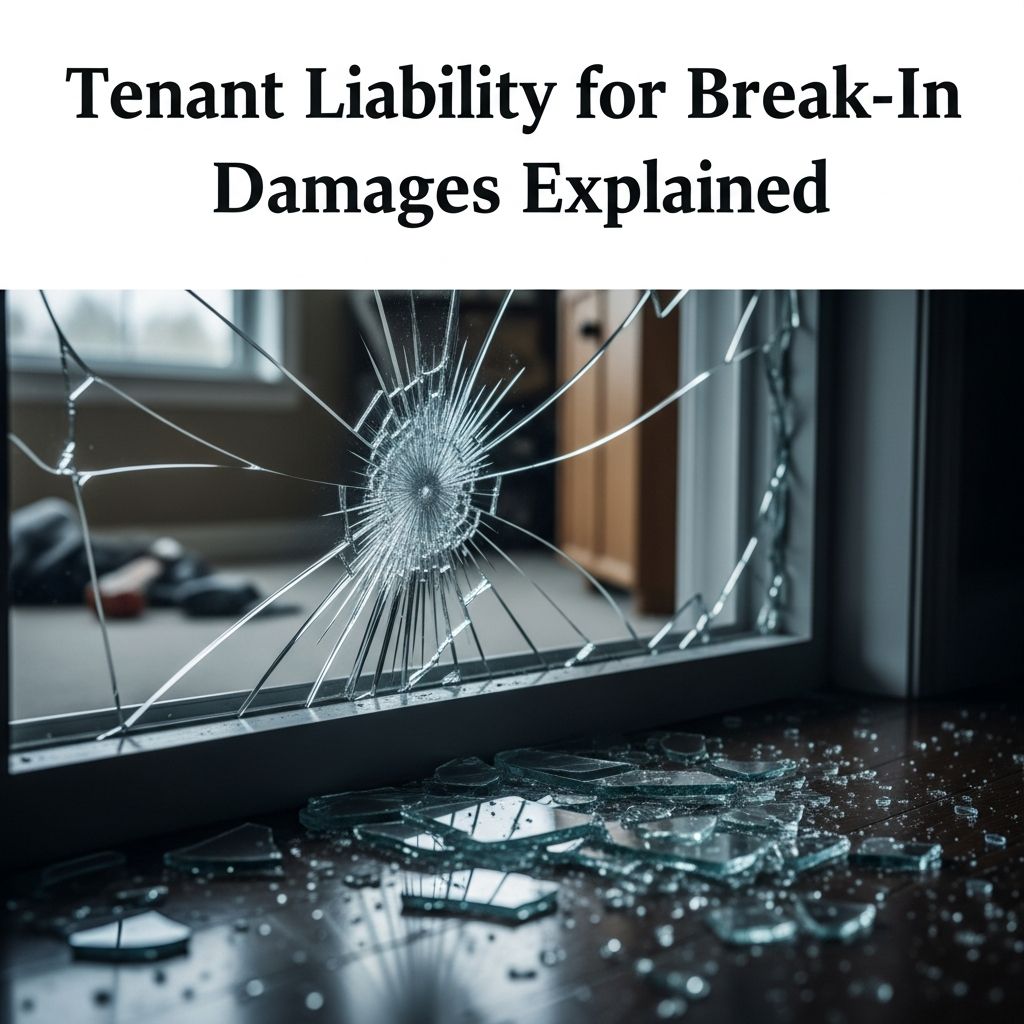
Rental properties face risks from burglaries, raising questions about who covers repair costs and stolen items. Typically, landlords handle structural damages from forced entries, while tenants bear responsibility if negligence like leaving doors unlocked contributes to the incident. This article examines legal frameworks, roles of insurance, dispute resolution, and proactive measures.
Understanding Burglary Impacts on Rentals
Burglaries disrupt lives and properties, often causing broken doors, shattered windows, and interior disarray. For tenants, personal belongings may be lost; for landlords, the building’s integrity suffers. Legal liability hinges on fault determination: was the break-in preventable by tenant actions or landlord-provided security?
State laws, such as Florida Statutes § 83.63, emphasize tenant duties to avoid negligence that leads to property harm. Landlords must ensure habitable conditions, including basic security features. When breaches occur, courts assess evidence like police reports and lease terms to apportion blame.
Landlord Obligations in Securing Rental Units
Landlords carry primary responsibility for exterior security, including functional locks, adequate lighting, and secure entry points. Neglecting these can expose owners to negligent security claims, where tenants seek compensation for injuries or losses from foreseeable crimes.
- Install and maintain deadbolt locks on all exterior doors.
- Provide working window locks and screens.
- Ensure outdoor lighting illuminates entryways and parking areas.
- Repair known vulnerabilities promptly after tenant reports.
Failure here shifts liability toward the landlord. For instance, courts may award tenants damages if a known broken lock enables a burglary, as seen in premises liability precedents emphasizing duty of care.
Tenant Responsibilities to Prevent Unauthorized Access
Tenants must actively maintain security by locking doors, closing windows, and reporting issues. Negligence, such as propping doors open or ignoring alarms, can make renters liable for resulting damages.
| Tenant Action | Potential Liability | Example Consequence |
|---|---|---|
| Leaving windows open overnight | High if burglar enters via window | Pays for window repair and any interior damage |
| Failing to lock doors | Moderate to high | Partial or full responsibility for entry damage |
| Not reporting broken locks | Moderate | Liable if delay worsens burglary risk |
| Allowing unauthorized guests | High if guests facilitate entry | Covers all associated repair costs |
These duties align with statutes requiring tenants to keep units sanitary and hazard-free, extending to security upkeep.
Role of Insurance in Covering Break-In Losses
Renter’s insurance protects tenants’ belongings, while landlord policies cover building structures. After a burglary:
- Landlord insurance: Pays for door frames, windows, and structural fixes.
- Renter’s insurance: Reimburses stolen or damaged personal items, often including temporary housing.
- Security deposit: Deductible only for tenant-caused damage, not criminal acts unless negligence proven.
Comprehensive policies may overlap, but subrogation—insurer suing at-fault parties—can complicate claims. Tenants without coverage risk personal financial loss.
Determining Fault After a Rental Burglary
Fault assessment involves police reports, witness statements, maintenance logs, and lease reviews. Key factors include:
- Entry method: Forced entry usually favors landlord coverage.
- Tenant habits: Verified unlocked access implicates renter.
- Prior complaints: Unaddressed security issues burden landlord.
- Local crime rates: High-risk areas heighten landlord duties.
Professional inspections post-incident document damage extent, aiding insurance and legal processes.
Legal Recourse for Landlords Seeking Tenant Payment
If tenant negligence contributes, landlords can withhold deposits or sue in small claims court. Florida law requires itemized damage lists and proof of tenant fault. Successful claims recover repair costs beyond insurance payouts.
Eviction threats arise only for repeated negligence, requiring court orders. Landlords cannot self-help by locking out tenants, risking triple damages liability.
Tenant Defenses Against Liability Claims
Tenants facing accusations can counter with evidence of landlord neglect or normal wear distinctions. Common defenses:
- Proof of reporting security flaws.
- Absence of negligence in police documentation.
- Landlord’s failure to maintain implied warranty of habitability.
Courts favor documented compliance, often returning full deposits if disputes lack merit.
Steps to Take Immediately After a Burglary
Swift action preserves rights:
- Call police for official report.
- Notify landlord in writing within 24 hours.
- Document all damage with photos/videos.
- Contact insurers promptly.
- Avoid cleaning until inspected.
These preserve evidence chains vital for claims.
Preventive Strategies for Safer Rentals
Proactive measures reduce risks:
- Landlords: Install smart locks, cameras, and gated access.
- Tenants: Use timers for lights, join neighborhood watches.
- Both: Review leases for security clauses.
Annual security audits and tenant education programs enhance protection.
State Variations in Liability Rules
While principles are nationwide, states differ. Florida emphasizes tenant negligence under §83.63; others mandate specific security in high-crime areas. Always consult local statutes or attorneys for jurisdiction-specific advice.
Frequently Asked Questions
Can tenants break a lease after a burglary?
Possibly, if landlord negligence like faulty locks contributed, allowing constructive eviction claims. Otherwise, lease terms bind tenants.
Does renter’s insurance cover burglary theft?
Yes, standard policies reimburse stolen items up to policy limits, minus deductibles.
Who pays to rekey locks after a break-in?
Landlord typically, as part of structural repairs, unless tenant fault proven.
Can landlords sue tenants for burglary damages?
Yes, if negligence evidence exists, through small claims or civil court.
What if no police report exists?
Claims weaken; file reports immediately to validate incidents.
Negotiating Settlements Outside Court
Many disputes resolve via mediation, splitting costs based on shared fault. Documented agreements prevent escalation, saving time and fees.
References
- Who is Liable for Accidental Damage to a Rental Property in Florida? — GED Lawyers. 2023. https://www.gedlawyers.com/faqs/who-is-responsible-for-accidental-damage-to-a-rental-property-in-florida/
- Rights and Duties of Tenants and Landlords — The Florida Bar. 2023. https://www.floridabar.org/public/consumer/tip014/
- Chapter 83 Section 491 – 2023 Florida Statutes — The Florida Senate. 2023. https://www.flsenate.gov/Laws/Statutes/2023/0083.491
- FL Landlords and Negligent Security Claims — Tampa Bay Defense Lawyer. 2023. https://www.tampabaydefenselawyer.com/fl-landlords-and-negligent-security-claims/
- What Damages Are Tenants Responsible For? — Eaton Realty. 2025-08-20. https://www.eatonrealty.com/blog/property-management/what-damages-are-tenants-responsible-when-tenant-must-pay
Similar Articles








Read full bio of Sneha Tete




