
Tax Identity Theft: How It Happens and How to Fight Back
Tax identity theft is surging, but practical steps can dramatically lower your risk and help you recover faster if it happens.
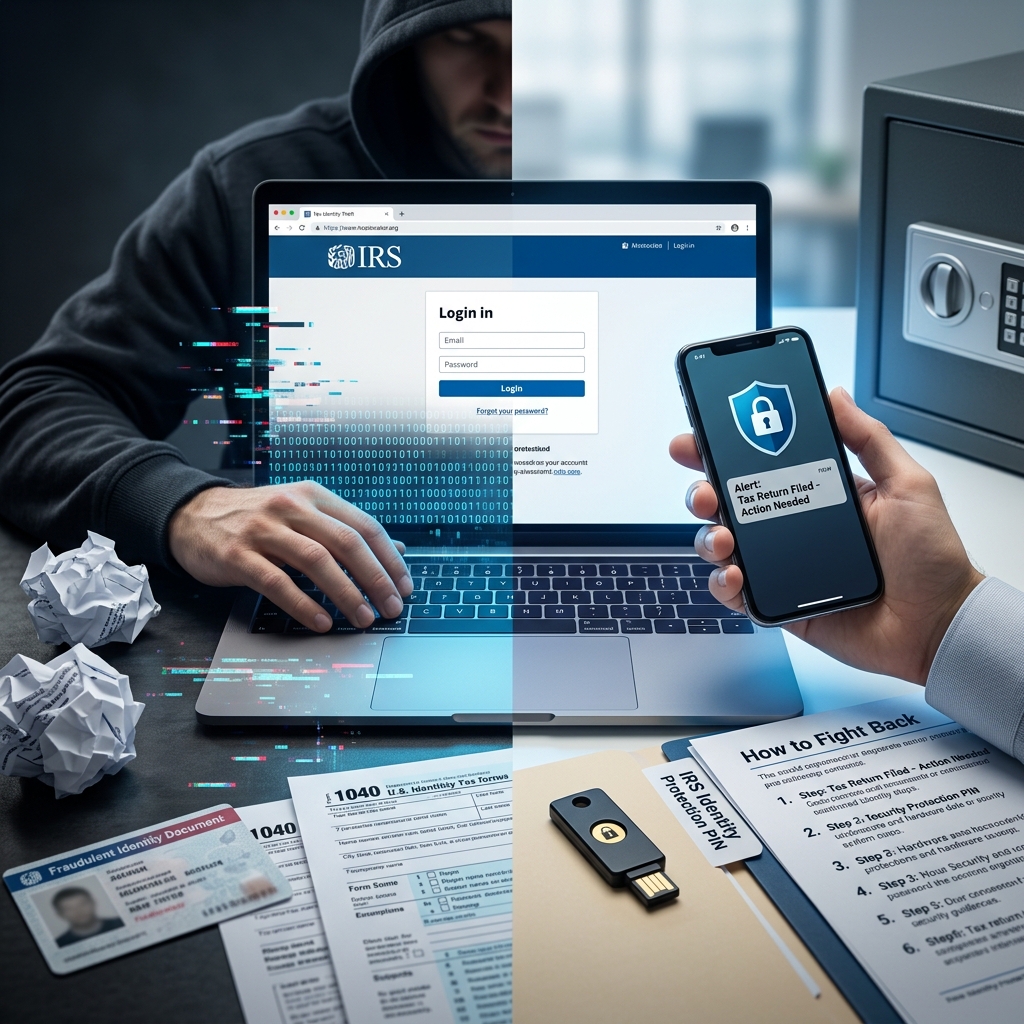
Tax season is not just busy for honest taxpayers and accountants. It is also prime time for criminals who use stolen personal information to file fraudulent returns and steal tax refunds before the real taxpayers can file their legitimate returns.
Understanding how tax identity theft works, recognizing early warning signs, and knowing exactly how to respond can greatly reduce the damage to your finances and credit, and help protect your future refunds.
What Is Tax Identity Theft?
Tax identity theft occurs when someone uses your Social Security number (SSN) or other identifying data to file a bogus tax return and claim a refund in your name. In most cases, the criminal files early in the season, hoping to beat your legitimate return and receive the refund before any discrepancy is detected.
According to the Federal Trade Commission, tax identity theft is a subset of identity theft that specifically targets your tax account and refund, often involving fraudulent returns filed with the Internal Revenue Service (IRS).
Key Features of Tax Identity Theft
- Use of stolen SSN: The thief uses your SSN and possibly other data such as date of birth and address to impersonate you on a tax return.
- False return filing: A fake return is filed, often with made-up income or credits to maximize a refund.
- Refund diversion: The refund is directed to an account, prepaid card, or address controlled by the criminal.
- You discover it later: Victims usually learn about the fraud only when the IRS rejects their e-filed return or sends a notice about a suspicious filing.
How Tax Identity Theft Fits Into Broader Tax Fraud
Tax identity theft is one type of tax fraud. Tax fraud generally refers to deliberate actions taken to evade taxes or obtain refunds or credits that are not owed. While some tax fraud involves misreporting income or claiming fake deductions, tax identity theft relies on misusing someone else’s identity to commit refund fraud.
| Type of Tax Misconduct | Main Behavior | Typical Goal |
|---|---|---|
| Tax evasion | Hiding or underreporting income, failing to file returns, or disguising assets. | Avoid paying taxes owed. |
| Refund fraud | Filing false returns with fake income or credits to generate refunds. | Receive undeserved refund payments. |
| Tax identity theft | Using someone else’s SSN and identity to file a fraudulent return. | Steal the victim’s refund, sometimes repeatedly. |
The U.S. Department of Justice identifies stolen identity refund fraud as a major enforcement priority, reflecting how widespread and damaging this form of tax crime has become.
Common Ways Criminals Steal Tax Identities
Criminals obtain the personal data needed for tax identity theft through many channels. Some methods are highly technical, while others rely on social engineering and human error.
Typical Data Theft Pathways
- Phishing emails and fake websites: Fraudsters send emails that appear to be from the IRS, tax software providers, or banks, tricking people into entering SSNs and other data on fraudulent sites.
- Data breaches: Large-scale breaches of employers, financial institutions, or health-care providers can expose millions of SSNs and related information.
- Stolen mail: W‑2s, 1099s, and other tax forms stolen from mailboxes provide enough information to file returns.
- Compromised devices: Unsecured computers or public Wi‑Fi networks used to prepare and file taxes may allow hackers to intercept sensitive data.
- Social engineering: Phone calls impersonating IRS agents or tax preparers are used to pressure victims into disclosing SSNs and payment details.
Warning Signs That You May Be a Victim
Many people discover tax identity theft only after the IRS notifies them of a problem. Recognizing the signs early allows you to act quickly and limit further harm.
IRS Notices and Return Rejections
- You try to e-file your return, but it is rejected because a return with your SSN has already been filed.
- You receive an IRS letter stating that more than one tax return has been filed using your SSN.
- You receive a notice about a tax transcript, online account, or refund you did not request or expect.
- The IRS contacts you to verify information on a return that you did not file.
Other Red Flags
- Unexplained changes on your credit report or new accounts opened in your name.
- Missing or delayed W‑2 and 1099 forms that were expected by mail.
- Evidence your wallet, mail, or personal records were lost, stolen, or tampered with around tax season.
How to Respond If You Suspect Tax Identity Theft
If you see any warning signs—or even suspect your SSN may have been exposed—authorities recommend taking immediate action rather than waiting for formal confirmation.
Step 1: Report the Fraud to the IRS
The IRS operates specialized programs and units to help victims of tax-related identity theft.
- Respond to IRS letters right away: If you receive a notice or a 5071C letter asking you to confirm information, follow the instructions promptly and contact the listed number.
- File IRS Form 14039: Complete the Identity Theft Affidavit (Form 14039) stating that your personal information has been compromised and a fraudulent tax return may have been filed.
- Call the Identity Protection Unit: Victims who have unresolved issues or continuing problems can contact the IRS Identity Protection Specialized Unit at 1‑800‑908‑4490.
- Submit a correct return on paper: In many cases, you will need to mail a paper copy of your true tax return, which the IRS will process after resolving the identity theft issue.
Step 2: Report Identity Theft and Create a Recovery Plan
The Federal Trade Commission operates IdentityTheft.gov, which allows you to report identity theft and generate a personalized recovery plan.
- Visit IdentityTheft.gov to report tax identity theft and receive step‑by‑step guidance for contacting credit bureaus, closing accounts, and monitoring your credit.
- File an identity theft report with the FTC, which helps document the incident and can support future disputes with creditors or agencies.
Step 3: Secure Your Financial Life
Because tax identity theft often coexists with other forms of financial fraud, it is important to secure all accounts and records.
- Notify major credit bureaus and consider placing a fraud alert or security freeze on your credit file.
- Change passwords for banking, tax preparation, and email accounts, using strong and unique credentials.
- Review bank and credit card statements regularly and close any accounts you suspect may be compromised.
- Keep copies of all letters, forms, and communications with the IRS and FTC for your records.
Practical Ways to Prevent Tax Identity Theft
No method offers perfect protection, but using a layered approach significantly reduces your risk.
Protect Your Social Security Number Year-Round
- Share your SSN only when absolutely necessary and with organizations you have verified as legitimate.
- Do not carry Social Security cards in your wallet; store them securely at home.
- Ask businesses why they need your SSN and whether alternative identifiers could be used instead.
File Smart During Tax Season
- File early: Submitting your return early in the tax season reduces the opportunity for a thief to file first using your SSN.
- Use secure filing methods: File electronically over a secure internet connection or mail returns directly from a post office rather than leaving them in unsecured mailboxes.
- Research your tax preparer: Check credentials, look for an IRS Preparer Tax Identification Number (PTIN), and verify their standing with consumer organizations such as the Better Business Bureau.
Strengthen Your Technology and Mail Security
- Protect computers with current antivirus software, firewalls, and regular security updates.
- Avoid using public Wi‑Fi for tax preparation or filing, especially when entering SSNs or financial details.
- Watch your mail closely in January and February for W‑2s and 1099s, and consider using services that let you preview incoming mail.
Use IRS Identity Protection Tools
The IRS offers additional tools to help protect taxpayers from filing-related identity theft.
- Identity Protection PIN (IP PIN): This six-digit number is assigned to eligible taxpayers and must be used when filing returns. It helps prevent criminals from using your SSN on fraudulent returns.
- IRS Identity Theft Central: The IRS provides an online hub with resources on preventing, detecting, and recovering from tax-related identity theft.
Frequently Asked Questions About Tax Identity Theft
Does the IRS ever call or email me to request personal information?
No. The IRS states that it does not initiate contact with taxpayers by email, text, or social media to request personal or financial information. Initial communication typically occurs through official letters sent by mail.
What should I do if my e-file return is rejected as a duplicate?
A rejected e-file return indicating a duplicate filing with your SSN is a strong sign of tax identity theft. You should contact the IRS using the number on the rejection notice, complete Form 14039, and follow instructions to submit a correct paper return.
Can tax identity theft affect my credit score?
Tax identity theft itself involves misuse of your SSN to file a tax return, but the same stolen information is often used to open accounts or take out loans in your name. Those actions can lead to missed payments, collections, and credit score damage if not addressed promptly.
How long does it take to resolve a tax identity theft case?
The IRS indicates that it can take several months to review documentation, correct your account, and process your legitimate paper return after a tax identity theft incident. During that time you may experience refund delays, but staying in regular contact and responding quickly to any IRS requests helps keep the process moving.
Should I still file if I know someone used my SSN?
Yes. Even if a fraudulent return was filed, you are still required to file a proper tax return. The IRS will work with you to distinguish the fraudulent filing from your legitimate return, usually through Form 14039 and paper submission.
References
- Tax Identity Theft Awareness Week — Federal Trade Commission. 2024-01-29. https://consumer.ftc.gov/features/tax-identity-theft-awareness
- Identity Theft Central — Internal Revenue Service. 2024-03-05. https://www.irs.gov/identity-theft-central
- Protect Yourself from Tax-Related Identity Theft — Texas Capital Bank. 2023-02-10. https://texascapitalbank.com/insights/protect-identity-theft-and-tax-fraud
- Tax ID Theft Tips — Missouri Attorney General. 2023-01-18. https://ago.mo.gov/get-help/programs-services-from-a-z/tax-id-theft-tips
- If You’ve Fallen Victim to a Tax Scam, Use Form 14039 — H&R Block. 2023-03-01. https://www.hrblock.com/tax-center/irs/tax-fraud/tax-identity-theft-form-14039/
- Beware: Protecting Against Tax ID Theft and Avoiding Other Scams — AMA Journal of Ethics. 2018-09-01. https://pmc.ncbi.nlm.nih.gov/articles/PMC6139745/
- Stolen Identity Refund Fraud — U.S. Department of Justice, Tax Division. 2015-05-15. https://www.justice.gov/archives/tax/stolen-identity-refund-fraud
Similar Articles








Read full bio of Sneha Tete




