
Strategies to Escape Timeshare Foreclosure Risks
Discover proven methods to exit timeshare ownership without facing foreclosure and safeguard your financial future effectively.
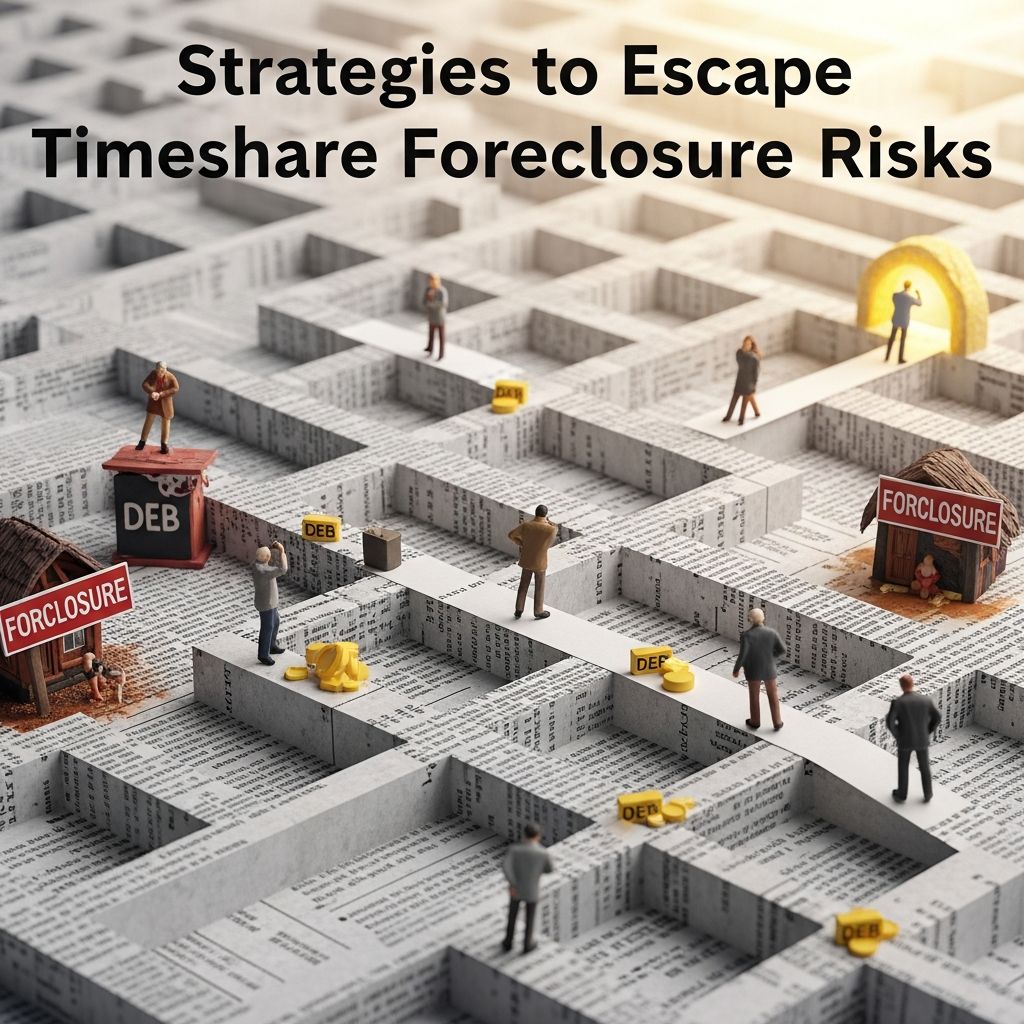
Timeshare ownership often starts as a dream of luxurious vacations but can turn into a financial burden due to escalating maintenance fees and assessments. When payments become unmanageable, the threat of foreclosure looms large, potentially damaging credit scores and leading to long-term financial strain. This article outlines actionable pathways to divest from timeshare commitments before reaching that critical point, drawing on established legal and negotiation tactics.
Understanding Timeshare Ownership Obligations
Timeshare properties typically require owners to pay annual maintenance fees covering upkeep like landscaping, security, and amenities such as pools and clubhouses. These fees apply regardless of usage, and special assessments may arise for major repairs. Failure to pay triggers liens that accrue interest, late charges, and collection costs, independent of any mortgage.
Owners hold either deeded interests, treated like real property, or right-to-use contracts. Delinquency on either can lead to foreclosure or repossession, with associations empowered by governing documents like Declarations of Covenants to enforce payments.
- Deeded timeshares: Subject to judicial or non-judicial foreclosure processes per state laws.
- Right-to-use: May result in contract termination and repossession without full foreclosure proceedings.
- Liens: Automatically attach upon delinquency, sometimes recorded publicly, prioritizing association claims.
Early Warning Signs of Financial Trouble
Recognizing delinquency early is crucial. Associations often initiate contact through notices, followed by first-party calls to remind owners of consequences. Ignoring these can escalate to third-party collections, further complicating resolution.
Proactive monitoring of billing statements and immediate response to late notices prevents escalation. State laws may grant redemption periods, allowing catch-up before formal action.
Negotiation Tactics with Resorts and Lenders
Direct communication forms the foundation of avoidance. Contact lenders or associations promptly upon financial hardship to explore forbearance or payment plans. Many respond favorably to documented hardship cases.
Specialized attorneys can negotiate settlements that include credit protections, identifying contract flaws or pursuing rescission to exit cleanly. Resorts may collaborate on resolutions to avoid costly foreclosures, preferring mutual agreements.
| Method | Pros | Cons | Credit Impact |
|---|---|---|---|
| Payment Plan | Maintains ownership; spreads costs | Ongoing fees persist | Minimal if adhered to |
| Settlement Agreement | Reduces debt; possible exit | May require lump sum | Negotiable protection |
| Forbearance | Temporary relief | Deferred payments accrue | Low if temporary |
Legal Pathways for Clean Exits
Leveraging legal expertise often yields the best outcomes. Timeshare exit teams or attorneys review contracts for violations, enabling transfers or cancellations without credit harm.
- Deed-in-Lieu of Foreclosure: Voluntarily surrender ownership, akin to mortgage practices, minimizing damage compared to default.
- Deedback to Developer: Return property directly, often requiring current payments and fees.
- Transfer to Third Party: Shift ownership to verified buyers, eliminating future liabilities.
State-specific rules dictate processes; judicial foreclosures require court judgments, while non-judicial follow statutory procedures. Attorneys ensure compliance and due process protections.
Resale and Transfer Programs
Resorts increasingly offer structured resale mechanisms to offload inventory responsibly, collecting upfront fees while avoiding repossession costs. Owners benefit from legitimate transfers to bona fide purchasers, vetted against scams.
Independent resale markets exist, though values are low. Avoid unverified exit companies promising quick relief, as they may lead to abandonment and further issues.
Protecting Your Credit Score
Foreclosure severely impacts credit, but alternatives like negotiated exits preserve scores. Dispute inaccuracies post-resolution and monitor reports closely. Deed-in-lieu typically causes less harm than full foreclosure.
Consult HUD-approved counselors for free guidance, steering clear of for-profit firms charging exorbitant fees for basic services.
Potential Pitfalls and Scams to Avoid
Beware of “relief” companies promoting fraudulent transfers; resorts now screen proposals to block such schemes. Always verify legitimacy through official channels.
Stopping payments abruptly invites liens and collections, worsening credit. Exhaust legitimate options first.
Frequently Asked Questions
What triggers a timeshare lien?
Delinquent maintenance fees or assessments automatically create liens, including interest and costs, per governing documents.
Can timeshares be foreclosed judicially?
Yes, associations file lawsuits for judgments allowing sales; non-judicial options bypass courts if permitted.
Does deed-in-lieu affect credit less than foreclosure?
Typically yes, as it demonstrates cooperation, though impacts vary; negotiate protections upfront.
Are payment plans always available?
Not guaranteed, but early contact improves chances; document hardships thoroughly.
How to spot legitimate exit help?
Seek attorneys or HUD counselors; avoid upfront fee companies promising miracles.
Long-Term Financial Planning Post-Exit
After divestment, rebuild credit through timely payments elsewhere and dispute lingering errors. Future vacation planning should prioritize flexible, fee-free options to prevent recurrence.
Owners who exit responsibly often report relief, redirecting funds to stable investments. Document all agreements meticulously for records.
References
- Timeshare Exit vs. Foreclosure: Credit Impact — Aaronson Law Group. 2023. https://aaronsonlawgroup.com/timeshare-exit-vs-foreclosure-credit-impact/
- Collections: Strategies for dealing with key issues facing timeshare resorts — TBM Associates. 2024. https://tbmassoc.org/collections-strategies-for-dealing-with-key-issues-facing-timeshare-resorts/
- Timeshare Foreclosures & the Legal Process — Justia. 2025-01-15. https://www.justia.com/foreclosure/timeshare-foreclosures/
- Strategies for Timeshare Resorts to Combat Unfair and Deceptive Resale Practices — GCG Law. 2024. https://www.gcglaw.com/knowledge-center/strategies-for-timeshare-resorts-to-combat-unfair-and-deceptive-resale-practices
- How to Get Rid of a Timeshare and Protect Your Credit — Vacation Ownership Consultants. 2024. https://vacationownershipconsultants.com/how-to-get-rid-of-a-timeshare-and-protect-your-credit/
- Can a Timeshare Be Foreclosed for Nonpayment of Fees or Assessments — Carelon Wellbeing. 2025. https://hd.carelonwellbeing.com/hd/find-legal-support/resources/real-estate/legal-assist/can-a-timeshare-be-foreclosed-for-nonpayment-of-fees-or-assessments
- Avoiding Foreclosure — U.S. Department of Housing and Urban Development (HUD.gov). 2025-01-10. http://www.hud.gov/helping-americans/avoiding-foreclosure
Similar Articles








Read full bio of Sneha Tete




