
Social Media Rules For Minors: 5 Key Changes In 2025 For Parents
A clear guide to age rules, parental consent, and new state restrictions on teen social media use.
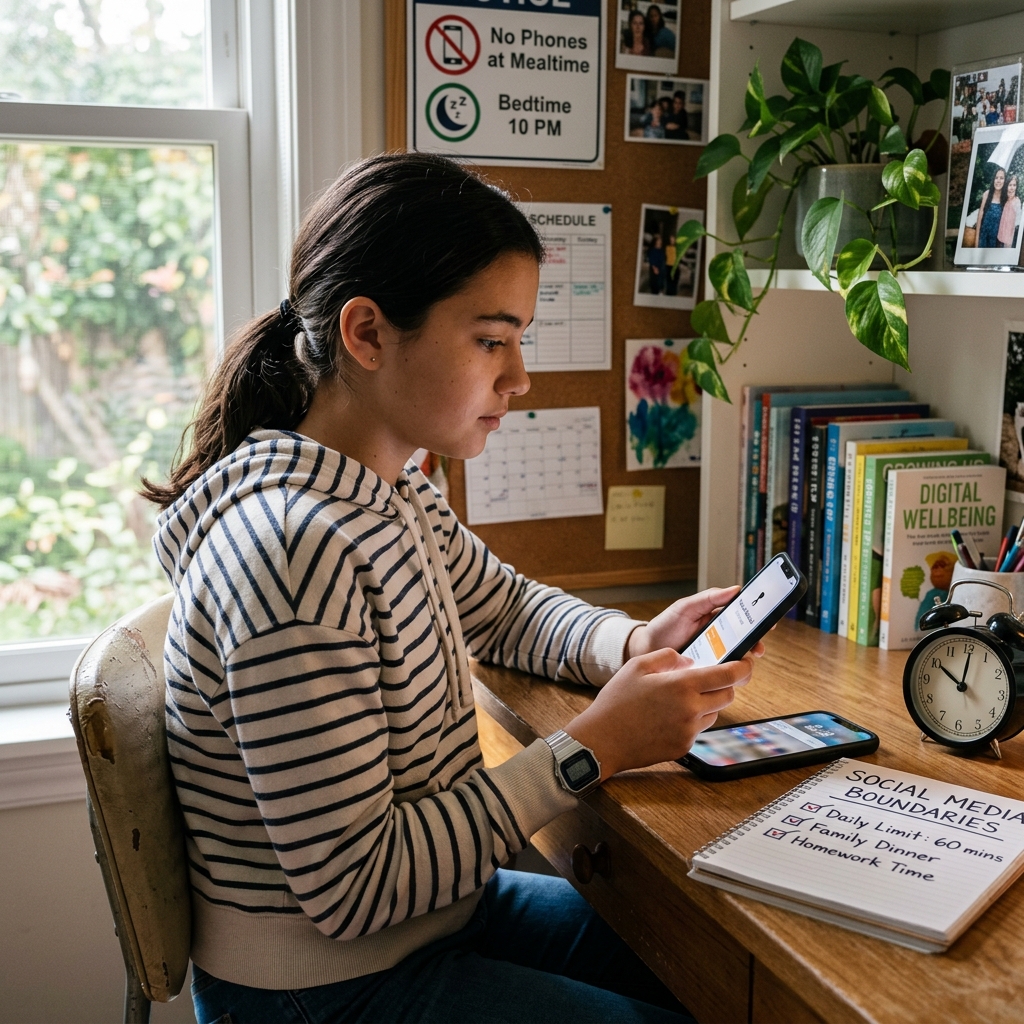
Why Social Media Rules for Minors Keep Expanding
Rules affecting children and teenagers on social platforms are changing quickly because lawmakers, schools, parents, and platform operators are trying to respond to concerns about safety, privacy, and mental health. In the United States, the baseline has long been that most major platforms do not permit children under 13 to create accounts, while newer state laws have experimented with stricter age checks, parental approval requirements, time limits, and design features intended to reduce harmful use.
The result is a legal landscape that is not fully uniform. Some restrictions are already in force, some are blocked in court, and others are still being implemented or challenged. For families, that means the practical rules a child faces may depend on the platform, the state, and sometimes even the school network being used.
The Starting Point: Platform Age Minimums
For years, the most common rule has been a minimum age of 13 for opening a social media account. Major companies typically align with that threshold, and child online privacy law has helped reinforce it by limiting the collection of personal information from children under 13 without parental consent.
That does not mean every platform or every state treats the issue identically. Some proposals go beyond the 13-and-up model by requiring stronger age assurance or by limiting certain features for users under 17 or 18. In practice, this means the legal question is no longer only whether a minor may create an account, but also what that account can do once it exists.
What States Are Trying to Regulate
State legislatures have taken several different approaches to youth social media regulation. Instead of one universal model, current laws tend to fall into a handful of categories: account creation limits, algorithm restrictions, liability rules, warning labels, and research or study requirements.
Among the most common approaches are the following:
- Blocking or limiting account creation by minors without parental permission.
- Restricting recommendation algorithms for younger users.
- Requiring age verification or age assurance systems.
- Adding notice requirements, such as mental health warnings.
- Requiring schools or agencies to study the effects of youth social media use.
According to recent summaries of state action, at least a growing number of states have enacted measures touching minors’ access to social media or related online safety duties, but court challenges have made enforcement uneven.
Parental Consent as a Middle Ground
Rather than banning teen use outright, many proposals use parental consent as the gatekeeper. Under this model, a minor may open an account only if a parent or guardian approves the registration process or if the platform can verify that consent has been given.
This approach reflects a compromise. It recognizes that some families want teens to participate in online communities while still giving adults more control over access. Public opinion data suggests this is not a fringe position: a large share of U.S. adults supports requiring parental consent before minors create social media accounts, and many also support age verification and time limits.
Time Limits and Daily Usage Caps
Another emerging strategy is to limit how long minors can use a social media platform each day. Virginia’s law is one example of this approach: it defines a minor as a person younger than 16 and requires social media platforms to use reasonable age-determination methods while limiting use to one hour per day, unless a parent gives verifiable consent to change that limit.
Daily time caps are designed to address concerns that endless scrolling can make it harder for younger users to disengage. Supporters argue that these restrictions are less intrusive than a total ban because they allow access while still setting a default boundary.
At the same time, time-based regulation raises hard practical questions. Platforms must identify who is a minor, determine how to count usage across devices or sessions, and avoid unfairly reducing service quality or charging more because a user is subject to a legal limit.
Algorithms, Feeds, and Addictive Design
Many lawmakers are less concerned with basic account access than with how platforms decide what minors see. The central issue is whether a platform uses algorithmic recommendation systems to keep young users engaged longer or steer them toward content they did not actively choose.
Some proposals would prohibit algorithmic recommendations for users under 17, while still allowing those users to search for content and view material in chronological order. Other state laws focus on addictive feeds and similar engagement-driven design features, especially where they affect minors.
This distinction matters. A platform that simply hosts content is not the same as a platform that actively predicts, pushes, and personalizes material for a young audience. Regulators have increasingly targeted the latter because of worries about exposure to harmful content, compulsive use, and reduced user control.
Age Verification and the Privacy Tradeoff
Age verification sounds straightforward, but it raises its own legal and technical concerns. To verify age reliably, a platform may need to collect sensitive information, and that creates questions about data retention, secondary use, and privacy protection. Virginia’s law, for example, states that information gathered to determine age may not be used for other purposes beyond age determination and age-appropriate experiences.
That privacy safeguard reflects a broader policy tension. If the goal is to protect children, lawmakers must still decide how much personal data companies may gather in order to prove that a user is a child. The more intrusive the verification method, the greater the risk of overcollection or misuse. The less intrusive the method, the weaker the assurance.
School Networks and Classroom Settings
Some policy efforts extend beyond the home and into the classroom. One federal proposal would require schools to work in good faith to limit social media on school networks, linking the issue to broader educational concerns about distraction and student welfare.
Schools already manage internet access through filtering and acceptable-use policies, but social media adds another layer because it is often accessed on personal devices, not only school computers. That means educational institutions can reduce exposure on their own networks, but they cannot fully control how students use platforms outside school hours.
Why Courts Matter So Much
Social media restrictions for minors are often challenged on constitutional grounds, especially when they regulate speech, access to speech, or platform design. Recent summaries of state laws show that several provisions have been blocked, while others remain subject to ongoing litigation.
These cases matter because judges may treat different regulations differently. A parental consent law may raise different concerns than a law banning recommendation algorithms or requiring warning labels. The constitutional analysis can turn on whether a law is viewed as content-based, content-neutral, or focused on conduct rather than expression.
As a practical matter, families and companies should not assume that a law on the books is necessarily enforceable. The regulatory picture can change quickly after injunctions, appeals, or settlement agreements.
What Parents Can Do Right Now
Even where the law is unsettled, parents do not have to wait for legislation to take action. The American Academy of Pediatrics recommends waiting until at least age 13 before introducing social media accounts and emphasizes that readiness depends on the child, not just the birthday.
Parents can also use a practical checklist to decide whether a teen is ready:
- Can the child explain why they want the platform and how they plan to use it?
- Can they recognize misleading influencers, scams, or unreliable content?
- Do they know how to block, unfollow, mute, or report accounts?
- Can they manage notifications and reduce comparison-based pressure?
- Will there be regular check-ins about stress, sleep, and screen time?
These questions matter because access alone is not the real issue. The more important issue is whether the child can use a platform with judgment, boundaries, and support.
How the Public Views the Debate
Public opinion is a major reason the issue remains active. Pew Research Center found that most U.S. adults support parental consent rules, age verification, and limits on minors’ social media time.
However, support is not identical across age groups. Teens are generally less enthusiastic than adults about these restrictions, which suggests that the policy debate is not only about safety but also about autonomy, convenience, and how younger users experience these rules in everyday life.
Key Questions Families and Companies Are Still Facing
| Issue | Why It Matters |
|---|---|
| Minimum age | Determines when a child can open an account at all. |
| Parental consent | Gives adults control over account creation or continued access. |
| Age verification | Helps platforms enforce rules, but may collect sensitive data. |
| Algorithm limits | Reduces personalized promotion of content to minors. |
| Time caps | Attempts to limit excessive daily use and compulsive scrolling. |
These questions are likely to remain central as more states consider new rules and courts continue to test the limits of existing laws.
Frequently Asked Questions
What is the usual minimum age for social media accounts?
Most major platforms set the minimum age at 13, and that threshold is reinforced by child privacy rules and long-standing platform policy.
Can states require parental consent for minors?
Yes. Several state laws and proposals require parental approval or similar authorization before a minor may open or keep an account.
Are social media time limits legal?
Some states have adopted daily usage limits, but these laws often face legal challenges and may be paused while courts review them.
Do these rules apply only to account creation?
No. Many newer proposals also target feed algorithms, late-night notifications, addictive design features, and platform duties related to minors.
What should parents focus on most?
Parents should look at maturity, digital judgment, sleep habits, privacy awareness, and the child’s ability to handle pressure, not just the child’s age.
References
- Kids Off Social Media Act | U.S. Senator Brian Schatz — Office of Senator Brian Schatz. 2024-??-??. https://www.schatz.senate.gov/kosma
- Social Media Bans & Restrictions for Minors: Laws & Policies — Youth Rights. 2026-??-??. https://www.youthrights.org/issues/age-discrimination/social-media-bans/
- Eight States Enact Minor Social Media Bans Despite Court Fights — Multistate. 2025-10-08. https://www.multistate.us/insider/2025/10/8/eight-states-enact-minor-social-media-bans-despite-court-fights
- State laws for social media — AVPA. 2026-07-??. https://avpassociation.com/us-state-age-assurance-laws-for-social-media/
- § 59.1-577.1. Social media platforms; responsibilities and prohibitions related to minors — Virginia Law. 2025-07-??. https://law.lis.virginia.gov/vacode/title59.1/chapter53/section59.1-577.1/
- Social media policies for minors: What US adults and teens think — Pew Research Center. 2023-10-31. https://www.pewresearch.org/short-reads/2023/10/31/81-of-us-adults-versus-46-of-teens-favor-parental-consent-for-minors-to-use-social-media/
- Content Neutrality for Kids: Intermediate Scrutiny for Social Media Age-Verification Laws — Harvard Law Review. 2025-??-??. https://harvardlawreview.org/print/vol-139/content-neutrality-for-kids-intermediate-scrutiny-for-social-media-age-verification-laws/
- Age to Introduce Social Media — American Academy of Pediatrics. 2024-??-??. https://www.aap.org/en/patient-care/media-and-children/center-of-excellence-on-social-media-and-youth-mental-health/qa-portal/qa-portal-library/qa-portal-library-questions/age-to-introduce-social-media/
Similar Articles








Read full bio of Sneha Tete


