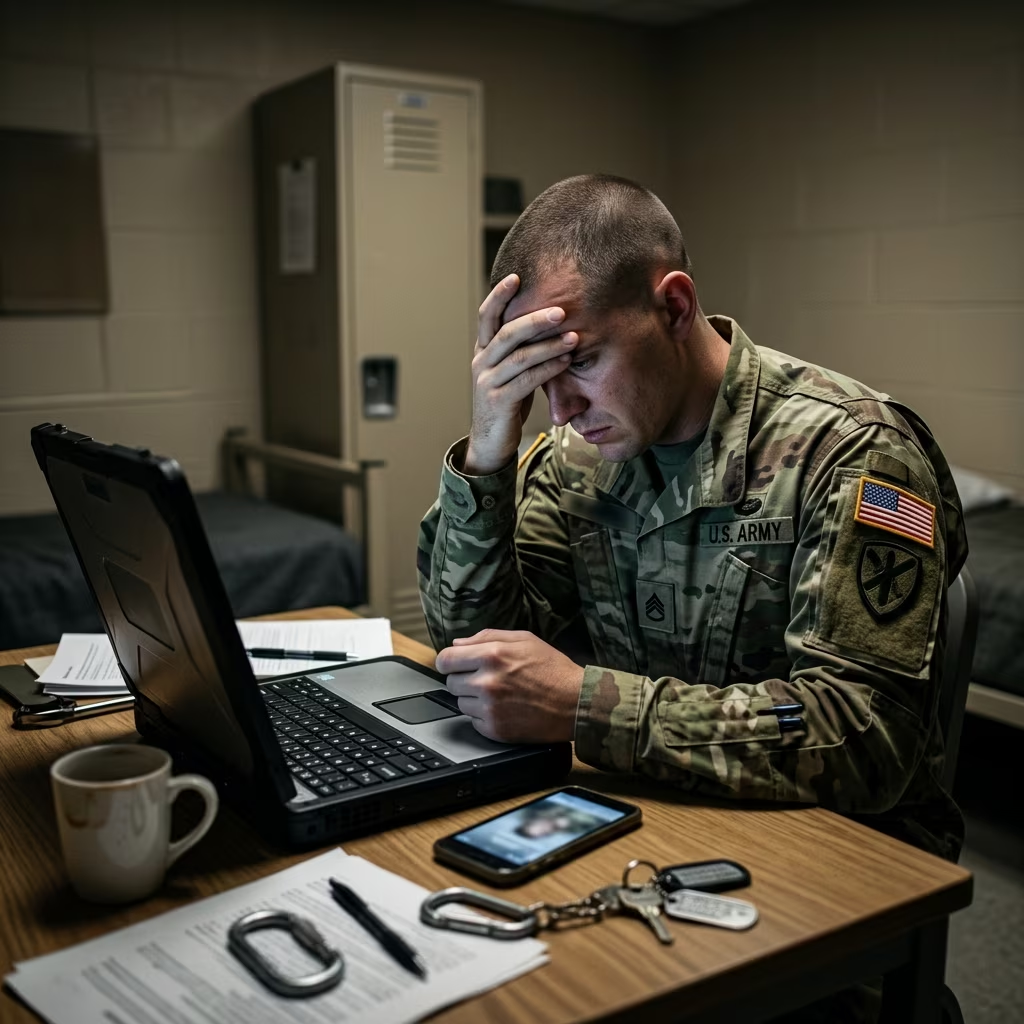
Military service members and their families face unique risks online, and one of the most damaging emerging threats is sextortion—sexual extortion using images, videos, or private conversations to coerce money, favors, or continued contact. In recent years, law enforcement has uncovered complex sextortion schemes, including operations run from inside prisons that specifically target troops and veterans.
This article explains how sextortion scams work, why the military community is a frequent target, what warning signs to watch for, and how to respond safely if you or someone you know is victimized. It is based on credible reporting and official guidance from military and federal agencies, but it presents the information in an original structure for educational and preventive purposes.
Understanding Sextortion in the Military Context
Sextortion is a form of cybercrime in which an offender leverages sexual images, videos, or explicit conversations to blackmail a victim for money, gifts, or other concessions. Often, the victim is enticed into sharing intimate content, which is then used as leverage with threats of exposure to family, friends, employers, or commanders.
For military members, sextortion can be especially devastating. Beyond financial loss and emotional harm, victims may fear damage to their careers, security clearances, and reputations within their units. Scammers know this and deliberately target service members because perceived stakes are higher and some victims may be more likely to pay.
- Emotional leverage: Threats often focus on embarrassment, shame, and fear of disciplinary action.
- Professional leverage: Perpetrators may threaten to send content to a commander, unit Facebook page, or official email addresses.
- Financial strain: Victims can be pressured into repeated payments, sometimes thousands of dollars, with demands that escalate over time.
Why Military Members Are Attractive Targets
Scammers do not target the military randomly. Several features of military life make service members, veterans, and their families appealing victims:
- Publicly visible service: Uniform photos, unit patches, and base locations are often easy to find online, making it simple to identify potential targets.
- Perceived income stability: Regular pay and benefits can create an assumption that troops have steady cash or credit available.
- High stress and isolation: Deployments, training, and long separations can increase vulnerability to online romance or attention.
- Security clearance concerns: Offenders know that fear of career consequences may push some victims to pay rather than report.
Federal agencies like the Federal Trade Commission and military criminal investigative units warn that scammers routinely impersonate soldiers and exploit pro-military sentiment in romance and sextortion schemes, including targeting those who support the troops as well as troops themselves.
How Sextortion Scams Typically Work
Although details vary, most sextortion schemes share a common pattern. Understanding this pattern can help you recognize trouble early and cut it off before harm escalates.
Common Sextortion Pathway
| Stage | What Happens | Red Flags |
|---|---|---|
| Contact | Victim meets the perpetrator online via social media, dating apps, gaming platforms, or text messages. | Unknown account, attractive profile with few posts, generic or stolen photos, quick move to private chat. |
| Rapid Intimacy | Conversation becomes flirtatious or sexual quickly; offender pushes for explicit messages or video calls. | Intense declarations of interest, pressure to share photos or videos, resistance to video chat that shows the other person clearly. |
| Collection of Content | Victim is recorded or screenshots are taken during a sexual video call, or they send intimate photos. | Requests to perform sexual acts on camera; insistence on specific poses that make identity clear. |
| Threat | Perpetrator reveals they have compromising material and demands payment, favors, or more content. | Explicit threats to send images to command, family, or social media; countdowns or urgent deadlines. |
| Escalation | Even if the victim pays, demands continue and often increase over time. | “Not enough” responses after payment, new threats, demands for cryptocurrency or gift cards. |
Prison-Linked Sextortion Schemes
Some of the most organized operations discovered in recent years have been run from inside correctional facilities. In one case, an inmate in South Carolina received a federal sentence for his role in a sextortion and money laundering scheme targeting military personnel. In schemes like this, offenders may use smuggled phones and coordinated networks to contact large numbers of service members.
- Target list building: Offenders mine social media for profiles indicating military service, then add these accounts to contact lists.
- Scripted interactions: Messages follow scripts that quickly build trust, shift to explicit exchanges, and then threaten exposure.
- Money laundering: Payments may be routed through multiple accounts or intermediaries to obscure the source and destination of funds.
These schemes often involve co-conspirators outside prison who receive funds, create new profiles, and help sustain the operation over long periods.
Key Warning Signs of a Sextortion Attempt
Not every intense or strange online interaction is a crime, but sextortion attempts tend to share recognizable warning signs. Being able to spot these early is a major line of defense.
- Fast-moving online relationships: A new contact immediately pushes for intimacy, romance, or sexual topics after minimal conversation.
- Refusal to verify identity: The person avoids real-time video calls that show their face clearly or uses poor-quality video that obscures features.
- Unsolicited explicit material: You receive unexpected sexual photos or videos, followed by pressure to reciprocate.
- Money or gift card requests: They demand payment for “privacy,” claim they need money urgently, or insist on cryptocurrency or prepaid cards.
- Threats linked to your military status: The person references your unit, commander, or military email and threatens to send material there.
- High-pressure deadlines: Messages use countdowns, repeated warnings, or insistence that you must act “right now” to avoid exposure.
Prevention Strategies for Service Members and Families
Complete safety can never be guaranteed online, but practical steps significantly reduce the risk of being targeted or harmed by sextortion schemes—especially for those in or connected to the military.
Online Behavior and Privacy Controls
- Limit public information: Avoid posting details like unit patches, base locations, and visible name tags in public social media posts.
- Adjust privacy settings: Use platform controls to restrict who can see your posts, send friend requests, or download your photos.
- Be cautious with new contacts: Treat friend requests or messages from unknown accounts with skepticism, especially if they appear unusually attractive or have minimal activity.
- Avoid sharing compromising content: Do not send or record sexual images or videos online, even with people you believe you trust; once shared, control is lost.
- Cover cameras when not in use: Simple physical barriers over webcams can prevent unauthorized recording.
Recognizing and Avoiding Scam Communications
- Check email domains: Claims of being from official military or government agencies should come from official domains, not free email services.
- Watch for spelling and formatting issues: Many scam messages contain spelling mistakes, odd phrasing, or mismatched logos.
- Refuse upfront fees: No legitimate authority will require a fee to keep you out of trouble or to “process” evidence related to sextortion.
- Insist on verification: If someone claims to be a military official or law enforcement contacting you online, call known official numbers to confirm.
What To Do If You Are Targeted
If you receive sextortion threats, the most important step is to prioritize safety and resist pressure to pay. Official guidance from military investigative organizations and federal agencies emphasizes that paying rarely resolves the situation and almost always encourages further demands.
Immediate Actions
- Stop communicating: Break off contact with the perpetrator as soon as you recognize the scam.
- Do not pay: Refuse to send money, gift cards, cryptocurrency, or additional explicit content.
- Preserve evidence: Take screenshots and save messages, usernames, email addresses, payment requests, and any related profiles.
Reporting Channels
Members of the U.S. military and their families have multiple avenues for reporting sextortion and related scams. Reporting quickly increases the chances of disrupting criminal networks and protecting other potential victims.
- Chain of command: Notify a supervisor or commander, especially if threats mention your unit or official duties.
- Military criminal investigative offices: Contact local Army Criminal Investigation Division (CID), Air Force Office of Special Investigations (AFOSI), Naval Criminal Investigative Service (NCIS), or Marine Corps law enforcement as appropriate.
- FBI Internet Crime Complaint Center (IC3): File an online complaint to document the incident and support broader investigations.
- Federal Trade Commission (FTC): Report scams and associated identity theft to help enforcement and recovery.
Depending on the branch and location, victims may also have access to victim assistance programs, chaplain support, and mental health services. AFOSI, for example, highlights support from victim assistance programs, readiness centers, and crisis hotlines.
Impact on Victims and Available Support
Sextortion is not just a financial or disciplinary issue; it is a serious emotional and psychological burden. Victims may experience guilt, shame, anxiety about career consequences, and fear of social judgment. For younger service members, this can be overwhelming and may interfere with performance, relationships, and mental health.
- Mental health stress: Persistent fear of exposure and mounting financial pressure can contribute to depression and anxiety.
- Isolation: Some victims withdraw from peers or chain of command, making it harder to get support.
- Risk of self-harm: The intense nature of threats means that supporting mental health and crisis resources is critical.
Military organizations encourage victims not to suffer in silence. Commanders, investigators, chaplains, and behavioral health professionals can often help navigate both the legal and emotional aspects, and confidential crisis hotlines remain an option for those who are hesitant to report through formal channels.
Frequently Asked Questions (FAQ)
1. Is sextortion a crime even if I consented to sending images?
Yes. Sextortion focuses on what the perpetrator does after obtaining content. Using sexual material to coerce money, favors, or ongoing contact through threats is a crime, regardless of whether you initially agreed to share the images or participate in video calls.
2. Will I get in trouble with my command if I report sextortion?
Commands and investigative agencies generally emphasize protecting victims and disrupting criminal activity. While each case is unique, early reporting is encouraged, and many units focus on support rather than punishment when a member is targeted by an external crime.
3. Should I ever pay to make the problem go away?
No. Official guidance consistently warns that paying does not stop the demands; scammers usually increase their threats and requests after receiving money. Cutting off contact and reporting to law enforcement is the recommended course of action.
4. How can families and partners help prevent sextortion?
Families can encourage open communication about online interactions, support healthy boundaries around privacy, and help service members limit public posting of identifiable military information. Parents and partners can also watch for sudden secrecy, unexplained financial stress, or anxiety related to devices, and encourage seeking help if something feels wrong.
5. What if the perpetrator claims to be a military official or law enforcement?
Scammers may impersonate officials to increase pressure. If someone claims to be from the military or a government agency, do not rely on contact information they provide. Instead, use official websites or known phone numbers to verify independently before taking any action.
Practical Checklist for Military Members
Use the following checklist as a quick reference to reduce your risk of sextortion and respond effectively if targeted.
- Review and tighten your social media privacy settings.
- Remove or limit posts that clearly show unit patches, name tags, or base locations.
- Decline friend or follow requests from unknown or suspicious profiles.
- Do not send or record explicit content online, even to trusted contacts.
- If threatened, stop responding and save all communications immediately.
- Report to your chain of command and the appropriate investigative office as soon as possible.
- File a complaint with IC3 and, when relevant, the FTC.
- Seek mental health or chaplain support if you feel overwhelmed or unsafe.
References
- Don’t fall victim to online ‘sextortion’ scams — Joint Base Elmendorf-Richardson Public Affairs. 2010-01-05. https://www.jber.jb.mil/News/News-Articles/Article/290509/dont-fall-victim-to-online-sextortion-scams/
- SEXTORTION (NCIS Sextortion Brochure) — Naval Criminal Investigative Service. 2019-01-01. https://www.mcasyuma.marines.mil/Portals/152/Staff%20and%20Agencies/Provost%20Marshals%20Office/NCIS%20Sextortion%20Brochure.pdf
- Sextortion targeting DAF’s youngest members, AFOSI warns — Air Force Office of Special Investigations. 2024-06-20. https://www.osi.af.mil/News/Article-Display/Article/4293737/sextortion-targeting-dafs-youngest-members-afosi-warns/
- These Social Media Scams Affect the Military — U.S. Department of Defense. 2019-08-13. https://www.defense.gov/News/Feature-Stories/Story/Article/1921988/these-social-media-scams-affect-the-military/
- South Carolina Inmate Sentenced to Federal Prison for Role in Military Sextortion Scheme — U.S. Department of Justice, U.S. Attorney’s Office District of South Carolina. 2023-08-18. https://www.justice.gov/usao-sc/pr/south-carolina-inmate-sentenced-federal-prison-role-military-sextortion-scheme-1
- Learn How To Protect Yourself Against 4 Common Military Scams — MyBaseGuide. 2023-11-01. https://mybaseguide.com/military-scams
- Military consumers and romance scams — Federal Trade Commission. 2023-07-11. https://consumer.ftc.gov/consumer-alerts/2023/07/military-consumers-romance-scams