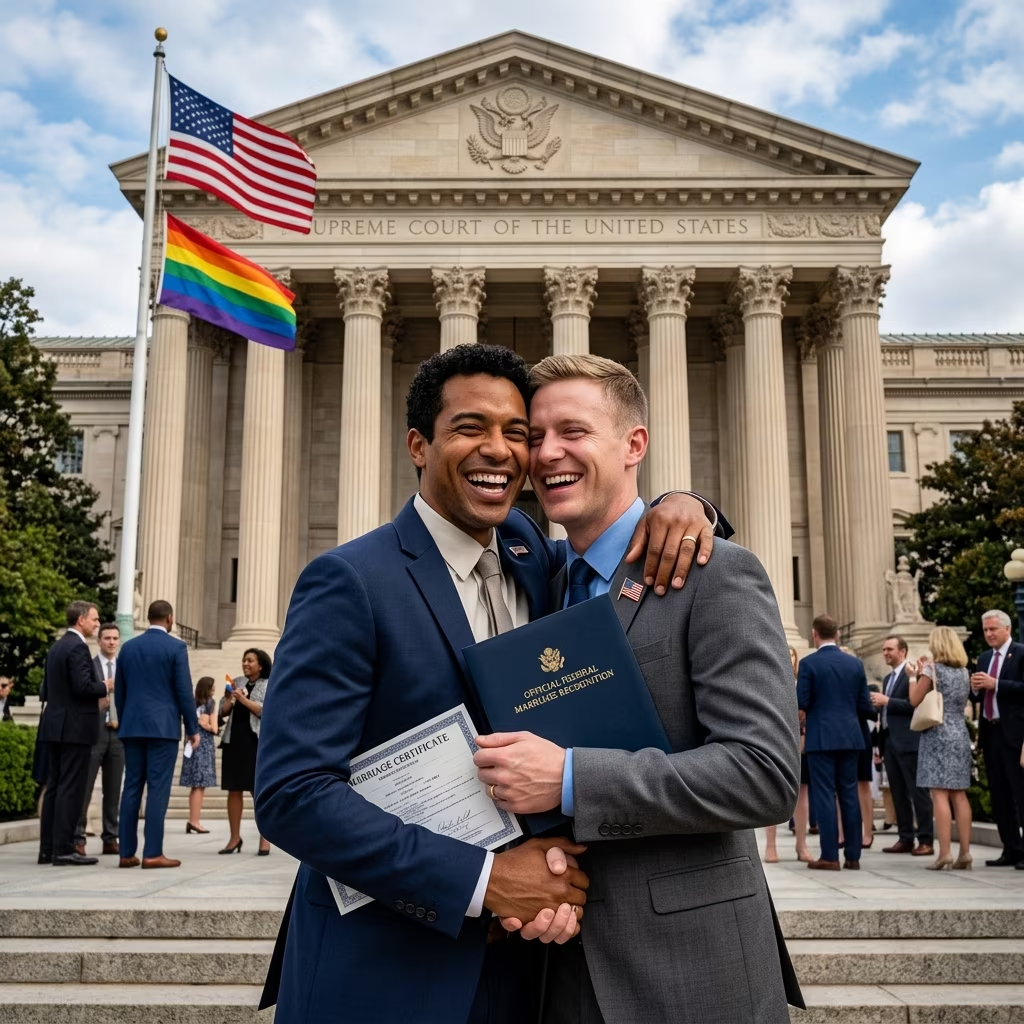
Legal recognition of same-sex marriage in the United States has dramatically reshaped access to federal benefits, financial protections, and family rights for LGBTQ couples. Once excluded from hundreds of federal programs tied to marital status, married same-sex couples now have access to the same core federal benefits as opposite-sex spouses, including Social Security, immigration benefits, tax treatment, military protections, and health coverage.
This article explains how federal benefits work for same-sex spouses, what changed after key Supreme Court decisions, and practical implications for families planning their financial and legal futures.
From Exclusion to Recognition: Legal Background
For many years, the federal government defined marriage as a union between one man and one woman under the Defense of Marriage Act (DOMA). This definition blocked married same-sex couples from accessing federal benefits even when their marriages were recognized under state law.
Federal recognition of same-sex marriage developed through several landmark decisions and legislative changes:
- United States v. Windsor (2013): The Supreme Court struck down key parts of DOMA that denied federal recognition to same-sex marriages valid under state law, opening access to many federal benefits for legally married couples.
- Obergefell v. Hodges (2015): The Court held that same-sex couples have a constitutional right to marry nationwide and to have their marriages recognized by every state.
- Post-Obergefell implementation: Federal agencies adjusted regulations so that marriage-related programs would treat same-sex spouses equally, regardless of the state where they live.
- Respect for Marriage Act (2022): Congress repealed remaining DOMA provisions and required federal recognition of same-sex and interracial marriages performed where they are legal.
These developments collectively mean that, today, marital status for federal benefit purposes is generally based on whether a couple is legally married, not the sex of the spouses.
Scope of Federal Marriage Benefits
A Government Accountability Office review identified over a thousand federal provisions that rely on marital status for rights or obligations, ranging from Social Security and tax rules to immigration and military benefits. After marriage equality, married same-sex couples are included in these programs on the same terms as other married couples.
Key Areas Affected by Federal Recognition
- Social Security and survivor benefits
- Federal income and estate taxation
- Immigration and family-based visas
- Military and veterans’ benefits
- Federal employee health, retirement, and life insurance programs
- Family and medical leave protections
Each of these areas has specific eligibility rules, but the baseline principle is equal treatment of legally married same-sex and opposite-sex couples.
Social Security Benefits for Same-Sex Spouses
The Social Security Administration (SSA) now recognizes same-sex marriages in all states for purposes of spousal and survivor benefits, Medicare eligibility, and Supplemental Security Income (SSI) rules. This has important financial consequences for retirement planning and protection after a spouse’s death.
Main Social Security Rights for Married Same-Sex Couples
- Spousal retirement benefits: A married person can potentially receive a benefit based on a spouse’s earnings record if it is higher than their own, assuming age and other conditions are met.
- Survivor benefits: Widows and widowers may be eligible for monthly benefits based on a deceased spouse’s work history, helping to replace income after death.
- Disability and auxiliary benefits: Spouses and some dependents may qualify for benefits on the record of a worker who becomes disabled.
- Medicare and SSI impacts: Marriage can affect eligibility or payment amounts for certain programs, including SSI, because they take household resources into account.
SSA guidance explicitly notes that it considers the marital status of same-sex couples when determining eligibility and payment amounts, bringing them within the same framework that applies to other married people.
Retroactive Survivor Benefits
In recent years, federal authorities have allowed some same-sex surviving spouses who were previously denied benefits due to state marriage bans to claim retroactive survivor benefits, if they can show they would have married earlier but for discriminatory laws. This policy change can provide significant financial relief to older LGBTQ adults whose partners died before marriage equality was nationwide.
Tax and Estate Planning Advantages
Federal recognition of same-sex marriage also reshaped the tax and estate landscape, allowing couples to use strategies previously available only to heterosexual married couples.
Federal Income Tax Treatment
- Joint filing: Married same-sex couples can file joint federal income tax returns, which may reduce or increase overall tax liability depending on income patterns.
- Marital deductions: Certain deductions and credits are structured around marital status, such as some child and dependent-related tax benefits.[10]
- Consistent treatment: After federal recognition, couples have a more predictable tax status aligned with their state-recognized marriages.
Estate, Gift, and Inheritance Rules
Marriage is central to federal estate and gift tax planning. Legal same-sex spouses now benefit from parity in several key areas:[10]
- Unlimited marital deduction: Transfers between spouses, during life or at death, may qualify for an unlimited federal estate and gift tax deduction when both are U.S. citizens.[10]
- Estate tax thresholds: Married couples can coordinate use of lifetime estate and gift tax exemptions more effectively.[10]
- Tax-free inheritance between spouses: Recognition of marriage allows many spousal transfers to avoid immediate federal estate tax.[10]
These rules make it easier for married same-sex couples to treat each other as primary beneficiaries and to build long-term wealth plans, often in combination with wills, trusts, and beneficiary designations.
Immigration Benefits for Same-Sex Spouses
Family-based immigration is another area where marriage is central. U.S. Citizenship and Immigration Services (USCIS) now evaluates immigration visa petitions filed on behalf of same-sex spouses in the same way as those for opposite-sex couples.
Typical Immigration Pathways for Married Couples
- Spousal immigrant visas: A U.S. citizen or lawful permanent resident may sponsor a foreign national spouse for permanent residence.
- Derivative status: Some employment-based visas and other categories allow spouses to obtain derivative immigration status.
- Protection from removal: Marriage-based relief may be available in certain immigration proceedings.
By recognizing same-sex marriages, federal authorities treat these couples’ relationships as authentic family ties for immigration purposes, which can be crucial for binational LGBTQ couples.
Military and Veterans’ Benefits
Military families rely heavily on benefits tied to marital status, such as health care, housing allowances, and survivor protections. Federal policy now ensures that legally married same-sex spouses are fully included in these systems.
Key Military Benefits Recognizing Same-Sex Spouses
- Health care coverage: Military spouses may be eligible for health care through programs such as TRICARE.
- Basic Allowance for Housing (BAH): Married service members can receive housing allowances that take family status into account.
- Family support programs: Access to support services and resources is extended to same-sex spouses.
- Survivor and death benefits: Certain benefits for surviving spouses apply regardless of the sex of the partners.
Veterans’ benefits are similarly affected. With nationwide marriage recognition, same-sex surviving spouses can qualify for veterans’ survivor benefits on the same terms as other widows and widowers.
Federal Employee Health, Retirement, and Insurance Programs
Federal employees and retirees participate in specific benefit programs that historically limited spousal coverage to opposite-sex couples. Following legal changes, those programs now clearly include same-sex spouses.
Core Federal Employee Programs
| Program | Type of Benefit | Same-Sex Spouse Access |
|---|---|---|
| Federal Employees Health Benefits (FEHB) | Group health insurance | Legally married same-sex spouses are eligible family members for enrollment. |
| Federal Employees Retirement System (FERS) / CSRS | Pension and survivor benefits | Survivor benefits now apply equally to same-sex spouses. |
| Federal Employees’ Group Life Insurance (FEGLI) | Life insurance and survivor coverage | Same-sex spouses have access to spousal and survivor protections. |
| Thrift Savings Plan (TSP) | Retirement savings account | Spouses share rights to inherit or transfer accounts similar to other married couples. |
These programs, combined with broader employment protections, support more comprehensive financial planning for federal workers in same-sex marriages.
Family and Medical Leave Protections
Federal family and medical leave rules rely on legal definitions of spouses and family members. After legal recognition of same-sex marriage, federal regulations extended Family and Medical Leave Act (FMLA) protections to married same-sex couples.
For eligible workers, this means:
- They can take protected leave to care for a same-sex spouse with a serious health condition.
- They may use leave for qualifying exigencies related to a spouse’s military service.
- Employers covered by federal law should treat same-sex and opposite-sex spouses equally for FMLA purposes.
Practical Planning Steps for Same-Sex Couples
Although federal recognition has expanded access to benefits, couples still need to take affirmative steps to secure those protections. Key practical actions include:
- Confirm legal marriage status: Ensure the marriage is validly performed under the laws of a jurisdiction that recognizes same-sex marriage.
- Update records: Notify Social Security, immigration authorities (if applicable), employers, and plan administrators of marital status and name changes.
- Review beneficiary designations: Check retirement accounts, life insurance policies, and pay-on-death accounts to align with current wishes.
- Complete estate planning documents: Draft wills, powers of attorney, and health care directives to supplement default legal rules.
- Consider tax and financial advice: Marriage can alter tax burdens and long-term financial strategies; professional guidance can help optimize decisions.[10]
Frequently Asked Questions (FAQs)
1. Do married same-sex couples receive the same Social Security benefits as opposite-sex spouses?
Yes. The Social Security Administration recognizes same-sex marriages in all states and applies the same rules for spousal, survivor, disability-related auxiliary benefits, and certain Medicare-linked provisions as it does for opposite-sex spouses.
2. Can a U.S. citizen sponsor a same-sex spouse for immigration purposes?
Yes. Family-based immigration petitions for same-sex spouses are adjudicated in the same way as those for opposite-sex couples, assuming the marriage is legally valid where it was performed.
3. Are same-sex spouses eligible for federal employee health insurance and retirement benefits?
Yes. Legally married same-sex spouses are considered eligible family members under the Federal Employees Health Benefits Program, and they are entitled to spousal and survivor benefits from federal retirement and life insurance programs on equal terms.
4. Does marriage equality affect private employer benefits?
Marriage equality and subsequent decisions on employment discrimination have expanded access to spousal employment benefits for LGBTQ workers, particularly when employers offer benefits to spouses generally. However, specific offerings vary by employer, and couples should review their plan documents.
5. Why is estate planning still important if federal law recognizes our marriage?
Federal recognition ensures baseline spousal rights in areas such as taxes and some survivor benefits, but it does not replace personalized estate planning. Wills, trusts, and powers of attorney allow couples to decide how property is distributed, who can make medical decisions, and how non-spouse family members or charities are included.[10]
References
- Same-Sex Marriage in the United States — Wikipedia (summary of legal changes, citing primary law sources). Accessed 2024-01-01. https://en.wikipedia.org/wiki/Same-sex_marriage_in_the_United_States
- Understanding Federal Benefits for Same-Sex Couples — STW Serve. 2023-08-15. https://stwserve.com/understanding-federal-benefits-for-same-sex-couples/
- Information for Military Couples in a Legal, Same-Sex Marriage — Military OneSource, U.S. Department of Defense. 2022-05-10. https://www.militaryonesource.mil/financial-legal/legal/legally-married-same-sex-couples-info/
- What Same-Sex Couples Need to Know — Social Security Administration (SSA Publication EN-05-10014). 2023-01-01. https://www.ssa.gov/pubs/EN-05-10014.pdf
- I Have a Same Sex Marriage — U.S. Office of Personnel Management. 2022-06-01. https://www.opm.gov/healthcare-insurance/life-events/memy-family/i-have-a-same-sex-marriage/
- Has Marriage Equality for LGBTQ People Impacted Access to Domestic Partner Health Benefits? — KFF (Kaiser Family Foundation). 2023-11-14. https://www.kff.org/private-insurance/has-marriage-equality-for-lgbtq-people-impacted-access-to-domestic-partner-health-benefits/
- 7 Financial Benefits of Same-Sex Marriage — MassMutual. 2021-06-01. https://blog.massmutual.com/planning/financial-benefits-of-lgbtq-marriage