Paying for goods online is convenient, but it also brings risks that shoppers do not face in a physical store. When you hand your card to a cashier, you usually see the item, the store, and the staff in front of you. In contrast, an online purchase often involves an unfamiliar website, a distant seller, and a product you have never seen in person. This guide explains how to pay safely, what legal protections you may have, and what steps to take if a transaction goes wrong.
1. Understanding the Online Payment Landscape
Before entering any card number or sending money, it helps to understand the main types of payment options and how they differ in terms of security and legal protection.
- Credit cards – Often provide strong fraud protection, limited liability for unauthorized charges, and chargeback rights in many countries.
- Debit cards – Draw funds directly from your bank account, sometimes with weaker protections than credit cards if not reported quickly.
- Digital wallets – Services like major tech-branded wallets or bank payment apps that add an extra layer between your bank and the merchant.
- Bank transfers and wire payments – Typically final once sent and difficult to reverse, with limited consumer protection on fraudulent transfers.
- Buy now, pay later (BNPL) – Short-term installment plans with varying dispute and refund policies depending on the provider.
Choosing the right method can greatly influence how easily you can resolve disputes, reverse fraudulent charges, or obtain a refund for defective or undelivered goods.
2. Key Legal Protections for Online Shoppers
Several legal frameworks and financial regulations are designed to protect consumers who pay electronically. These protections differ by country, card network, and bank, but some common themes appear in many jurisdictions.
| Protection | Typical Source | What It Covers |
|---|---|---|
| Limited liability for unauthorized card use | Banking and card regulations | Caps how much you pay if your card details are stolen and misused, when you report it promptly. |
| Chargeback rights | Card network rules, national laws | Allows you to ask your card issuer to reverse certain disputed transactions. |
| Refund obligations | Consumer protection laws, e‑commerce rules | Requires sellers to refund for faulty goods, non-delivery, or cancelled orders in many circumstances. |
| Data and privacy rules | Data protection laws | Govern how merchants store and use your personal and payment data. |
Government agencies such as financial regulators and consumer protection offices often publish detailed explanations of these rights, and banks must usually disclose them in account and card agreements.
2.1 Chargebacks and Disputes
A chargeback is a process in which your card issuer reverses a payment and pulls the money back from the merchant’s bank. This tool is especially important when a seller refuses to fix a problem.
- Common reasons include non-delivery of goods, significantly not-as-described items, duplicate charges, or clear fraud.
- Time limits usually apply; some networks give 60–120 days from the statement date, though this varies.
- Issuers may ask for documentation such as emails with the seller, order confirmations, and delivery tracking.
Consumer regulators recommend contacting the merchant first and documenting your attempts before escalating to your bank.
3. Safer Payment Methods and How to Use Them
3.1 Credit Cards
Credit cards are generally considered one of the safest ways to pay for goods online because they do not pull money directly out of your bank account and often include strong dispute rights.
Best practices when using a credit card online:
- Use a card that offers zero-liability or limited-liability policies for unauthorized charges.
- Enable transaction alerts via text or email so you can spot suspicious activity quickly.
- Avoid saving your card details on multiple sites; instead, use a secure browser or trusted wallet where possible.
- Review statements promptly and dispute unfamiliar charges without delay.
3.2 Debit Cards
Debit cards are convenient, but they access your bank funds directly. If someone misuses your card, it can affect your available money for bills and everyday needs until the bank resolves the matter.
Many jurisdictions offer protection for unauthorized debit transactions, but the timing of your report can significantly change how much you might lose.
- Use debit cards only on highly trusted websites and networks.
- Monitor account activity regularly through online banking or mobile apps.
- Report lost cards or suspicious transactions immediately to minimize potential liability.
3.3 Digital Wallets and Payment Apps
Digital wallets and major payment apps can reduce the exposure of your underlying card or bank number. They often use tokenization, replacing your real card number with a temporary token during the transaction.
- Set up strong authentication such as biometrics or multi-factor verification for wallet access.
- Only link the wallet to accounts you monitor frequently.
- Turn on transaction notifications so you can detect unauthorized payments quickly.
3.4 Bank Transfers, Wires, and Person-to-Person Payments
Bank transfers, wire payments, and person-to-person (P2P) payment services are often marketed for paying friends or family, not unknown sellers. Once a transfer is sent, reversing it can be difficult or impossible, especially if sent to the wrong person or a fraudulent seller.
Financial regulators warn that these methods should be treated like cash when dealing with strangers online.
- Avoid sending bank transfers to sellers you do not know or to individuals advertising on social media or classified sites.
- Do not rely on screenshots or emails alone as proof that funds are “on the way.” Wait for confirmation inside your own bank or app.
- Use P2P apps only for people you personally know and trust.
4. Checking Whether a Website Is Safe Before Paying
Many payment problems can be avoided by evaluating the merchant and its website before you complete a checkout form. Consumer protection authorities and cybersecurity agencies offer practical checklists for spotting legitimate online businesses.
4.1 Technical Security Signals
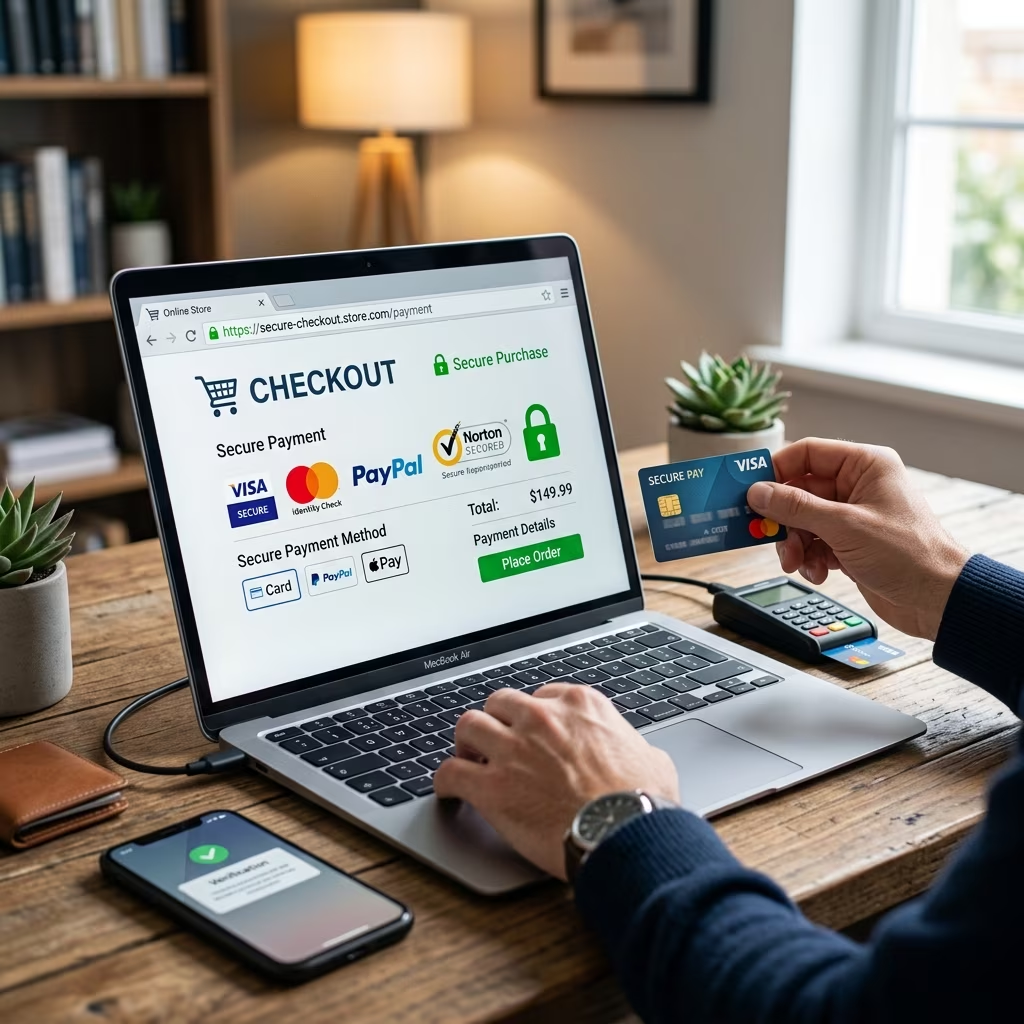
- Look for HTTPS and a padlock icon in the browser address bar when you are on pages that collect personal or payment data.
- Check the website address carefully for spelling errors or unusual domain endings that mimic well-known brands.
- Consider using updated browsers and security software, as many can warn you about known fraudulent sites.
4.2 Business and Reputation Checks
- Search for independent reviews of the merchant, paying attention to repeated complaints about non-delivery or unprocessed refunds.
- Look for a physical address, phone number, and clear contact information on the site.
- Review the refund, shipping, and privacy policies before entering payment details.
- Be cautious if the site only accepts hard-to-reverse payments such as wire transfers or cryptocurrency.
5. Recognizing Common Online Payment Scams
Online shopping scams continue to evolve, but many share similar warning signs. Law enforcement and consumer agencies regularly publish alerts about these patterns.
- Too-good-to-be-true prices – Extremely low prices for in-demand products can signal counterfeit goods or non-delivery.
- Pressure to pay immediately – Messages that claim an offer will vanish or that your account will be closed unless you pay right away are often red flags.
- Requests for unusual payment methods – Demands for prepaid gift cards, cryptocurrency, or obscure money transfer services for a normal retail purchase are suspicious.
- Impersonation of known companies – Emails or texts that appear to be from shipping companies, online marketplaces, or your bank but link to a fake payment page.
- Phishing links – Links in messages that lead to fake login pages designed to steal your password or card details.
If any of these signs appear, stop the transaction and independently verify information through the official website or customer service number, not the contact details provided in the suspicious message.
6. Practical Steps to Take Before You Click “Pay”
Developing a short personal checklist can significantly reduce your risk when paying online. Consider pausing at the final step of checkout and reviewing the following points.
- Confirm the full price, including taxes, shipping, and any recurring charges such as subscriptions.
- Take note of the delivery timeframe and whether the seller provides tracking information.
- Read the return and refund policy, including who pays for return shipping and how long refunds take.
- Double-check the merchant name that will appear on your card statement.
- Use a secure network; avoid entering card details on public Wi‑Fi networks without additional protection.
7. What to Do When a Payment Problem Arises
Despite your best efforts, problems can still occur: goods may arrive damaged, orders may never show up, or unauthorized transactions may appear on your statement. Taking quick, organized action can make a major difference in the outcome.
7.1 If You See an Unauthorized Charge
- Contact your bank or card issuer immediately using the number on the back of your card or official website.
- Ask to block the card or account if you suspect your details have been compromised.
- Follow any instructions for filing a fraud report or written dispute within the required timeframe.
- Change passwords on associated online accounts and enable multi-factor authentication where possible.
7.2 If Goods Never Arrive or Are Defective
- Check the order confirmation and shipping status, verifying the delivery address and tracking updates.
- Contact the seller in writing, clearly describing the issue and what resolution you are seeking (refund, replacement, repair).
- Keep copies of all communications, pictures of the item, and any packaging labels.
- If the seller does not cooperate, file a dispute with your card issuer or payment provider within their time limits.
- Consider reporting the problem to a consumer protection agency or online marketplace, especially if you suspect a pattern of fraud.
7.3 Escalating to Regulators or Law Enforcement
When significant money is involved or you suspect a scam rather than a simple mistake, government agencies may be able to help. Financial regulators, competition and consumer protection bodies, and cybercrime units often operate complaint channels and can use the information to pursue repeat offenders.
- File a complaint with your national consumer protection authority, including all evidence.
- Report phishing emails or fraudulent websites to cybersecurity agencies or designated reporting portals.
- If you have lost a large sum of money to fraud, consult local law enforcement about filing a police report.
8. Long-Term Habits for Safer Online Payments
Safe online shopping is not a single decision but a series of habits that reduce your exposure over time.
- Use strong, unique passwords for shopping sites and never reuse banking passwords elsewhere.
- Update devices and browsers regularly to patch security vulnerabilities.
- Limit how many merchants store your card details; delete saved cards you no longer use.
- Review financial statements monthly or more often to detect suspicious activity early.
- Educate family members, especially teenagers and older adults, about the risks of clicking suspicious links or sharing payment details.
9. Frequently Asked Questions (FAQs)
9.1 Is it safer to pay with a credit card or a debit card online?
In many jurisdictions, credit cards offer stronger protections than debit cards for online purchases, including more robust chargeback rights and limited liability for unauthorized charges, provided you report them promptly. With a credit card, disputed funds usually do not come directly out of your bank account while the issue is being resolved.
9.2 Can my bank reverse a wire transfer if I was scammed?
Wire transfers and many bank transfers are often treated as final, especially once the funds have been collected by the recipient bank. If you suspect fraud, contact your bank immediately; they may attempt to recall the transfer, but success is not guaranteed. This is why regulators advise against using wires to pay unknown online sellers.
9.3 Should I save my card details on shopping websites?
Saving card details can be convenient, but it increases the number of places where your information is stored. Security experts often recommend limiting card storage to a few reputable merchants or using digital wallets that keep your actual card number hidden. If a website suffers a data breach, stored payment data may be at greater risk.
9.4 What should I do if I entered my card on a suspicious website?
If you believe you shared payment details on a fraudulent or insecure site, contact your bank or card issuer immediately, explain the situation, and ask about cancelling the card and monitoring for unauthorized charges. You should also watch your statements closely and avoid reusing any passwords that might have been compromised.
9.5 Are mobile payments more secure than typing my card number on a website?
Many mobile payment systems and digital wallets use tokenization and strong authentication, which can reduce certain types of risk compared to manually entering your card number on many different sites. However, you must still protect your device with a lock screen, keep software up to date, and only install apps from trusted sources.
References
- Credit Card Protections and Security — Federal Trade Commission. 2024-03-01. https://www.consumer.ftc.gov/articles/what-know-about-credit-cards
- Electronic Fund Transfers FAQs — Consumer Financial Protection Bureau. 2023-08-10. https://www.consumerfinance.gov/ask-cfpb/category-electronic-fund-transfers/
- Chargeback Rights and Card Disputes — UK Financial Conduct Authority. 2023-06-15. https://www.fca.org.uk/consumers/credit-card-debit-card-chargeback
- Online Shopping Safety Tips — Cybersecurity and Infrastructure Security Agency. 2022-11-21. https://www.cisa.gov/news-events/news/online-shopping-safely
- Internet Shopping and Online Auctions — Europol. 2022-12-05. https://www.europol.europa.eu/crime-areas-and-trends/crime-areas/cybercrime/internet-shopping-and-auctions