
Original Will Storage: 5 Secure Options For Executors And Heirs
Learn how to keep your original will protected, discoverable, and legally effective so your wishes are honored without costly delays.
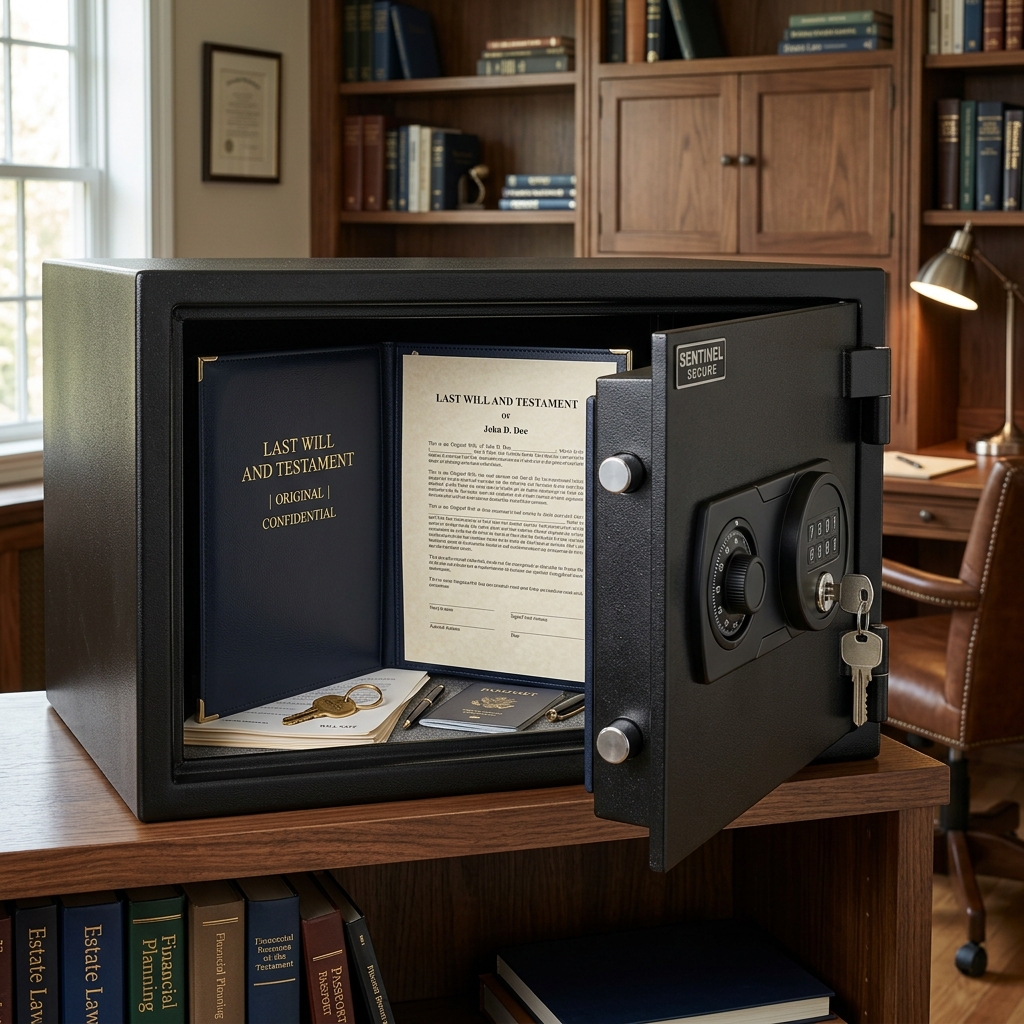
Your original will is one of the most important legal documents you will ever sign. If it is lost, destroyed, or inaccessible when you die, a court may need to treat your estate as if you never made a will at all, or rely only on imperfect copies. Choosing where and how to store the document is therefore a core part of responsible estate planning, not an afterthought.
This article explains practical options for storing your original will, the legal and logistical issues behind each choice, and the steps you can take so your executor and family can locate the document quickly and use it during probate. While laws vary by jurisdiction, the principles of security, accessibility and clarity are widely recognized by courts, lawyers and bar associations.
Why Original Will Storage Matters
Many people spend time drafting thoughtful estate plans but give little attention to what happens to the physical document afterward. That gap can create serious problems, including court delays, increased legal fees, and even disputes among heirs.
- Legal validity depends on the original: In most jurisdictions, the court expects to see the document signed with your original ink signature and witnesses, not just a copy or scan.
- Probate requires timely access: The executor named in your will will typically need the original document early in the probate process to open the estate and prove their authority.
- Loss or destruction can change outcomes: If the original cannot be found, some courts presume the will was revoked or may require a complex evidentiary hearing to rely on a copy.
- Storage location can affect costs: Different storage choices (home safe, court repository, bank box, lawyer’s office) carry different costs and risks over time.
Because of these factors, professional practice guides routinely treat the storage and disposition of original estate planning documents as a separate, important topic rather than a minor administrative detail.
Core Principles for Storing Your Will
Regardless of the specific storage option you choose, four key principles apply in most situations.
- Protection from physical harm: Your will should be safeguarded from fire, water, theft, and everyday wear and tear.
- Predictable access: The people who will need the will—primarily your executor—must know where it is and how to gain access without significant delay or legal obstacles.
- Clear documentation: Your lawyer, executor, and sometimes the court should be able to confirm where the original is stored.
- Consistency with local law: Some jurisdictions offer or encourage specific repositories, such as probate court filing systems.
Main Options for Storing an Original Will
There is no single universally “best” location for every person. Instead, you should understand the practical pros and cons of each option and decide what aligns with your family situation, local law, and personal preferences.
1. Home Fireproof and Waterproof Safe
One widely recommended approach is to keep your will at home in a fireproof and waterproof safe or lockbox. This option combines physical security with relatively easy access for your executor and family.
Advantages include:
- Immediate availability to your executor and family, without needing a bank officer or court order.
- Protection from disasters if you choose a high-quality safe designed to withstand fire and water.
- Centralized storage for other important documents such as property deeds, powers of attorney and health care directives.
To make this option effective, it is important to:
- Place the safe in a location that is secure but not so hidden that your executor cannot find it.
- Share access details (keys, codes) with your executor or a trusted person, or document them in a secure manner.
- Avoid clutter or mixing the will with stacks of unrelated papers, so it can be quickly identified.
2. Filing with Probate or Superior Court
Some jurisdictions allow or encourage individuals to file their original will with the local probate court or superior court before death. The court clerk then holds the document in a secure repository until it is needed.
Typical features of court filing include:
- A modest administrative fee for filing and storage.
- Secure facilities, often with protection against fire and other hazards.
- Formal entry in a register so that the existence and location of the will are documented.
Professional liability guidance in some states recommends filing original wills with the court rather than leaving them indefinitely in law firm storage, so that clients and heirs have a clear path to retrieval.
However, this option may not exist or may be used differently depending on the jurisdiction, so it is important to consult local rules or your attorney.
3. Bank Safe Deposit Box
A safe deposit box at a bank can offer high physical security for your will and other valuable papers. The box is usually kept in a vault designed to withstand fire, water and theft.
Advantages include:
- Strong protection and controlled access, suitable for high-value documents.
- Ability to store multiple estate planning documents together, such as trusts and powers of attorney.
Potential complications are significant:
- In many cases, the bank will not allow anyone to open the box after your death unless they are a co-signer or present a court order or proof of appointment.
- Keys can be misplaced, and the process of drilling a box open can add delay and expense.
- If no one knows which bank, branch, or box number to look for, the will may effectively be “lost,” even if physically safe.
Because of these practical issues, some professionals advise using a safe deposit box only if you carefully document access arrangements and inform your executor and attorney of the specific details.
4. With Your Estate Planning Lawyer
Historically, many lawyers stored clients’ original wills in firm vaults or file rooms. Modern professional guidance increasingly encourages lawyers either to return originals to clients or file them with the court instead of keeping them permanently.
Advantages of lawyer storage may include:
- The firm is already familiar with your estate plan and can help your executor interpret the document.
- Secure file systems and tracking procedures, especially in established practices.
Challenges include:
- Lawyers eventually retire, relocate or close their practices, creating questions about long-term storage.
- Successor lawyers may inherit boxes of documents, creating logistical difficulty in returning or locating individual wills.
Professional liability materials therefore often recommend that lawyers keep copies but not long-term custody of original wills whenever possible.
5. Professional Will Storage Services
Some jurisdictions and private companies offer dedicated will storage services that focus on secure custody and organized retrieval of original documents. These services may be provided by government agencies, courts, law firms or specialized providers.
Common features include:
- Secure, monitored facilities designed for document preservation.
- Protocols for releasing the document only to authorized individuals, such as the named executor or a court officer.
- Clear documentation of where the will is held, often including notices or labels provided to the client.
When considering such a service, review how it handles long-term custody, what happens if the organization changes ownership, and how your executor will prove their entitlement to access.
Comparing Storage Options
The following table summarizes key practical differences among common storage locations. Conditions vary by jurisdiction and institution, so treat this as a general guide rather than definitive legal advice.
| Storage Option | Security Level | Access After Death | Typical Costs | Key Risk |
|---|---|---|---|---|
| Home fireproof safe | High (depends on safe quality) | Executor access if they know location and code/key | One-time purchase of safe | Document may be hidden, forgotten, or damaged if safe is low quality |
| Probate/superior court repository | High, designed for official records | Released under court procedures | Modest filing fee | Not available in all jurisdictions; retrieval can require formal steps |
| Bank safe deposit box | Very high physical security | May require court order or co-signer access | Annual rental fee | Access delays, lost keys, or unknown box location |
| Lawyer’s vault or file room | Moderate to high, depending on firm practices | Executor must locate the firm and comply with its procedures | Usually included in legal services | Issues when lawyer retires or firm closes; difficulty returning originals |
| Professional will storage service | High (document-focused facility) | Defined release process to executor or court | Service fees (one-time or ongoing) | Long-term continuity of provider and clarity of access rules |
Best Practices Beyond Location Choice
Choosing a storage location is only part of the picture. Effective will storage also involves communication, documentation and copies.
Informing Key People
Your executor cannot use a will they do not know exists or cannot find. Professional guidance emphasizes tell people where the document is stored and how it can be reached.
At minimum, you should inform:
- Your named executor or personal representative
- Your spouse or partner, if appropriate
- Your estate planning lawyer
- Any trusted advisor (such as a financial planner) who plays a role in your estate plan
Provide them with:
- The exact location of the original will
- Any access credentials, such as keys or codes, or instructions on where to find them
- The name and address of any institution involved (bank branch, court, storage service)
Maintaining Copies and Related Documents
Although courts typically require the original will for probate, keeping copies can still be valuable for reference and planning.
- Store at least one paper copy separately from the original, so that you can review it without disturbing the original.
- Maintain electronic copies in secure digital storage for your records, while understanding that they do not replace the original in most jurisdictions.
- Keep related estate planning documents—trusts, powers of attorney, health care directives—in a coordinated system, often in the same safe or repository.
Professional guidance often recommends that lawyers label copies with the location of the original and the firm’s contact information, so that anyone reading a copy knows where to request the signed document.
Avoiding Common Storage Mistakes
Certain practices consistently cause trouble in probate, according to lawyers and courts.
- Hiding the will in an obscure place known only to you—such as inside books, random drawers, or unusual household spots—can make it effectively impossible to find after death.
- Relying solely on digital copies in jurisdictions that still require paper originals; most laws have not yet fully transitioned to electronic wills.
- Attaching papers with staples or clips in ways that leave marks or impressions on the will, potentially raising questions about tampering or missing pages.
- Failing to update storage information when you change banks, move homes, or switch lawyers.
When You Update or Replace Your Will
Estate plans evolve as circumstances change. When you sign a new will or codicil, storage decisions need to be revisited.
- Ensure that the new original document takes the place of the prior one in your chosen storage location.
- Destroy superseded copies or clearly mark them as revoked, to avoid confusion.
- Notify your executor, spouse, lawyer and any advisors that a new document exists and where it is stored.
If you have filed a prior will with the court or stored it in a bank safe deposit box, ask your lawyer about the procedure for updating those records so the correct version is used in probate.
Frequently Asked Questions About Will Storage
Do I need to use a court repository for my will?
No. Court filing is one option, but it is not mandatory in most jurisdictions. Many people instead use a home safe or professional storage service. Whether court filing is possible or advisable depends on your local rules and personal preferences.
Is a scanned copy of my will enough for probate?
Generally not. Courts typically require the original signed will to open probate, and many explicitly warn that scanned copies are not a substitute. Copies may be useful for reference, but you should not rely on them alone unless your jurisdiction has specific laws authorizing electronic wills.
Who should have a copy of my will?
It is common for your lawyer and executor to hold copies. You may also choose to share copies with your spouse or close family, depending on your comfort level and the structure of your plan. The key is that at least your executor and lawyer know where the original is stored.
Is a bank safe deposit box a bad place to store my will?
Not necessarily, but it can be complicated. Safe deposit boxes are secure, yet often difficult to access promptly after death without court orders or special arrangements. If you use one, ensure your executor knows the bank, branch and box number and that local law allows them to gain access without excessive delay.
Should I leave my original will with my attorney?
Some lawyers still offer storage, but professional liability guidelines in several states now encourage lawyers to return original wills to clients or file them with the court instead. Ask your attorney about their policies and how they handle long-term storage and retrieval.
Planning Ahead: A Simple Will Storage Checklist
To put these ideas into practice, consider working through the following basic checklist:
- Choose a secure storage location that balances protection and access.
- Purchase or arrange any necessary infrastructure (safe, deposit box, court filing).
- Inform your executor, spouse, lawyer and at least one trusted person where the original is stored and how to access it.
- Maintain at least one copy, clearly marked with the location of the original.
- Review storage arrangements whenever you move, change banks, update your will or switch attorneys.
By giving careful thought to storage, you significantly increase the likelihood that your will can do what it is meant to do: provide clear, timely guidance to your loved ones and the court during a difficult time.
References
- Safekeeping of Your Original Will and Other Estate Planning Documents — Carmichael Clark. 2023-04-05. https://www.carmichaelclark.com/news/probate-and-estate-planning/safekeeping-of-your-original-will-and-other-estate-planning-documents/
- A Guide on How to Store Your Will — NobleWills. 2024-01-10. https://noblewills.com/blog/a-guide-on-how-to-store-your-will/
- Storage of Estate Planning Documents — Spangler and DeStefano. 2021-06-23. https://spangleranddestefano.com/2021/06/23/storage-of-estate-planning-documents/
- The Good, the Bad, and The Ugly: 5 Options for Storing Your Will — Leave a Legacy NC. 2017-02-23. https://www.leavealegacync.com/2017/02/23/the-good-the-bad-and-the-ugly-5-options-for-storing-your-will
- Storing Your Will: How to Keep It Safe, Secure, and Accessible — The Probate Pro. 2020-09-15. https://theprobatepro.com/blog/storing-your-will/
- Do You Keep Original Wills? Best Practices Say No — NWSidebar (Washington State Bar Association). 2015-03-04. https://nwsidebar.wsba.org/2015/03/04/dont-keep-original-wills/
- Storage and Disposition of Original Estate Planning Documents — Oregon State Bar Estate Planning and Administration Section. 2011-04-01. https://estateplanning.osbar.org/files/2015/05/Est_2011Apr.pdf
Similar Articles








Read full bio of medha deb


