Car enthusiasts often customize their vehicles to boost performance, aesthetics, or unique style. However, many popular modifications cross legal boundaries, leading to tickets, failed safety inspections, or even vehicle seizure. Understanding these restrictions helps drivers avoid costly mistakes while enjoying their rides responsibly.
Why Vehicle Modifications Face Strict Regulations
Government agencies like the National Highway Traffic Safety Administration (NHTSA) and the Environmental Protection Agency (EPA) enforce rules to ensure road safety, reduce emissions, and prevent evasion of law enforcement. State laws vary, but federal standards set baselines. For instance, alterations affecting visibility, noise levels, or emissions often trigger violations under the Clean Air Act or state vehicle codes.
Modifications become illegal when they compromise safety, such as obstructing lights or creating hazards, or when they tamper with factory-certified components. Penalties range from $100 fines to thousands in fixes, plus towing fees. Always check local Department of Motor Vehicles (DMV) guidelines before installing aftermarket parts.
1. Excessively Loud Exhaust Systems
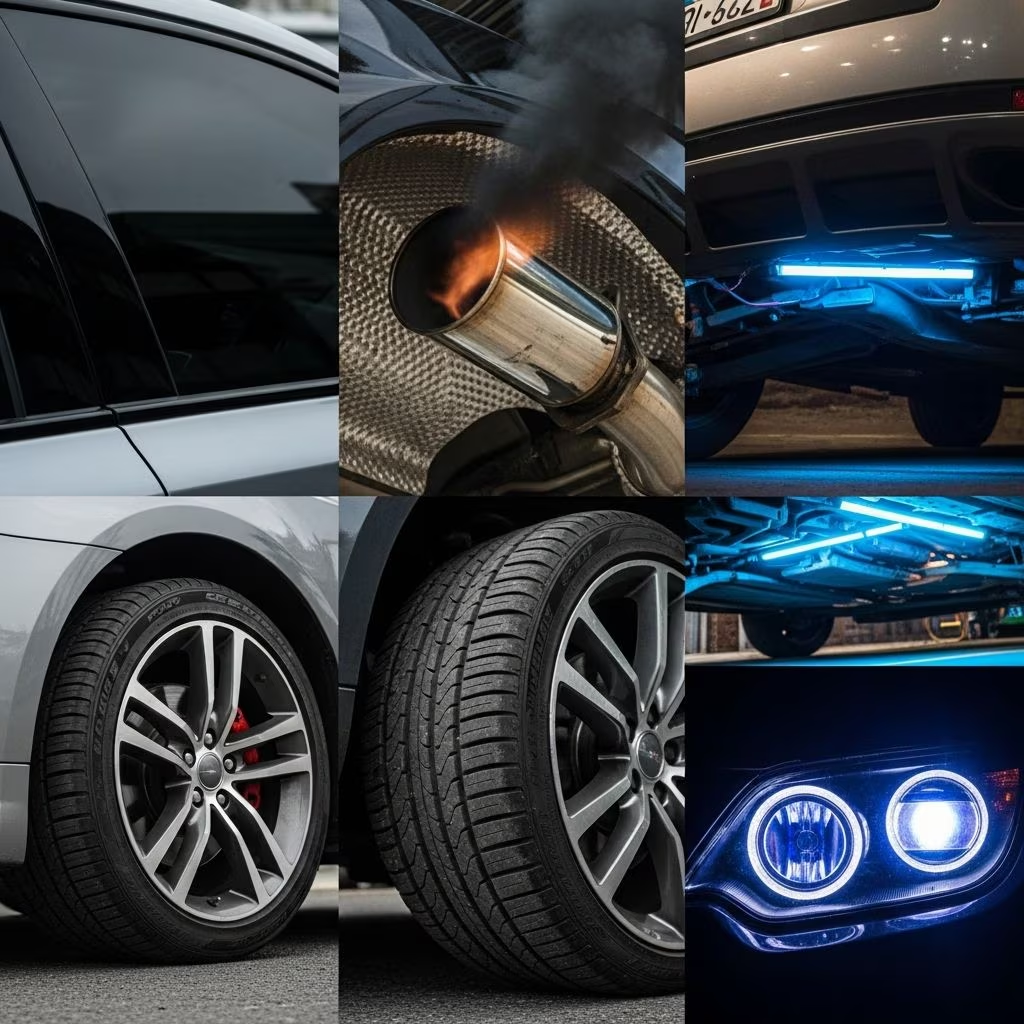
One of the most common infractions involves modifying exhausts for a deeper roar or flame-spitting effects. Removing mufflers, installing straight pipes, or adding flamethrower kits unburns excess fuel dramatically, captivating crowds at car meets but alarming neighbors and police on streets.
These setups exceed noise thresholds—often 95 decibels in many states—violating municipal ordinances and failing emissions tests by bypassing catalytic converters. The EPA prohibits such tampering federally, as it increases pollutants like hydrocarbons and nitrogen oxides. In California, for example, exhaust noise over 95 dB can net a $1,000 fine plus required repairs.
Risks: Distracts other drivers, contributes to noise pollution, and risks backfires igniting nearby dry grass. Legal Alternative: Cat-back systems certified by the manufacturer that maintain stock sound levels and emissions compliance.
2. Suspicious License Plate Concealers
Devices like flip-up covers, reflective sprays, or tinted frames that obscure plates aim to dodge speed cameras and tolls. These ‘James Bond’ gadgets seem clever but are outright banned nationwide as they hinder identification critical for public safety and enforcement.
Most states classify them as misdemeanor offenses, with fines up to $250 and potential jail time for repeat offenders. Even subtle rims partially hiding numbers violate codes requiring full visibility from 60 feet. Law enforcement uses automated systems relying on clear plates, making evasion tools a fast track to impoundment.
- Federal Angle: Interferes with interstate commerce tracking.
- State Variations: Texas bans any cover reducing readability; New York prohibits sprays.
- Detection: Officers spot anomalies during routine stops.
Safe Swap: Illuminated OEM-style frames ensuring constant clarity.
3. Overly Dark Window Tinting and Light Obscuration
Tinting windows beyond legal limits—typically 35% visible light transmission (VLT) for sedans—blocks police views inside and impairs night driving. Tailoring headlights or taillights with black vinyl or sprays further reduces required luminosity, creating accident risks.
Medical exemptions exist for UV sensitivity, but standard tints must allow 70% front side glass transmittance per ANSI Z26 standards. Headlight tinting fails safety certifications everywhere, as it dims beams needed for 500-foot visibility. Fines average $200, with mandatory removal during inspections.
| Window Position | Max Tint (VLT %) | Common Violation |
|---|---|---|
| Windshield | 70% (top 5\” strip) | Full dark film |
| Front Sides | 35-50% | <20% limo black |
| Rear Sides/Back | 20-35% | No medical note |
Pro Tip: Use certified films and get a tint meter check post-install.
4. Radar Jammers and Speed Detection Defeaters
Active jammers emit signals scrambling police radar/laser guns, escalating the cat-and-mouse game illegally. Passive reflectors or license plate mounts also qualify as prohibited under FCC rules banning interference with licensed frequencies.
All 50 states outlaw them, with federal fines up to $10,000 per device plus confiscation. They undermine traffic safety efforts, as undetected speeding contributes to 30% of fatal crashes per NHTSA data. Installation voids warranties and flags vehicles in databases.
Why It Fails: Modern police use instant-on radar defeating jammers. Better Choice: Radar detectors (legal in most states) for awareness, not disruption.
5. Dangerous Suspension Drops and Height Alterations
Slamming cars via coilover kits, air bags sans certification, or removed springs lowers centers of gravity for handling but scrapes undercarriages, bottoms on speed bumps, and impairs turning clearance. California mandates no less than rim height; violations risk control loss on uneven roads.
Air suspensions must retain factory leaf/coil integration for stability inspections. Extreme drops fail fender clearance rules (2 inches minimum) and increase rollover odds. Fixes involve costly lifts and alignments, with tickets from $150 upward.
- Performance Myth: Lowers help tracks, not highways with potholes.
- Legal Path: Adjustable coilovers with DMV approval plates.
Performance Tweaks That Cross the Emissions Line
Beyond aesthetics, power mods like cold air intakes recalibrating mass airflow sensors, nitrous kits, or ECU flashes disabling smog controls boost horsepower but violate EPA anti-tampering laws. Catalytic deletes spike torque 10-20% yet fail sniffer tests, risking registration denial.
States with strict smog (CA, NY) impound non-compliant rides. Track-only cars escape via de-registration, but street use demands adherence.
State-by-State Regulation Snapshot
| Mod Type | California | Texas | Florida |
|---|---|---|---|
| Loud Exhaust | 95 dB max | 92 dB | Muffler required |
| Tint Front | 70% VLT | 25% | 28% |
| Jammers | Banned | Banned | Banned |
| Suspension | Rim height | Frame > bumper | No scrape |
Navigating Inspections and Penalties
Annual safety/emissions checks catch most issues. Pre-inspection audits by certified shops prevent surprises. Appeals exist for disputed fixes, but prevention trumps cure. Insurance hikes 20-50% for mod-related claims underscore financial hits.
Frequently Asked Questions (FAQs)
What happens if I’m caught with illegal mods?
Fines start at $100-500, escalating with priors; vehicles may be towed, requiring certified repairs for release.
Are all aftermarket parts illegal?
No—CARB/EPA-approved ones pass; always verify certifications like SAE labels.
Can I mod for track days?
Yes, deregister for circuit use; swap back plates/parts for street legality.
How do laws differ by state?
Federal baselines apply, but states add noise/tint specifics—consult DMV sites.
What’s the safest customization?
Wheels, paint, interiors without functional changes; aero kits under 3 inches.
Staying Legal While Customizing Responsibly
Customization thrives within bounds: opt for bolt-on certified upgrades enhancing safety and efficiency. Join forums for local intel, document installs, and prioritize engineering over spectacle. Responsible modding preserves freedom to drive without legal drama.
References
- 10 Mods That Are Illegal (And 10 Worth Every Penny) — HotCars. 2023-05-15. https://www.hotcars.com/10-mods-that-are-illegal-and-10-mods-worth-every-penny/
- Top Ten Illegal Vehicle Modifications — M1 Safety Certificates. 2024-02-10. https://m1-safetycertificates.com/top-ten-illegal-vehicle-modifications/
- 10 Car Mods BANNED IN America — YouTube (The Auto Brain). 2023-08-20. https://www.youtube.com/watch?v=yVgEtdnqCaA
- 10 Illegal Mods That Will Make Your Car Run Better — YouTube (Car Guide). 2024-01-12. https://www.youtube.com/watch?v=F1OQ55ov-qM
- Federal Motor Vehicle Safety Standards — NHTSA.gov. 2025-03-01. https://www.nhtsa.gov/equipment/federal-motor-vehicle-safety-standards
- Clean Air Act Vehicle Emissions Standards — EPA.gov. 2025-11-15. https://www.epa.gov/regulations-emissions-vehicles-and-engines