
Reopening a Divorce Case in New Jersey: A Practical Guide
Understand when and how a finalized New Jersey divorce can be revisited, and what legal and practical steps you must take.
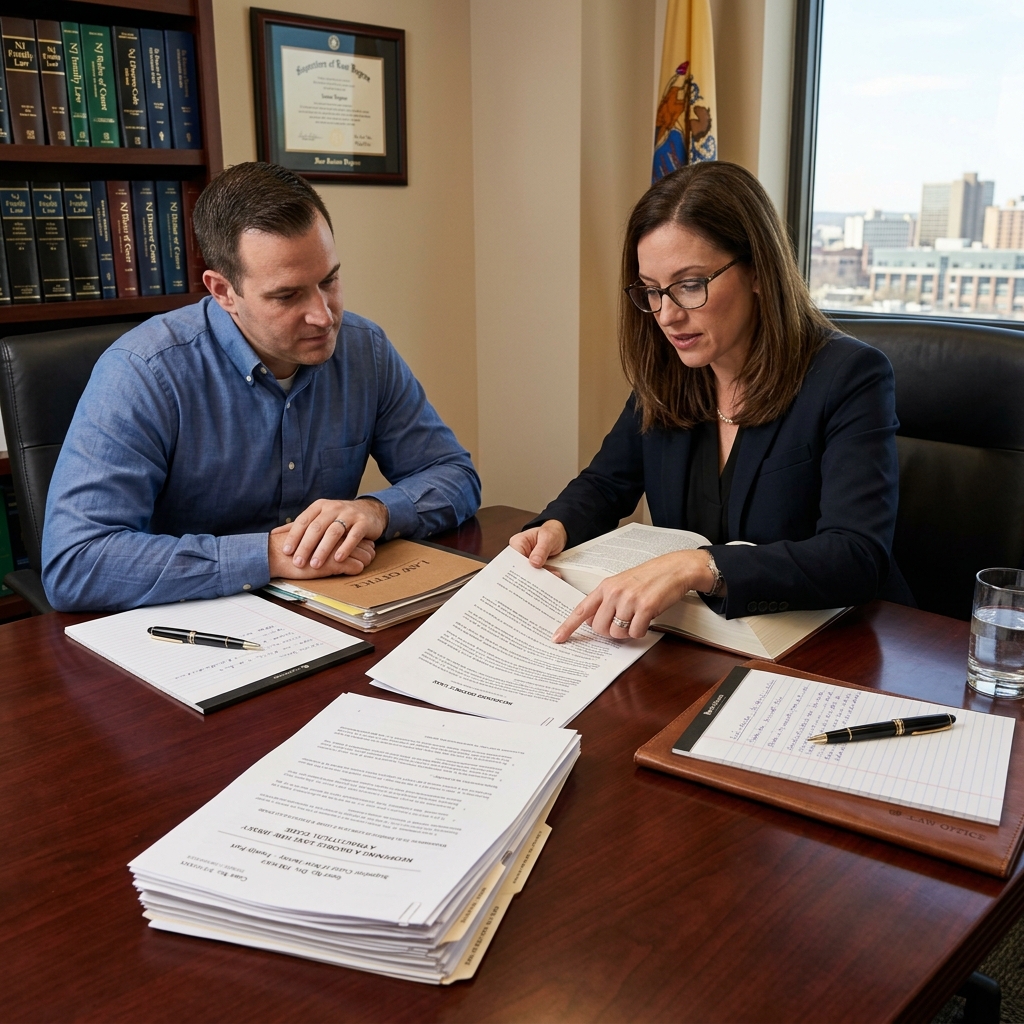
Many people assume that once a divorce judgment is entered, nothing about it can ever be changed. In New Jersey, however, certain parts of a finalized divorce can be challenged, reopened, or modified when specific legal standards are met and proper procedures are followed.
This guide explains when you may reopen a divorce case in New Jersey, the legal grounds, time limits, and step-by-step process, along with practical tips and frequently asked questions. It is for informational purposes only and is not a substitute for legal advice.
1. Final Judgments vs. Modifiable Orders
Before considering reopening a divorce case, it is important to understand what parts of a divorce judgment are truly “final” and what parts are routinely modified after the fact.
1.1 What is a Final Judgment of Divorce?
In New Jersey, the Final Judgment of Divorce (FJD) is the court’s order dissolving the marriage and setting out the terms of:
- Equitable distribution of property and debts
- Alimony or spousal support
- Child custody and parenting time
- Child support
Once entered, this judgment has the force of law and is generally intended to resolve financial and custodial issues on a long-term basis.
1.2 What Can Be Modified Without “Reopening”?
Some aspects of a divorce are inherently subject to change over time. New Jersey law allows post-judgment modifications to certain provisions without fully reopening the entire case.
Commonly modified terms include:
- Child support – can be adjusted upon a substantial change in financial circumstances or the child’s needs.
- Custody and parenting time – may be revised to reflect a child’s best interests as circumstances evolve.
- Alimony – often modifiable if the parties’ incomes or living situations change significantly, depending on the type of alimony awarded.
These changes are requested through post-judgment motions, but they do not necessarily involve setting aside the original judgment. By contrast, reopening a case usually means asking the court to grant relief from the final judgment itself.
2. Legal Basis for Reopening a Divorce in New Jersey
New Jersey courts rely on Rule 4:50-1 of the New Jersey Court Rules, titled “Relief from Judgment or Order,” when deciding whether to reopen or set aside a final judgment of divorce. This rule lists specific grounds that may justify reopening:
| Ground | Plain-language meaning | Typical examples |
|---|---|---|
| Mistake, inadvertence, surprise, or excusable neglect | A significant error or failure that occurred despite reasonable care | Misunderstanding terms; clerical error in the judgment |
| Newly discovered evidence | Important evidence that could not reasonably have been found earlier | Financial documents showing hidden accounts discovered after divorce |
| Fraud, misrepresentation, or other misconduct | Deceptive behavior that affected the outcome | Concealing assets; lying about income or debts |
| Void judgment | A judgment entered without legal authority or jurisdiction | Lack of proper service; court lacked jurisdiction |
| Judgment satisfied or no longer equitable | The judgment has been fully performed or continuing it is unfair | Support order that no longer makes sense due to major changes |
| Catch-all: any other reason | Extraordinary reason justifying relief | Unique hardship or injustice not covered above |
To succeed, the moving party must show strong evidence and explain why enforcing the judgment as written would be unjust or inequitable in light of the rule.
2.1 Fraud and Concealment of Assets
Fraud is one of the most frequently cited reasons for reopening a divorce. Fraud may involve:
- Intentionally hiding bank accounts, investments, or business interests
- Underreporting income or exaggerating debts
- Providing false information on financial disclosure forms
New Jersey courts regard deliberate concealment of assets during divorce proceedings as a serious violation. If proven with documentary or testimonial evidence, the court may reopen the case and recalculate equitable distribution and support based on the accurate financial picture.
2.2 Newly Discovered Evidence
Another basis is newly discovered evidence that could not have been obtained at the time of the original trial or settlement despite reasonable efforts.
Examples include:
- Tax records obtained later that reveal undisclosed income
- Recently found documents proving ownership of property that was omitted
- Records showing that an asset’s value was significantly misrepresented
To qualify under Rule 4:50-1, the evidence must be truly new, material to the outcome, and likely to change the result if the case were reconsidered.
2.3 Mistake, Oversight, and Clerical Error
Some divorces contain genuine errors that are not the result of fraud. These can include:
- Drafting mistakes in the judgment or settlement agreement
- Incorrect figures for asset values or support amounts due to miscalculations
- Missing terms that both parties intended to include
New Jersey courts may grant relief to correct such errors in appropriate cases, particularly when the mistake significantly affects the parties’ rights and obligations.
2.4 Duress or Coercion
A party might also seek reopening if they signed a divorce settlement under duress, meaning wrongful pressure or coercion that overcame their free will.
Indicators of duress can include:
- Threats of harm or severe financial consequences
- Extreme time pressure without opportunity to consult counsel
- Manipulation or intimidation that led to an unfair agreement
Simply regretting a settlement or feeling that you made a poor bargain is generally not enough. There must be evidence of improper conduct that affected your ability to negotiate freely.
3. Time Limits and “Reasonable Time” Standard
Relief from a judgment under New Jersey Rule 4:50-1 must be sought within a reasonable time, and some grounds have specific outer time limits.
3.1 General Time Framework
New Jersey law does not set a simple single deadline for all reopening motions. Instead:
- Motions based on fraud, misrepresentation, or newly discovered evidence must usually be filed within a defined period (often within one year of the judgment for certain Rule 4:50-1 grounds).
- Other grounds, such as a void judgment or extraordinary reasons, may be raised later, provided the delay is still considered reasonable.
What counts as “reasonable” depends on factors such as when the problem was discovered, why it was not raised earlier, and whether the delay prejudices the other party.
3.2 Why Acting Promptly Matters
As time passes, evidence may be lost or memories may fade. Courts are less inclined to reopen old cases when significant time has elapsed without action. Acting quickly when you discover fraud or mistakes increases the likelihood that the court will consider your request.
By contrast, post-judgment modifications of support and custody generally follow different timing rules and can often be filed years later if a substantial change in circumstances occurs.
4. Procedure to Request Reopening
The process for reopening a divorce case in New Jersey begins with filing a motion for relief from judgment in the same court that issued the Final Judgment of Divorce.
4.1 Preparing the Motion
Although specific formatting varies, a typical motion package in New Jersey courts includes several documents.
- Notice of Motion – informs the court and your ex-spouse of what relief you are seeking and when the motion will be heard.
- Certification in Support – your sworn statement describing the facts, including how the original judgment was entered and why it should be reopened, accompanied by exhibits.
- Legal brief or memorandum – explains the legal basis for relief under Rule 4:50-1 and cites relevant law.
- Certification of Service – confirms that you served the motion papers on the other party.
- Proposed form of Order – a draft order for the judge to sign if the motion is granted.
These documents must be filed with the court and properly served on the opposing party, following New Jersey Court Rules.
4.2 Gathering Evidence
Evidence is critical. You will need to provide documents and information that support your claims, such as:
- Tax returns, bank statements, and financial records
- Emails or communications showing concealment or coercion
- Expert valuations of property or businesses
- Prior court filings and the original divorce agreement
Without strong supporting evidence, courts are unlikely to disturb a final judgment.
4.3 Court Review and Possible Hearing
After the motion is filed:
- The judge reviews the motion papers and the opposing party’s response.
- The court may deny the motion based solely on the written submissions or schedule oral argument.
- If the judge believes factual disputes must be resolved, the court may schedule a plenary hearing, where witnesses testify, financial information is reviewed, and evidence is presented.
At the hearing, the judge evaluates whether keeping the judgment in place would be unjust in light of the new information. Outcomes can range from denying relief to partially adjusting the judgment or, in rare cases, substantially restructuring financial and support arrangements.
5. Practical Considerations and Strategy
Reopening a divorce is a complex and potentially costly process. Before proceeding, consider the following strategic points:
5.1 When Reopening May Be Worth Pursuing
You may want to explore reopening if:
- You have clear, credible evidence of fraud or hidden assets.
- The financial impact of the mistake or omission is substantial.
- You discovered new evidence that significantly changes the valuation of assets or income.
- Your standard of living has dropped sharply compared to what was reasonably anticipated based on the original judgment, and there are legal grounds to revisit the agreement.
If the potential financial or custodial benefit is modest compared to the cost and stress of litigation, a targeted modification motion (e.g., for support) may be more practical.
5.2 The Role of Legal Counsel
Because Rule 4:50-1 applications involve detailed factual and legal arguments, consulting an experienced New Jersey family law attorney is highly advisable.
An attorney can:
- Assess whether your situation meets the legal standards for reopening
- Help you gather and organize persuasive evidence
- Draft motion papers and present arguments in court
- Advise whether a modification (rather than reopening) is more appropriate
5.3 Alternatives to Litigation
In some cases, parties can resolve disputes through negotiation or mediation without fully litigating a motion to reopen:
- Using mediation to renegotiate specific terms of support or property division
- Entering into a new consent order reflecting updated terms
- Agreeing to limited discovery to address concerns about assets without revisiting the entire case
While a court order is still needed to formally change a judgment, a mutually agreed solution can reduce conflict and legal expenses.
6. Frequently Asked Questions (FAQs)
6.1 Is being unhappy with my settlement enough to reopen the case?
No. Courts expect parties to live with agreements they voluntarily entered. To reopen, you must show recognized legal grounds such as fraud, newly discovered evidence, or mistake. Mere regret or dissatisfaction is not sufficient.
6.2 Can I reopen my case simply because my ex-spouse’s income increased?
Generally, an increase in income is addressed through a modification of support, not by reopening the entire divorce judgment. New Jersey allows post-judgment changes to support when there is a substantial and continuing change in circumstances.
6.3 What if I just discovered that my ex hid assets years ago?
Hidden assets can be a strong ground for reopening, even after some time has passed, especially if you act promptly upon discovery. However, you must provide solid evidence, and the court will consider whether the delay is reasonable and whether reopening would still be fair to both parties.
6.4 Do I have to go through a full trial again?
Not necessarily. Some motions are decided based on written submissions or brief hearings. However, if the judge finds serious factual disputes, the court may schedule a plenary hearing similar to a mini-trial to resolve those issues.
6.5 Can I handle a motion to reopen on my own?
New Jersey courts permit self-representation, and self-help materials are available for divorce. Still, reopening a case is legally complex, and most people benefit from representation by a family law attorney, especially when substantial assets or support obligations are at stake.
7. Key Takeaways
- A finalized New Jersey divorce is not always the last word; under Rule 4:50-1, relief from judgment is possible in specific circumstances.
- Common grounds include fraud, newly discovered evidence, mistake, and other extraordinary reasons.
- Requests must be made within a reasonable time, and some grounds have specific time constraints.
- The process involves filing a detailed motion, providing strong evidence, and potentially attending a plenary hearing.
- Because of the complexity and stakes involved, professional legal advice is strongly recommended.
References
- New Jersey Court Rules, Rule 4:50-1 – Relief from Judgment or Order — New Jersey Judiciary. 2024-01-01. https://www.njcourts.gov
- Divorce Self-Help Information — New Jersey Courts. 2023-09-15. https://www.njcourts.gov/self-help/divorce
- Possible Scenarios to Reopen a Divorce Case in NJ — Bronzino Law Firm. 2022-06-10. https://www.bronzinolaw.com/possible-scenarios-to-reopen-a-divorce-case-in-nj/
- Can I Reopen My Divorce Case? — New Jersey Divorce Lawyer (Law Office Source). 2009-01-29. https://www.divorcelawyerofnj.com/2009/01/29/can-i-reopen-my-divorce-case/
- Reopening Divorce Case: What You Need to Know — Happ Law Group. 2021-05-01. https://www.happlawgroup.com/faq/reopening-divorce-case-what-you-need-to-know/
- Instructions for Preparing: Motion to Reopen Case — United States Bankruptcy Court, District of New Jersey. 2016-05-01. https://www.njb.uscourts.gov/sites/njb/files/forms/Motion%20to%20Reopen%20Case%20(5-2016).pdf
Similar Articles








Read full bio of Sneha Tete


