
Religious Freedom Behind Bars: When Prisoners Preach
Exploring how U.S. law balances security, rehabilitation, and the right of incarcerated people to lead and participate in religious worship.
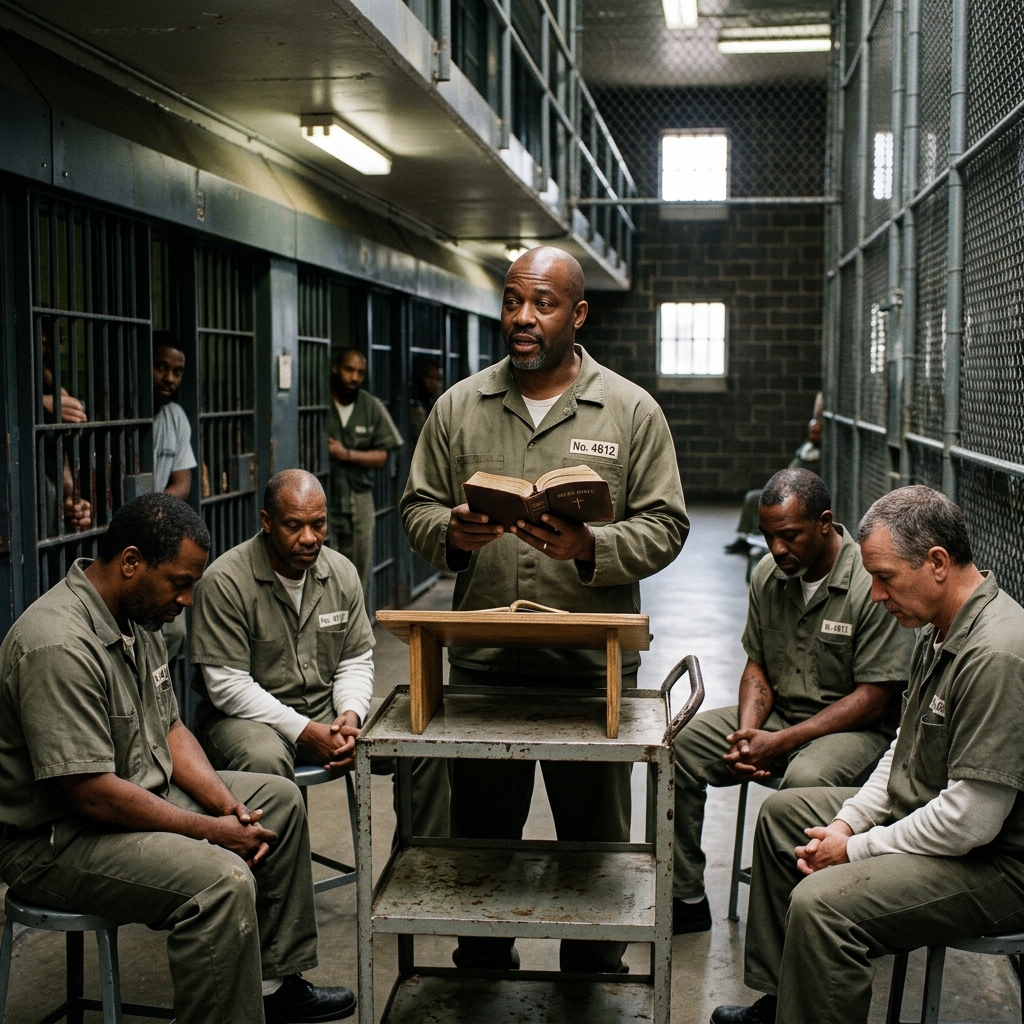
In U.S. prisons, religious faith can be a lifeline, a source of hope, and a powerful force for rehabilitation. Yet when incarcerated people seek not only to worship but also to preach or lead services, complex legal and practical questions arise. How far do constitutional protections extend behind bars? Can a prisoner serve as a lay minister or teacher? And when, if ever, can prison officials lawfully say “no”?
This article explores how U.S. law approaches the religious rights of prisoners, with a focus on those who wish to preach or lead worship. Drawing on constitutional principles, federal statutes, and real-world litigation, it explains where the law strongly protects religious exercise and where prison security and administrative concerns may justify restrictions.
Why Religious Leadership in Prison Matters
Religion plays a significant role in many correctional facilities. Chaplains, volunteers, and incarcerated leaders facilitate worship and spiritual counseling. For some prisoners, especially those serving long sentences, becoming a religious leader is part of their path toward transformation and accountability.
- Spiritual support: Organized worship and teaching provide emotional and moral guidance during incarceration.
- Community-building: Religious groups foster mutual support, often reducing isolation and tensions between prisoners.
- Rehabilitation: For some, religious commitment is tied to abandoning criminal behavior and rebuilding a new identity.
- Continuity of faith: Prisoners who were ministers or lay leaders before incarceration may wish to continue those roles.
However, when religious activity involves leadership by incarcerated people, prison officials may worry about security, the potential for coercion, or conflicts with institutional rules. The legal framework that has developed seeks to balance those concerns with robust protection for religious liberty.
The Constitutional Foundation: Free Exercise in Prison
Outside prison walls, the First Amendment broadly protects the free exercise of religion. Inside prisons, those rights do not disappear, but they are limited by the realities of incarceration. The U.S. Supreme Court has held that prisoners retain constitutional rights, including religious rights, subject to reasonable restrictions related to legitimate penological interests such as security and order.
Under this framework, courts ask whether a prison rule:
- Serves a legitimate and neutral purpose (for example, preventing violence or contraband).
- Is reasonably related to that purpose, not arbitrary or targeted at a particular religion.
- Allows alternative means for religious exercise, even if certain forms (like leadership roles) are restricted.
In practice, this means that prison officials cannot simply ban religious activity or leadership on a whim. But they can regulate how and when prisoners preach if they can show that doing so is reasonably necessary for safety, order, or resource management.
RLUIPA: Stronger Protection for Religious Exercise
Because constitutional standards were often deferential to prison officials, Congress enacted the Religious Land Use and Institutionalized Persons Act (RLUIPA) in 2000 to provide stronger protection for incarcerated people’s religious exercise.
Under RLUIPA, state and local institutions receiving federal funds may not impose a policy that substantially burdens a prisoner’s religious exercise unless they can show:
- The policy furthers a compelling governmental interest (such as preventing serious security threats).
- The policy is the least restrictive means of achieving that interest.
This is a demanding standard. A prison cannot simply assert security concerns in the abstract. It must explain why a particular restriction is truly necessary and why less restrictive alternatives (for example, supervision or limits on group size) would not achieve the same goal.
RLUIPA covers a wide range of religious activities, including worship services, access to religious materials, dietary observance, and participation in religious instruction. In practice, it has been used to challenge policies that block prisoners from accessing clergy, religious literature, or opportunities to practice faith traditions.
Can Prisoners Legally Preach or Lead Services?
In many facilities, incarcerated people play active roles in religious programming. Some prisons allow prisoners to teach Bible study, lead prayer groups, or even deliver sermons under the oversight of chaplains or staff. Legal advocacy has reinforced that such opportunities can be part of the protected exercise of religion.
For example, civil liberties organizations have pursued cases where prisoners were ordained ministers or long-time religious leaders and were suddenly barred from preaching or teaching. In at least one New Jersey case, a settlement restored a Pentecostal prisoner’s right to preach at worship services and teach Bible study classes after officials had revoked those privileges without a valid security justification.
These types of outcomes highlight a few key points about the law:
- Preaching is religious exercise: Courts and advocates recognize that preaching, teaching, and leading worship can be integral parts of a person’s religious practice.
- Restrictions must be justified: When prisons limit a prisoner’s ability to preach solely because of discomfort with the content or the person’s status, they risk violating RLUIPA or constitutional protections.
- Supervision is common: Many institutions impose safeguards, such as staff presence at services or guidelines about proselytizing other prisoners, which are typically allowed when reasonably tailored to security.
Typical Conditions on Prison-Based Preaching
Even when preaching is permitted, it often comes with conditions designed to protect order and safety. Common examples include:
- Requiring authorization from a chaplain or religious coordinator.
- Limiting preaching to designated times and locations.
- Prohibiting speech that incites violence or defiance of lawful orders.
- Restricting the ability to recruit followers in housing units or work assignments.
These conditions are generally lawful so long as they are applied consistently across faiths and do not effectively prevent reasonable opportunities for religious practice.
Security Concerns vs. Religious Rights
Prisons are high-risk environments, and officials must manage tensions, gang influence, and potential conflicts between groups. Religious gatherings, if misused, can sometimes be a platform for exerting undue control over other prisoners or spreading extremist ideology. The law recognizes these concerns but demands evidence-based responses.
| Security Concern | Potential Religious Impact | Legally Acceptable Response |
|---|---|---|
| Fear of gang control via religious groups | Restrictions on who can lead services | Monitoring services, vetting leaders, limiting unsupervised gatherings |
| Risk of incitement or extremist preaching | Limits on topics or speakers | Prohibiting advocacy of violence or contraband while allowing ordinary religious teaching |
| Operational burden (staffing, space) | Reduced number or length of services | Reasonable scheduling and capacity rules, applied neutrally across faiths |
Under RLUIPA, prison officials must demonstrate that any restriction on preaching or religious leadership is narrowly tailored to a genuine problem, and that less restrictive approaches would not work. Blanket bans on prisoner-led worship are more vulnerable to challenge than carefully targeted rules.
Discrimination, Protected Classes, and Religious Organizations
Another layer of complexity arises when a religious organization—such as a church—refuses to allow someone to preach because of their criminal record, including sex offenses. In such situations, people sometimes ask whether anti-discrimination laws provide a remedy.
In general, U.S. civil rights laws protect people from discrimination based on certain protected characteristics such as race, sex, religion, national origin, disability, and age in specific contexts like employment or public accommodations. Criminal history, including sex offender status, is not usually recognized as a protected class for purposes of federal anti-discrimination law.
In addition, the First Amendment’s protection for religious organizations gives churches wide autonomy over internal decisions about who may preach, teach, or hold leadership roles. Courts have recognized a “ministerial exception” that shields religious bodies from many employment discrimination claims involving clergy. This autonomy has been extended broadly to choices about doctrine, leadership, and worship.
As a result:
- A church or religious organization generally cannot be compelled by civil courts to accept a particular person as a preacher or minister.
- Refusal to allow a person with a particular criminal history to preach is not, by itself, unlawful discrimination under most civil rights statutes, unless another protected characteristic is at issue.
- For incarcerated individuals, opportunities to preach usually depend on institutional policies, chaplain decisions, and security assessments rather than on enforceable rights to lead a specific congregation.
Access to Religious Materials and Services
Preaching is only one aspect of religious life in prison. Regulations that limit access to religious materials, worship services, or pastoral care can also raise serious legal issues. The U.S. Department of Justice has brought lawsuits where prison systems imposed blanket bans or unjustified obstacles on religious books and resources.
In one case, the DOJ challenged policies that hindered prisoners’ access to religious literature and study materials, arguing that these rules imposed a substantial burden on religious exercise without adequate justification. The lawsuit was resolved with changes that improved access to religious materials. This illustrates how federal enforcement can reinforce RLUIPA’s protections when institutional policies go too far.
Similarly, civil liberties organizations have negotiated settlements restoring prisoners’ rights to participate in worship or lead religious activities when officials imposed restrictive measures without legitimate reasons.
Key Elements of Protected Religious Access
- Reasonable availability of scriptures and core religious texts, subject to security screening.
- Opportunities to attend services for one’s faith tradition, where attendance is logistically feasible.
- Access to clergy or religious advisors, at least through visits or correspondence when in-person ministry is restricted.
- Non-discriminatory treatment across faiths, so that no group is arbitrarily disfavored in access to services or materials.
Balancing Rights and Responsibilities
Prisoners who wish to preach or act as religious leaders must navigate both legal rights and institutional responsibilities. While the law recognizes preaching as a form of religious exercise, it also expects compliance with prison rules and respect for others’ freedom of belief.
Responsibilities of Prisoners Who Preach
- Following institutional rules about speech, assembly, and program schedules.
- Respecting the beliefs and autonomy of other prisoners, avoiding coercive or harassing conduct.
- Working within oversight by chaplains and staff, who remain responsible for safety.
- Using preaching as a constructive, non-disruptive tool for spiritual growth, not for control or intimidation.
From a legal perspective, prisoners who can demonstrate a longstanding, sincere religious commitment and respectful conduct may have stronger grounds to challenge arbitrary restrictions on their ability to teach or lead worship, especially under RLUIPA. Advocacy organizations frequently emphasize the rehabilitative value of responsible religious leadership in pushing for policy reforms.
Frequently Asked Questions
Do prisoners have a right to practice their religion?
Yes. Prisoners retain the right to freely exercise their religion, subject to restrictions necessary for security and order. The First Amendment and RLUIPA both protect religious practice in prisons, including worship, prayer, dietary observance, and access to religious materials.
Can a prisoner be banned from preaching?
Prison officials may restrict or regulate prisoner-led preaching if they can show that the restriction serves a legitimate security or operational purpose and is narrowly tailored. Under RLUIPA, any policy that substantially burdens religious exercise must be justified by a compelling interest and be the least restrictive means of achieving that interest. Arbitrary bans or bans based on disliking a particular faith are legally vulnerable.
Is preaching considered religious exercise under the law?
Yes. Preaching, teaching, and leading worship are generally recognized as forms of religious exercise. Legal challenges and settlements have affirmed that prisoners’ opportunities to preach can fall within protected religious activity when done sincerely and within institutional rules.
Can someone sue a church for refusing to let them preach because of their criminal record?
In most cases, no. Criminal history, including sex offender status, is not a protected class under typical anti-discrimination laws. Moreover, churches have broad autonomy under the First Amendment to decide who may preach and hold religious offices, and courts rarely interfere with these internal religious decisions.
What should a prisoner do if they believe their religious rights are being violated?
Prisoners can often begin by using internal grievance procedures to document the issue. If that fails, they may seek legal assistance from civil rights organizations or legal counsel. Complaints may focus on violations of RLUIPA, constitutional rights, or inconsistent treatment compared with other religious groups. In some cases, advocacy and litigation have led to policy changes and restored religious privileges.
Practical Takeaways for Advocates and Institutions
For policymakers, advocates, and prison administrators, the law around prisoner preaching offers guidance on how to create fair, legally sound religious programs:
- Recognize religious leadership as protected activity: Treat preaching and teaching as core religious practices, not mere privileges.
- Document security reasoning: When limiting prisoner-led worship, clearly record the specific risks and why less restrictive options are inadequate.
- Ensure equal treatment across faiths: Apply similar standards to all religious groups to avoid claims of discrimination.
- Facilitate constructive ministry: Encourage chaplains and approved prisoner leaders to support rehabilitation and respect for institutional rules.
- Engage with oversight and training: Provide staff with training on RLUIPA and constitutional standards to reduce unlawful restrictions and litigation.
By approaching preaching and religious leadership in prison as both an opportunity for rehabilitation and a legally protected activity, institutions can promote safety while honoring fundamental rights. Incarceration limits liberty, but it does not erase the human need for meaning, community, and spiritual growth.
References
- Pentecostal Prisoner’s Religious Rights Restored in N.J. — American Civil Liberties Union. 2007-05-24. https://www.aclu.org/news/national-security/pentecostal-prisoners-religious-rights-restored-nj
- Can I sue the church I am a member of for not allowing me to preach? — Avvo Legal Q&A (Attorney Answer). 2014-03-10. https://www.avvo.com/legal-answers/can-i-sue-the-church-i-am-a-member-of-for-not-allo-2315664.html
- Do New Jersey Prisoners Have the Right to Preach? — Rutgers Journal of Law and Religion (Nabila Saeed). 2025-11-01. https://rutgersjournaloflawandreligion.com/wp-content/uploads/2025/11/Nabila_Saeed.pdf
- Prisoners Gain Access to Religious Materials, Resolving DOJ Lawsuit — U.S. Department of Justice, Civil Rights Division. 2010-03-31. https://www.justice.gov/crt/prisoners-gain-access-religious-materials-resolving-doj-lawsuit
Similar Articles








Read full bio of medha deb




