
Rain, Floods, and Fine Print: Decoding Water Damage Insurance
Understand how insurers label rain, surface water, and floods so you can fight unfair denials and protect your home.
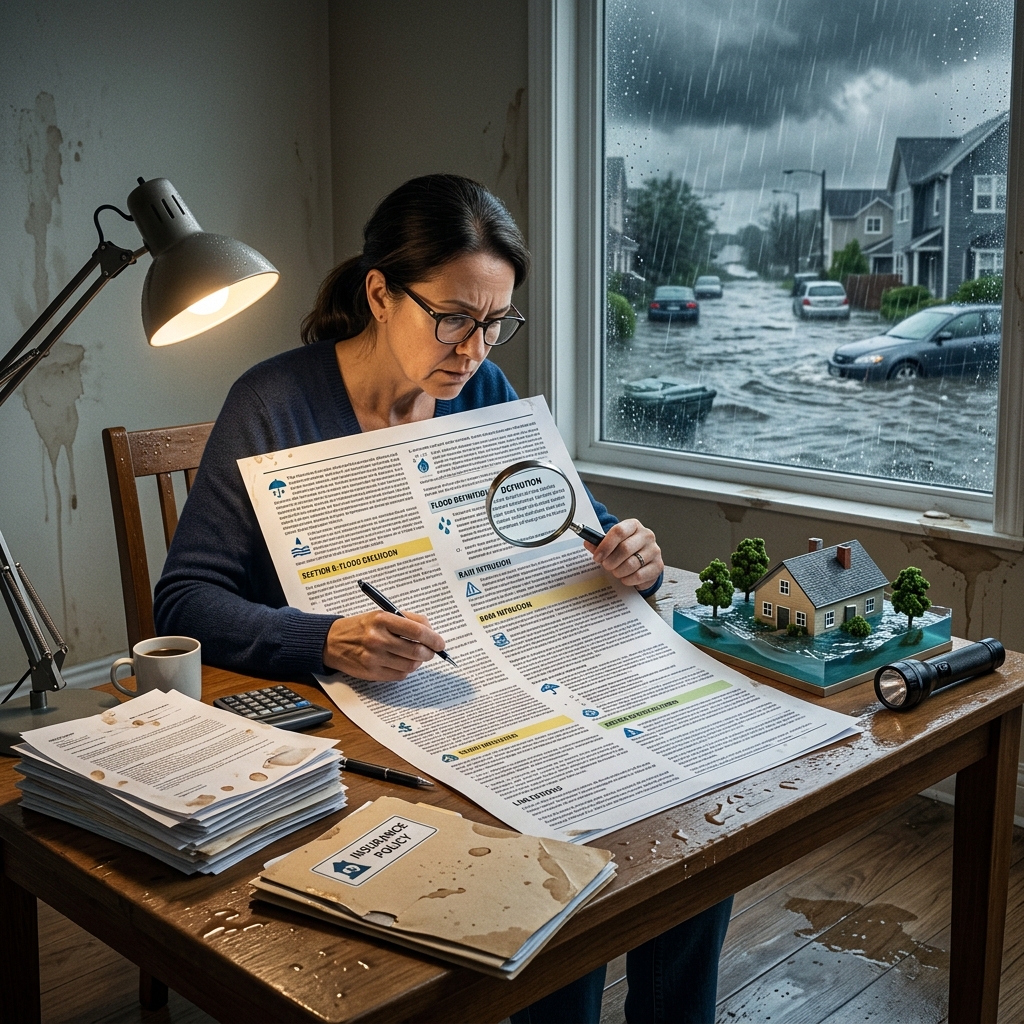
Intense rainstorms and overflowing gutters can turn a dry, comfortable home into a soggy mess overnight. But the real shock often comes later, when the insurance company says your disaster is not a covered loss at all, but just surface water or flooding. Understanding how insurers use policy language to deny or limit water damage claims is essential if you want to protect your home and your finances.
This guide unpacks the language of water damage exclusions, the difference between covered and excluded water events, and practical steps you can take before and after a loss to strengthen your position.
Why Water Damage Claims Are So Controversial
Water damage is one of the most common and expensive types of property insurance claims, but it is also one of the most heavily limited by exclusions and technical definitions.
- High frequency: Heavy rain, plumbing failures, and roof leaks can occur in any climate.
- High cost: Water can damage structure, contents, and cause long-term mold and rot.
- Complex causes: A single incident may involve rain, poor drainage, roof defects, and rising groundwater all at once.
- Ambiguous language: Terms like “flood,” “surface water,” and “seepage” are often undefined or vague.
These factors create fertile ground for disputes, especially when an insurer relabels what you call “storm damage” as “excluded flood” to avoid paying the claim.
Key Insurance Terms You Must Understand
Most homeowners policies distinguish water losses based on the water’s source and path into the home. The same volume of water can be covered in one scenario and excluded in another.
Covered Water Events (Typical)
| Type of Water Event | Typical Treatment | Example |
|---|---|---|
| Sudden & accidental internal discharge | Often covered under homeowners insurance if not due to neglect. | A pipe bursts behind a wall and floods your living room. |
| Roof leak from covered peril | Often covered when caused by windstorm, hail, or similar peril. | High winds rip shingles off; rain enters through the damaged area. |
| Wind-driven rain through sudden opening | Often covered if wind damage is the primary cause. | A storm breaks a window and rain blows inside, soaking floors and walls. |
Commonly Excluded Water Events
- Flood: Generally defined as water that inundates normally dry land, often from rivers, storm surge, or heavy rain pooling over an area.
- Surface water: Water traveling or standing on the ground before entering the home, such as runoff collecting around the foundation.
- Groundwater seepage: Water that permeates through soil, foundations, or basement walls over time.
- Neglect and long-term leaks: Damage from unrepaired, slow leaks or poor maintenance rather than sudden events.
Standard homeowners policies almost always exclude flood damage and many forms of water entering from the ground, even if the immediate trigger is a severe rainstorm.
Rain vs. Surface Water: How Wording Changes Outcomes
One of the most frustrating experiences for policyholders is learning that rain damage may be covered in one scenario but treated as excluded surface water in another, even when the same storm is involved.
When Rain Damage Is Often Covered
Homeowners insurance generally helps when water damage is tied to a sudden, specific peril listed in the policy.
- Windstorm or hail breaks your roof or window, and rain immediately enters through that opening.
- Ice dam formation on the roof causes trapped water to back up and leak into the attic.
- Firefighting water used to put out a fire causes water damage.
In these situations, insurers often treat the storm or covered peril as the primary cause, and the water as a secondary, covered consequence.
When the Same Rain Becomes “Surface Water”
The coverage picture changes dramatically when rainwater hits the ground first and then enters your home.
- Water running across the yard toward your house and seeping into the basement.
- Rain accumulating in low spots near the foundation and then leaking through walls or floor.
- Street runoff flowing over curbs and into ground-level entrances.
Insurers often classify this as surface water or flood, which standard homeowners policies typically exclude, even when the cause is an intense storm.
Flood Insurance and the Role of the NFIP
Because standard homeowners insurance excludes flood damage, many property owners must rely on separate flood coverage, often through the National Flood Insurance Program (NFIP) or private insurers.
How Flood Is Defined for Coverage
NFIP guidance explains that a flood generally involves an overflow of water onto normally dry land affecting at least two properties or two acres. This can happen through:
- Overflowing rivers or streams.
- Coastal storm surge.
- Heavy rainfall that collects and inundates an area.
That means what looks like rainwater in your basement may legally be “flood water” if it is part of a broader neighborhood inundation rather than an isolated plumbing issue.
Why You Might Need Both Policies
In many risk-prone areas, one policy is not enough:
- Homeowners insurance for wind, fire, theft, and many internal water damages.
- Flood insurance for rising water, storm surge, and neighborhood-wide flooding.
Relying on homeowners insurance alone can leave large gaps in protection if intense rainfall leads to flooding or surface water accumulation around your home.
Typical Reasons Water Damage Claims Get Denied
Even when you believe your loss is clearly covered, insurers may point to policy language to limit or deny the claim. Common rationales include:
1. Recasting the Loss as Flood or Surface Water
Insurers may argue that the real cause of the damage was:
- Flooding from heavy rain affecting multiple properties.
- Surface water pooling or flowing on the ground before entering the building.
By reframing a “rainstorm loss” as a “flood loss,” the insurer can invoke exclusions and avoid paying under the homeowners policy.
2. Alleged Neglect or Lack of Maintenance
Homeowners insurance is designed to cover sudden and accidental damage, not gradual problems due to poor maintenance.
- Old, worn roofing that has leaked slowly over time.
- Unrepaired cracks in the foundation or exterior walls.
- Known plumbing leaks left unattended.
If an insurer can frame the loss as the result of long-term neglect rather than a sudden event, it may deny the claim or substantially reduce its value.
3. Slow Seepage vs. Sudden Discharge
Many policies exclude damage from repeated seepage or leakage occurring over weeks or months. Evidence of staining, mold, or dry rot may be used to argue that water has been present for some time, even if you only discovered it recently.
4. Policy Limits, Deductibles, and Endorsements
Even when coverage exists, the insurer may rely on:
- Special sub-limits for water backup or basement damage.
- High deductibles for wind or hurricane-related claims.
- Missing endorsements for sewer backup or sump pump failure.
Understanding these details before a loss helps you anticipate out-of-pocket costs and whether additional endorsements are worth purchasing.
Steps to Strengthen Your Position Before a Loss
You cannot control the weather, but you can reduce both the chance of water damage and the likelihood of a successful denial.
1. Read and Clarify Your Policy Now
- Locate the water damage, flood, surface water, and seepage provisions.
- Ask your agent to explain in plain language how rain-related claims are handled.
- Determine whether you need separate flood insurance or endorsements for sewer backup or sump pump failures.
2. Maintain Roofs, Gutters, and Drainage
Maintenance not only prevents damage, it also removes a common excuse for denial based on neglect.
- Inspect and repair roofing, flashing, and caulking.
- Clean gutters and downspouts and direct water away from the foundation.
- Regrade soil where necessary so water flows away from the home.
- Address cracks in foundations and basement walls proactively.
3. Keep Evidence of Upkeep
Save invoices, photos, and inspection reports that show you have maintained your property. If a dispute arises, this history can undermine claims that your damage was caused by long-term neglect.
What to Do Immediately After Water Damage
Your actions in the hours and days after a water incident can strongly influence the outcome of your claim.
1. Protect Safety First
- Turn off electricity to affected areas if water is near outlets or electrical equipment.
- Avoid walking through standing water if you are unsure about contamination or hidden hazards.
2. Stop Further Damage
- Shut off the main water supply if a pipe or appliance is leaking.
- Cover damaged roof areas with tarps if it is safe to do so.
- Move undamaged belongings to dry areas.
Most policies require you to take reasonable steps to protect the property from additional harm.
3. Document Everything
- Take extensive photos and videos before discarding anything.
- Capture where the water appears to be coming from and how far it has spread.
- Keep a written timeline of when you discovered the damage and what you did next.
4. Notify Your Insurer Quickly
Contact your insurer as soon as possible to report the loss and ask about next steps in the claim process. Note the claim number, the names of people you speak with, and any instructions they give.
5. Consider Professional Help
- Restoration companies can help dry and clean the area to prevent mold.
- Independent contractors can provide repair estimates.
- Legal or public adjuster assistance may be helpful for complex or disputed claims.
Challenging an Unfair Water Damage Denial
If your insurer denies coverage, you are not required to accept the decision without question. Many disputes center on whether the real cause was a covered peril (like wind-driven rain) or an excluded one (like flood).
1. Request the Denial in Writing
Ask for a written explanation citing the specific policy language relied on in denying your claim. This document becomes the starting point for any appeal or legal review.
2. Compare Facts to Policy Language
- Did a covered peril (such as wind) destroy part of your roof or siding before water entered?
- Is the insurer ignoring evidence of a sudden event and instead focusing on minor pre-existing conditions?
- Does the policy define key terms like “flood,” “surface water,” or “seepage,” and do those definitions truly fit your situation?
3. Gather Independent Evidence
- Weather reports showing storm intensity and wind speeds.
- Contractor opinions linking the damage to sudden storm impacts rather than long-term issues.
- Photos taken immediately after the loss, especially of exterior damage.
4. Use Internal Appeals and External Help
If informal discussions with the adjuster do not resolve the issue, you may:
- File a formal internal appeal with the insurer.
- Submit a complaint to your state insurance regulator or consumer protection office.
- Consult with an attorney or a licensed public adjuster for complex or high-value claims.
Practical FAQ: Rain, Surface Water, and Your Policy
Does homeowners insurance cover rain coming through the roof?
Often yes, if a sudden event like wind or hail caused roof damage and allowed rain to enter. If the roof was already in poor condition and leaking over time, the insurer may deny coverage based on wear and tear or neglect.
What if my basement floods after heavy rain?
Water entering from outside and pooling in the basement is frequently treated as flood or surface water, which is usually excluded under standard homeowners policies. Separate flood insurance is typically required to cover this type of loss.
Is wind-driven rain always covered?
Not always. Wind-driven rain is more likely to be covered when it enters through a storm-created opening, like a broken window or damaged roof. If water simply blows under door gaps or through small existing cracks, insurers may argue it is not a sudden, accidental covered event.
Are slow leaks from plumbing covered?
Homeowners insurance usually covers sudden and accidental leaks, such as a pipe that bursts unexpectedly. Long-term seepage from a small, unrepaired leak is often excluded as a maintenance issue.
How can I tell if I need flood insurance?
You may need flood insurance if your home is in an area where heavy rains, rivers, or coastal storms can cause rising water or pooling around buildings. Speaking with your insurance agent or reviewing flood risk maps can help you evaluate your exposure.
Key Takeaways for Homeowners
- Coverage often hinges on whether water came from inside the house (e.g., burst pipes) or from outside as flood or surface water.
- Rain connected to a covered peril (such as wind damage to a roof) is more likely to be covered.
- Standard homeowners insurance does not cover flood damage; separate flood insurance is usually needed.
- Maintenance, documentation, and quick action after a loss significantly affect claim outcomes.
- Policy language is negotiable in practice—question denials that seem to stretch definitions of flood or surface water.
References
- Does Home Insurance Cover Water Damage From Rain? — Policygenius. 2024-01-10. https://www.policygenius.com/homeowners-insurance/does-homeowners-insurance-cover-water-damage-from-rain/
- Wind-Driven Rain: What Is It and Does Your Insurance Cover It? — Merlin Law Group. 2021-09-15. https://www.merlinlawgroup.com/wind-driven-rain/
- Does Homeowners Insurance Cover Water Damage? — Progressive. 2023-08-01. https://www.progressive.com/answers/does-home-insurance-cover-water-damage/
- Does Homeowners Insurance Cover Water Damage? — Allstate. 2023-05-12. https://www.allstate.com/resources/home-insurance/water-damage
- Does Homeowners Insurance Cover Water Damage? — U.S. News & World Report. 2023-06-28. https://www.usnews.com/insurance/homeowners-insurance/does-homeowners-insurance-cover-water-damage
- Does Insurance Cover Water Damage? — Bravera Bank. 2022-04-05. https://www.bravera.bank/insurance/water-damage
- The Cause of Flooding Matters for NFIP Coverage — FloodSmart.gov (FEMA/NFIP). 2021-07-20. https://agents.floodsmart.gov/articles/cause-flooding-matters-nfip-coverage
Similar Articles








Read full bio of Sneha Tete




