
Pulled Over for No Clear Reason: Know Your Rights
Understand when police can stop your car, what you must do, and how to safely protect your legal rights during any traffic stop.
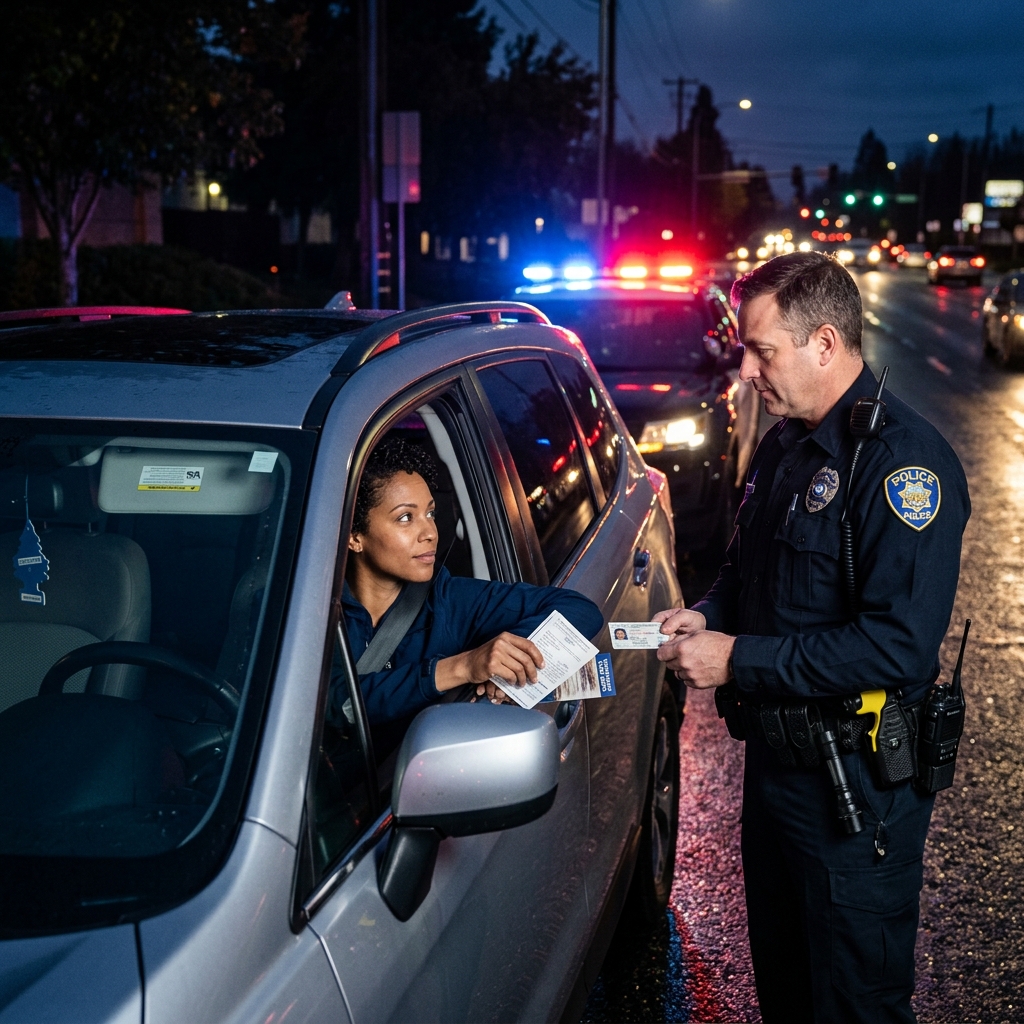
Being stopped by the police when you do not believe you did anything wrong is stressful, confusing, and sometimes frightening. Yet traffic stops are one of the most common ways people interact with law enforcement. Understanding when officers are allowed to stop your vehicle, what your rights are during the encounter, and how to respond calmly but firmly can make a major difference for your safety and any legal case that may follow.
1. When Can Police Legally Pull You Over?
In the United States, officers cannot legally stop your car for no reason at all. The U.S. Constitution’s Fourth Amendment protects you against unreasonable searches and seizures, and a traffic stop is considered a seizure of the driver and passengers. To initiate a stop, an officer generally must have at least reasonable suspicion that a traffic law or other criminal law has been violated.
1.1 The Legal Standard: Reasonable Suspicion vs. Probable Cause
Two related standards control police authority during traffic encounters:
- Reasonable suspicion – A lower threshold that allows officers to stop a vehicle based on specific, articulable facts suggesting that a law has been or is being broken.
- Probable cause – A higher standard required for actions such as searches or arrests; it exists when the facts and circumstances would lead a reasonable person to believe a crime has been committed.
For a basic traffic stop, reasonable suspicion usually suffices. Examples include observing speeding, swerving between lanes, a broken taillight, or an expired registration sticker.
1.2 Common Reasons Officers Use to Justify a Stop
Even if you feel the stop is unfair, it is helpful to understand typical reasons officers cite:
- Speeding or running a red light or stop sign
- Broken headlights, taillights, or turn signals
- Obstructed license plate or missing registration tags
- Swerving, drifting lanes, or other signs of impaired driving
- Failing to signal a turn or lane change
- Not wearing a seat belt where required by law
Sometimes, an officer may have a minor legal basis but is really interested in another suspected offense; this is known as a pretextual stop. Courts have generally held that such stops are lawful as long as a legitimate traffic violation exists, even if the officer’s true motive is different.
1.3 What About “No Reason” at All?
In theory, stopping a car without any reason can violate the Fourth Amendment and may allow a court to suppress evidence gathered during that encounter. In practice, however, officers may claim they observed something suspicious, even if you disagree, and that claimed reason may be enough to justify the stop in court.
| Action | Required Legal Standard | Examples |
|---|---|---|
| Initial traffic stop | Reasonable suspicion | Speeding, running a light, swerving, broken light |
| Vehicle search (without warrant) | Probable cause | Smell of drugs, visible contraband, admission of wrongdoing |
| Arrest | Probable cause | Evidence of DUI, drugs, or other criminal offense |
2. Immediate Steps to Take When You’re Pulled Over
Once you see police lights or hear a siren behind you, your first priority is safety—for yourself, your passengers, and others on the road. The way you handle the first moments can set the tone for the entire encounter.
2.1 Stopping Safely
- Turn on your turn signal to show that you acknowledge the officer.
- Pull over to the right side of the road or another safe, well-lit location as soon as it is reasonably possible.
- Put the vehicle in park, turn off the engine, and keep your hands visible—commonly on the steering wheel.
Sudden or unusual movements can heighten an officer’s concern. Staying calm and moving deliberately reduces the risk of misunderstanding.
2.2 How to Conduct Yourself
- Remain polite and avoid hostile language or gestures, even if you feel wronged.
- Wait for the officer to ask for documents before reaching into pockets, bags, or compartments.
- When you do reach for items, explain your actions first: for example, “I’m going to get my registration from the glove box.”
- Stay in the vehicle unless the officer instructs you to step out.
Although the law protects you from unreasonable seizures, officers are also allowed to take steps they consider necessary for safety. Calm behavior can decrease tension and may help avoid escalation.
3. Documents and Information You Must Provide
During a routine traffic stop, you are generally required to provide certain basic information. Refusing to provide these items can itself lead to legal consequences.
3.1 Required Identification and Vehicle Documents
- Driver’s license – proof you are legally allowed to operate the vehicle.
- Vehicle registration – proof the vehicle is properly registered.
- Proof of insurance – required in most states.
Keep these documents in an easily accessible place so you are not digging through bags or clutter when an officer is standing at your window.
3.2 Answering Basic Identification Questions
In some states, you may be required to state your name or confirm your identity if asked by an officer during a lawful stop. However, beyond basic identification, you have significant rights to remain silent and avoid answering questions that could incriminate you.
4. Your Right to Remain Silent and Avoid Self-Incrimination
The Fifth Amendment to the U.S. Constitution protects you from being forced to incriminate yourself. That right applies during traffic stops just as it does during more serious criminal investigations.
4.1 Common Questions You Can Decline to Answer
Officers often ask questions such as:
- “Do you know why I pulled you over?”
- “Where are you coming from?” or “Where are you going?”
- “Have you been drinking or using any drugs?”
While you should avoid lying, you are not required to admit wrongdoing or provide detailed information that could later be used against you. You may respond with neutral statements such as:
- “I prefer not to answer any questions.”
- “I would like to remain silent.”
- “I’d like to speak with a lawyer before answering.”
Courts can treat your statements during a stop as admissions of guilt, so choosing words carefully—or declining to answer altogether—can protect you.
5. Searches of Your Vehicle: Consent, Warrants, and Probable Cause
A critical aspect of traffic stop rights is knowing when officers can search your car, and when you can say no. The Fourth Amendment generally requires a warrant for searches, but several exceptions apply to vehicles.
5.1 Your Right to Refuse Consent
Unless the officer has a warrant or probable cause, you usually have the right to decline a voluntary search of your vehicle.
- If an officer asks, “Do you mind if I look in your car?” you may respond, “I do not consent to any searches.”
- Refusing consent does not give the officer probable cause by itself.
- Stay calm and non-confrontational when declining; raising your voice or making threats can escalate the situation.
5.2 When Officers Can Search Without Your Consent
Officers may legally search your car without consent in several circumstances:
- They have probable cause that the vehicle contains evidence of a crime—for example, the smell of marijuana or visible contraband.
- They have a valid warrant authorizing the search.
- Items are in plain view, meaning the officer can see them without entering or moving anything inside the vehicle; such items can be seized under the “plain view” doctrine.
Understanding these limits helps you distinguish between a lawful search and one you may later challenge in court.
6. Staying Safe While Preserving Your Legal Options
Even if you are certain the stop is unfair or unlawful, arguing aggressively with an officer on the roadside is both risky and unlikely to help. Legal challenges happen later, in court or through a complaint process—not at the scene.
6.1 De-Escalation Principles
- Keep your voice steady and calm.
- Avoid sudden movements that could be misinterpreted as threatening.
- Do not physically resist, even if you believe the officer is acting improperly.
- Focus on compliance with lawful commands while asserting your rights verbally.
Some civil rights organizations emphasize that staying calm and non-hostile can reduce risk to you, particularly in tense or rapidly developing situations.
6.2 Asserting Rights Without Escalating
You can often assert key rights in simple, measured phrases, such as:
- “Officer, am I being detained, or am I free to go?”
- “I don’t consent to any searches.”
- “I choose to remain silent and want to speak with a lawyer.”
Using clear but respectful language helps ensure that if the encounter is later reviewed, you appear reasonable and consistent in asserting your rights.
7. After the Stop: Documenting and Challenging Possible Misconduct
If you believe you were stopped without a valid reason, treated unfairly, or subjected to an unlawful search, the most effective response usually occurs after the encounter ends.
7.1 Collecting Information
As soon as practical after the stop, write down everything you can remember, including:
- Date, time, and location of the stop
- Officer’s name and badge number, if known
- Patrol car number or agency
- What the officer said was the reason for the stop
- Any searches conducted and whether you consented
- Names and contact information of witnesses, if any
Clear notes taken close to the event can be very helpful if you later challenge a citation or file a complaint.
7.2 Consulting a Lawyer
If you received a ticket, were arrested, or had your vehicle searched, it is wise to speak with an attorney experienced in traffic or criminal defense law. Lawyers can evaluate:
- Whether the officer had reasonable suspicion or probable cause
- Whether any evidence might be suppressed due to an unconstitutional stop or search
- Whether you should contest the citation in court
If you cannot afford an attorney and are charged with a crime, you may have the right to a court-appointed lawyer.
7.3 Filing a Complaint
When you believe an officer violated your rights, you may be able to file a written complaint with the police department’s internal affairs unit or a civilian oversight board. Many agencies accept complaints from the public, sometimes even anonymously.
8. Frequently Asked Questions (FAQs)
8.1 Can police really pull me over for “no reason”?
Legally, officers must have at least reasonable suspicion that a law has been violated to stop your vehicle. A stop conducted with no factual basis can be challenged as unconstitutional, and evidence from such a stop may be excluded in court. However, officers may claim they observed something that justifies the stop, so documenting what happened is important.
8.2 Do I have to answer the officer’s questions?
You must generally provide identification and basic documents, but you do not have to answer questions that could incriminate you. The Fifth Amendment gives you the right to remain silent, and you can politely state that you prefer not to answer questions or that you want to speak to a lawyer first.
8.3 Can the officer search my car without my permission?
Officers may not lawfully search your vehicle solely because you are stopped; they need either your consent, a warrant, or probable cause that the vehicle contains evidence of a crime. You can decline consent, but if the officer believes there is probable cause—for example, due to the smell of drugs or items in plain view—they may conduct a search without your permission.
8.4 What should I do if I think the stop was discriminatory?
If you believe you were stopped based on race, ethnicity, or other improper factors rather than a legitimate traffic issue, carefully document the encounter and speak with an attorney or a civil rights organization. They can advise you on possible complaints, civil actions, or policy advocacy aimed at addressing discriminatory enforcement.
8.5 Can I record the traffic stop?
In many jurisdictions, you may legally record officers performing their duties in public, as long as you do not interfere with the encounter or violate other laws. Civil liberties groups generally support the right to record as a way to preserve evidence of what happened. However, always check local law and keep your device use safe and non-confrontational.
References
- Can Police Pull You Over For No Reason? — DMT Law. 2023-05-10. https://www.dmtlaw.com/blog/can-police-pull-you-over-for-no-reason/
- Your Rights When Pulled Over By The Police in Mississippi — Hopson Law Firm. 2022-08-15. http://hopsonlawfirm.net/your-rights-when-pulled-over-by-the-police-in-mississippi/
- Getting Pulled Over: Laws and Rights — FindLaw. 2021-11-03. https://www.findlaw.com/traffic/traffic-stops/getting-pulled-over.html
- Stopped by Police — American Civil Liberties Union (ACLU). 2022-07-01. https://www.aclu.org/know-your-rights/stopped-by-police
- Can a Cop Pull You Over for No Reason in Virginia? — Andrew Flusche, Attorney at Law. 2023-02-20. https://www.andrewflusche.com/blog/can-cop-pull-no-reason/
Similar Articles








Read full bio of Sneha Tete




