
Publicly Shaming Your Child: Discipline, Law, and Harm
Exploring when public humiliation crosses the line from questionable parenting choice into potential child endangerment and emotional abuse.
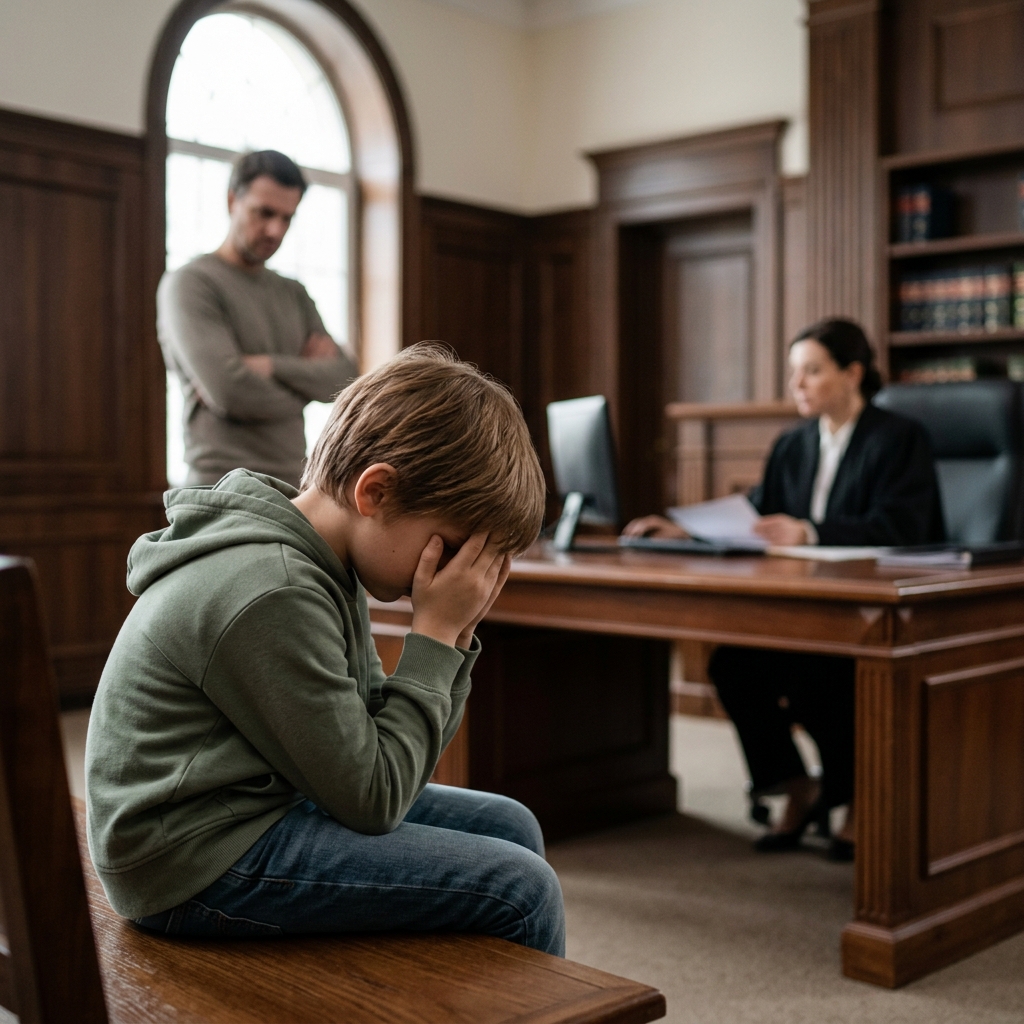
Publicly humiliating a child as punishment has become more visible in recent years, especially through viral social media posts and videos. Some parents see these tactics as a way to “teach a lesson” that will never be forgotten. Others view public shaming as cruel, harmful, and possibly illegal. This article examines how these practices intersect with criminal law, child protection standards, and child psychology, and offers practical alternatives that promote accountability without humiliation.
What Does “Public Shaming” of a Child Mean?
Public shaming usually involves a parent or caregiver deliberately exposing a child’s misbehavior to an audience in order to embarrass or humiliate them. Legal research on public humiliation defines it as announcing or displaying a wrongdoing in a way designed to degrade someone in front of many peers or strangers, either in person or online.
- Offline examples: making a child stand on a street corner with a sign describing their misbehavior, forcing them to wear clothing or signs that highlight a rule they broke, yelling at them harshly in a crowded store.
- Online examples: posting photos or videos of the child and their alleged misconduct on social media, live-streaming a severe scolding, sharing private details about the child’s mistakes to a wide audience.
Researchers studying public shaming describe it as an attempt to punish a perceived moral transgression by criticizing or punishing the person in a way that other people will see. When the target is a child, that humiliation is layered on top of an already unequal power relationship.
Is Public Shaming by Parents a Crime?
In most jurisdictions in the United States, there is no statute that simply says, “It is illegal to embarrass or shame your child.” Criminal law tends to focus on physical harm, serious neglect, or situations that place a child at significant risk. Generally speaking, public humiliation by itself is not prohibited the way physical assault or severe neglect are.
However, the situation becomes more complex when public shaming:
- Occurs in a dangerous environment.
- Involves prolonged or extreme humiliation.
- Is part of an ongoing pattern of emotional abuse.
State child abuse statutes often include mental harm or emotional injury as part of the legal definition of abuse, even if no physical injury occurs. In those systems, a prosecutor may bring child abuse charges if they can show that a caregiver’s conduct caused lasting psychological or emotional damage to the child, and can prove a cause-and-effect relationship between the conduct and the harm.
Where Child Endangerment Comes In
One of the clearest criminal law hooks is child endangerment. Many states have laws that make it a crime to place a child in a situation that could reasonably lead to injury or serious risk of harm. Parents who put their children in dangerous situations, even for disciplinary reasons, may be guilty of child endangerment.
Public shaming can cross that line when, for example:
- A child is left unsupervised on a busy street corner to hold a punishment sign.
- The parent encourages strangers to harass or mock the child.
- The child is exposed to traffic, severe weather, or other unsafe conditions during the punishment.
In those circumstances, it is not the embarrassment itself, but the physical risk and lack of adequate supervision that can trigger criminal liability.
Government Punishment vs. Parenting Choices
Debates about public shaming often mention the Eighth Amendment, which bars the government from imposing cruel and unusual punishment. Courts have long limited extreme public humiliation sanctions imposed by judges or correctional authorities. However, the constitutional protection applies to state action, not private discipline by parents. The Eighth Amendment does not directly regulate how parents discipline their own children.
Legally speaking, this creates a distinction:
| Actor | Constraints | Relevance to Public Shaming |
|---|---|---|
| Courts / Government | Bound by constitutional protections like the Eighth Amendment and due process. | Cannot impose extreme humiliating punishments that are cruel or unusual. |
| Parents / Caregivers | Not directly governed by the Eighth Amendment, but subject to child abuse and endangerment laws. | May use many forms of discipline unless they cross into abuse, neglect, or endangerment. |
The fact that a punishment might be unconstitutional for a judge to impose does not automatically mean a parent cannot use something similar. Instead, child welfare law, criminal statutes, and family courts are the mechanisms that restrict severe or harmful discipline at home.
When Public Shaming May Be Considered Emotional Abuse
Psychologists and child advocates increasingly describe humiliation-based discipline as a form of emotional or psychological abuse, especially when it is repeated, intense, or targeted at a child’s identity rather than their behavior.
Some key features that raise concern include:
- Global negative messages: comments that label the child as bad, useless, or hopeless, rather than criticizing a specific action.
- Chronic criticism: frequent public calling out, name-calling, or ridicule that becomes part of family culture.
- Loss of trust: using private information or vulnerabilities as content for public humiliation.
Child health professionals emphasize that shaming affects how kids see themselves and their core sense of worth. Repeated public criticism can contribute to anxiety, depression, difficulties with emotional regulation, and damaged self-esteem. Over time, children may develop negative self-talk such as, “I’m not good enough.”
While not every instance of embarrassment will rise to the level of criminal child abuse, sustained humiliation can draw the attention of child protective services, especially if mental health professionals document lasting harm.
Psychological Consequences of Public Humiliation
Research on public humiliation and shaming indicates that the emotional consequences can be severe, including long-term damage to social standing and mental health. When the person being shamed is a child—someone still developing identity, coping skills, and social confidence—the impacts can be magnified.
Short-Term Effects
- Intense embarrassment and fear: Children may feel overwhelmed, ashamed, and terrified of repeating the incident.
- Anger or resentment: Humiliation can quickly turn into anger at the parent, undermining the lesson the parent intended.
- Social withdrawal: Kids who are publicly shamed may avoid peers, school events, or activities where they fear being mocked.
Long-Term Effects
Evidence from child psychology and hospital-based counseling supports several broader risks:
- Anxiety and depression: Repeated public criticism and humiliation increase the likelihood of mood and anxiety disorders.
- Negative self-image: Children begin to internalize shaming messages, seeing themselves as failures or inherently bad.
- Difficulty regulating emotions: Chronic shame undermines a child’s ability to handle stress and conflict, making emotional regulation more difficult.
- Damaged relationships: Trust in parents and other adults erodes, potentially leading to secrecy, avoidance, and difficulty seeking help later in life.
Scholarly work on public humiliation notes that it can lead to lasting problems such as anxiety, depression, and even suicidal thoughts in some cases. While most parents do not intend such outcomes, the risk highlights why many experts strongly discourage humiliation-based discipline.
Public Shaming as Deterrence: Does It Work?
Supporters of public shaming often argue that it “works” because the child is so embarrassed they will never repeat the mistake. Research on public shaming as a deterrent for moral transgressions suggests that it is usually direct and motivated by a desire to discourage future misconduct. However, effectiveness is not just about whether behavior stops temporarily.
Child specialists caution that shame-based discipline may produce short-term compliance while degrading long-term wellbeing. Numerous studies show that positive reinforcement—rewarding desired behaviors—is generally more effective for teaching children and promoting lasting behavioral change than punishment focused on making them feel bad.
Key concerns about relying on public shame as deterrence include:
- Superficial learning: Children may learn to avoid getting caught or publicly humiliated rather than understanding why the behavior was harmful.
- Risk of secrecy: Fear of humiliation can discourage children from admitting mistakes or seeking help when they truly need it.
- Confusion between behavior and identity: Kids may infer that their mistakes mean they are fundamentally bad or unlovable.
Legal and Ethical Red Flags Parents Should Watch For
Although public shaming is not per se illegal, it can trigger serious consequences when it veers into abuse or endangerment. Parents considering any form of public discipline should pay attention to the following warning signs:
- Safety risks: Any public punishment that involves traffic, extreme weather, dangerous neighborhoods, or encouraging strangers to interact with the child raises endangerment concerns.
- Loss of supervision: Leaving a child alone in public as part of the punishment may be seen as unsupervised exposure to harm.
- Persistent humiliation: Repeated episodes of public ridicule can be viewed as emotional abuse, especially if mental harm is documented.
- Online permanence: Social media posts can follow a child for years, affecting their reputation, schooling, and employment opportunities.
Ethically, caregivers should consider whether the discipline:
- Targets the specific behavior rather than the child’s worth.
- Preserves the child’s dignity and basic sense of safety.
- Leaves room for learning, repair, and growth.
Healthier Discipline Alternatives
Mental health professionals and pediatric experts consistently recommend approaches that combine clear boundaries with empathy and respect. Shame is not considered a healthy foundation for discipline.
Principles for Constructive Discipline
- Focus on behavior: Address the specific rule or action that needs to change, not the child’s character.
- Use proportionate consequences: Ensure the punishment matches the seriousness of the behavior and is directly related when possible (e.g., repairing damage caused).
- Maintain privacy: Discipline in a private setting where the child can listen without public embarrassment.
- Explain the reasons: Help the child understand why the behavior is wrong and how to make better choices.
Examples of Alternatives
- Loss of privileges: Temporarily removing access to devices, activities, or outings linked to the behavior.
- Restorative tasks: Having the child repair or make amends for harm (e.g., apologizing sincerely, doing extra chores to replace something broken).
- Positive reinforcement: Intentionally noticing and praising responsible decisions and honest behavior, following the idea of praising positive actions more frequently than correcting mistakes.
- Collaborative problem-solving: Talking through what led to the misbehavior and brainstorming ways to handle similar situations differently next time.
Counselors often suggest a rough “5:1” guideline—offering many more moments of recognition and praise than correction—so that children feel secure enough to hear difficult feedback. This does not mean ignoring problems; it means addressing them in a context of overall support rather than humiliation.
Frequently Asked Questions
Is it always legal to publicly shame my child?
There is no broad law that categorically bans all forms of public shaming by parents. However, if the discipline places the child in danger, involves serious emotional harm, or becomes part of an abusive pattern, child endangerment or child abuse laws may apply. Legal risk depends heavily on the specific circumstances.
Can child protective services investigate me for public shaming?
Yes. Even where emotional abuse is not explicitly listed in penal statutes, child protection agencies can investigate when reports suggest that a child is being harmed emotionally or psychologically. If a caregiver’s conduct causes lasting mental harm, charges or court intervention may follow.
What about posting discipline videos on social media?
Sharing humiliating punishment videos or photos online raises particular concern because the content can spread quickly and remain accessible for years. This can intensify emotional harm and may draw scrutiny from schools, child welfare agencies, or law enforcement if the child appears endangered or severely distressed.
Is embarrassing my child in front of family considered public shaming?
Public shaming usually involves a wider audience beyond the immediate household or close family circle. However, repeatedly humiliating a child even in a smaller group can be emotionally damaging and may be viewed as a form of emotional abuse if severe. The key issue is the pattern and impact, not just the size of the audience.
What should I do if I’ve already used public shaming and regret it?
Parents sometimes act out of frustration and regret tactics they used. The most constructive steps are to acknowledge the mistake, apologize to the child, and discuss healthier ways to handle future problems. Consulting a pediatric counselor or parenting educator can help you build new strategies and repair trust.
References
- Is Public Shaming a Form of Child Abuse? Part 2 — The Kronzek Firm PLC. 2019-04-10. https://abuseandneglectdefense.com/public-shaming-form-child-abuse-part-2.html
- Is It Legal to Publicly ‘Shame’ Your Kid? — FindLaw. 2016-03-18. https://www.findlaw.com/legalblogs/criminal-defense/is-it-legal-to-publicly-shame-your-kid/
- Why shaming your child on Social Media is NOT a good idea — Sue Atkins. 2025-08-01. https://sueatkinsparentingcoach.com/2025/08/why-shaming-your-child-on-social-media-is-not-a-good-idea/
- Public shaming as a form of deterrence for transgressions involving moral decoupling — A. Izzo et al., Journal of Social Influence. 2025-06-30. https://www.tandfonline.com/doi/full/10.1080/15534510.2025.2495561
- Public humiliation (shaming) — EBSCO Research Starters. 2023-01-15. https://www.ebsco.com/research-starters/law/public-humiliation-shaming
- Is Shaming Kids Effective? — Children’s Hospital Colorado. 2022-09-12. https://www.childrenscolorado.org/just-ask-childrens/articles/impact-of-shame/
Similar Articles








Read full bio of medha deb


