
Proximate Cause In Personal Injury Law: Key Insights
Unlocking the legal link: How proximate cause determines responsibility in injury claims and shapes justice.
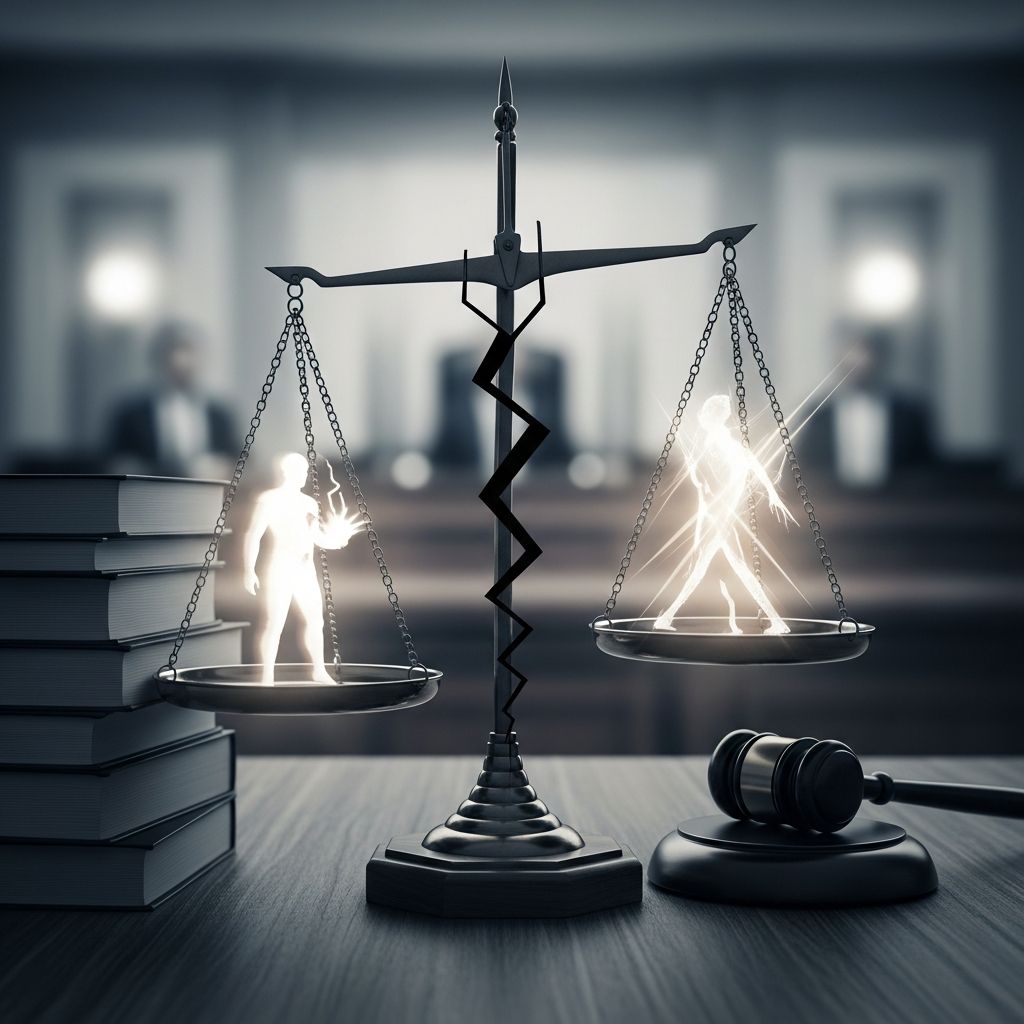
Proximate cause serves as a fundamental principle in personal injury litigation, determining whether a defendant’s actions bear legal responsibility for a plaintiff’s harm. It bridges the gap between factual events and judicial accountability by assessing foreseeability and fairness.
Defining Proximate Cause and Its Core Elements
In legal terms,
proximate cause
—also known as legal cause—evaluates if an event is sufficiently connected to an injury to impose liability. Unlike mere chronological sequence, it requires the harm to be a predictable outcome of the defendant’s conduct. Courts apply this to avoid holding parties accountable for distant or improbable consequences.The concept hinges on two main tests: substantial factor and foreseeability. A defendant’s act must be a substantial factor in causing the injury, meaning it materially contributed without which the harm would not occur. Foreseeability asks if a reasonable person could anticipate the type of injury from the risky behavior.
- Substantial Factor Test: Assesses if the conduct played a meaningful role in the outcome.
- Foreseeability: Determines if the harm type was within the scope of risk created.
- Policy Considerations: Ensures liability aligns with justice, limiting endless chains of causation.
This framework prevents ‘freak accidents’ from triggering liability, focusing justice on responsible parties.
Distinguishing Actual Cause from Proximate Cause
Personal injury claims demand proof of both
actual cause
(cause-in-fact) and proximate cause. Actual cause uses the ‘but-for’ test: but for the defendant’s negligence, would the injury have happened?.Proximate cause then filters this through legal lenses. For instance, a distracted driver’s text might factually cause a crash (actual cause), but if it leads to an unforeseeable explosion, proximate cause might sever liability.
| Aspect | Actual Cause (Cause-in-Fact) | Proximate Cause (Legal Cause) |
|---|---|---|
| Test | ‘But-for’ – Injury wouldn’t occur without the act | Foreseeable and substantial connection |
| Focus | Factual sequence of events | Legal policy, fairness, predictability |
| Example | Running red light hits car | Same, if whiplash is expected harm |
| Purpose | Establishes basic link | Limits remote liabilities |
This distinction ensures comprehensive causation proof, vital for negligence elements.
Real-World Examples Across Injury Scenarios
Proximate cause manifests differently in contexts like traffic accidents, premises liability, and product failures, illustrating its practical application.
Traffic Collisions and Driver Negligence
Consider a rear-end crash: Driver A glances at their phone, misses slowing traffic, and collides with Driver B, causing neck injuries. The distraction is both actual and proximate cause, as soft-tissue harms are typical risks of inattention. Courts readily find liability here due to high foreseeability.
Contrast this with a chain reaction: If the crash distracts a pedestrian into another lane, struck by Car C, the original driver’s proximate cause may break. The pedestrian’s independent act intervenes superseding liability.
Premises Liability and Security Failures
A landlord neglects broken locks and dim parking lot lights despite complaints. A tenant is assaulted there. If local crime stats show assaults as foreseeable risks, the negligence proximately causes injuries, even with a third-party criminal act. Colorado courts emphasize this in cases like inadequate clinic security.
Product Liability and Equipment Mishaps
A zipline operator skips maintenance, leading to a cable snap and rider injury. The failure is proximately caused by negligence, as falls are direct, expected risks. However, if a bird severs the cable mid-ride—a freak event—proximate cause fails.
Multiple causes can coexist: Two negligent fires merging into one blaze make both starters liable if either suffices for damage.
Judicial Tests and State Variations
Courts employ varied approaches. Colorado defines proximate cause as a natural, unbroken sequence producing injury, per Calkins v. Albi (1967), refined in Rocky Mountain Planned Parenthood v. Wagner (2020) stressing foreseeability. Jury instructions allow multiple proximate causes, not requiring the ‘last’ or ‘nearest’ one (Instructions 9:19, 9:20).
New York requires foreseeable harm beyond ‘but-for’ causation. Generally, substantial factor tests apply where acts concur. Juries weigh these, assigning negligence percentages in comparative fault systems.
Intervening and Superseding Causes
Not all events sustain causation chains.
Intervening causes
occur post-defendant’s act but before injury; if foreseeable, they don’t break proximity (e.g., typical medical complications).Superseding causes
are unforeseeable, independent acts—like intentional crimes in low-risk areas—severing liability.- Foreseeable intervention: Expected third-party response.
- Superseding: Extraordinary, unforeseeable event.
In negligent security, foreseeable crimes preserve proximate cause; random ones may not.
Proving Proximate Cause in Court
Plaintiffs must present evidence showing the defendant’s conduct as a substantial, foreseeable factor. Experts testify on risk scopes, timelines reconstruct events, and precedents guide juries.
Defendants counter with remoteness arguments or superseding events. Comparative negligence apportions fault if multiple proximates exist. Statutes of limitations, like Colorado’s C.R.S. 13-80-102, demand timely filing.
Strategic Implications for Plaintiffs
Understanding proximate cause guides case evaluation. Strong claims feature direct, predictable links; weak ones involve attenuated chains. Early attorney involvement preserves evidence and meets deadlines.
Victims pursue compensation for medical bills, lost wages, pain—hinging on robust causation proof. Successful navigation yields fair verdicts.
Frequently Asked Questions
What if multiple parties contribute to my injury?
Multiple proximate causes are possible; juries allocate fault percentages.
Does proximate cause apply only to car accidents?
No, it spans premises liability, products, medical malpractice—any negligence tort.
How does foreseeability factor in?
It ensures liability for expected harm types from the risky conduct.
Can a third-party act end my case?
Only if unforeseeable and superseding; foreseeable ones maintain the chain.
What’s the time limit to file after injury?
Varies by state; e.g., Colorado’s general limit bars late claims.
Eggshell Plaintiff Rule and Scope of Liability
Proximate cause respects the
eggshell plaintiff
doctrine: defendants take victims as found. Foreseeable trigger of worse harm due to pre-existing conditions remains within scope. This expands liability fairly without punishing vulnerability.Overall, proximate cause balances accountability with practicality, ensuring justice focuses on preventable harms.
References
- Understanding proximate cause in today’s claims environment — Sedgwick. 2023. https://www.sedgwick.com/blog/understanding-proximate-cause-in-todays-claims-environment/
- Examples of Proximate Cause in a Personal Injury Case — GoKenny. 2024. https://www.gokenny.com/blog/examples-of-proximate-cause-in-a-personal-injury-case/
- What Is Proximate Cause? Definition, Legal Meaning, and Examples — Boesen Law. 2024. https://boesenlaw.com/blog/what-is-proximate-cause-definition-legal-meaning-and-examples/
- Examples of Proximate Cause in a Personal Injury Case — Rosenbaum Personal Injury Lawyers. 2024-03. https://www.rosenbaumnylaw.com/blog/2024/03/examples-of-proximate-cause-in-a-personal-injury-case/
- Personal Injury Cases: Examples of Proximate Cause — Colorado Law. 2023. https://www.coloradolaw.net/practice-area/personal-injury-attorney/personal-injury-cases-proximate-cause/
- Proximate cause — Wikipedia. 2026. https://en.wikipedia.org/wiki/Proximate_cause
Similar Articles








Read full bio of medha deb


