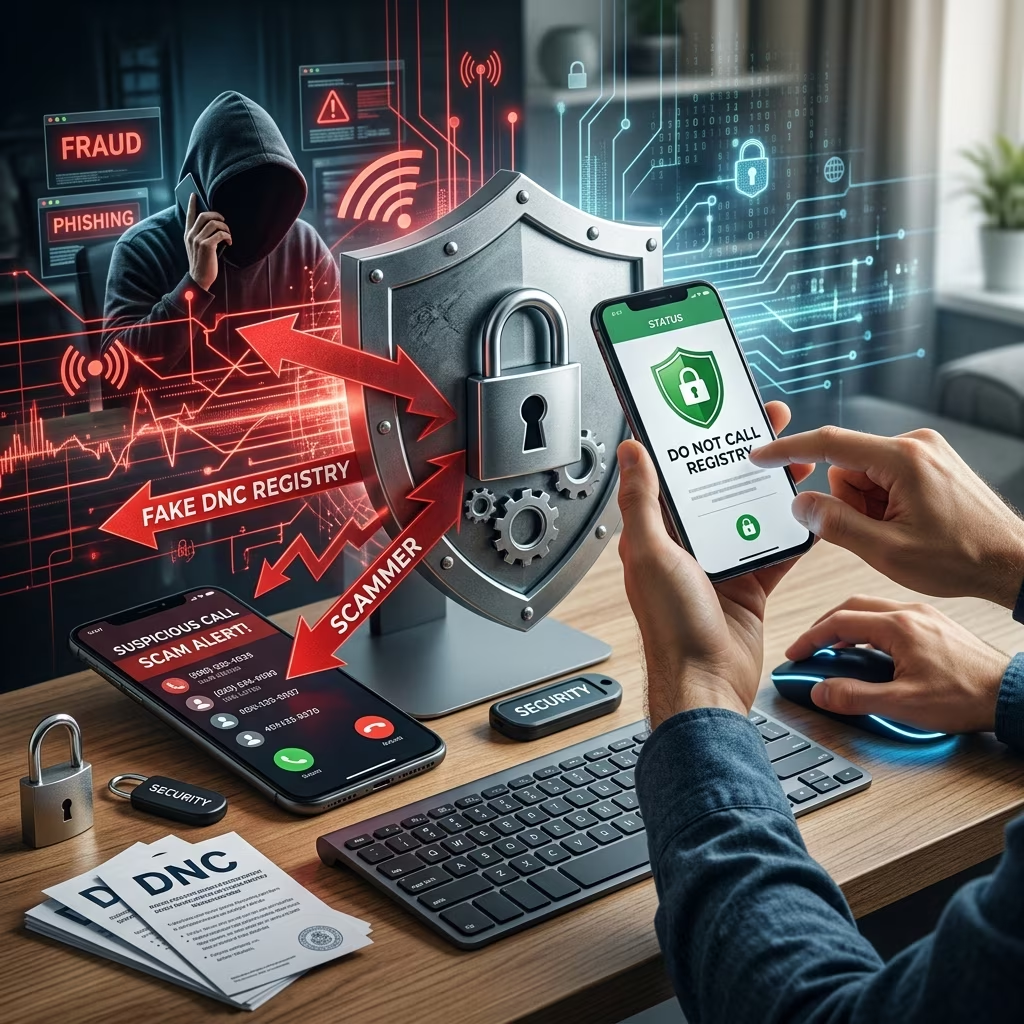
Many people sign up for the National Do Not Call Registry hoping to cut down on nuisance sales calls. Scammers know this and have created a thriving industry of fake registration services, impersonation calls, and misleading robocalls designed to steal money and personal data. Understanding how the real registry works, and how fraudsters try to mimic it, is the best way to protect yourself.
1. What the Real National Do Not Call Registry Actually Does
The National Do Not Call Registry is a program run by the Federal Trade Commission (FTC), the main federal agency responsible for enforcing consumer protection laws in the United States. Its purpose is to reduce unwanted sales calls from legitimate telemarketers who follow the law, not to block every unwanted call you receive.
Key facts about the legitimate registry:
- It is free to register your home or mobile phone number.
- You can register online at the official government site or by calling the official toll-free number from the phone you want to register.
- Most honest telemarketers must stop calling you within 31 days after your number is added.
- The registry does not physically block calls; it is a list that legitimate telemarketers are required to check and honor.
- It does not stop scammers or illegal robocallers who choose to ignore the law.
Because the program is widely known and trusted, it has become a powerful lure for scammers, who count on people not knowing these basic details.
2. Common Myths That Make People Vulnerable
Misunderstandings about how the registry works can make it easier for fraudsters to trick you. Several widespread myths are worth clearing up:
- Myth: You have to pay to stay on the registry.
In reality, registration is free and does not expire for most phone numbers. - Myth: The government will call you to confirm or renew your registration.
The FTC does not call, text, or email people to sign them up or to verify registration. - Myth: Being on the registry stops all unwanted calls.
The registry only affects legitimate sales calls. Political calls, charitable solicitations, debt collection, and scam calls can still reach you. - Myth: If you still get calls, the registry is fake.
Persistent calls usually come from companies that ignore the law or from outright scammers, not because the official registry is a scam.
Scammers build their scripts around these myths. When you know the facts, their pitches are easier to spot and dismiss.
3. How Fake Do Not Call Registry Scams Work
There are several recurring patterns in scams that misuse the Do Not Call Registry name or concept. These schemes may come through phone calls, text messages, emails, or misleading websites.
3.1 Imposter Calls Claiming to Represent the Registry
One of the most common schemes involves callers who claim to be from:
- the “National Do Not Call Registry” office,
- the “Do Not Call List department,” or
- a “federal consumer protection service” connected to the registry.
Red flags in these calls include:
- Requests for payment to register your number, extend coverage, or speed up removal from call lists.
- Demands for personal information such as your Social Security number, bank account details, or full date of birth.
- Threats or pressure tactics, like claiming you could be fined if you do not respond.
- Generic greetings that do not use your name or reference any specific account.
According to FTC guidance, if someone calls and says they are from the National Do Not Call Registry, it is a scam; the registry does not call people.
3.2 Fee-Based “Registration Services”
Another variation involves companies that present themselves as helpful intermediaries. They may advertise that they will:
- sign you up for the Do Not Call list,
- “renew” or “reactivate” your registration, or
- use special tools to eliminate all unwanted calls.
These services typically charge a fee for something you can do yourself for free through the official FTC channels. In some cases, the company might not register your number at all, effectively taking your money and providing no benefit.
3.3 Robocalls Using the Do Not Call Name
Robocalls may play recorded messages that claim you can:
- “press 1 to add your number to a national Do Not Call list,” or
- “press 2 to confirm your registration and stop spam calls immediately.”
These messages often lead you to another scam, such as:
- live operators who try to sell service plans or extended warranties,
- phishing attempts asking for sensitive personal details, or
- consent to future marketing instead of actually reducing calls.
The FTC advises hanging up on unexpected robocalls and reporting them, especially if they mention fees, urgent deadlines, or fear-based claims.
4. Spotting a Do Not Call-Related Scam in Real Time
Scammers constantly adjust their scripts, but they reuse certain techniques. The checklist below can help you quickly decide if a call, text, or website is risky.
| Warning Sign | Why It’s Suspicious |
|---|---|
| Caller claims to be from the Do Not Call Registry or FTC | The registry and FTC do not contact people to sign them up or confirm registration. |
| Requests for payment to register or renew | Registration is free and does not require renewal for most numbers. |
| Urgent threats of fines, lawsuits, or account closure | Scammers use urgency to prevent you from thinking clearly or verifying information. |
| Demands for sensitive personal information | Government agencies do not ask for full SSNs or banking information over unsolicited calls. |
| Promises to stop all robocalls forever | No service can legally or practically guarantee complete elimination of illegal calls. |
5. How to Use the Real Registry Safely and Effectively
If you are not yet registered, or want to confirm your status, you can safely use the National Do Not Call Registry by following FTC and state attorney general guidance.
5.1 Registering Your Number
To register without risk:
- Go directly to the official government website run by the FTC, typing the address into your browser yourself instead of clicking on ads or links in unsolicited messages.
- Alternatively, call the official toll-free number from the phone you wish to register, as described in federal and state guidance.
- Follow the prompts and confirm your number. Your registration typically appears on the registry within 24 hours, but sales calls may take up to 31 days to stop.
5.2 Understanding What Calls Are Still Allowed
Even after you register, you may still receive certain categories of calls. Under federal rules and FTC guidance, the registry does not stop:
- calls from political organizations,
- charity or nonprofit solicitations,
- surveys or informational calls,
- debt collection calls, or
- calls from businesses you have an existing relationship with, in many cases.
Understanding these exceptions helps you set realistic expectations and identify when a call is simply legal but unwanted versus clearly illegal or fraudulent.
6. Extra Steps to Reduce Unwanted Calls
The registry is one important tool, but not the only one. Consumer protection agencies recommend a layered approach to reduce nuisance and scam calls.
- Use built-in phone blocking tools.
Most smartphones and many landline providers have features for reporting spam, blocking recent callers, or silencing unknown numbers. - Consider reputable call-blocking apps.
There are third-party services that maintain databases of known spam numbers and can screen or block them automatically. - Let unknown numbers go to voicemail.
Legitimate callers will usually leave a message; many scammers will not. - Do not call back suspicious numbers.
Returning a missed call or responding to a text from an unknown source may connect you to more scams or premium-rate services. - Be cautious about sharing your number.
Providing your primary phone number widely online or in-store can increase marketing and scam exposure over time.
7. What To Do If You Receive a Suspected Scam Call
If you suspect you are dealing with a fake Do Not Call Registry offer or related scam, taking quick and deliberate steps can protect you and help enforcement agencies build cases against the perpetrators.
7.1 In the Moment: How to Respond
- Hang up immediately if the caller asks for payment or sensitive information in connection with the Do Not Call Registry.
- Do not press any numbers on a suspicious robocall, even if the message says “press 2 to be removed” — this may confirm your number is active.
- Do not provide personal details such as your Social Security number, credit card information, or bank account numbers.
- Take note of details like the caller ID number, any callback number they provide, and the time and date of the call.
7.2 After the Call: Report and Document
Once you have ended the call, you can help stop future scams by submitting a report. The FTC and other agencies use these reports to identify patterns and target illegal operations.
- Report phone scams and unwanted calls to the FTC using their official reporting tools.
- Include as much information as possible — the number that called you, any number you were told to call back, and the date and time of the call.
- Contact your state attorney general’s office if you suspect telemarketing fraud; many state offices provide online complaint forms.
- Notify your phone provider if the calls are persistent; they may have additional blocking or tracing options.
If you gave out financial information or made a payment, consider:
- contacting your bank or credit card company to dispute charges and monitor for fraud, and
- reviewing your credit reports for any unauthorized accounts.
8. Frequently Asked Questions (FAQ)
FAQ 1: Does the National Do Not Call Registry cost anything?
No. Registration for the National Do Not Call Registry is completely free whether you sign up online or by phone. Any call, message, or website that requires a fee to sign up, confirm, or extend your registration is not legitimate.
FAQ 2: Will the registry stop all robocalls and scams?
No. The registry is designed to stop unwanted sales calls from legitimate companies that obey telemarketing rules. Scammers and illegal robocallers routinely ignore the law, so they may still contact you. This is why call-blocking tools, cautious habits, and reporting suspicious calls are also essential.
FAQ 3: How long does it take for calls to decrease after I register?
After registering, your number should appear on the list within about 24 hours, but it can take up to 31 days for most sales calls from legitimate telemarketers to stop. If calls continue beyond that period from companies selling goods or services, you can report them.
FAQ 4: Why do I still get calls from charities or political campaigns?
Certain types of calls are not covered by the Do Not Call rules, including political calls, calls from charities, survey calls, and some informational messages. While these calls may still be annoying, they are often legal even when you are registered. However, you can ask individual organizations not to call you again.
FAQ 5: How do I verify if my number is already on the registry?
The safest way is to use the official verification tools provided by the FTC, either online or via the official phone number listed in federal and state consumer guidance. Avoid third-party sites that offer to check for you, especially if they ask for payment or personal identifying information.
FAQ 6: What if someone threatens me with fines for not registering?
This is a scare tactic commonly used by scammers. There is no penalty for failing to join the National Do Not Call Registry, and the government does not impose fines on individuals for not registering. If you receive such threats, hang up and report the incident.
9. Key Takeaways to Stay Safe
Scammers depend on fear, confusion, and the good reputation of the National Do Not Call Registry to trick people into handing over money and personal information. You can dramatically lower your risk by keeping a few core principles in mind:
- The real registry is free and run by the FTC.
- The registry and FTC will never call you to sign you up, verify your information, or ask for money.
- Being on the registry reduces legal sales calls but does not block every scam or robocall.
- Never pay a third party to register you, and never share sensitive data with unsolicited callers.
- Use call-blocking tools, screen unknown calls, and report suspicious activity to federal and state authorities.
By combining the official registry with smart phone habits and timely reporting, you can reduce unwanted calls and help enforcement agencies crack down on deceptive telemarketing schemes that misuse the Do Not Call name.
References
- National Do Not Call Registry FAQs — Federal Trade Commission. 2022-10-01 (last updated date as listed on page). https://consumer.ftc.gov/articles/national-do-not-call-registry-faqs
- National Do Not Call Registry — Federal Trade Commission. 2024-01-01 (accessed official portal description). https://www.donotcall.gov
- Do Not Call Registry — Office of the Attorney General of Virginia. 2021-06-15. https://www.oag.state.va.us/consumer-protection/index.php/tips-info2?view=article&id=153%3Ado-not-call-registry&catid=15
- Complain about phone and text scams, robocalls, and telemarketers — USA.gov. 2023-03-20. https://www.usa.gov/telemarketer-scam-call-complaints
- National Do Not Call Registry — Stop unwanted calls — Federal Trade Commission, Consumer Advice overview. 2022-09-10. https://consumer.ftc.gov