
Private Equity and Predatory Loans: When Mailed Checks Become Debt Traps
How a seemingly harmless check in your mailbox can turn into a high-cost loan powered by private equity and predatory lending tactics.
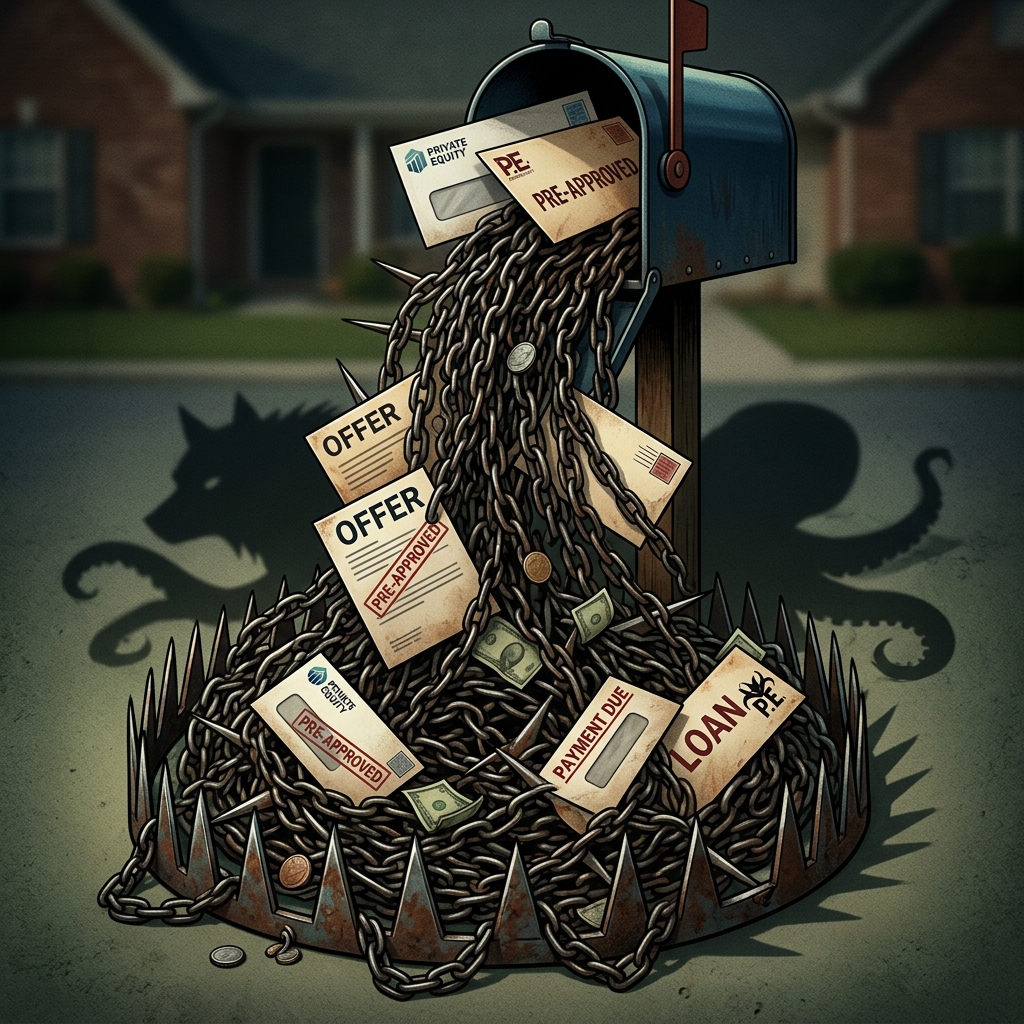
Across the United States, many households still live paycheck to paycheck, making them especially vulnerable to offers of quick cash. In recent years, a disturbing practice has emerged: private equity-backed lenders mailing unsolicited checks to consumers, which function as high-cost loans once cashed. This strategy combines the aggressive profit-seeking of private equity with classic predatory lending tactics, creating a dangerous trap for borrowers who are already financially stressed.
From Helpful Offer to High-Cost Loan: The Mechanics of Mailed Checks
Mailed checks from finance companies can look like fast relief. A borrower opens an envelope and finds a pre-approved check for hundreds or even thousands of dollars. There is often minimal paperwork, and the messaging emphasizes ease and speed. But cashing the check typically means entering into a binding loan agreement with high interest rates and hefty fees buried in fine print.
- Unsolicited credit: Consumers receive checks they did not actively request, framed as a special offer or pre-approval.
- Implied urgency: Marketing language may stress limited-time availability or immediate access to funds.
- Hidden costs: Loan terms, including annual percentage rates (APRs) and fees, are often disclosed in dense, technical language that many borrowers do not fully understand.
- Automatic obligation: Once the check is cashed, the borrower is legally bound to the loan agreement, frequently at much higher cost than typical credit products.
In practice, these mailed checks operate similarly to other forms of predatory credit, such as subprime installment loans and payday loans. The key difference is that the lender initiates the relationship, not the borrower, and uses the physical check as both marketing tool and contract trigger.
What Makes a Loan Predatory?
Predatory lending is not defined solely by a high interest rate. Financial regulators and consumer advocates generally describe it as a pattern of unfair, deceptive, or abusive loan practices that target vulnerable populations and strip wealth from borrowers.
Common features of predatory loans include:
- Excessive interest rates and fees that far exceed what would be justified by the borrower’s risk.
- Loan flipping, or repeatedly refinancing debt into new loans with more fees, without reducing the borrower’s total obligation.
- Asset-based lending, in which loan decisions depend more on the borrower’s collateral (home, car, or benefits) than on their ability to repay.
- Deceptive or incomplete disclosure of terms, making it difficult for borrowers to understand the true cost and risks.
- Targeting vulnerable groups, such as older adults, people of color, or low-income communities, who may have fewer credit options.
Mailed checks fit this pattern when they are designed to exploit financial desperation and limited access to mainstream credit. If the lender sets terms that virtually guarantee repeated borrowing, late fees, or refinancings, the product functions less as helpful credit and more as a mechanism to transfer income from borrowers to investors.
How Private Equity Amplifies Predatory Lending
Private equity (PE) funds pool capital from wealthy individuals and institutional investors (such as pension funds) to buy and restructure businesses. Their core model focuses on high returns over relatively short time horizons. In the consumer finance sector, this can translate into aggressive revenue extraction from loan portfolios, often at the expense of borrowers.
When private equity controls predatory lenders, several dynamics escalate risk and harm:
- Pressure for rapid, high returns: PE-backed lenders have strong incentives to maximize fee revenue, interest income, and loan volume quickly.
- Expansion into marginalized markets: PE ownership can provide capital and scale, enabling lenders to saturate communities with high-cost credit products, including mailed checks and online offers.
- Use of complex financing structures: PE may securitize or otherwise leverage loan portfolios, increasing systemic risk and reducing accountability for borrower outcomes.
- Cost cutting and automation: Investment firms may push for standardized, automated underwriting that pays less attention to borrower well-being and more to profitability.
Research on private equity’s role in payday lending shows that PE ownership can lead to more aggressive loan terms and collection practices. Private equity can “turbocharge” abusive lending by injecting capital and data-driven marketing into business models already structured around high fees and repeat borrowing.
Targeting Vulnerable Borrowers: Who Gets These Checks?
Predatory lenders rarely target affluent households with abundant savings and strong credit histories. Instead, they seek out people facing chronic financial strain. Mailed checks and similar products are disproportionately marketed to communities that have been excluded from mainstream banking or are dealing with recurring cash shortfalls.
Commonly targeted groups include:
- Low-income workers who rely on payday advances or overdraft protection to manage bills.
- Borrowers with damaged credit who have few low-cost options and are more likely to accept unfavorable terms.
- Communities of color that have experienced decades of discrimination in lending and may face higher denial rates for prime credit.
- Older adults receiving fixed incomes from Social Security or disability benefits, which may be used as predictable streams for debt repayment.
In many cases, these borrowers are not seeking new credit at the time they receive a mailed check. The lender uses data and marketing to identify households likely to feel compelled to cash the check, turning temporary hardship into long-term debt.
Economic and Social Consequences of High-Cost Loans
For individual borrowers, the consequences of accepting a mailed check loan can be severe. High costs, combined with unstable income, often lead to cycles of indebtedness. Families may juggle multiple loans, late fees, and collection calls, all while facing essential expenses like rent, utilities, and medical care.
| Impact Area | Short-Term Effect | Long-Term Risk |
|---|---|---|
| Household budget | Immediate cash relief, but higher monthly payments due to interest and fees. | Chronic cash shortfalls, repeated borrowing, and potential default. |
| Credit score | New tradeline may appear as subprime credit. | Damage from late payments, collections, or judgments. |
| Mental health | Short-term stress reduction after receiving funds. | Intense stress and anxiety associated with escalating debt and collection actions. |
| Community wealth | Small increase in local spending from borrowed funds. | Ongoing extraction of income from local households to distant investors, reinforcing inequality. |
At a broader level, predatory lending contributes to economic inequality. By directing high-cost credit at those least able to afford it, the financial system systematically transfers resources from financially insecure households to investors and executives, including private equity partners.
Legal Protections and Regulatory Gaps
U.S. law offers some protections against unfair lending, but gaps remain. The Consumer Financial Protection Bureau (CFPB) and other regulators enforce rules against deceptive practices and certain forms of abusive lending. Federal laws such as the Truth in Lending Act require standardized disclosure of costs, including APRs, to help borrowers understand what they are agreeing to.
However, several challenges make it difficult to curb predatory mailed check loans:
- State-by-state regulation: Interest rate caps and consumer protections vary widely among states, allowing lenders to operate in jurisdictions with looser rules.
- Use of non-bank charters: Some lenders partner with banks or other entities to avoid stricter state usury limits.
- Complex ownership structures: Private equity-backed lenders may operate through layers of subsidiaries, making accountability harder to enforce.
- Limited borrower awareness: Even when disclosures are technically compliant, borrowers may not fully understand the risks.
Regulators have begun to scrutinize high-cost lending more closely, including payday and installment loans. Still, specialized strategies like unsolicited mailed checks can fall into gray areas unless laws explicitly address them.
Policy Proposals to Rein in Private Equity and Predatory Lending
Several policy initiatives seek to curb abusive practices by private equity and predatory lenders. One prominent example is the proposed Stop Wall Street Looting Act, which aims to increase accountability and transparency in the private equity industry.
Key elements of this type of reform include:
- Making executives legally liable for harms caused by the companies they control.
- Closing tax loopholes such as the carried interest provision that allows PE managers to pay lower taxes on certain income.
- Improving transparency around fees, returns, and risks in private equity investments.
- Protecting workers and communities when companies owned by private equity fail or impose harmful practices.
Applied to predatory lending, these reforms could make it harder for private equity firms to profit from high-cost loan schemes while avoiding responsibility for borrower outcomes. Stronger consumer protections, interest rate caps, and enforcement of fair lending laws would complement structural changes in the investment industry.
Practical Steps Borrowers Can Take
While systemic reform is crucial, individual borrowers can also take steps to protect themselves from mailed check schemes and other high-cost loans. Understanding the risks and options can help households avoid long-term debt traps.
Before You Cash That Check
- Read the full disclosure: Look for the APR, total repayment amount, and any fees. Compare these to mainstream credit options, such as credit unions or community banks.
- Consider your budget: Calculate whether you can realistically afford the monthly payments without missing essentials like housing or food.
- Check the lender’s reputation: Search for complaints, regulatory actions, or reviews indicating abusive practices.
- Seek advice: Consider talking to a nonprofit credit counselor or legal aid organization before accepting the loan.
Alternatives to High-Cost Mailed Check Loans
- Credit unions often offer small-dollar loans at significantly lower interest rates than predatory lenders.
- Employer-based programs in some workplaces provide emergency loans or earned wage access under more favorable terms.
- Payment plans with landlords, utilities, or medical providers may be less expensive than taking on high-interest debt.
- Local assistance, such as community organizations or government programs, may offer grants or interest-free support for emergencies.
FAQs: Private Equity, Mailed Checks, and Predatory Loans
1. Why do lenders mail checks instead of offering traditional loans?
Mailed checks serve both as marketing and as a mechanism to create automatic loan agreements. When a borrower cashes the check, they enter into a binding contract with predetermined terms, often at high cost. This approach lowers barriers for lenders to originate many small loans quickly, especially to borrowers who might hesitate to apply for credit through normal channels.
2. Are unsolicited mailed checks legal?
In many jurisdictions, unsolicited checks are legal as long as lenders comply with disclosure and consumer protection laws. However, the practice can still be considered unfair or abusive if it relies on misleading marketing, obscured costs, or targeting of vulnerable populations. Legal status depends on state law, federal regulations, and specific facts of each case.
3. How does private equity benefit from predatory lending?
Private equity firms seek high returns from the companies they own. In consumer finance, this can involve pushing lenders to grow portfolios of high-fee, high-interest loans, including mailed checks and similar products. Fee revenue and interest payments flow to the lender and ultimately to PE investors, who can earn significant profits even if borrowers struggle or default.
4. Can I cancel a loan created by cashing a mailed check?
Some loan agreements may include a brief cancellation or rescission period, but this is not guaranteed. Borrowers typically need to review the contract carefully and act quickly if they wish to cancel. If a mailed check loan appears abusive or deceptive, contacting a consumer protection agency or legal aid organization may provide options for relief.
5. What policy changes would most effectively reduce harm?
Effective policy changes would combine stronger consumer protections—such as interest rate caps, clearer disclosures, and restrictions on unsolicited credit offers—with reforms in private equity, including greater accountability for harms and improved transparency. Laws like the Stop Wall Street Looting Act are designed to address structural incentives that encourage abusive practices in private equity-owned companies.
References
- How Private Equity Amplifies the Abuse of Predatory Lending — Inequality.org. 2019-09-16. https://inequality.org/article/private-equity-predatory-lending/
- Predatory Lending: Tips, Examples, and Legal Protections — Investopedia. 2024-03-15. https://www.investopedia.com/terms/p/predatory_lending.asp
- Fact Sheet: The Stop Wall Street Looting Act: End Private Equity’s Predatory Practices — Americans for Financial Reform Education Fund. 2023-07-19. https://ourfinancialsecurity.org/reports-publications/fact-sheet-the-stop-wall-street-looting-act-end-private-equitys-predatory-practices/
- Predatory Private Equity Practices Threaten Americans’ Health and the Economy — U.S. Joint Economic Committee Democrats. 2024-07-10. https://www.jec.senate.gov/public/index.cfm/democrats/2024/7/predatory-private-equity-practices-threaten-americans-health-and-the-economy
- ‘A way of monetizing poor people’: How private equity firms make money offering loans to cash-strapped Americans — The Washington Post. 2018-07-01. https://www.washingtonpost.com/business/economy/a-way-of-monetizing-poor-people-how-private-equity-firms-make-money-offering-loans-to-cash-strapped-americans/2018/07/01/5f7e2670-5dee-11e8-9ee3-49d6d4814c4c_story.html
Similar Articles








Read full bio of medha deb




