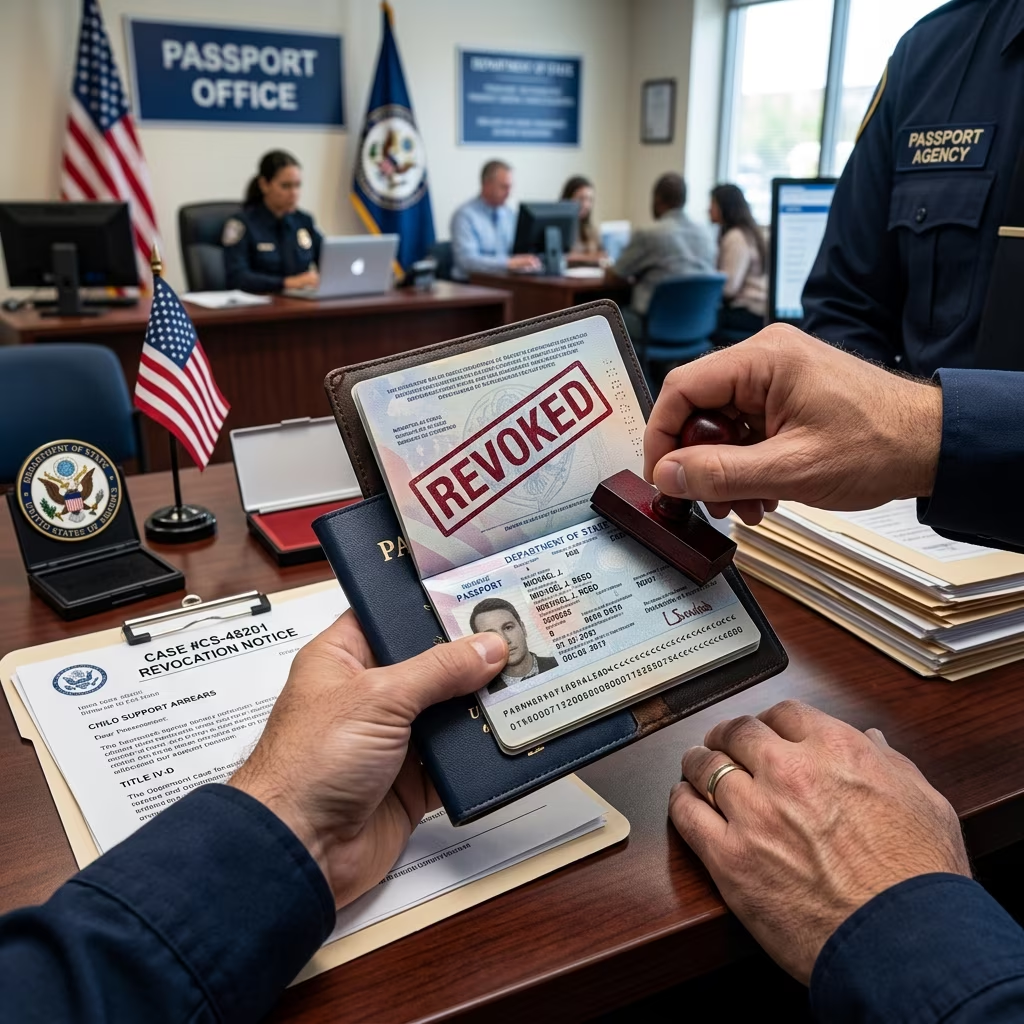
In the United States, unpaid child support can affect far more than a parent’s bank account. Under longstanding federal law, significant child support debt can lead to the denial or revocation of a U.S. passport, limiting a parent’s ability to travel abroad and, in some cases, even to return home after an overseas trip. Recent policies have moved this enforcement tool from something that affected mainly new applications and renewals to an active effort to cancel certain existing passports held by parents with certified arrears.
This article explains the legal framework behind passport revocations, how the enforcement process works in practice, which parents are at risk, and concrete steps parents can take to protect their travel privileges while addressing their support obligations.
How Child Support Became Linked to U.S. Passports
The connection between child support debt and U.S. passports is not new. It is rooted in federal legislation passed in the 1990s aimed at strengthening child support enforcement nationwide.
The key statute is the Personal Responsibility and Work Opportunity Reconciliation Act of 1996 (often called PRWORA), a broad welfare reform law. Among many other provisions, Congress directed federal agencies to coordinate more closely with the states to track and enforce child support obligations.
- Mandatory reporting: The law instructs the U.S. Department of Health and Human Services (HHS) to receive information from state child support agencies on parents who are seriously delinquent in their payments.
- Passport denial and revocation authority: The statute authorizes the U.S. Department of State (State Department) to deny new passports and revoke existing passports for individuals who owe more than a legally defined threshold of child support arrears.
- National program: Together, HHS and the State Department administer a nationwide passport denial and revocation program for child support debt, which runs in parallel with other enforcement tools such as wage garnishment, tax refund interception, and license suspension.
Initially, this authority was used mostly at the application stage: parents with serious arrears simply could not obtain a new passport or renew an expiring one. More recent initiatives have expanded the use of the law to actively cancel certain passports that are already valid, especially for parents whose debts are very large.
Key Legal Thresholds and Eligibility Rules
To understand who is at risk, it is important to know the main numerical threshold and how it is applied.
| Criterion | Typical Federal Rule | Practical Effect |
|---|---|---|
| Minimum arrears threshold | More than $2,500 in certified back child support debt | Triggers eligibility for passport denial or revocation under federal law. |
| Certification process | State agency reports delinquent parent to HHS, which then forwards data to the State Department | Debt must be formally recorded and transmitted; not every late payment immediately leads to action. |
| Type of action | Denial of new passports and renewals; in some policies, proactive revocation of valid passports | Parents may be unable to obtain or keep a passport until they resolve their arrears. |
| Restoring eligibility | Pay debt in full or enter an approved arrangement so arrears are no longer considered delinquent | State child support agency and HHS must update records before the State Department can issue a passport again. |
While the statutory threshold is generally set at more than $2,500 in certified arrears, enforcement may be rolled out in stages, prioritizing very high-debt cases (for example, parents who owe tens of thousands of dollars) before expanding to smaller arrears that still exceed the federal limit.
How the Passport Denial and Revocation Process Works
The process that leads from unpaid support to passport problems involves multiple steps and agencies. Understanding this system can help parents anticipate and address issues before travel is disrupted.
1. State Child Support Enforcement and Arrears Certification
Child support is typically ordered by state courts and enforced by state or local child support agencies. When a parent fails to pay as ordered, arrears accumulate. Once delinquent arrears exceed the federal threshold, the state may “certify” the debt for passport enforcement purposes.
- For federal passport enforcement, only certified arrears count. A temporary missed payment does not automatically trigger involvement by HHS.
- Certification often occurs after a pattern of nonpayment or when the amount owed is clearly above the threshold.
- Once certified, the case is entered into a national database used for multiple enforcement programs, including passport denial.
2. Data Sharing Between HHS and the State Department
After certification, HHS regularly transmits lists of eligible cases to the State Department. These lists include information such as the parent’s name, identifying details, and the amount of arrears.
- HHS acts as the central hub, aggregating data from dozens of state programs.
- The State Department uses this information to flag passport applications or identify existing passport holders who meet the criteria for denial or revocation.
3. Passport Application Denial and Renewal Problems
Historically, the most common consequence has been denial of new passport applications or refusal to renew expiring passports when a parent’s name appears on the certified arrears list.
- Parents applying for a passport for the first time may receive a notice that their application cannot be processed due to child support debt.
- Parents seeking to renew may find that their renewal is denied or delayed until they clear their arrears.
- In both cases, the State Department generally directs parents to contact their state child support agency to resolve the underlying debt.
4. Proactive Revocation of Existing Passports
More recent enforcement efforts have involved the revocation of existing valid passports for certain parents with very substantial child support arrears. This represents a shift from limiting access to new travel documents to actively cancelling ones already in use.
Under these policies:
- Parents with arrears above specified thresholds—often starting with six-figure debts—may receive notice that their current passport is no longer valid for travel.
- The revocation can occur even if the parent is not applying for renewal and has years left before expiration.
- Once revoked, the passport cannot be used, and eligibility for a new passport will only be restored after the debtor has addressed their child support obligations and been removed from the certified list.
For parents currently abroad when a revocation takes effect, the State Department can issue emergency travel documents through U.S. embassies or consulates so they can return home, but routine travel is restricted until arrears are resolved.
Who Is Most Likely to Be Affected?
Not every parent who has ever missed a payment will face passport problems. The program is designed to target parents with substantial and persistent arrears that meet or exceed the federal threshold.
Parents are more likely to be affected if they fall into one or more of these categories:
- High total arrears: Owing more than $2,500 in certified back child support and remaining delinquent over time.
- Long-term nonpayment or sporadic payment: A history of failing to comply with court orders, particularly where state agencies have already taken other enforcement actions.
- Interstate or international travel patterns: Parents who regularly travel or live abroad may come to the attention of enforcement programs that rely on passport data.
- Existing enforcement cases: Parents already subject to wage garnishment, tax refund intercepts, or license suspensions may be more likely to have their cases certified for passport enforcement.
By contrast, parents who quickly address a temporary shortfall or enter into a formal payment arrangement may be less likely to have their debt certified for these purposes, especially if they maintain compliance with the agreed plan.
Consequences of Passport Revocation or Denial
Having a passport denied or revoked can create practical and legal challenges that go beyond inconvenience.
- Blocked international travel: Parents may be unable to travel abroad for business, family emergencies, or tourism until arrears are addressed and eligibility is restored.
- Complications for overseas residents: Parents living abroad who rely on a U.S. passport may face difficulties maintaining lawful status or returning to the U.S. if their passport is cancelled.
- Delays after debt is paid: Even once a parent pays off arrears, a revoked passport is not automatically reinstated. The individual must apply for a new passport, and federal verification adds processing time beyond the standard issuance period.
- Additional scrutiny: Parents who have previously had passports denied or revoked may face closer scrutiny in future applications to ensure that child support obligations remain satisfied.
Because passport issues can take weeks or longer to resolve, parents planning international travel should consider their child support status well in advance of departure dates.
Steps Parents Can Take to Protect Their Travel and Legal Rights
Parents who owe child support or suspect they may be near the arrears threshold have practical options to reduce the risk of passport enforcement and to address problems if they arise.
1. Check Your Arrears Status Regularly
- Contact your state child support enforcement agency to obtain an up-to-date statement of your account.
- Ask whether your case has been certified for federal enforcement programs, including passport denial or revocation.
- Review court orders and payment records to ensure they match the agency’s accounting; if there are discrepancies, raise them promptly.
2. Explore Payment Plans or Modifications
If you cannot pay the full amount immediately, consider working with your state agency or the other parent to put a structured plan in place.
- Payment plans: Many enforcement programs allow parents to avoid the most severe measures by complying with a formal plan that gradually reduces arrears.
- Modification of support orders: If your income has significantly changed, you may be able to ask the court to modify the ongoing support amount, reducing the risk of future arrears. This does not erase existing debt but can make future compliance more realistic.
- Documented agreements: Always ensure arrangements are formally recorded with the court or agency; informal promises may not affect enforcement lists.
3. Plan Ahead for International Travel
Parents who expect to travel abroad should address potential passport issues well in advance.
- Confirm that your name does not appear on the list of certified arrears before booking nonrefundable travel.
- If you have recently paid off arrears or started a payment plan, ask how long it will take for records to update and for any passport flags to be removed.
- Apply for or renew your passport early, leaving time to resolve any unexpected denial notice.
4. Seek Legal Advice When Needed
Complex cases—such as those involving disputed arrears amounts, multi-state orders, or overseas residence—may benefit from professional legal guidance.
- A family law attorney can help you understand your obligations, challenge inaccurate arrears calculations, or request court modifications.
- Lawyers who handle international family law issues may advise on travel impacts and immigration consequences of passport problems.
- Legal aid organizations sometimes offer assistance to parents with limited income facing enforcement actions, including license or passport suspensions.
Balancing Enforcement Goals and Parents’ Practical Needs
Federal officials have emphasized that passport denial and revocation are intended to support the welfare of children by creating meaningful consequences for serious child support delinquency. At the same time, there is recognition that restricting travel can affect a parent’s ability to work, visit family, or meet other responsibilities.
As a result, enforcement programs often include mechanisms for relief when parents make good-faith efforts to comply:
- Emergency passports or travel documents may be available for parents abroad to return home, even if their passport has been revoked.
- Parents who establish and follow an approved payment plan may be removed from enforcement lists or avoid revocation, particularly in high-debt tiers.
- Ongoing dialogue between state agencies and parents can help tailor enforcement to encourage compliance without unduly blocking necessary travel.
Ultimately, however, the law gives federal authorities clear power to deny and revoke passports when arrears exceed the threshold and remain delinquent. For parents, the most reliable way to preserve travel rights is to keep support payments current or quickly address any arrears that arise.
Frequently Asked Questions (FAQs)
Can my passport be revoked if I miss one child support payment?
One missed payment by itself does not usually lead to passport revocation. Federal enforcement focuses on certified arrears above $2,500, which generally reflect a pattern of nonpayment over time. However, repeated missed payments can accumulate and eventually push you over the threshold.
How will I know if my passport has been denied or revoked?
If your passport application or renewal is denied due to child support arrears, the State Department typically issues a notice explaining that the denial is based on information from child support enforcement agencies. For revocations, parents with significant arrears can receive written notice that their existing passport is no longer valid, along with instructions on contacting child support agencies and, if applicable, obtaining emergency travel documents.
What happens if I am outside the U.S. when my passport is revoked?
If a revocation is implemented while you are abroad, your ordinary passport is not considered valid for continued travel. However, you may be able to obtain an emergency travel document from a U.S. embassy or consulate to return to the United States. Once back, you will need to address your child support debt before becoming eligible for a new passport.
Will my passport automatically become valid again after I pay my debt?
No. Payment of arrears is necessary but not sufficient by itself. The state child support agency must update your records and notify HHS that you are no longer delinquent, and HHS must remove you from the enforcement list. Only then can you apply for a new passport. A previously revoked passport will not be automatically reinstated; you will need to go through the standard application process, which may take additional time due to federal verification.
Can I negotiate my passport status directly with the State Department?
In most cases, passport issues tied to child support are resolved through state child support agencies, not directly with the State Department. The State Department relies on certified information from HHS and does not independently adjust arrears amounts. If you believe your debt is incorrect or have entered a payment plan, you must work with your state agency so your status can be updated in the federal system.
Does this enforcement apply to all kinds of child support orders?
The passport program typically applies to court-ordered child support obligations that are enforced by state agencies and reported to HHS. Private agreements that are not part of the formal enforcement system may not be captured unless they have been converted into enforceable orders and entered into state records.
References
- Passport Revocations Due to Significant Child Support Debt — U.S. Department of State. 2026-05-08. https://www.state.gov/releases/office-of-the-spokesperson/2026/05/passport-revocations-due-to-significant-child-support-debt
- Trump Administration to Revoke Passports for Unpaid Child Support — FindLaw. 2026-05-09. https://www.findlaw.com/legalblogs/law-and-life/trump-administration-to-revoke-passports-for-unpaid-child-support/
- U.S. Passports Revoked for Unpaid Child Support Debt — AFAR Media. 2026-05-12. https://www.afar.com/magazine/u-s-passports-revoked-for-unpaid-child-support-debt
- AP report: Americans who owe significant child support will have their U.S. passports revoked — PBS NewsHour / Associated Press. 2026-05-08. https://www.pbs.org/newshour/politics/ap-report-americans-who-owe-significant-child-support-will-have-their-u-s-passports-revoked
- Trump Plans To Revoke Passports For Child Support Debts — My AZ Lawyers. 2026-05-10. https://myazlawyers.com/trump-plans-to-revoke-passports-for-child-support-debts/