
NLRB vs. Costco: Lessons for Social Media Policies
How the NLRB’s decision against Costco reshaped employer social media rules and what businesses must do to comply.
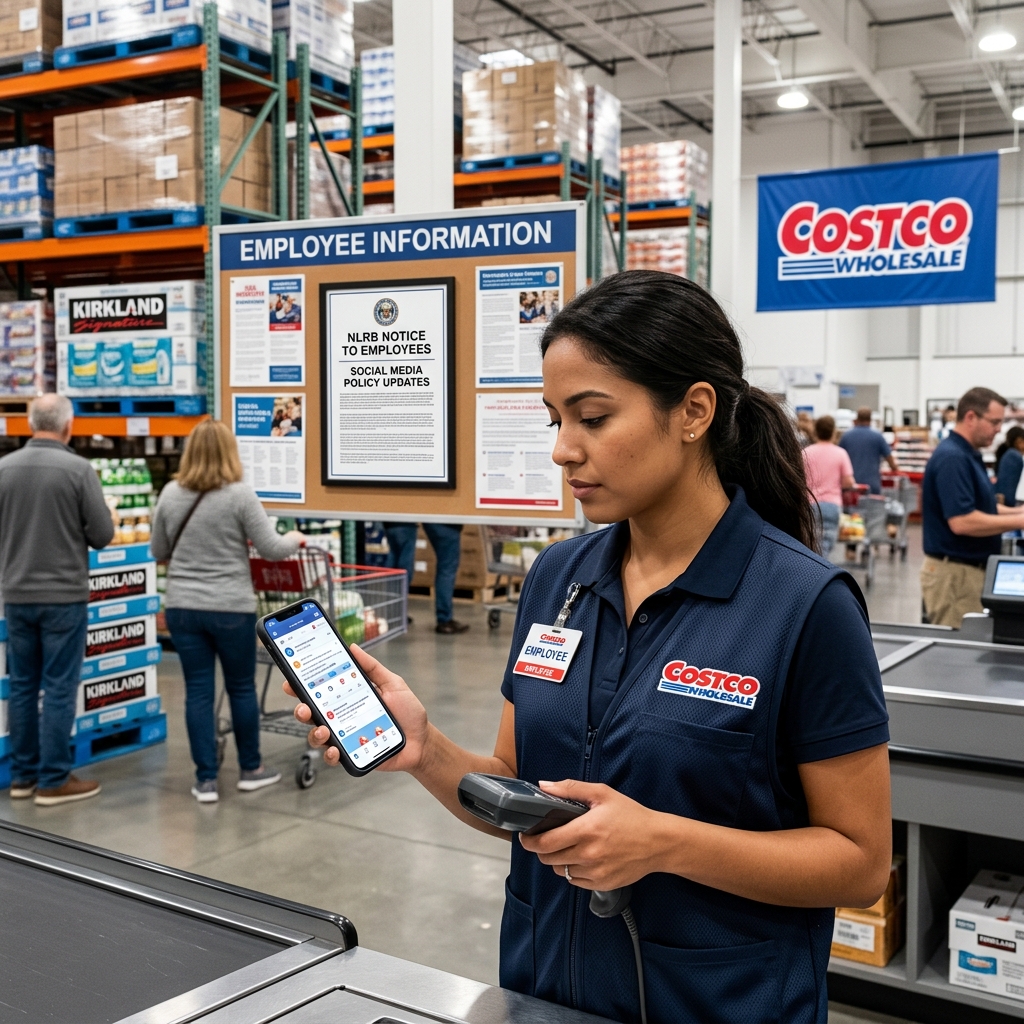
The National Labor Relations Board’s decision invalidating Costco’s social media policy marked a pivotal moment in how U.S. employers regulate employee online speech. Employers across industries were forced to re‑examine their handbooks and rethink how far they can go in restricting criticism and discussion of working conditions without violating federal labor law.
This article explains what happened in the Costco case, how the National Labor Relations Act (NLRA) applies to social media, and how businesses can design lawful, practical policies that protect both their reputations and employee rights.
Background: Social Media Meets the National Labor Relations Act
For decades, U.S. labor law focused on traditional workplaces – physical bulletin boards, in‑person meetings, and printed newsletters. The rise of Facebook, Twitter, and other platforms forced regulators to interpret old rules in a new environment. The NLRA, enacted in 1935, does not mention social media, yet its core protections apply to online communications just as they do to conversations around the break room.
What the NLRA Protects
The NLRA grants most private‑sector employees the right to engage in protected concerted activity. This includes acting together to improve wages, hours, and other working conditions, whether or not employees are unionized.
- Protected activity includes discussing pay, scheduling, safety concerns, and management practices.
- These rights cover both union and non‑union employees in most private workplaces.
- Employers may not interfere with, restrain, or coerce employees in exercising these rights (Section 8(a)(1)).
When employees use social media to talk about working conditions, complain about treatment, or organize support for changes, those communications are often protected under Section 7 of the NLRA.
Why Social Media Policies Became a Flashpoint
As social platforms grew, employers adopted broad rules to limit reputational harm, confidentiality breaches, and harassment. Many policies banned “disparaging” or “damaging” comments about the company or co‑workers. The NLRB began scrutinizing these rules, asking whether a reasonable employee would read them as prohibiting protected discussions about workplace issues.
Costco’s policy became an early and influential test case.
The Costco Case: What the NLRB Found Unlawful
Costco Wholesale Corporation, a large national retailer, maintained an employee handbook rule governing electronic communications and social media. The rule prohibited employees from posting statements that would damage the company or any person’s reputation.
The United Food and Commercial Workers union challenged several handbook provisions, arguing that they unlawfully restricted protected activity under the NLRA. The NLRB ultimately agreed that Costco’s social media rule was overly broad and violated Section 8(a)(1).
The Core Problem: Overbroad, Vague Language
The Board focused on the policy’s sweeping ban on statements that “damage the Company” or “damage any person’s reputation.” Although the rule did not explicitly mention union activity or working conditions, the NLRB asked how a reasonable employee would interpret it.
The Board concluded that employees could reasonably read the rule to forbid:
- Critical comments about Costco’s treatment of employees.
- Online complaints about wages, hours, or workplace safety.
- Statements supporting collective bargaining or organizing efforts that reflect negatively on the company.
Because these topics are at the heart of protected concerted activity, a rule that reasonably discourages such speech has a “reasonable tendency to chill” employees from exercising their rights under Section 7.
Key Legal Reasoning from the NLRB
In analyzing Costco’s rule, the NLRB applied a long‑standing standard: a facially neutral policy is unlawful if employees would reasonably read it to prohibit protected communications.
Important aspects of the Board’s reasoning included:
- No explicit safe harbor for NLRA‑protected speech. The policy lacked language clarifying that discussions of wages, hours, or working conditions were permitted.
- Generalized prohibitions on damaging or disparaging statements were seen as encompassing protected criticism of the employer.
- Context of other handbook rules restricting employee communications reinforced the impression that criticism of Costco could result in discipline.
The Board did not require proof that Costco had actually disciplined employees for protected online speech. The mere existence of an overbroad rule that would reasonably discourage such speech was enough to find a violation.
What the NLRB Ordered Costco to Change
As part of its decision, the NLRB directed Costco to cease and desist from maintaining social media and communication rules that could be interpreted as restricting protected activity.
Among other things, Costco was ordered to stop:
- Maintaining social media provisions that could be read as prohibiting employees from discussing working conditions, wages, or employment issues.
- Banning posts that might “damage a person’s reputation” where such posts include criticism of management or workplace practices.
- Using broad policies that could be construed as negatively affecting employees’ collective bargaining rights.
- Prohibiting employees from posting negative information about the company when those posts involve protected concerns about working conditions.
The ruling signaled that many existing employer policies—particularly those using general bans on disparaging or damaging comments—were vulnerable under the NLRA and needed substantial revision.
Key Lessons for Employers Drafting Social Media Policies
The Costco decision was widely described as the NLRB’s first significant ruling directly addressing a social media policy under the NLRA. Legal commentators and law firms recommended that companies review and update their policies to avoid similar findings of unfair labor practices.
1. Avoid Overly Broad Prohibitions on “Negative” or “Damaging” Speech
Rules that broadly ban “negative,” “disparaging,” or “damaging” statements about the company, its management, or co‑workers are legally risky. Employees may reasonably read such language as forbidding protected criticism of wages, hours, staffing, or supervision.
Consider instead:
- Targeted bans on unlawful harassment, discrimination, and threats.
- Prohibitions on revealing confidential business information, such as trade secrets or customer data.
- Clear distinctions between protected criticism of working conditions and unprotected misconduct (e.g., defamation, hate speech).
2. Include Explicit NLRA-Safe Language
One recurring theme in NLRB guidance is the importance of clarifying that nothing in the policy is intended to restrict rights under Section 7 of the NLRA. Employers can reduce risk by including language such as:
- “This policy does not prohibit employees from discussing wages, hours, working conditions, or other matters protected by federal labor law.”
- “Employees are free to engage in lawful concerted activity, including criticism of the company related to workplace issues.”
While a disclaimer is not a cure‑all, it helps demonstrate that the employer does not intend to restrict protected activity and may influence how the Board interprets ambiguous provisions.
3. Focus on Legitimate Business Interests
Employers have legitimate interests in preventing harassment, protecting confidential information, and ensuring accurate representation of the company. A well‑crafted policy should focus on these interests rather than silencing criticism.
Legally safer policy objectives include:
- Protecting trade secrets and proprietary information.
- Prohibiting unlawful harassment, discrimination, and threats against co‑workers or customers.
- Requiring employees who speak in an official capacity to follow approved communication channels.
- Clarifying that employees who identify themselves as company representatives must avoid misleading statements about products or services.
4. Train Managers and HR on NLRA-Protected Online Speech
A compliant written policy is only part of the solution. Managers and HR personnel must understand that employees have a legal right to complain about working conditions—even publicly on social media—and that knee‑jerk disciplinary responses can trigger unfair labor practice charges.
Effective training should cover:
- Examples of protected concerted activity online (e.g., group discussions about safety or pay on Facebook).
- How to distinguish protected criticism from unprotected misconduct (e.g., threats, unlawful harassment).
- Steps to take before disciplining an employee for online comments, including consulting legal counsel.
Comparison: Lawful vs. Unlawful Policy Language
The table below illustrates how small wording changes can significantly impact NLRA compliance:
| Policy Goal | Risky (Overbroad) Language | Safer, NLRA-Conscious Alternative |
|---|---|---|
| Protect company reputation | “Employees may not post any negative or disparaging comments about the company or its management.” | “Employees must not make false statements presented as facts about the company or engage in unlawful harassment or threats. This policy does not restrict lawful criticism related to wages, hours, or working conditions.” |
| Prevent disclosure of confidential information | “Employees may not discuss company business on social media.” | “Employees may not disclose confidential or proprietary business information, including trade secrets, customer data, or non‑public financial information. Discussions of non‑confidential working conditions are not restricted.” |
| Control official communications | “Employees may not mention the company on social media without prior approval.” | “Employees may not speak on behalf of the company or represent that they are authorized spokespersons unless designated to do so. This does not limit personal discussions of working conditions consistent with the NLRA.” |
Practical Steps to Review and Update Your Policy
Following the Costco decision, many law firms advised employers to conduct a thorough review of their social media policies in light of NLRA standards. A structured approach can help organizations modernize their rules while minimizing risk.
Step-by-Step Review Checklist
- Inventory existing policies that regulate employee communications, including social media, email, messaging apps, and public statements.
- Identify broad or vague bans on “disparaging,” “harmful,” “damaging,” or “negative” comments about the company or its personnel.
- Check for NLRA-safe language confirming that discussions of wages, hours, and working conditions are permitted.
- Narrow the scope of restrictions to focus on unprotected conduct (harassment, threats, disclosure of confidential information, defamation).
- Consult experienced labor counsel to ensure alignment with current NLRB decisions and guidance.
- Train managers and HR on the revised policy and NLRA rights related to social media use.
Frequently Asked Questions (FAQs)
Can an employer ever prohibit negative comments about the company?
Employers may prohibit unprotected negative comments—such as knowingly false statements presented as fact, unlawful harassment, threats, or disclosure of confidential information. However, they generally cannot ban truthful or opinion‑based criticism related to wages, hours, or working conditions, because such speech is often protected under the NLRA.
Do NLRA social media protections apply to non‑union workplaces?
Yes. The NLRA’s protections for concerted activity apply to most private‑sector employees regardless of whether they belong to a union. The Costco decision underscores that employers with no union presence must still ensure their policies do not chill protected discussions about working conditions.
What counts as “concerted” activity on social media?
Activity is often deemed concerted when employees act together or on behalf of others. Examples include group discussions on Facebook about workload, a shared petition for schedule changes circulated online, or a public post seeking co‑workers’ support for improving safety practices. A single employee’s post can be protected if it seeks to initiate group action or is made on behalf of others.
Can employers discipline employees for social media posts that violate other laws?
Yes, employers may discipline employees for posts that involve unlawful harassment, threats, discrimination, defamation, or disclosure of trade secrets, provided that the discipline is not a pretext to punish protected concerted activity. Policies and enforcement should clearly differentiate these forms of misconduct from lawful criticism of working conditions.
How often should social media policies be reviewed?
Because NLRB interpretations continue to evolve, best practice is to review social media and communication policies at least every one to two years, and more frequently following significant Board decisions or regulatory guidance. Legal counsel can help interpret new rulings and adjust policy language accordingly.
References
- NLRB Mandates Wholesale Changes to Costco’s Social Media Policy — Mintz. 2012-09-20. https://www.mintz.com/insights-center/viewpoints/2012-09-20-nlrb-mandates-wholesale-changes-costcos-social-media-policy
- NLRB Issues its First Social Media Policy Decision — Crowell & Moring. 2012-09-19. https://www.crowell.com/en/insights/client-alerts/nlrb-issues-its-first-social-media-policy-decision
- NLRB Finds Costco’s Social Media Policy Violates Rights of Union Employees — The New Jersey Employment Law Firm Blog. 2012-10-08. https://www.thenjemploymentlawfirmblog.com/nlrb-finds-costcos-social-medi/
- Time to Re-Examine Your Social Media Policy — Loeb & Loeb. 2012-10-01. https://www.loeb.com/en/insights/publications/2012/10/time-to-re-examine-your-social-media-policy
- NLRB Invalidates Costco’s Social Media Policy — Lizerbram & Associates. 2012-09-18. https://www.lizerbramlaw.com/blog/nlrb-invalidates-costcos-social-media-policy/
Similar Articles








Read full bio of medha deb




