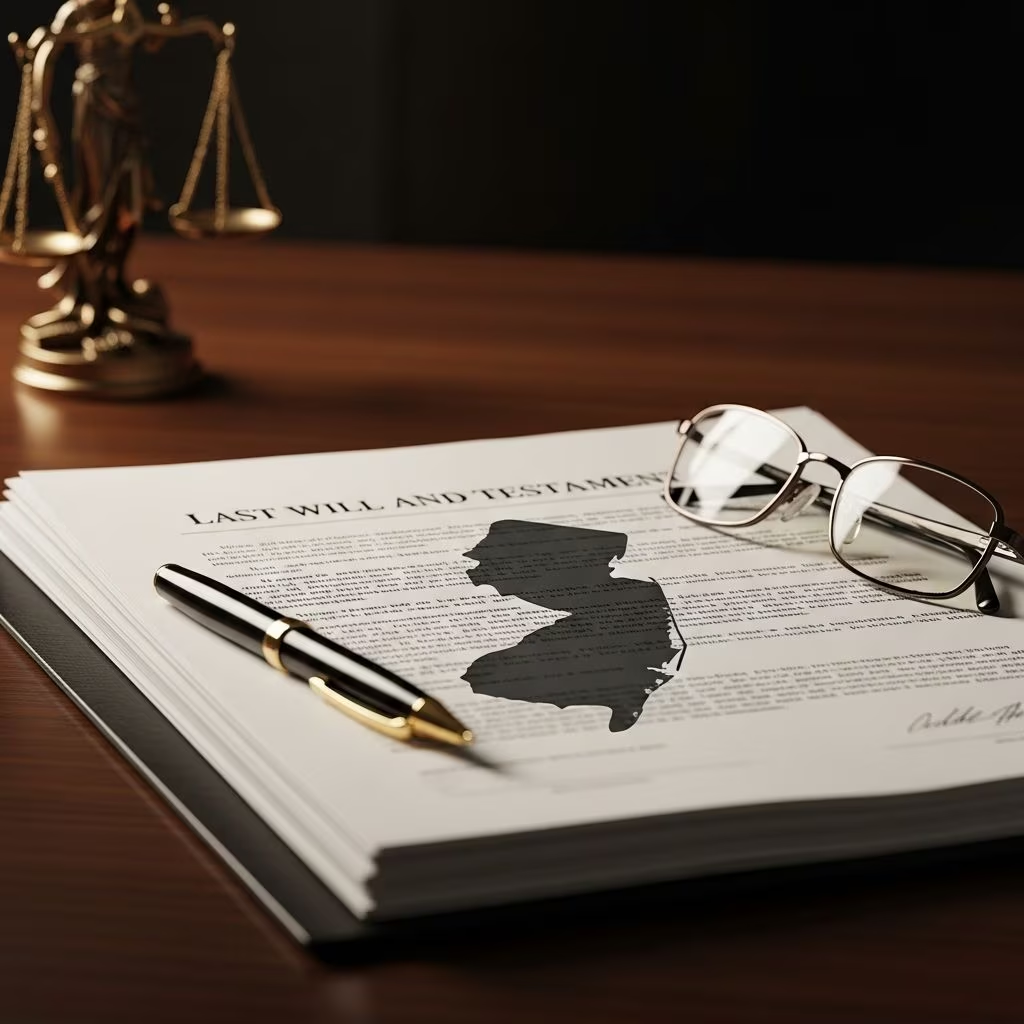
Creating a last will and testament in New Jersey empowers you to dictate how your assets will be distributed after your passing, sparing your loved ones from uncertainty and potential disputes. This legally binding document outlines your wishes for property division, guardianship for minors, and executor appointment, all while adhering to state-specific statutes under Title 3B of the New Jersey Revised Statutes. Without one, New Jersey’s intestacy laws (N.J.S.A. 3B:5-3) dictate distribution, often leading to outcomes misaligned with your intentions, such as a surviving spouse not receiving everything if descendants or parents survive.
Who Can Create a Valid Will in the Garden State?
Eligibility to draft a will in New Jersey is straightforward: you must be at least 18 years old and of sound mind, meaning you understand the nature of your assets, your relationships, and the implications of your decisions. Emancipated minors may qualify in rare cases, but adults typically meet this threshold easily. Sound mind is presumed unless proven otherwise in court, protecting against challenges based on incapacity.
Handwritten or holographic wills are recognized if entirely in your handwriting, including the signature and key provisions, without needing witnesses—though they invite more scrutiny during probate. Formal typed wills, however, remain the gold standard for clarity and enforceability.
Essential Legal Requirements for Execution
For a will to hold up in New Jersey courts, it must satisfy strict formalities outlined in N.J.S.A. 3B:3-2. The document must be in writing—electronic wills are not yet valid—and signed by the testator or by another person at your direction in your presence. Crucially, two witnesses over 18, who are mentally competent, must observe your signing (or acknowledgment) and sign themselves within a reasonable time, ideally in each other’s presence.
- Witness best practices: Choose disinterested parties (not beneficiaries) to minimize conflict risks, though beneficiary witnesses don’t invalidate the will—just their bequest.
- Signing ceremony: All parties present simultaneously ensures authenticity.
A self-proving affidavit elevates your will by including a notarized statement from you and witnesses affirming proper execution, bypassing the need for live testimony in probate. Most post-1979 forms include this; attach it post-signing with a notary verifying identities via photo ID.
Core Components Every NJ Will Must Include
A robust New Jersey will structures your estate plan comprehensively. Begin with your full identification: name, address, age confirmation, and a declaration revoking prior wills.
Appointing an Executor
Name a trusted executor (or personal representative) to manage probate, pay debts, and distribute assets. Include alternates for backups. This person handles filings at the county Surrogate’s Court, so select someone local, organized, and willing.
Beneficiary Designations and Specific Gifts
Detail specific bequests: name recipients and describe items (e.g., ‘my 2025 Toyota Camry to my son John Doe’). A residuary clause catches everything else, directing it to primary (e.g., spouse) then contingent beneficiaries (e.g., children). Address predecease scenarios: if a beneficiary dies first, their share lapses or redirects.
Guardianship for Minor Children
For parents, nominate a guardian for children under 18, specifying property managers if needed. Courts appoint if unspecified, but your choice prevails absent unfitness. Consider testamentary trusts for minors, releasing funds at ages like 26 or upon events, shielding from creditors.
Debts, Taxes, and Final Wishes
Direct payment of debts and taxes from the estate. Optional: burial/cremation instructions, though not binding—use a separate document for those.
| Component | Purpose | Example Language |
|---|---|---|
| Declaration | Establishes validity | ‘I, [Name], of sound mind, revoke all prior wills.’ |
| Executor | Manages estate | ‘I appoint [Name] as executor, with [Alternate] as successor.’ |
| Specific Bequest | Targeted gifts | ‘My jewelry collection to [Beneficiary].’ |
| Residuary | Catches remainder | ‘All remaining property to my children equally.’ |
| Guardian | Child protection | ‘[Name] as guardian for my minor children.’ |
Navigating the Probate Process in New Jersey
Probate validates your will via the county Surrogate’s Court where you resided. Submit: original will (untampered), death certificate, kin list (spouse, descendants, parents—even non-beneficiaries), and fees ($100-$200 via NJ bank check). Self-proving wills streamline this—no witness hunt required.
Timeline: 30-12+ months depending on estate complexity. Executor inventories assets, notifies creditors (via published notice), files taxes. Real estate transfers via deed; personal property distributed post-claims.
- Intestacy pitfalls: Spouse gets all only if no kids/parents survive; otherwise, shares split.
- Small estates: Simplified if under $50,000 (personal property) or $20,000 (realty with affidavit).
Protecting Your Will from Challenges
Wills face contests on grounds like incapacity, undue influence, fraud, improper execution, or revocation. Mitigate by:
- Using video declarations of sound mind.
- Avoiding beneficiary witnesses.
- Updating post-life events (divorce, births).
- Storing safely (original with attorney; copies with executor/family).
Revocation occurs by physical destruction, new will, or written statement.
Advanced Planning: Trusts and Beyond
Pair your will with a revocable living trust to avoid probate entirely—transfer assets in-life. Testamentary trusts within wills manage minors’ inheritances, with trustees controlling distributions. Spendthrift clauses protect against creditors.
Digital assets? List accounts/passwords separately. Joint property, POD/TOD accounts bypass probate automatically.
Frequently Asked Questions (FAQs)
Does a New Jersey will need to be notarized?
No, but a self-proving affidavit (notarized) is highly recommended to simplify probate by confirming execution without witness testimony.
How many witnesses are required?
At least two witnesses aged 18+, competent, signing in your presence and each other’s.
Can I use a holographic will?
Yes, if fully handwritten by you, but formal witnessed wills are safer from challenges.
What if I die without a will?
Intestacy rules apply: spouse may share with kids/parents per N.J.S.A. 3B:5-3.
Where do I file for probate?
County Surrogate’s Court; bring original will, death certificate, kin list, fees.
Can beneficiaries witness my will?
Yes, but they forfeit their bequest to avoid conflicts.
How often should I update my will?
After marriage/divorce, births/deaths, asset changes, or moves.
This guide equips you to craft a ironclad New Jersey last will and testament. Consult an estate attorney for personalized advice, especially complex estates.
References
- Last Will & Testament – Bergen County Surrogate’s Court — Bergen County Surrogate’s Court. Accessed 2026. https://www.bergencountysurrogate.com/wills.html
- New Jersey Last Will & Testament (Married, Minor Children, & Trust) — InLegal Resources Group. Accessed 2026. https://www.ilrg.com/forms/lastwill-married-mc-tr/us/nj
- Free New Jersey Last Will and Testament Form — DoYourOwnWill.com. Accessed 2026. https://www.doyourownwill.com/templates/last-will/nj/
- New Jersey Revised Statutes Section 3B:3-2 — Justia (NJ Official Statutes). 2024. https://law.justia.com/codes/new-jersey/title-3b/section-3b-3-2/
- What Are the Basic Requirements of a Will in New Jersey? — Cosner Law. Accessed 2026. https://cosnerlaw.com/blog/what-are-the-basic-requirements-for-a-valid-new-jersey-will/