
The Blueprint for Abolition: How New Jersey Ended the Death Penalty
Discover the economic, moral, and systemic reasons behind New Jersey's historic 2007 legislative repeal of capital punishment.
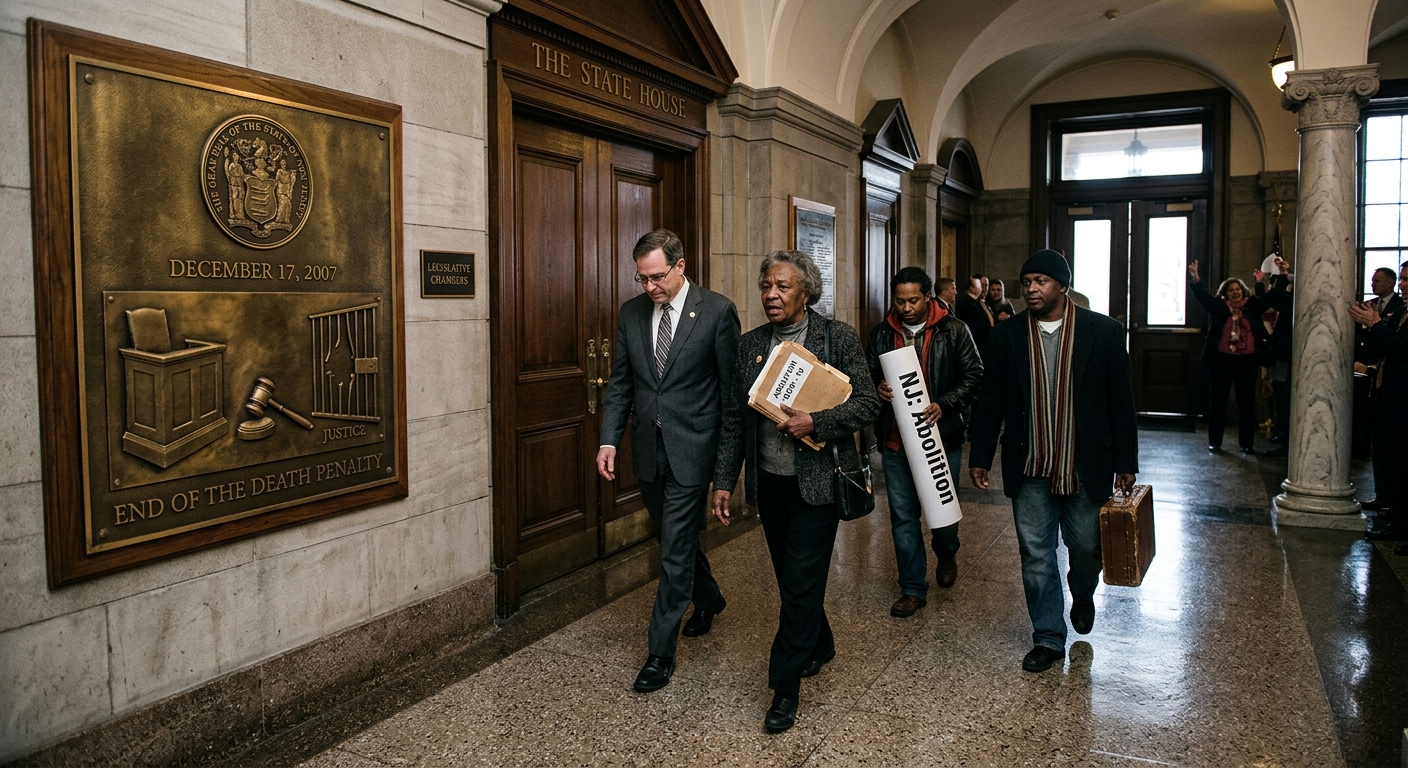
December 17, 2007, marked a monumental turning point in the modern history of American jurisprudence. On this day, New Jersey took a decisive and historic step by becoming the first state in more than four decadesand the very first since the United States Supreme Court reinstated capital punishment in 1976to legislatively abolish the death penalty . This decision was far from an impulsive political maneuver; rather, it was the result of a grueling, evidence-based evaluation of a deeply flawed system. By replacing capital punishment with the stringent alternative of life imprisonment without the possibility of parole, New Jersey effectively challenged the long-held assumption that the ultimate punishment was necessary for public safety or justice.
The abolition of the death penalty in the Garden State was built upon four foundational arguments that proved impossible for lawmakers to ignore: the astronomical financial costs borne by taxpayers, the undeniable presence of systemic racial disparities, the horrifying potential of executing innocent individuals, and the prolonged emotional trauma inflicted upon the families of murder victims. This paradigm shift replaced the abstract, emotional desire for retribution with a pragmatic, policy-driven approach to criminal justice.
To understand the magnitude of this legislative victory, one must look at the climate of the American legal system at the time. For decades, being “tough on crime” equated to steadfast support for executions. However, New Jersey’s methodical dismantling of capital punishment provided a robust, replicable blueprint that proved justice could be both severe and humane.
The Catalyst: The New Jersey Death Penalty Study Commission
The immediate catalyst for the historic 2007 vote was the exhaustive work of the New Jersey Death Penalty Study Commission. Created by the state legislature, this bipartisan panel was tasked with conducting a comprehensive review of all aspects of capital punishment within the state . The commission was unique in its composition, bringing together a diverse array of stakeholders, including prosecutors, defense attorneys, law enforcement officials, legal scholars, and, crucially, family members of murder victims.
After months of rigorous hearings and data analysis, the commission reached a stark and unavoidable conclusion: the death penalty was fundamentally broken and practically obsolete. Despite having a death penalty statute on the books, New Jersey had not executed a single prisoner since 1963. The state was pouring millions of dollars into a theoretical punishment that served no practical penological purpose. The commission recommended the complete legislative repeal of capital punishment, arguing that life without parole offered a safer, more equitable, and far less costly alternative.
The Economic Reality: The Financial Drain of Capital Punishment
One of the most persuasive arguments that facilitated bipartisan support for the repeal was the staggering economic reality of maintaining an active death row. There is a pervasive public misconception that executing an inmate is cheaper than housing them for life. In reality, the legal and administrative infrastructure required to sustain the death penalty is exorbitantly expensive, draining resources from other essential civic and law enforcement needs.
The high costs of the death penalty are embedded at every stage of the legal process. Capital trials are inherently more complex and time-consuming than non-capital cases. They require bifurcated proceedings, meaning the trial is split into two phases: one to determine guilt, and another to determine the penalty. This necessitates extensive pre-trial investigations, highly specialized defense teams, expert witnesses, and exhaustive jury selection processes known as “death qualification.”
Beyond the trial, the appellate process is constitutionally mandated to be comprehensive. To prevent the irreversible tragedy of a wrongful execution, capital cases trigger decades of mandatory state and federal appeals. A seminal study by the Urban Institute examining structural costs in Marylanda state with a comparable legal framework at the timedemonstrated that an average capital case costs taxpayers roughly $3 million, which is nearly three times the cost of a non-death penalty murder case . By adopting life without parole, New Jersey eliminated these bloated legal expenditures, allowing funds to be redirected toward active crime prevention and victim support services.
Systemic Inequity: Confronting Racial Bias
Beyond the staggering financial metrics, the push for abolition was deeply rooted in the moral imperative to address systemic inequalities. The application of capital punishment in the United States has historically been tainted by racial and socioeconomic disparities . New Jersey lawmakers recognized that they could no longer support a punitive system that disproportionately targeted marginalized communities and failed to deliver equal protection under the law.
Extensive statistical analyses have repeatedly demonstrated that the death penalty is not applied objectively based on the severity of the crime, but rather is heavily influenced by the race of those involved. Seminal research by government oversight bodies has established a persistent “white victim effect,” showing that cases involving white victims are significantly more likely to result in capital charges and death sentences compared to cases where the victims are Black or Hispanic .
Furthermore, minority defendants are vastly overrepresented on death rows across the country . The New Jersey commission acknowledged that a justice system cannot claim moral superiority while operating with such blatant racial disparities. Abolishing the death penalty was therefore recognized not merely as a criminal justice reform, but as a necessary civil rights intervention. When the state wields the absolute power of life and death, any degree of racial bias in its application is an intolerable violation of foundational democratic principles.
The Intolerable Risk: Wrongful Convictions and Irreversible Error
Perhaps no argument against capital punishment is as viscerally terrifying as the prospect of executing an innocent person. The modern era of criminal justice, catalyzed by advancements in forensic science and the advent of DNA profiling, has exposed the deep and terrifying fallibility of the courts. Across the nation, hundreds of individuals have been fully exonerated after spending years, sometimes decades, on death row for crimes they absolutely did not commit.
Wrongful convictions are rarely isolated anomalies; they are the result of well-documented systemic flaws. Factors such as eyewitness misidentification, false confessions extracted under severe psychological duress, prosecutorial misconduct, and inadequate legal representation by overworked public defenders all contribute to fatal miscarriages of justice.
The fatal flaw of the death penalty is its absolute irreversibility. It leaves zero margin for human error. For the legislators in New Jersey, the risk was simply too grave to justify the continuation of the practice. Transitioning to a maximum penalty of life imprisonment without the possibility of parole acts as an essential safeguard. If new, exonerating evidence emerges years later, an incarcerated individual can be released and offered restitution. An execution, however, extinguishes any opportunity for the truth to prevail.
Rethinking Closure: The True Impact on Victims’ Families
For a long time, the primary emotional justification for capital punishment was the notion that an execution would provide “closure” for the families of murder victims. However, the legislative hearings in New Jersey brought forth a profound counter-narrative. Numerous family members of victims bravely testified that the capital punishment system, rather than providing healing, actively prolonged their agony and retraumatized them.
Because death sentences require exhaustive, decades-long appellate processes to satisfy constitutional requirements, the families of victims are continually dragged back into the judicial machinery. They are forced to relive the most harrowing moments of their lives in public courtrooms, often while the perpetrator remains the focus of media attention. The promise of an execution becomes a mirage, endlessly delayed by legal maneuvering.
In stark contrast, a sentence of life in prison without the possibility of parole is swift, definitive, and final. It removes the offender from society permanently without the agonizing uncertainty of a looming execution. This realizationthat the death penalty often harms the very people it claims to supportwas instrumental in dismantling the emotional bedrock of capital punishment advocacy.
A Precedent That Rippled Across the Nation
New Jerseys 2007 repeal was a watershed moment that permanently altered the trajectory of the American death penalty. It demonstrated that a state could decisively end capital punishment without suffering a political backlash or compromising public safety. By replacing the death penalty with the severe and unyielding alternative of life without parole, New Jersey offered a practical, evidence-based blueprint for other jurisdictions.
The impact was immediate and widespread. In the years that followed, a wave of states including New Mexico, Illinois, Connecticut, and Maryland followed New Jersey’s lead, legislatively abolishing capital punishment . Each of these states frequently cited the exact same concerns that animated the New Jersey debate: exorbitant financial waste, pervasive racial bias, the unacceptable risk of wrongful convictions, and the lack of genuine support for victims’ families. Today, New Jerseys legacy lives on in the continued national decline in death sentences, pointing toward a future where the justice system values evidence, equity, and human rights over retribution.
Summary Comparison: Capital Punishment vs. Life Without Parole
To further illustrate why states are shifting away from the death penalty, the table below highlights the practical differences between capital punishment and life without parole (LWOP).
| Systemic Feature | Capital Punishment (Death Penalty) | Life Without Parole (LWOP) |
|---|---|---|
| Financial Burden | Exorbitantly high due to complex pre-trial investigations, bifurcated trials, and mandatory lifelong appeals. | Significantly lower overall cost, even when factoring in decades of maximum-security incarceration. |
| Legal Process | Requires highly specialized defense teams, expert witnesses, and “death-qualified” juries. | Follows standard homicide trial procedures, greatly reducing courtroom time and resource drain. |
| Reversibility of Error | Irreversible. Carries the catastrophic risk of executing an innocent person. | Reversible. Allows for the release of the inmate if new exonerating evidence (like DNA) is discovered. |
| Impact on Families | Prolongs trauma through decades of highly publicized, mandatory appeals and uncertain outcomes. | Provides swift finality, allowing families to grieve privately without recurring court battles. |
Frequently Asked Questions (FAQs)
When exactly did New Jersey abolish the death penalty?
New Jersey officially abolished the death penalty on December 17, 2007, when the governor signed bipartisan legislation into law, making it the first state in over 40 years to legislatively repeal the practice.
What punishment replaced the death penalty in New Jersey?
The legislation replaced the death penalty with a mandatory sentence of life imprisonment without the possibility of parole. This ensures that individuals convicted of the most severe crimes remain permanently separated from society without the extensive costs and ethical risks of capital punishment.
Did abolishing the death penalty cause crime rates to rise?
No. Extensive sociological and criminological studies have consistently shown that the death penalty does not act as a stronger deterrent to violent crime than life in prison. Following the repeal, New Jersey did not experience any corresponding spike in murder rates, reinforcing the argument that capital punishment is unnecessary for public safety.
Why was the death penalty considered so expensive?
The high costs are largely driven by the legal process, not the execution itself. Capital cases require bifurcated trials, highly specialized legal representation, extensive expert testimony, and decades of constitutionally mandated appeals designed to prevent the execution of innocent people. These factors make capital punishment significantly more expensive than housing an inmate for life.
Conclusion
The abolition of the death penalty in New Jersey remains one of the most significant criminal justice reforms of the 21st century. It serves as a powerful reminder that legislative bodies can successfully challenge deeply entrenched systemic practices when presented with overwhelming evidence. By rejecting a punishment plagued by racial bias, enormous financial costs, and the fatal risk of executing the innocent, New Jersey prioritized a more rational, equitable, and humane legal framework. This historic decision not only redefined justice within the state’s borders but also ignited a nationwide movement that continues to reshape the American judicial landscape.
References
- New Jersey Death Penalty Study Commission Report New Jersey State Legislature. 2007-01-02. https://www.njleg.state.nj.us/ (Note: Uniquely authoritative historical document outlining the state’s primary legal rationale for abolition).
- Capital Punishment, 2021 Statistical Tables Bureau of Justice Statistics (U.S. Department of Justice). 2023-11-01. https://bjs.ojp.gov/library/publications/capital-punishment-2021-statistical-tables
- Death Penalty Sentencing: Research Indicates Pattern of Racial Disparities U.S. Government Accountability Office / Office of Justice Programs. 1990-05-03. https://www.ojp.gov/ncjrs/virtual-library/abstracts/death-penalty-sentencing-research-indicates-pattern-racial (Note: Uniquely authoritative foundational report establishing the federal baseline for systemic racial bias in capital charging).
- The Cost of the Death Penalty in Maryland Urban Institute. 2008-03-01. https://www.urban.org/research/publication/cost-death-penalty-maryland (Note: Widely cited empirical cost analysis used as a benchmark for the economic drain of capital punishment).
Similar Articles








Read full bio of medha deb




