
Neighbor’s Trees Blocking Your View: What Are Your Rights?
Understand when you can trim, when you must tolerate, and how to handle legal disputes over trees that block your view.
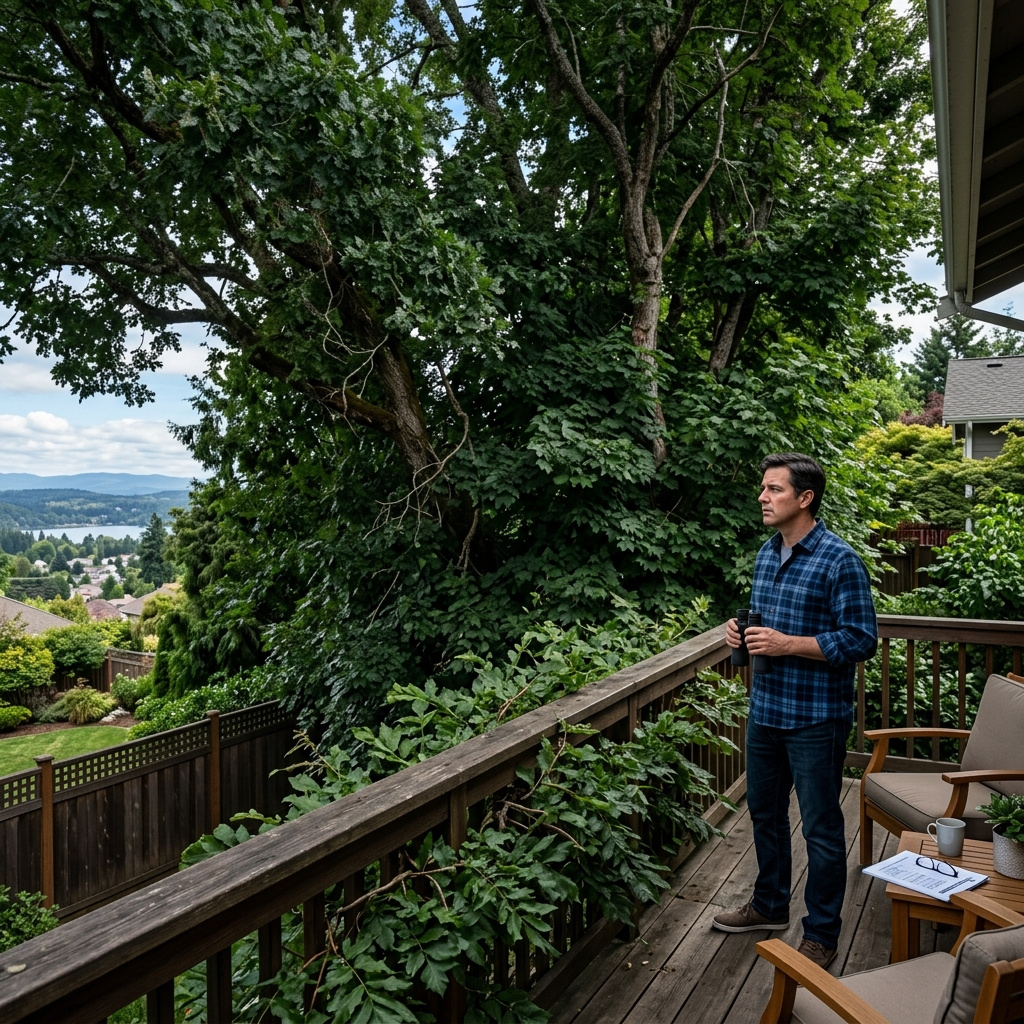
Many homeowners invest in property specifically for a scenic view, only to watch it slowly disappear behind a neighbor’s growing trees. When branches creep over a fence or a tall hedge wipes out a sunset, the question quickly arises: Do you have any legal right to protect your view or trim those trees?
This guide explains the core legal principles that apply when a neighbor’s trees block your view, what you can usually trim on your own, and when you may need professional legal help. While rules vary by state and city, the concepts below provide a foundation for understanding your options.
1. Why Tree Disputes Are Legally Complicated
Tree conflicts sit at the intersection of property rights, local regulation, and neighbor relations. A tree can be a valuable asset, a safety risk, a nuisance, or all three at once. Courts and legislatures have tried to balance the interests of:
- Tree owners who want to enjoy and preserve their landscaping.
- Adjoining owners who want sunlight, safety, and sometimes a view.
- Local governments that may protect public shade trees or regulate vegetation.
Because these interests conflict, the law rarely gives one neighbor complete control. Instead, it offers limited self-help rights, potential remedies in nuisance or trespass, and sometimes special protections for particularly valuable views.
2. Do You Have a Legal Right to a View?
In most of the United States, there is no automatic, general legal right to an unobstructed view from your property. Courts consider views a desirable feature, but not a guaranteed property right. This means that if your neighbor’s tree simply blocks a pleasant vista, you usually cannot force them to cut it down or shorten it solely for that reason.
However, there are important exceptions that may apply in specific circumstances.
2.1 Local View Ordinances
Some cities, particularly those with hillside neighborhoods or coastal vistas, adopt view ordinances that protect certain views from unreasonable obstruction. These ordinances may allow a property owner to seek relief if nearby vegetation substantially blocks a protected view.
Key features of typical view ordinances include:
- They are local, applying only within that specific city or jurisdiction.
- They usually focus on overgrown trees or hedges, not every possible obstruction.
- They often require an attempt at informal resolution before filing a formal claim.
- They may authorize trimming, height reductions, or damages if a violation is found.
If you suspect your city has such a law, checking the municipal code or contacting the local planning or code enforcement department is an important early step.
2.2 Easements and View Agreements
Even where no ordinance exists, property owners can sometimes create private contractual rights to a view through a view easement or similar recorded agreement.
| Feature | View Easement |
|---|---|
| Nature | Legal right recorded in property records that limits what the burdened property owner can do to obstruct a specified view. |
| Creation | Typically established by a written agreement between neighbors, then recorded. |
| Scope | Defines the area of protected view and the types or heights of allowed obstructions. |
| Duration | Often runs with the land, binding future owners unless the easement is terminated. |
Purchasing or negotiating such an easement is sometimes described as “buying back” your view. However, without this kind of agreement, your neighbor is generally free to plant or grow trees within applicable zoning limits, even if that impacts your view.
2.3 Spite Fences and Malicious Obstructions
There is one important situation where an otherwise lawful tree or fence may become illegal: a spite fence. In many states, laws or court decisions restrict intentionally malicious structures or vegetation that serve no genuine purpose other than to annoy a neighbor.
- If a neighbor deliberately plants or maintains trees with the primary goal of blocking your view or sunlight.
- If the obstruction is unusually tall or dense, and lacks a legitimate use.
- If evidence (such as statements, timing, or design) suggests the tree was a retaliatory measure.
Under those circumstances, a court may treat the trees as a spite fence and allow legal remedies, including trimming orders or damages. Proving malicious intent, however, can be difficult and often requires detailed evidence.
3. Your Right to Trim Encroaching Branches and Roots
Even though you rarely have a right to demand a lower tree purely to restore a view, you typically do have some limited self-help rights when branches or roots extend across the property line.
3.1 Common Law Self-Help Rules
Under long-standing common law in many states, a neighbor may trim branches and roots that encroach onto their own property, subject to important limits:
- You can trim only on your side of the boundary line.
- You generally cannot enter your neighbor’s property without permission; doing so may be trespass.
- You must avoid unreasonable damage to the tree; killing or severely injuring it can expose you to liability.
- You bear the cost of trimming unless otherwise agreed.
In some jurisdictions, the portion of the tree that crosses into your property is legally considered under your control for purposes of trimming, but the trunk location still determines ownership.
3.2 Public Shade Trees and Special Statutes
Certain states have specific statutes protecting public shade trees or trees along public ways. For example, Massachusetts law requires a permit from the local tree warden before cutting or trimming many public shade trees, even if the fee owner holds title to the underlying land. Violations can lead to fines or even criminal penalties.
This illustrates why property owners must not assume they can freely trim any tree near their property. When a tree may be protected by statute, a quick review of state or municipal law is essential before taking action.
4. When a Tree Becomes a Legal Nuisance
Although blocking a view alone usually does not constitute a legal nuisance, trees can become actionable if they substantially interfere with another owner’s use and enjoyment of their property.
4.1 What Counts as Nuisance?
Nuisance law focuses on unreasonable, substantial interference with property use. Courts look at factors such as:
- Physical damage to structures from invading roots.
- Safety risks, such as unstable limbs threatening to fall.
- Excessive debris, pests, or other burdens well beyond ordinary tree drop.
One Minnesota law firm notes that obstruction of a view by itself “likely does not constitute a nuisance”, and that courts are more concerned with concrete impacts like damage, pests, or excessive shade than with aesthetics alone.
4.2 Potential Remedies in Nuisance
If a tree does qualify as a nuisance, a neighbor may seek legal relief, which could include:
- A court order requiring trimming or removal.
- Monetary damages for harm to structures or land.
- An injunction preventing further growth that increases the harm.
These remedies typically require filing a lawsuit and presenting credible evidence of both the interference and the extent of damages. Expert testimony from an arborist is often useful to explain the tree’s condition, risks, and the likely impact of different trimming options.
5. Practical Steps Before Taking Legal Action
Because lawsuits are expensive and neighbor relationships can last for years, many legal guides emphasize practical, non-litigation steps before resorting to court.
5.1 Confirm Property Lines and Ownership
Before raising a dispute, it is important to confirm who actually owns the tree and where the boundary line lies.
- Review recorded plat maps or surveys of your property.
- Obtain a current professional survey if boundaries are uncertain.
- Determine whether the tree trunk is on your land, your neighbor’s land, or straddles the line.
Ownership typically follows the trunk, though trees on boundary lines can be treated differently depending on local law.
5.2 Check HOA Rules and Local Ordinances
Homeowners’ associations (HOAs) and local governments often have rules about trees, fences, and views that may apply.
- HOA covenants, conditions, and restrictions (CC&Rs) may contain view protection clauses or height limits.
- City codes may regulate fence heights, hedge height, or vegetation near public ways.
- Tree preservation ordinances may restrict removal of certain species or large trees.
Understanding these rules can clarify whether your neighbor is in compliance and whether you have any formal process for challenging the obstruction.
5.3 Document the Situation Carefully
Comprehensive documentation helps both in informal discussions and any later legal proceedings.
- Take dated photographs from consistent locations showing changes over time.
- Keep copies of written communications with your neighbor.
- Collect estimates from arborists or contractors for proposed trimming.
- Note any damages or safety incidents that relate to the tree.
Detailed records make it easier for attorneys, mediators, or judges to understand the issue and evaluate remedies.
5.4 Consult an Arborist
Hiring a certified arborist can provide an objective assessment of the tree’s health, risks, and the impact of trimming.
- They can identify structural problems, disease, or hazards.
- They can recommend trimming approaches that are safe for the tree and surrounding property.
- Their written report can be used in negotiations or court to support your position.
6. Communicating with Your Neighbor
Legal commentators consistently recommend starting with direct, respectful communication rather than immediate legal threats.
6.1 Start with a Conversation
Explain how the trees affect your property and what change you are seeking. Consider:
- Offering to share the cost of tree trimming.
- Proposing modest height reductions rather than removal.
- Discussing alternatives, such as selective thinning rather than topping.
Many neighbors are willing to accommodate reasonable requests, especially when costs are shared and the proposal respects the health of the tree.
6.2 Use Mediation or HOA Processes
If a direct conversation fails, neutral third parties can help resolve the dispute.
- HOAs may have dispute resolution procedures that include hearings or mediation.
- Community mediation services or local bar associations sometimes offer low-cost mediators.
- Mediators can help reframe the issue and identify compromises that work for both sides.
Compared to litigation, mediation is faster, cheaper, and less damaging to long-term neighbor relationships.
7. When to Involve a Real Estate Attorney
Some situations justify formal legal advice or representation from a real estate or property law attorney.
7.1 Indicators You Need Legal Counsel
- The neighbor threatens legal action or has already filed a complaint.
- A tree presents a serious safety hazard, and the owner refuses to act.
- You believe a view ordinance or easement gives you specific rights that are being violated.
- Property boundaries or ownership of the tree are disputed.
Attorneys can interpret local statutes, evaluate the strength of potential claims, and advise on whether to pursue damages or injunctive relief.
7.2 Typical Legal Remedies
Depending on the facts and jurisdiction, an attorney might recommend:
- Sending a formal demand letter outlining the issue and requested action.
- Filing a claim under a view ordinance or HOA enforcement process.
- Bringing a lawsuit in small claims or civil court for nuisance, trespass, or violation of a recorded easement.
- Seeking an injunction that orders specific trimming or removal where legally justified.
Legal action should generally be considered a last resort, used only after cooperative approaches have failed and the impact on your property is significant.
8. Common Mistakes to Avoid
Well-intentioned property owners sometimes worsen their situation by acting hastily. Avoid these pitfalls:
- Cutting beyond the property line without permission, which may constitute trespass and lead to liability.
- Over-trimming to the point of killing or severely damaging the tree; in some states, treble damages may apply.
- Ignoring public tree protections and special permits required for shade trees.
- Failing to document communications and changes, making later disputes harder to prove.
Careful planning and respect for both property lines and tree health can prevent expensive conflicts.
9. Frequently Asked Questions
FAQ 1: Can I trim my neighbor’s tree to restore my view?
You may typically trim branches and roots that extend onto your property, but only from your side of the boundary and without causing unreasonable damage to the tree. However, you generally cannot trim solely to improve a view if that requires entering their property or substantially harming the tree.
FAQ 2: What if a city view ordinance exists?
Where a valid view ordinance applies, you may have greater protection against trees that block a designated view. These laws can authorize formal complaints and, in some cases, orders to trim or reduce tree height. You must follow the specific procedures set out in the ordinance.
FAQ 3: Do I have an inherent legal right to a view?
In most states, there is no inherent right to an unobstructed view absent a local ordinance, easement, or contract creating that right. Courts typically treat views as a benefit, not a guaranteed property interest.
FAQ 4: Can my neighbor sue me because my tree blocks their view?
A neighbor can file a lawsuit, but success depends on legal grounds such as nuisance, violation of a view ordinance, or breach of an easement. If the complaint rests only on loss of view, many courts are reluctant to grant relief unless additional harm or malicious intent is shown.
FAQ 5: How do I know if a tree is considered a spite fence?
Spite fence laws focus on structures or vegetation placed primarily to annoy or harm a neighbor. Evidence of malicious intent, unusual height, and lack of practical purpose can be relevant. Because this is a fact-specific inquiry, legal advice is recommended if you believe spite fence rules apply.
References
- Can My Neighbor Legally Block My View? — FindLaw. 2022-04-20. https://www.findlaw.com/realestate/neighbors/can-my-neighbor-legally-block-my-view.html
- Can I Trim My Neighbor’s Trees Blocking My View? A Legal Guide — Super Lawyers. 2023-08-15. https://www.superlawyers.com/resources/real-estate/trimming-neighbors-trees-blocking-view/
- Massachusetts law about neighbors and trees — Mass.gov. 2022-07-01. https://www.mass.gov/info-details/massachusetts-law-about-neighbors-and-trees
- Can your neighbor sue you if your tree blocks their view? — Patrick Burns Law. 2019-03-15. https://www.patrickburnslaw.com/blog/2019/03/can-your-neighbor-sue-you-if-your-tree-blocks-their-view/
- Tree Encroachment and View Obstruction Legal Rights FAQs — JustAnswer (Expert Q&A). 2021-06-10. https://www.justanswer.com/ca-real-estate/oct5a-tree-encroachment-view-obstruction-situation.html
Similar Articles








Read full bio of medha deb


