
When a Neighbor’s Tree Falls on Your Property: Who Pays?
Understand liability, insurance, and practical steps when a neighbor’s tree crashes onto your home, yard, or driveway.
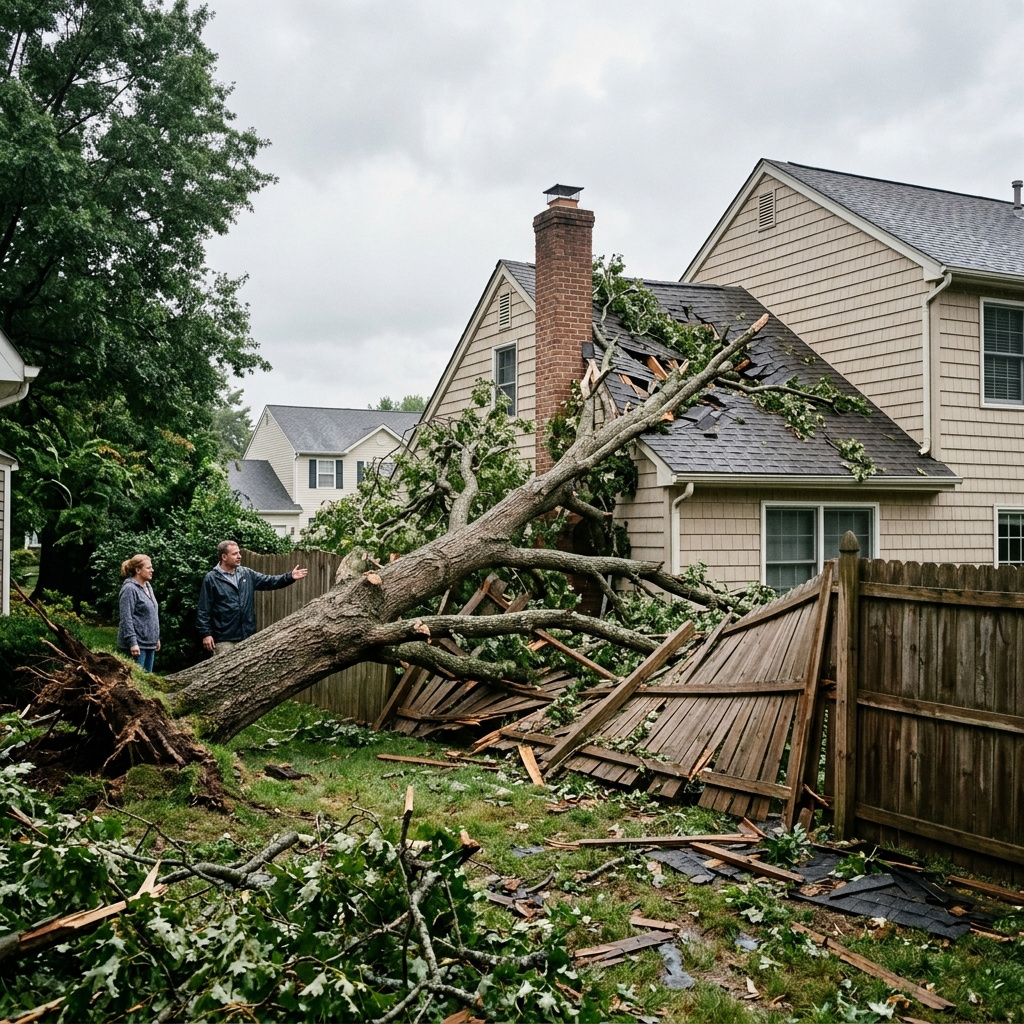
Falling trees are a classic neighborhood headache. A storm rolls through, a large oak comes crashing down, and suddenly everyone wants to know: who is responsible for the damage and cleanup? Is it the neighbor who owns the tree, or the property owner where the tree lands?
This guide walks through how liability typically works, how homeowners insurance usually responds, and the practical steps you should take if a tree lands on your yard, home, or other structures. While specific rules vary by state, there are some common patterns in American property and insurance law that can help you understand what to expect.
Core Principle: Responsibility Usually Follows the Property Line
Across many states, courts and insurance companies start with a basic idea: the owner of the property where the damage occurs generally bears the initial responsibility.
That means:
- If your neighbor’s healthy tree is blown down in a storm and lands on your house, you usually file a claim with your own homeowners insurance, not your neighbor’s insurer.
- If your tree falls on your neighbor’s garage during a strong storm, your neighbor’s policy typically responds to their loss, not yours.
- If a tree falls but does not damage any covered property (for example, it only lies in the yard), insurance may or may not cover removal, depending on your policy language.
In legal language, a storm that knocks down a healthy tree is often treated as an “act of God” or natural event. Because the tree owner did not cause the storm, they are usually not automatically liable for what nature did.
When the Tree Owner Can Be Held Liable
The general “your property, your damage” rule has an important exception: negligence. A tree owner may be financially responsible if they knew or reasonably should have known the tree was dangerous and failed to take reasonable steps to fix the problem.
Examples of Possible Negligence
Tree owners may face liability in situations such as:
- The tree was clearly dead, rotten, or leaning dangerously, and the owner ignored it for a long period.
- The neighbor warned the tree owner in writing that the tree appeared unsafe, and the owner still did nothing.
- The owner attempted a risky DIY removal or trimming without proper skill or equipment, and the tree fell onto a neighbor’s property as a result.
In these cases, the injured neighbor may argue that the tree owner did not act as a reasonably careful property owner. Some state courts and local rules place higher expectations on owners in urban or suburban areas, where close neighbors and structures make dangerous trees more risky.
Healthy Tree vs. Neglected Tree
| Tree Condition | Typical Cause of Fall | Likely Financial Responsibility* |
|---|---|---|
| Healthy tree | Severe storm, strong wind, ice, or heavy snow | Property owner where tree lands uses their own insurance for damage and cleanup. |
| Dead or visibly decayed tree | Falls in mild weather or after repeated warnings about its condition | Tree owner may be found negligent and responsible for neighbor’s damage. |
| Tree cut improperly by owner | Owner’s DIY cutting causes tree to fall onto neighbor’s home | Tree owner is often liable; their liability coverage may respond. |
*Responsibility always depends on state law, local regulations, and specific facts.
How Homeowners Insurance Typically Handles Fallen Trees
Most standard homeowners policies address fallen trees in two separate ways: damage to covered property and cleanup/removal.
Damage to Structures
- If a tree (yours or your neighbor’s) falls on your house, garage, fence, or shed, your own policy often covers the repairs up to policy limits, minus your deductible.
- Coverage usually applies when the fall is caused by a covered peril, such as wind, lightning, or weight of ice and snow, as defined in your policy.
- If the fall was caused by the tree owner’s negligence, your insurer may pay you first and then attempt to recover from the tree owner’s liability insurance (a process called subrogation).
Cost of Tree Removal
Insurance coverage for actually removing the tree is more limited and varies by policy:
- Many policies provide a fixed dollar limit for tree removal (for example, a few hundred dollars), even if you have multiple downed trees.
- Removal is more likely covered when the tree damages a covered structure or blocks access to your driveway or a ramp necessary for mobility.
- If a tree simply falls in your yard without damaging structures, your insurer might not cover cleanup unless specific conditions in the policy are met.
Because policies differ, reviewing your own policy declarations and speaking with your insurer is essential.
First Steps After a Tree Falls on Your Property
When you discover a fallen tree, your actions in the first hours can affect both safety and the success of any insurance claim.
1. Make Safety the Priority
- Check that everyone in the household is safe and move away from any structurally damaged areas.
- Stay clear of downed power lines and do not touch them. Call your utility company or emergency services if lines are down.
- Avoid climbing onto the roof or using chainsaws if you are not trained. Wait for professionals when the scene is unstable.
2. Document the Damage Thoroughly
- Take clear photos and videos of the tree, the damaged areas, and the surrounding conditions (such as storm impacts or debris).
- Capture images from multiple angles and distances, including close-ups of broken structures.
- Save any prior communications with your neighbor about the tree’s condition, especially written notices.
3. Contact Your Insurance Company Promptly
- Notify your insurer as soon as reasonably possible; many policies require prompt notice.
- Provide the photos, videos, and any written communication related to the tree or prior concerns.
- Ask specifically about what is covered: structural repairs, debris removal, and related living expenses if your home is uninhabitable.
4. Prevent Further Damage
- If it is safe, take reasonable temporary measures to prevent additional damage, such as tarping an exposed roof or boarding up broken windows.
- Keep receipts for any emergency repairs or temporary lodging, as these may be reimbursable.
Dealing with Your Neighbor: Communication and Etiquette
Even though the legal and insurance rules are important, the quality of your relationship with your neighbor can strongly influence how smoothly the situation is handled.
Before a Tree Ever Falls
- Maintain open, respectful communication about trees that appear diseased, leaning, or overgrown near the property line.
- Consider sending a polite written note or email if you are concerned about a particular tree. This creates a record that you alerted the owner, which can matter if negligence is later alleged.
- Offer to cooperate on inspection or pruning costs if appropriate, especially for large or shared boundary trees.
After a Tree Falls
- Inform your neighbor as soon as possible, ideally with photos, so they understand what happened.
- Stay calm and factual. Avoid arguing over fault at the scene; liability is often determined later by insurers and, if necessary, courts.
- If the tree owner appears upset or confused about the process, suggest that both of you speak with your insurance carriers or independent legal counsel.
Special Situations You Should Know About
Only Branches or Limbs Cross the Line
If only branches or part of a tree fall across the property line:
- Each property owner is usually responsible for cleaning up on their own side of the boundary.
- If a branch causes damage to a structure (such as a shed or fence), that property owner usually files the claim.
- Many jurisdictions allow you to trim branches that extend over your property, as long as you do not damage the health of the tree and comply with local tree ordinances.
Tree Falls Without Causing Property Damage
If a tree lands only on grass or landscaping and does not damage structures:
- Your insurer may view it as a maintenance or yard issue rather than a covered loss, unless policy language provides otherwise.
- You are typically responsible for organizing and paying for removal, unless local laws or your policy say otherwise.
Rural vs. Urban Expectations
Some states recognize a difference between rural and urban settings:
- In urban or suburban areas, courts sometimes expect owners to be more proactive about inspecting trees and addressing visible dangers, because there is a higher likelihood of harm to neighbors and nearby structures.
- In rural areas, owners may have less legal duty to regularly inspect every tree on large tracts of land, especially where trees pose minimal risk to neighboring structures.
However, ignoring an obviously decaying or leaning tree can create liability in any setting.
Practical Checklist: Protecting Yourself Before Problems Arise
You cannot prevent every storm, but you can reduce legal and financial risk by being proactive. Consider the following steps:
- Inspect your trees regularly. Look for dead limbs, fungi at the base, hollow sections, or significant leaning. Consider consulting a certified arborist for large or questionable trees.
- Keep records. Save invoices from tree services, inspection reports, and photos showing the condition of trees over time. These can show you acted responsibly if a dispute arises.
- Review your homeowners insurance. Understand what perils are covered, the limits for tree removal, and your deductible. Ask your agent how your policy treats fallen trees.
- Address obvious hazards. Do not ignore clearly dead or diseased trees on your property. Prompt removal or professional pruning may cost less than potential lawsuits or uncovered damage.
- Communicate in writing with neighbors about risky trees. If a neighbor’s tree is clearly dangerous, a polite written notice may both encourage action and document that the neighbor was warned.
Frequently Asked Questions
1. If my neighbor’s tree falls on my house, does their insurance have to pay?
Not automatically. In many cases, your own homeowners policy responds to damage on your property when a healthy tree falls due to a storm or other natural event. The neighbor’s liability coverage might become involved only if you can show they were negligent in maintaining a dangerous tree.
2. What if the tree was clearly dead or diseased before it fell?
If you can demonstrate that the tree was visibly unsafe and the owner knew or should have known about its condition, you may have a stronger claim that the owner was negligent. Evidence can include prior written complaints, photos of decay, or arborist reports. In that case, the tree owner’s liability insurance may need to cover your damages.
3. A storm knocked down my tree onto my neighbor’s garage. Am I automatically liable?
In many jurisdictions, you are not automatically liable when a healthy tree is toppled by a storm. Your neighbor normally turns to their own homeowners policy, unless your negligence played a role, such as ignoring a known hazard or attempting an unsafe cut that caused the fall.
4. Does insurance pay to remove a tree that just falls in my yard?
Often, insurance only covers removal when the tree damages a covered structure or blocks key access ways like your driveway. If the tree merely lies in the yard, many policies will not pay for cleanup, or will pay only a limited amount. You will need to check your policy’s specific language.
5. Can I trim branches from my neighbor’s tree that hang over my property?
In many states, property owners have the right to trim branches that cross onto their property, as long as they do not harm the overall health of the tree and follow local tree and zoning ordinances. Because rules vary by city and state, it is wise to check local codes or consult a local attorney before significant trimming.
6. Should I call a lawyer if there is a dispute?
If the damage is substantial, there are questions about negligence, or you and your neighbor cannot agree on responsibility, speaking with a local real estate or property lawyer can help. An attorney can interpret state statutes, local ordinances, and your insurance policy, and advise on whether litigation or negotiation is appropriate.
References
- Storm Damage FAQs — The Maryland People’s Law Library. 2021-10-01. https://www.peoples-law.org/storm-damage-faqs
- Who is Liable When a Tree Falls on a Neighbor’s Property? — Narragansett Trees, Town of Narragansett, RI. 2017-03-17. https://narragansettri.gov/DocumentCenter/View/9326/Who-is-Liable-When-a-Tree-Falls-on-a-Neighbor
- What Ohio law says about liability when tree falls on property — Mahoning Matters. 2023-08-21. https://www.mahoningmatters.com/living/article290913434.html
- My Tree Fell Onto My Neighbors’ Property – Am I Liable For the Resulting Damage? — Oregon Property Owners Association. 2019-05-15. https://www.oregonpropertyowners.org/my-tree-fell-onto-my-neighbors-property-am-i-liable-for-the-resulting-damage/
- What to Do When a Tree Falls on Your Property — Progressive Insurance. 2022-09-07. https://www.progressive.com/answers/tree-fell-on-property/
Similar Articles








Read full bio of medha deb


