
Navigating DUI Charges: Law, Rights, and Defense
A practical legal guide to understanding DUI charges, protecting your job, and building an effective defense strategy.
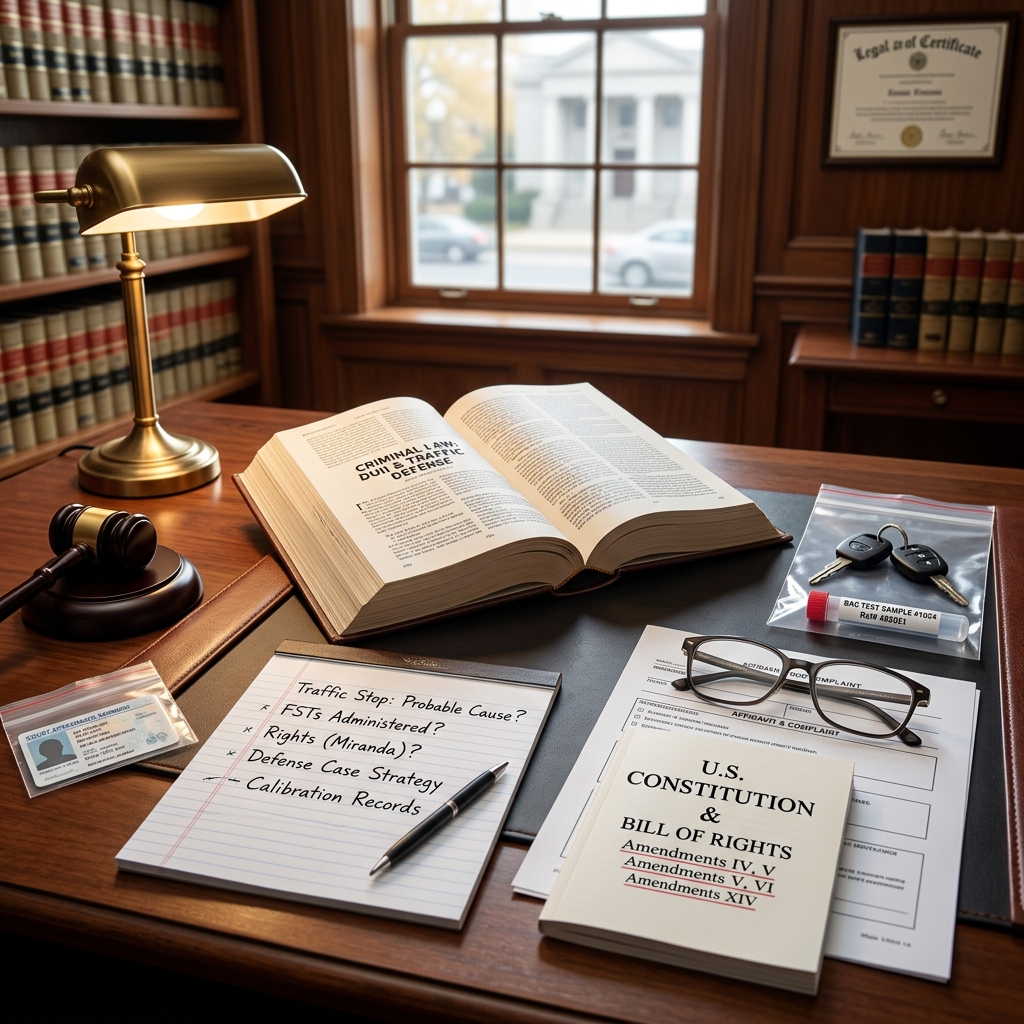
Being accused of driving under the influence (DUI) can feel overwhelming. It touches nearly every part of life: your freedom, your finances, your reputation, and often your job. This guide explains how DUI laws work, what happens after an arrest, how a conviction can affect employment, and the key defense strategies that lawyers commonly use to challenge these charges.
While DUI rules vary from state to state, there are shared principles across the United States that can help you understand the process and make informed decisions. This article is informational and not legal advice; you should always consult a qualified attorney in your jurisdiction if you face DUI charges.
1. Understanding DUI Laws and Basic Legal Concepts
DUI laws are designed to prevent impaired driving and protect public safety. In most states, you can be charged with a DUI in two main ways:
- Per se DUI: Driving with a blood alcohol concentration (BAC) at or above the legal limit, typically 0.08% for non-commercial adult drivers.
- Impairment-based DUI: Driving while impaired by alcohol, drugs, or a combination, even if your measured BAC is below 0.08%.
The government must usually prove two core elements:
- That you were operating or in control of a vehicle.
- That you were under the influence or over the legal BAC limit at the time of driving.
1.1 Common Evidence Used in DUI Cases
Prosecutors often rely on a combination of physical, scientific, and officer-observation evidence. Typical evidence includes:
- Police reports describing driving behavior (weaving, speeding, running lights).
- Officer observations (odor of alcohol, slurred speech, bloodshot eyes, unsteady balance).
- Field sobriety tests, such as walking a straight line or following a pen with your eyes.
- Breath tests using a breathalyzer device, measuring estimated BAC.
- Blood or urine tests, especially where drugs are suspected.
All of this evidence can be challenged. A DUI charge is not the same as a conviction, and the government must prove its case beyond a reasonable doubt.
1.2 Constitutional Protections in DUI Stops
DUI investigations are constrained by constitutional rights, particularly the Fourth Amendment, which protects against unreasonable searches and seizures.
- Reasonable suspicion: Officers generally need a specific, articulable reason to stop your vehicle, such as a traffic violation or erratic driving.
- Probable cause: To arrest you for DUI, police must have enough evidence to reasonably believe a crime has been committed.
- Searches and chemical tests: Breath, blood, and sometimes urine tests are considered searches. Courts evaluate whether those tests were requested and conducted lawfully.
If the stop or arrest violated constitutional standards, your attorney may ask the court to suppress the resulting evidence. When critical evidence is excluded, the prosecution’s case can weaken significantly.
2. What Happens After a DUI Arrest?
Although procedures differ somewhat by state, most DUI cases follow a similar sequence.
2.1 Typical Steps in a DUI Case
| Stage | What Usually Happens |
|---|---|
| Traffic Stop | Officer stops your vehicle based on alleged violation or suspicion. You may be asked questions and to perform field sobriety tests. |
| Arrest & Booking | If the officer believes you are impaired, you may be arrested, transported to a station, and formally booked. |
| Chemical Testing | Breath or blood tests are typically administered to measure BAC and detect drugs. |
| License Consequences | Your license may be suspended administratively by the motor vehicle agency, separate from the criminal case. |
| Arraignment | You appear in court, are informed of the charges, and enter a plea (usually not guilty initially). |
| Pretrial & Motions | Attorneys investigate, request evidence, and file motions to suppress or dismiss where appropriate. |
| Plea or Trial | Most cases are resolved by plea agreements; others go to trial where a judge or jury decides guilt. |
2.2 Possible Criminal Penalties
Penalties depend heavily on prior history, BAC level, presence of minors, injury or property damage, and local law. Common consequences of a first DUI conviction can include:
- Fines and court costs.
- Jail time or probation.
- Mandatory alcohol education or treatment programs.
- License suspension, often from several months up to a year for a first conviction.
- Installation of an ignition interlock device in some cases.
Repeat offenders, high BAC levels, accidents causing injury, or DUIs committed with minors in the vehicle often trigger significantly harsher penalties.
3. Employment and Professional Consequences of a DUI
DUI charges can affect your job long before a case is resolved, and the impact of a conviction can last for years. It is important to distinguish between an arrest and a conviction when evaluating employment risk.
3.1 Arrest Versus Conviction
- DUI arrest: Being charged without a finding of guilt. In most states, an arrest alone is not proof of wrongdoing.
- DUI conviction: A guilty plea or verdict. This becomes part of your criminal record and is often visible in background checks.
Employers and licensing boards generally give much greater weight to convictions than to arrests. Some state laws or federal regulations limit how employers can use arrest records that did not result in a conviction.
3.2 How a DUI Can Affect Your Current Job
Whether you lose your job after a DUI often depends on the nature of your position, your employment contract, and company policies.[10]
- Jobs requiring regular driving (delivery, commercial trucking, sales on the road) are at high risk if your license is suspended.
- Professions governed by strict ethics rules, such as healthcare, finance, and government, may require disclosure of criminal charges and convictions, leading to discipline or termination.
- Some employers maintain zero-tolerance policies for criminal convictions, especially where public trust or safety is central.
Many employment contracts and handbooks include clauses requiring employees to report arrests or convictions within a short timeframe; failing to comply can itself be grounds for discipline or dismissal.[10]
3.3 Impact on Professional Licenses and Certifications
A DUI can also affect professional and occupational licenses:
- Commercial drivers: Federal Motor Carrier Safety Administration rules disqualify commercial drivers from operating certain vehicles for at least one year following a first DUI conviction, even if it occurred in a personal vehicle.
- Healthcare professionals, teachers, and financial workers: Licensing boards may investigate a DUI, require additional reporting, or impose sanctions that range from reprimands to suspension of a license.
- Security clearance: A DUI may complicate or jeopardize clearance processes, particularly if it suggests substance misuse or poor judgment.
3.4 Background Checks and Long-Term Career Effects
Most employers that conduct pre-employment screening will see a DUI conviction when they check criminal records. Some jurisdictions allow expungement or sealing of dismissed charges or certain first offenses, but many do not permit expungement of a DUI conviction itself.
Over the long term, the impact on employment tends to depend on:
- The type of work you pursue.
- How you explain the incident in interviews.
- Whether you have subsequent legal or disciplinary issues.
- Evidence of rehabilitation, such as treatment, support group participation, or a clean record thereafter.
4. Core DUI Defense Strategies Used by Attorneys
Even in cases where breath or blood tests show a high BAC, experienced defense lawyers often find ways to challenge DUI charges. Common strategies focus on the legality of the stop, the reliability of tests, and gaps in proof.
4.1 Challenging the Traffic Stop
If police lacked reasonable suspicion to stop your vehicle, everything that follows—including test results—may be vulnerable to suppression.
- Your lawyer may question whether the officer observed an actual traffic violation or behavior indicating impairment.
- Dashcam or bodycam footage, 911 records, and witness testimony can be critical in evaluating the officer’s stated reasons for the stop.
- If the stop is ruled unconstitutional, key evidence may be excluded, potentially leading to dismissal.
4.2 Disputing Field Sobriety Tests
Field sobriety tests (FSTs) are designed to measure coordination and attention, but they are not perfectly reliable. Courts expect officers to follow specific protocols when administering these tests.
- Improper instructions, uneven surfaces, poor lighting, or medical conditions can skew performance.
- Law enforcement agencies maintain policies for conducting FSTs; deviations from these standards can undermine their evidentiary value.
- An attorney may seek to limit or exclude FST results or highlight their weaknesses at trial.
4.3 Attacking Breath and Chemical Test Results
Breath and blood tests are central to many DUI cases. Defense strategies often focus on device accuracy, testing procedures, and chain of custody.
- Calibration and maintenance: Breathalyzer devices must be properly calibrated and maintained to produce reliable readings. Lack of documentation or missed calibration can justify excluding results.
- Sample collection issues: For blood and urine tests, improper collection, storage, or laboratory handling can create reasonable doubt about accuracy.
- Medical or physiological factors: Gastroesophageal reflux disease (GERD), certain diets, or mouth alcohol can influence breath test results.
4.4 The “Rising BAC” Defense
Alcohol absorption takes time. Under certain circumstances, lawyers argue that a driver’s BAC was below the legal limit at the time of driving but increased by the time the test was administered.
- If a significant delay occurs between driving and testing, and drinking occurred shortly before driving, BAC can continue to rise after the traffic stop.
- An expert witness may analyze timing, drinking patterns, and physiological data to support this argument.
4.5 Contesting Proof of Driving or Vehicle Control
In some jurisdictions, the prosecution must prove that there was an actual volitional movement of the vehicle or that the accused was in control of it as defined by law.
- When no one witnessed driving—such as in cases where police arrive after an accident—attorneys may argue that the state lacks proof that the defendant was the driver.
- Evidence like seat position, key location, and witness statements can be critical in arguments about control of the vehicle.
5. Protecting Your Employment After a DUI Charge
While your criminal case proceeds, you also need a plan to protect your job and future career. Employment consequences are often collateral but very real.[10]
5.1 Reviewing Employment Policies and Contracts
One of the first steps is to carefully review your employment documents:
- Your offer letter or contract.
- Employee handbook or code of conduct.[10]
- Any policies specific to driving, substance use, or criminal history.
These documents often set out whether and how you must report arrests or convictions, and what consequences may follow. Discuss them with your attorney before taking any action.[10]
5.2 Communicating Strategically with Your Employer
How and when you speak to your employer can significantly influence the outcome.
- Consult a criminal defense or employment lawyer before answering detailed questions about the incident.
- When disclosure is required, focus on factual, concise statements rather than speculation or emotional commentary.
- Demonstrate responsibility by acknowledging the seriousness of the situation and explaining steps you are taking to address it, such as legal representation or treatment.
5.3 Exploring Legal Protections and Benefits
Several legal frameworks may help protect your employment under specific circumstances:
- Anti-discrimination laws: Federal statutes such as Title VII primarily protect against discrimination based on protected characteristics (race, sex, religion, etc.), but they can be relevant if an employer uses a DUI as a pretext for unlawful bias.
- Disability-related protections: When a DUI is connected to an underlying substance use disorder and an employee is in recovery, limited protections may arise under disability laws if they concern past addiction rather than current illegal use.
- Unemployment benefits: In some states, individuals terminated after a DUI may still qualify for unemployment if the termination is not deemed misconduct under state law.
These issues are complex and fact-specific; legal advice is critical.
5.4 Practical Steps to Support Your Case and Career
Beyond legal rights, practical actions can help minimize damage:
- Complete court-mandated programs—such as classes, community service, or probation—on time.
- Seek voluntary counseling or treatment if alcohol or drug use contributed to the incident.
- Keep records of class attendance, treatment, and compliance to share with your attorney and, if appropriate, your employer.
- Prepare a brief, professional explanation you can use with future employers that emphasizes responsibility and lessons learned.
6. Practical FAQs About DUI, Work, and Defense
FAQ 1: Do I have to tell my employer about a DUI arrest?
There is usually no universal law requiring disclosure of an arrest to an employer, but many contracts and policies impose their own reporting requirements.[10] Review your documents and speak with your attorney before deciding whether and how to disclose.
FAQ 2: Can I be fired for a DUI conviction?
Yes, in many situations. At-will employment states allow employers to terminate for almost any lawful reason, and a DUI conviction can be considered job-related misconduct, especially for driving-intensive or safety-sensitive positions. However, employers may face limits if termination would violate anti-discrimination or other specific laws.
FAQ 3: Will a DUI always show up on background checks?
A DUI conviction typically appears on standard criminal background checks, and in many jurisdictions it cannot be expunged once a guilty verdict is entered. Dismissed charges or certain diversion outcomes may be eligible for expungement depending on state law, potentially reducing their visibility.
FAQ 4: What should I do immediately after a DUI arrest to protect my job?
Key steps include:
- Contact a qualified DUI defense lawyer promptly.
- Preserve documents related to the incident (citations, test results, court papers).
- Review your employment policies to understand any reporting obligations.[10]
- Avoid making detailed statements to your employer or law enforcement until you have legal advice.
FAQ 5: Are DUI charges ever dismissed?
Yes. Charges can be dismissed when evidence is suppressed, constitutional violations occurred, tests were unreliable, or the prosecution cannot meet its burden of proof. Many DUI cases are resolved through plea bargains that reduce charges or penalties, while others result in acquittal at trial.
References
- DUI Defense Strategies — FindLaw. 2023-05-10. https://www.findlaw.com/dui/cases/defenses-to-drunk-driving.html
- DUI Dismissal Strategies That Work — Daniel B. Ukelson Law Office. 2023-04-01. https://dbouklawoffice.com/blog/dui-dismissal-defense-strategies/
- DUI and Employment: Know Your Legal Rights in Texas — Texas DUI Law Firm. 2022-11-15. https://texasduilawfirm.com/legal-rights-for-dui-and-employment-texas/
- DUI and Your Job in South Carolina: What You Need to Know — Young & Thurmond, LLC. 2023-02-20. https://youngthurmondlaw.com/dui-and-your-job-in-south-carolina-what-you-need-to-know/
- Will a DUI Affect My Job? — My Rights Law. 2023-03-12. https://www.myrightslawgroup.com/blog/will-a-dui-affect-my-job/
- How DUIs Affect Employment in Montgomery County — FrizWoods LLC. 2022-09-30. https://maryland-criminallawyer.com/montgomery-county-criminal/dui-lawyer/employment/
- DUI Conviction and Your Employment — Law Office of James Novak. 2022-08-18. https://www.azduilaws.com/dui/charges-and-penalties/criminal-civil-and-collateral-penalties-of-dui/dui-conviction-and-your-employment/
Similar Articles








Read full bio of medha deb




