
Native Child Welfare Law and the Fifth Circuit
A clear look at the legal fight over tribal child placement rules and federal authority.
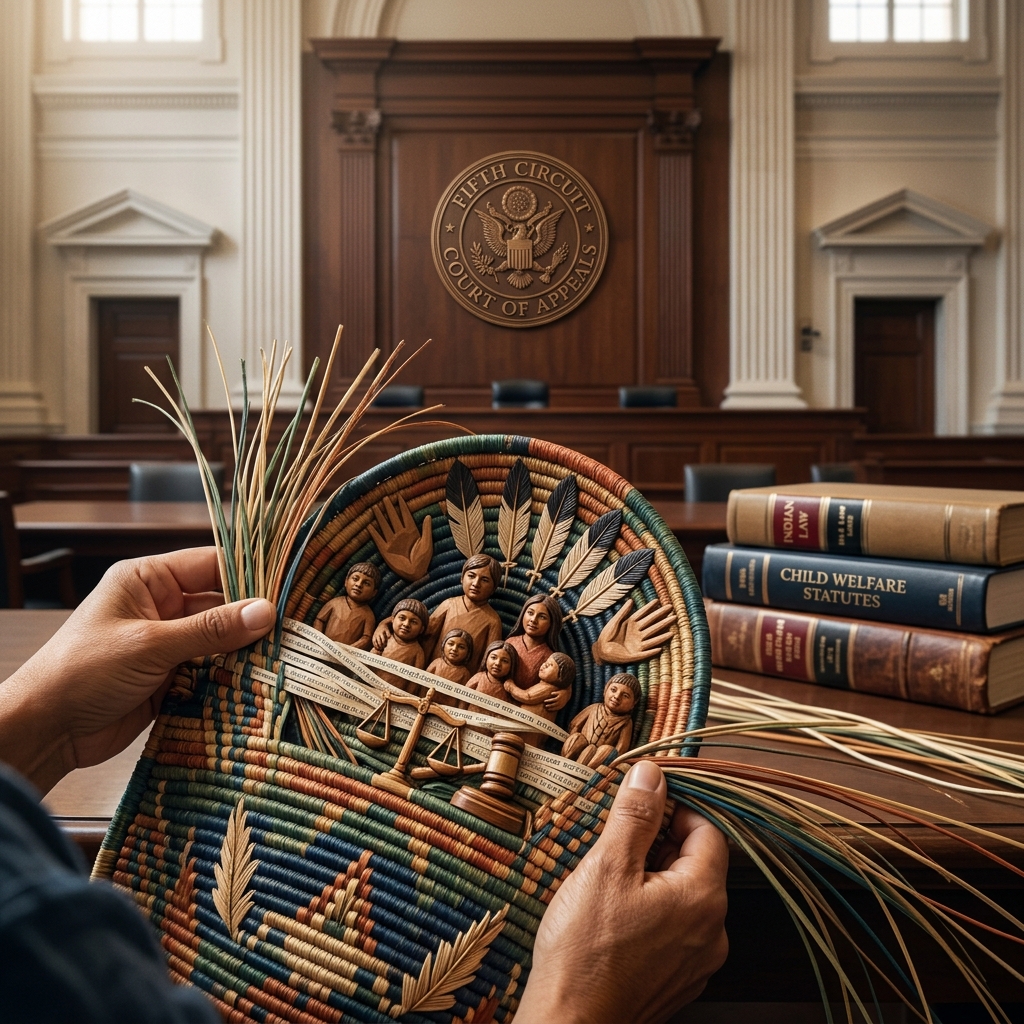
Why the Native Child Welfare Case Drew So Much Attention
The legal battle over the Indian Child Welfare Act, often called ICWA, became one of the most closely watched child welfare cases in the country because it sat at the intersection of family law, federal power, and tribal sovereignty. The dispute asked whether the federal government could create special placement rules for Native American children in foster care and adoption cases, and whether those rules were a lawful response to a long history of family separation.
The case also carried consequences far beyond the courtroom. For tribes, it raised the question of whether the government would continue to recognize tribal authority over children who are part of a Native community. For states and private challengers, it raised questions about equal protection, federalism, and the proper limits of Congress’s power. The Fifth Circuit’s involvement made the issue even more visible because that court had already signaled deep disagreement over how ICWA should be understood.
- The dispute was about child placement rules for Native children.
- The case tested federal authority against state child welfare systems.
- The outcome affected tribes, foster parents, adoptive parents, and children.
What the Indian Child Welfare Act Was Designed to Do
ICWA was enacted in 1978 after Congress concluded that Native children were being removed from their families and communities at alarming rates. The law created standards for foster care and adoption cases involving Native children and gave preference to placements with extended family members, other tribal members, or Native families when possible. According to the Supreme Court coverage in the supplied search results, the statute was defended as a response to concerns that Native children had historically been taken from their homes and placed with white families, often severing ties to their culture and communities.
At a practical level, ICWA requires state courts and agencies to take a different approach when a child is eligible for tribal membership or is otherwise covered by the statute. The law does not automatically block adoption by non-Native families, but it does add procedural protections and placement preferences intended to preserve the child’s connection to family and tribe.
| Core feature | Purpose |
|---|---|
| Notice to tribes | Gives tribes a chance to intervene in child welfare proceedings |
| Placement preferences | Prioritizes family, tribal, and Native placements |
| Higher procedural safeguards | Requires additional steps before removal or adoption |
How the Lawsuit Reached the Fifth Circuit
The challenge that reached the Fifth Circuit began in Texas and later became a broader constitutional attack on ICWA. The plaintiffs included individual parties and, eventually, states that argued the statute unlawfully discriminated on the basis of race and exceeded federal authority. The National Indian Child Welfare Association materials in the search results describe the case as moving through federal district court, a Fifth Circuit panel, and then the full en banc court.
By the time the case was heard in the Fifth Circuit, it had evolved into a major test of whether Native child welfare rules are best understood as race-based preferences or as political and sovereign-related protections tied to federally recognized tribes. That distinction mattered because the law’s defenders argued that ICWA regulates the relationship between the federal government and tribal nations, not racial categories in the abstract.
The Main Constitutional Arguments on Both Sides
The challengers argued that ICWA treated children and families differently based on race and therefore violated equal protection principles. They also claimed that the law intruded on state authority over family law and child placement. In the supplied reporting, opponents framed the statute as one that gave Native families and tribes a legally preferred status that should not exist under the Constitution.
Defenders of the law took the opposite view. They argued that Congress has special authority in Indian affairs and that Native tribes are political entities, not racial groups. Under that interpretation, ICWA is not a race-based classification but a law tied to the federal government’s historic and legal relationship with tribes. Supporters also emphasized the practical purpose of the law: to reduce the chance that Native children would be cut off from their extended families, tribes, and cultural identity.
- Opponents focused on equal protection and state sovereignty.
- Supporters focused on tribal sovereignty and federal Indian law.
- The legal debate turned on whether tribal membership is political or racial in nature.
Why Child Placement Rules Became the Center of the Dispute
At first glance, the case might sound like a narrow disagreement about adoption preferences. In reality, it addressed a much larger policy question: who should have the strongest voice when a Native child enters the child welfare system? The answer matters because child placement decisions are not only about immediate care. They also shape language, identity, kinship, and long-term community ties.
The search results show that the law was intended to keep Native children connected to their communities by giving preference to tribal families and to relatives when possible. That framework is often described as an expanded form of kinship care, where placement with extended family is preferred over placement with unrelated caregivers. In the tribal context, the law adds a second layer by recognizing the importance of preserving a child’s relationship with the tribe itself.
| Placement order under ICWA | General idea |
|---|---|
| Family members | First preference when available and suitable |
| Tribal members | Next preference to maintain tribal connection |
| Other Native families | Additional preference if closer options are unavailable |
| Non-Native placements | Possible when preferred options are not available |
What the Fifth Circuit’s Review Signaled
The Fifth Circuit’s review was important because it reflected a deeper split in how federal courts might interpret ICWA. Some judges and commentators viewed the law as a legitimate exercise of Congress’s power in Indian affairs. Others saw the statute as a special classification that conflicted with constitutional limits. The supplied sources describe the court as issuing a split decision before the case continued toward further review, underscoring how divided the judiciary was on the issue.
That split also mattered geographically. Because the Fifth Circuit covers Texas, Louisiana, and Mississippi, its rulings can have direct effects on families and agencies within those states. Yet a broader constitutional holding could have affected child welfare practice across the nation. That is why the case drew national attention well before the Supreme Court resolved it.
How the Supreme Court Later Framed the Issue
The supplied search results show that the Supreme Court ultimately upheld ICWA in Haaland v. Brackeen, rejecting the central attack that the law was unconstitutional. The Court’s decision preserved the law’s general structure and left in place the federal framework that had governed Native child welfare cases for decades.
That later ruling helps explain why the Fifth Circuit case mattered so much: it was one of the last major stages in a nationwide constitutional challenge. The Supreme Court’s willingness to preserve the statute indicated that the federal government still has a legally recognized role in protecting tribal interests in child placement proceedings.
Practical Effects for Families, Agencies, and Tribes
For families navigating adoption or foster care, ICWA can change the order of decision-making and the steps an agency must take. That does not mean a Native child cannot be adopted by a non-Native family, but it does mean the state must first consider the statute’s placement preferences and give tribes a meaningful role. The result is a process that is more structured and often more demanding than ordinary state adoption cases.
For tribes, the law is a mechanism for protecting membership ties and preventing the loss of children to outside systems. For state agencies, it creates an added obligation to identify covered children early, give proper notice, and document efforts to follow the law. Those procedures can be complicated, but they are central to the statute’s purpose.
- Agencies must identify whether ICWA applies early in the case.
- Tribes may intervene in proceedings involving eligible children.
- Courts must evaluate preferred placements before turning to others.
Why the Case Resonated Beyond Legal Specialists
This dispute resonated because it touched a sensitive and emotional issue: the future of children caught between state systems and tribal communities. Adoption cases are always personal, but ICWA cases carry an additional historical burden. They involve a federal response to past practices that separated Native children from their families on a massive scale. That history gave the statute a moral dimension that many legal debates do not have.
At the same time, the controversy showed how difficult it can be to balance individual family interests with community-based protections. Critics saw a system that treated people differently. Supporters saw a long-overdue correction to policies that had harmed Native communities for generations. The Fifth Circuit case became a focal point because it forced judges to confront both of those realities at once.
Common Questions About ICWA and the Fifth Circuit Case
- Was the case only about adoption?
- No. It involved both foster care and adoption procedures for Native children, along with broader constitutional questions about federal authority and tribal rights.
- Did the law ban non-Native adoptions?
- No. The law sets preferences and procedural requirements, but non-Native placements can still occur when preferred placements are unavailable or unsuitable.
- Why did tribes care so much about the case?
- Because the case affected whether tribes could continue to protect their children’s ties to family, culture, and community through the federal system.
- Did the Supreme Court change the law?
- No. The Supreme Court upheld ICWA and left the basic framework intact.
What the Fifth Circuit Dispute Ultimately Revealed
The Fifth Circuit litigation revealed that ICWA is more than a family law rule. It is also a statement about how the United States treats tribal nations and whether the government recognizes the distinct political status of Native peoples. That is why the case was never just about one adoption or one foster placement. It became a national test of history, sovereignty, and the legal meaning of tribal membership.
By the time the Supreme Court upheld the statute, the message was clear: Native child welfare law remains an area where federal policy, tribal sovereignty, and state family law all intersect. The Fifth Circuit case showed how fragile that balance can be, and why Congress’s 1978 response to the removal of Native children still matters today.
References
- Supreme Court upholds Native American child adoption law — YouTube / Associated Press coverage. 2023-06-15. https://www.youtube.com/watch?v=PGHbo89M3rE
- Indian Child Welfare Act (ICWA) (Haaland v. Brackeen) — Native American Rights Fund. 2023-06-15. https://narf.org/cases/brackeen-v-bernhardt/
- Supreme Court rejects challenges to Indian Child Welfare Act — Kiowa Tribe / CBS News repost. 2023-06-15. https://www.kiowatribe.org/blog/supreme-court-rejects-challenges-indian-child-welfare-act-leaving-law-intact-cbs-news
- LISTEN: Supreme Court likely to uphold adoption law intended to protect Native American families — PBS NewsHour / Associated Press. 2023-04-26. https://www.pbs.org/newshour/politics/listen-live-supreme-court-hears-cases-on-adoption-law-intended-to-protect-native-american-families
- Federal ICWA lawsuit remains a case to watch despite split decision in 5th Circuit Court of Appeals — KNBA. 2021-04-29. https://www.knba.org/news/2021-04-29/federal-icwa-lawsuit-remains-a-case-to-watch-despite-split-decision-in-5th-circuit-court-of-appeals
- The Indian Child Welfare Act – State Bar of Texas — State Bar of Texas. 2021-01-01. https://www.texasbar.com/AM/Template.cfm?Section=articles&Template=%2FCM%2FContentDisplay.cfm&ContentID=69601
Similar Articles








Read full bio of Sneha Tete


