Getting married in Michigan involves more than planning a ceremony and choosing a date. State law sets clear rules for who can marry, how a license is obtained, when the ceremony may happen, and who may legally officiate the marriage. Michigan also places limits on certain family relationships, prohibits bigamy, and does not recognize common law marriage created within the state.
This guide breaks those rules into plain language so couples can better understand the legal steps before the wedding day. It also explains what happens after the license is issued and why the details matter if you want the marriage to be valid under Michigan law.
What Michigan Requires for a Valid Marriage
Michigan treats marriage as a legal contract, not just a personal commitment. That means both parties must be legally eligible to marry, must obtain the proper license, and must complete the ceremony in a way the state recognizes.
In general, a valid marriage in Michigan depends on four things:
- Both people must be legally able to marry.
- The couple must obtain a marriage license before the ceremony.
- The ceremony must occur within the license’s valid period.
- An authorized officiant and the required witnesses must participate.
If any of these steps is missing, the marriage may be invalid or at risk of being challenged later. That is why couples should understand the requirements before the ceremony rather than after it.
Age and Consent Rules
Michigan law requires a person to be at least 18 years old to marry on their own. A marriage entered into in Michigan by someone under 18 is void.
There is a limited exception for people age 16 or 17. In those cases, written parental consent is required. If the underage party does not meet the legal conditions, the marriage cannot proceed as a valid Michigan marriage.
Michigan also expects both parties to have the legal capacity to consent to marriage. That means the person must be able to understand what they are agreeing to. If someone is intoxicated, mentally impaired, or otherwise unable to make a valid decision, the consent requirement may not be satisfied.
Who Is Not Allowed to Marry in Michigan
Michigan law prohibits certain marriages even when both people want to marry. These rules are designed to prevent unlawful or void marriages.
The main restrictions include:
- A person may not marry while already legally married to someone else.
- Close relatives generally may not marry each other.
- Michigan does not permit marriages that fall within prohibited family relationships under state law.
The state’s incest restrictions are detailed and include many direct family relationships. The exact list is set out in the Michigan statutes, so couples with any concern about a family connection should review the law carefully before applying for a license.
Bigamy is also prohibited. In plain terms, a person cannot have more than one spouse at the same time under Michigan law.
How to Get a Marriage License in Michigan
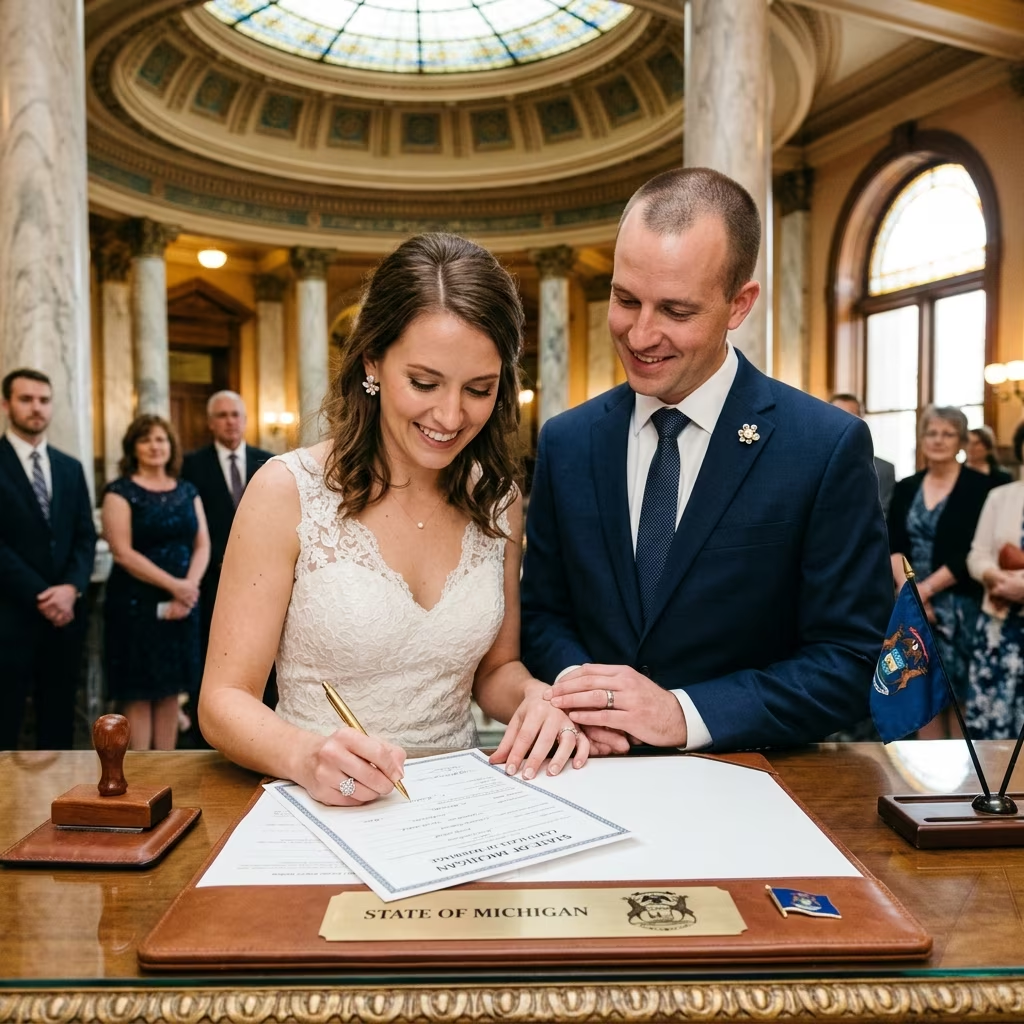
Before the ceremony, couples must apply for a marriage license through the county clerk. The license is the document that allows the marriage to take place legally.
The county where the application is filed depends on residency and where the ceremony will happen. Michigan residents generally apply in the county where they live. If both parties live out of state, they typically apply in the county where the wedding will occur.
Applicants should expect to provide proof of age and identification when requested by the clerk. Michigan law authorizes clerks to ask for supporting documents such as a birth certificate or other proof of age.
Some counties also charge specific fees for the license, and those fees may differ for residents and nonresidents. Because local procedures can vary, couples should check the county clerk’s office rules before applying.
Waiting Period and License Validity
Michigan has a waiting period after the license is issued. The marriage cannot legally happen until the waiting period has passed.
In addition to the waiting period, the license is only valid for a limited time. After it is issued, the couple must complete the ceremony within the license’s validity window.
| Rule | Michigan Requirement |
|---|---|
| Waiting period | Three days after the license is received |
| License validity | 33 days from issuance or application-related timing, depending on the county process described by sources |
| Practical effect | The couple generally has 30 days to marry after the waiting period ends |
Because the timing rules can be easy to misunderstand, couples should apply early enough to avoid problems with their wedding date. If the ceremony happens too soon or too late, the marriage may not be legally effective.
Where the Ceremony May Take Place
Once a valid license is issued, the couple can generally marry anywhere in Michigan. The license is not limited to the county where it was obtained.
That flexibility can be helpful for couples planning destination weddings, courthouse ceremonies, or events in a different county from where they live. Still, the ceremony must follow all other legal requirements, including the timing rules and officiant rules.
Who Can Perform a Michigan Wedding
Michigan limits who may legally solemnize a marriage. The ceremony must be performed by a person authorized under state law, such as a judge, magistrate, mayor, or ordained minister or clergy member recognized for that purpose.
If the officiant is not legally qualified, the ceremony may not create a valid marriage. Couples should confirm the officiant’s authority before the wedding, especially if using a friend or family member in a ceremonial role.
After the ceremony, the officiant must complete the required paperwork and return the license or certificate information as required by law. That administrative step matters because the marriage must be properly recorded with the state.
Witnesses and Ceremony Formalities
Michigan does not require an elaborate ceremony script, but it does require certain formalities. The parties must make a declaration in the presence of the officiant and attending witnesses.
Sources describing Michigan marriage practice also note that at least two witnesses are typically needed for the ceremony. Couples should therefore plan for witnesses in advance rather than assuming the officiant will provide them.
The law is focused less on religious ritual and more on whether the legal declaration and ceremony requirements are met. That means a simple civil ceremony can be valid if it includes the correct participants and documentation.
What Common Law Marriage Means in Michigan
Michigan does not recognize common law marriage created within the state. Simply living together, sharing finances, or presenting yourselves as married does not create a legal marriage in Michigan.
This is important because many couples assume long-term cohabitation gives them the same rights as married spouses. In Michigan, it does not.
Michigan will, however, recognize a common law marriage that was validly created in another jurisdiction if the other place’s law allowed it. That distinction matters for people who moved to Michigan after already establishing a recognized common law marriage elsewhere.
Married Life, Divorce, and Property Issues
While this article focuses on marriage formation, it is useful to understand how Michigan treats marriage if the relationship later ends. Michigan is a no-fault divorce state, which means a spouse does not have to prove wrongdoing to end the marriage.
Michigan also follows equitable distribution rules for property division. That means marital property is divided fairly, but not necessarily equally. Courts consider factors such as the length of the marriage, the needs of the spouses and children, earning ability, and how property was acquired.
Only property acquired during the marriage from sources other than gifts or inheritance is typically treated as marital property. This separation between marital and nonmarital property often becomes important in divorce, but it begins with the legal marriage itself.
Practical Checklist Before You Marry
Before applying for a license or setting a date, couples can use the following checklist:
- Confirm both parties meet Michigan’s age and consent rules.
- Make sure neither person is already married to someone else.
- Check whether any family relationship creates a legal bar to marriage.
- Apply for the license in the correct county.
- Plan for the three-day waiting period.
- Choose a legally authorized officiant.
- Arrange for witnesses if needed.
- Schedule the ceremony within the license’s validity period.
Taking care of these steps early reduces the chance of delays, extra fees, or a ceremony that does not count under state law.
Frequently Asked Questions
Can I marry in Michigan if I live in another state?
Yes. Nonresidents may apply for a Michigan marriage license, usually in the county where the ceremony will occur.
Do I need a license before the wedding?
Yes. Michigan requires a marriage license before the ceremony can be legally recognized.
Can I get married the same day I get the license?
No. Michigan has a three-day waiting period after the license is issued.
Is common law marriage valid in Michigan?
Michigan does not create common law marriages within the state, though it may recognize one validly made in another jurisdiction.
Can a friend officiate my wedding?
Only if that person is legally authorized to solemnize marriages under Michigan law. Couples should verify the officiant’s authority before the ceremony.
What happens if the marriage license expires?
If the ceremony is not completed within the legal validity period, the couple may need to obtain a new license.
References
- Michigan Family Law and Legal Issues Overview — LawInfo. 2026. https://www.lawinfo.com/resources/family-law/michigan/
- What Do You Need for a Legal Marriage in Michigan? — IS Family Law. 2026. https://www.isfamilylaw.com/what-do-you-need-for-a-legal-marriage-in-michigan/
- MCL Section 551.103 — Michigan Legislature. 2026. https://www.legislature.mi.gov/Laws/MCL?objectName=mcl-551-103
- Common Law Marriage in Michigan — Greenleaf Trust. 2026. https://greenleaftrust.com/missives/common-law-marriage-in-michigan/
- Chapter 551 – Marriage — Michigan Legislature. 2026. https://www.legislature.mi.gov/documents/mcl/pdf/mcl-chap551.pdf
- Michigan Marital Property Laws — FindLaw. 2026. https://www.findlaw.com/state/michigan-law/michigan-marital-property-laws.html
- Selected Michigan Marriage Laws — Washtenaw County, Michigan. 2026. https://www.washtenaw.org/selected-michigan-marriage-laws
- Michigan Regulations — Dickinson County, Michigan. 2026. https://www.dickinsoncountymi.gov/government/county_departments/county_clerk/marriage_licenses/michigan_regulations.php