
Marriage License Validity: What Couples Need To Know In 2025
How marriage license deadlines work, why they exist, and what couples should verify before the wedding day.
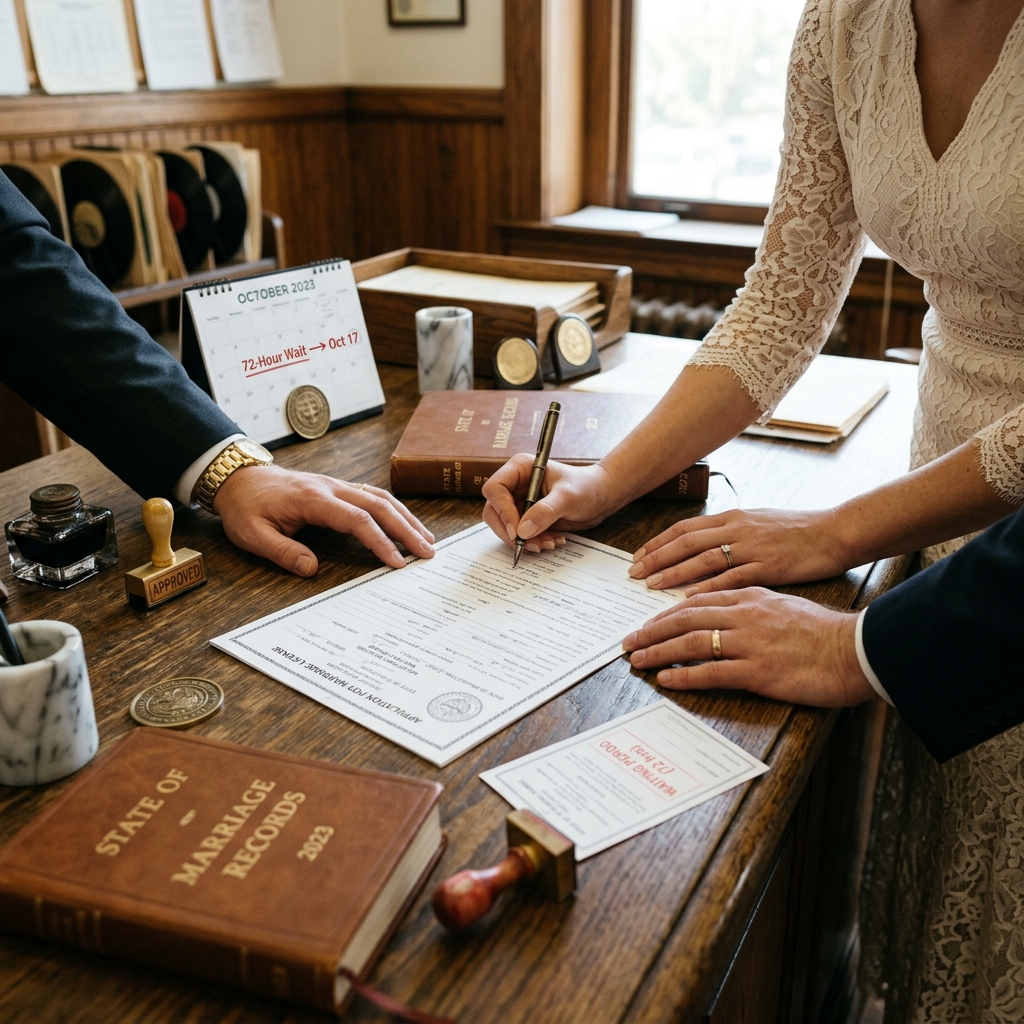
Planning a wedding involves more than choosing a venue, sending invitations, and arranging the reception. One of the most important legal tasks is making sure the marriage license is obtained on time and used before it expires. A license is not just a formality. In many states, it has a limited window of validity, and missing that deadline can create stress, delay the ceremony, or force a couple to reapply.
Rules for marriage licenses vary by state, but the core idea is consistent: couples must complete the legal paperwork within a set period and often must follow a waiting period before the ceremony can occur. Understanding those rules helps avoid last-minute problems and ensures the marriage is legally recognized.
Why a Marriage License Has a Time Limit
A marriage license is issued for a specific purpose and a specific period. Courts and county clerks use expiration dates to make sure the information on the application remains current. If a couple waits too long, details such as names, addresses, or eligibility status may no longer be reliable, so the license must be renewed or replaced.
Time limits also encourage couples to complete the ceremony while the issued document is still valid. In many places, the state wants the paperwork to reflect a real and immediate intention to marry rather than an open-ended permission slip. That is why a license may be valid for only a few weeks or a few months, depending on local law.
Waiting Periods vs. Expiration Dates
It is easy to confuse a waiting period with a license expiration date, but they are different legal rules. A waiting period is the amount of time a couple must wait after applying before they can legally marry. An expiration date is the last day the already-issued license can be used.
Some states require no waiting period at all, while others require couples to wait a day or more. Separately, the license itself may be good for a limited time after issuance. That means a couple can be eligible to marry, but still lose the ability to use the license if the ceremony is not scheduled before the deadline.
| Rule | What it means | Why it matters |
|---|---|---|
| Waiting period | Time after applying before the marriage can happen | Can affect ceremony timing |
| License validity | How long the issued license remains usable | Can require reapplication if missed |
Common Steps Couples Must Take
Although the details vary by jurisdiction, most couples follow a similar process when obtaining a marriage license. The application is often filed in person with a county clerk or similar local office. Applicants may need identification, proof of age, and sometimes additional records if a prior marriage ended through divorce or death.
After the license is issued, the couple must typically have the ceremony performed by an authorized officiant. In many states, the officiant and witnesses must sign the document before it is returned for recording. If any part of that process is delayed too long, the license may no longer be valid.
- Confirm the local office where the application must be filed.
- Bring acceptable identification and any required documents.
- Ask whether there is a waiting period before the ceremony.
- Check the exact expiration date of the license.
- Make sure the officiant knows how and when to return the completed form.
What Happens If the Deadline Is Missed
If a couple lets a marriage license expire before the ceremony, the usual solution is to apply again. That can mean more paperwork, another fee, and a scheduling headache. In some locations, the ceremony itself may have to be postponed even if all other wedding plans are in place.
Missing the deadline does not usually create a legal penalty beyond the inconvenience and cost of starting over. Still, the effect can be significant, especially for couples who planned a destination wedding or who arranged travel for family and guests. A missed deadline can also create confusion if vendors, officiants, or venues have already been booked.
Why State Rules Differ So Much
Marriage is governed by state law, so the requirements are not uniform across the country. Each state sets its own procedures for application, waiting periods, age requirements, and license validity. Some states are relatively flexible, while others impose stricter deadlines or more detailed documentation rules.
These differences reflect local policy choices. Some states prioritize administrative convenience; others focus on ensuring that applicants have time to consider the decision. Because the rules change by location, couples should never assume that what applies in one state will apply in another.
Practical Planning Tips for Couples
The safest approach is to treat the marriage license like any other time-sensitive legal document. Couples should apply close enough to the ceremony to avoid expiration, but not so close that there is no room for processing delays. If the ceremony is planned near a holiday or during a busy season, extra caution is wise because local offices may have limited hours or higher demand.
It is also a good idea to keep a copy of the license details, including the date of issuance and the deadline for use. If the couple is marrying away from home, they should verify whether the license must be obtained in the state where the ceremony will occur or where they live.
- Read the clerk’s instructions before applying.
- Schedule the ceremony only after confirming the license window.
- Build in backup time for rescheduling if needed.
- Ask whether the license must be used in the county of issue.
- Confirm whether certified copies will be needed after recording.
How This Affects Wedding Logistics
Wedding planning often focuses on entertainment, décor, and guest experience, but legal timing can be just as important. A couple may have a beautiful ceremony planned, yet still face a problem if the license is not active on the wedding day. That is why officiants, planners, and couples often work backward from the ceremony date to determine the safest application date.
For destination weddings, the risk is even higher because travel delays, weather, or changes in venue availability can disrupt the schedule. A couple with a narrow window may need to apply early enough to meet legal requirements while still leaving room for unexpected changes.
Frequently Asked Questions
How long is a marriage license usually valid?
Validity periods vary by state and sometimes by county. In many places, a marriage license is valid for a limited period such as a few weeks or a few months, but the exact number of days depends on local law.
Is a waiting period the same as an expiration date?
No. A waiting period is the time between the application and the earliest legal wedding date, while expiration is the last day the issued license can be used.
What if the ceremony is delayed after the license is issued?
If the ceremony is delayed past the license’s expiration date, the couple typically has to apply for a new one and pay any required fee again.
Do both parties have to appear in person?
In many places, yes. Some jurisdictions require both applicants to appear together, while others may allow different procedures. The local clerk’s office sets the exact rule.
Can an officiant correct a mistake on the license?
Minor corrections may sometimes be possible, but the rules vary. Because a completed license must be accurate for recording, any error should be addressed immediately with the issuing office.
Key Takeaways for Couples
Marriage licenses are simple in concept but time-sensitive in practice. A couple must know when to apply, how long the license lasts, whether there is a waiting period, and who is authorized to perform the ceremony. Those details can determine whether the marriage proceeds smoothly or requires a last-minute reset.
Careful planning reduces the risk of an expired document, a postponed ceremony, or avoidable administrative delays. For anyone preparing to marry, checking the local rules early is one of the most practical steps in the entire process.
References
- Marriage License Requirements — California Courts. 2025-11-01. https://www.courts.ca.gov/selfhelp-marriage.htm
- Getting Married in Texas — Texas State Law Library. 2025-03-20. https://www.sll.texas.gov/toolkits/marriage/getting-married-in-texas/
- Marriage Licenses — New York State Department of Health. 2025-02-14. https://www.health.ny.gov/vital_records/marriage.htm
- Marriage License and Ceremony Rules — Florida Department of Health. 2025-06-10. https://www.floridahealth.gov/certificates/certificates/marriage/index.html
Similar Articles








Read full bio of medha deb


