
Legal Marijuana and Parental Rights: CPS Intervention Guide
Understand how legal cannabis use affects child custody and CPS involvement in family law.
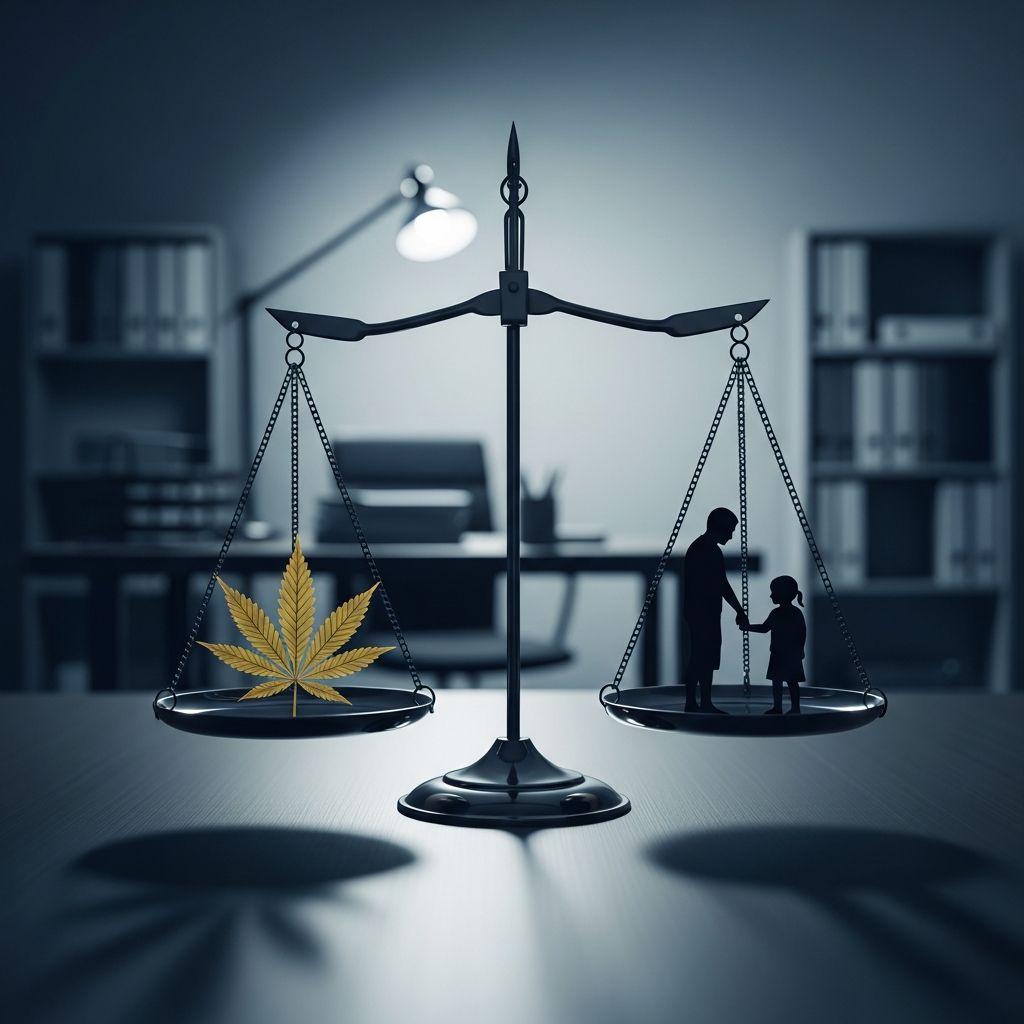
Understanding the Legal Landscape: Cannabis and Child Welfare Systems
The legalization of marijuana in numerous states has created a complex intersection between parental rights and child protective services that parents must navigate carefully. While many adults assume that legal cannabis use automatically shields them from scrutiny by child welfare authorities, the reality is considerably more nuanced. Child Protective Services (CPS) agencies operate under different legal frameworks than the state laws governing adult cannabis consumption, meaning that what is permissible for adults under state law does not necessarily translate to protection from family court intervention or custody challenges.
The fundamental distinction lies in how CPS evaluates parental fitness. Agencies do not simply investigate based on the legality of a substance; rather, they focus on whether any parental behavior—legal or illegal—creates conditions that endanger children or constitute neglect. Cannabis legality is essentially irrelevant to this analysis. Instead, CPS examines factors such as impairment while caregiving, exposure of children to substances, accessibility of drugs to minors, and overall parental capacity to provide safe environments.
The Critical Difference Between State Law and CPS Standards
Many parents mistakenly believe that legalization provides blanket protection against CPS involvement. This misconception can lead to complacency and risky parenting decisions. In reality, legality and safety are separate considerations in child welfare law. Alcohol, prescription painkillers, and tobacco are all legal substances, yet CPS regularly intervenes in cases where parental use of these substances compromises child safety. Cannabis, despite legalization in certain jurisdictions, occupies the same category of scrutiny.
The disconnect between legality and CPS authority stems from federal law, which continues to classify marijuana as a Schedule I controlled substance. This federal prohibition means that even in states where cannabis is legal, the substance remains illegal at the federal level, a distinction that influences how courts and social workers evaluate its presence in households with children. Additionally, child welfare agencies maintain independent standards for determining imminent danger or neglect that are not bound by state legalization statutes.
How CPS Evaluates Parental Cannabis Use
When investigating potential child endangerment or neglect, CPS workers examine specific criteria rather than simply documenting substance presence. These evaluations typically focus on several key areas:
- Functional impairment: Whether the parent is impaired to a degree that prevents adequate supervision, decision-making, or response to emergencies
- Child access and safety: Whether cannabis products are stored securely and inaccessible to minors, and whether children are exposed to secondhand smoke or residual effects
- Pattern of use: Whether consumption is occasional or indicates substance dependence that interferes with parenting responsibilities
- Environmental conditions: Whether the household maintains adequate cleanliness, safety measures, and resources for children’s wellbeing
- Comparative parenting performance: Whether cannabis use correlates with documented instances of neglect, missed medical appointments, truancy, or other harm indicators
The burden of proof for CPS intervention is typically lower than criminal standards. Agencies need only demonstrate that a child faces imminent danger or that conditions constitute neglect under state-specific definitions, which vary considerably. Some jurisdictions explicitly state that cannabis possession or use alone cannot constitute grounds for removal, while others maintain more ambiguous standards that leave room for subjective interpretation by caseworkers and courts.
Custody Implications in Divorce and Family Proceedings
Beyond CPS investigations, parental cannabis use significantly influences custody determinations in divorce, separation, and guardianship proceedings. Family courts apply the “best interest of the child” standard, a flexible framework that allows judges considerable discretion in weighing various factors. Cannabis use—legal or otherwise—can be introduced as evidence during custody hearings, and courts have increasingly taken positions ranging from cautious skepticism to active penalization of cannabis-using parents.
Some courts have implemented policies explicitly stating that legality does not shield parents from custody consequences. Even when judges do not prohibit parenting time outright, they frequently impose restrictions such as requiring parents to abstain from cannabis during designated custody periods or before assuming caregiving responsibilities. Other courts require submission to drug testing, impose supervised visitation conditions, or award primary custody to the non-using parent while limiting the cannabis-using parent to restricted parenting arrangements.
The developing case law in this area remains inconsistent. Few courts have comprehensively addressed cannabis legalization’s impact on custody standards, leaving the field largely unexplored legally. This uncertainty means that judges often rely on outdated prejudices against cannabis or apply standards developed for illegal drug cases without distinguishing between legal and illegal use contexts. Parents in contentious custody situations face the risk that cannabis use, however legal and responsible, may be weaponized by opposing parties to diminish their custody rights.
Disproportionate Impact on Communities of Color
Research indicates that cannabis legalization has not eliminated discriminatory application of child welfare standards. Families of color experience substantially higher rates of CPS investigation and child removal compared to white families, even when controlling for socioeconomic factors and substance use patterns. CPS caseworkers and courts sometimes use cannabis use as a proxy for poor parenting, particularly in marginalized communities, despite legalization efforts designed to reduce criminalization.
This systemic bias means that cannabis use by parents of color may trigger more aggressive CPS responses, more thorough investigations, and higher likelihoods of negative findings compared to identical circumstances involving white families. The legalization of marijuana has not automatically corrected these underlying disparities in how child welfare systems operate. Parents from communities with historical overpolicing and overrepresentation in family court systems face heightened risk of CPS involvement related to legal cannabis use.
Practical Strategies for Responsible Cannabis Use and Legal Protection
Parents who choose to use cannabis legally should implement several protective measures to minimize CPS and custody risks:
- Secure storage: Keep all cannabis products in locked containers placed out of sight and reach of children, following all state-mandated safety requirements for edibles and products
- Consumption location and timing: Use cannabis only when children are not present, preferably outside the home or in designated areas, and never immediately before or during caregiving responsibilities
- No impairment during caregiving: Ensure complete sobriety when supervising children, responding to emergencies, driving, or making decisions affecting child welfare
- Household cleanliness and safety: Maintain premises in clean, safe condition without drug paraphernalia, ash residue, or other visible indicators of substance use
- Documentation of responsible parenting: Maintain records of children’s school attendance, medical appointments, activities, and achievements to demonstrate consistent, attentive parenting
- Legal counsel preparation: Consult with family law attorneys before CPS involvement occurs to understand specific risks in your jurisdiction and prepare responsive strategies
Responding to CPS Inquiries and Investigation
If CPS contacts you regarding cannabis use, several strategic considerations apply. Cooperation with reasonable requests demonstrates good faith, but parents should exercise caution regarding voluntary admissions or consent to searches without legal representation. When caseworkers request temporary cessation of cannabis use, compliance demonstrates commitment to child safety and responsiveness to authority concerns, which favorably influences case outcomes.
Parents should avoid extensive explanations about why they use cannabis, as such discussions introduce subjective judgments about necessity, medical conditions, or mental health status. Cannabis use for medical purposes provides potential legal protections in states with medical marijuana programs, but claiming medical necessity when not genuinely applicable creates credibility problems if discovered. Instead, focus responses on concrete safety practices, responsible storage, and separation of consumption from childcare duties.
Documenting your own responsible practices—photographs of secure storage, written household rules about substance use timing and location, and records of children’s wellbeing—provides evidence supporting responsible parenting if CPS investigations escalate. Such documentation proves particularly valuable if cases proceed to family court, where judges make custody determinations based on evidentiary records rather than CPS findings alone.
Legal Protections and Statutory Developments
Several jurisdictions have enacted statutory protections explicitly stating that legal cannabis possession or use cannot alone constitute grounds for CPS investigation or child removal. New York City’s Resolution 0740 exemplifies this approach, mandating that city child welfare authorities not initiate removal based solely on cannabis possession or use. However, such protections remain limited geographically and typically include explicit carve-outs for cases involving neglect, abuse, or imminent danger regardless of cannabis presence.
The absence of such statutory protections in most jurisdictions means that CPS retains significant discretion to investigate cannabis-using households and that subjective interpretations of “imminent danger” or “neglect” may include cannabis use as a contributing factor. This discretionary authority creates legal vulnerability for cannabis-using parents in most states, particularly in regions where cannabis legalization is more recent or where cultural attitudes toward cannabis remain negative.
Custody and Visitation Restrictions
Courts increasingly impose specific restrictions on cannabis use by parents with custody or visitation rights. Common restrictions include prohibitions on smoking or using cannabis within specified distances of children, requirements to refrain from cannabis use during designated custody periods, and provisions allowing the other parent to terminate visitation if the cannabis-using parent appears impaired. Some arrangements require the cannabis-using parent to submit to drug testing or substance abuse counseling as conditions of maintaining custody or unsupervised visitation.
These restrictions, while less severe than complete custody loss, substantially complicate parental life by limiting private consumption choices and subjecting parents to ongoing monitoring and potential legal consequences for violations. Violating court-ordered cannabis restrictions can result in contempt of court findings, modified custody arrangements, or escalated enforcement mechanisms.
Frequently Asked Questions
Q: Can CPS investigate me solely because I use legal marijuana?
A: In most jurisdictions, CPS cannot initiate investigation based solely on legal cannabis use, but they can investigate if cannabis use correlates with neglect, impairment during caregiving, or child endangerment. A few states explicitly protect legal use from CPS investigation, but most provide limited statutory protection.
Q: Will legal marijuana use automatically result in custody loss?
A: No, but family courts can consider cannabis use as one factor in custody decisions. Courts typically impose restrictions rather than eliminate custody entirely, such as prohibiting use during parenting time or requiring abstinence periods before childcare.
Q: What storage requirements apply to cannabis in households with children?
A: Most states with legal cannabis require secure, child-resistant storage that prevents minor access. Specific requirements vary by jurisdiction but typically mandate locked containers and storage locations out of children’s reach and sight.
Q: Can I use cannabis outdoors in front of my children?
A: Most jurisdictions prohibit consuming cannabis around minors or exposing children to secondhand smoke. Even if legal use itself is permitted, consuming in children’s presence may constitute neglect or endangerment under child welfare standards.
Q: How should I respond if CPS asks me to stop using marijuana?
A: Compliance with CPS requests—even if you believe your use is legally protected—demonstrates cooperation and commitment to child safety. Such compliance often favorably influences investigation outcomes and demonstrates responsiveness to authority concerns.
Q: Does medical marijuana use receive different legal treatment in custody cases?
A: Medical marijuana use may receive somewhat favorable consideration if you are a registered patient in a medical marijuana program and can document legitimate medical necessity. However, courts are not required to treat medical use differently and may still impose restrictions or consider it a factor in custody determinations.
References
- Can CPS Take My Child for Smoking Legal Marijuana? — Avvo. Accessed 2026. https://www.avvo.com/legal-answers/can-cps-take-my-child-for-smoking-legal-marijuana–3643333.html
- A Guide to Cannabis, Legal Marijuana and Family Law Matters — LawJaw. https://lawjaw.com/
- Marijuana Laws and Child Protective Services Cases — WTVG News. https://www.13abc.com/
Similar Articles








Read full bio of Sneha Tete




