
Legal Recourse After Public Transit Accidents
Understanding your rights and options when injured on public transportation.
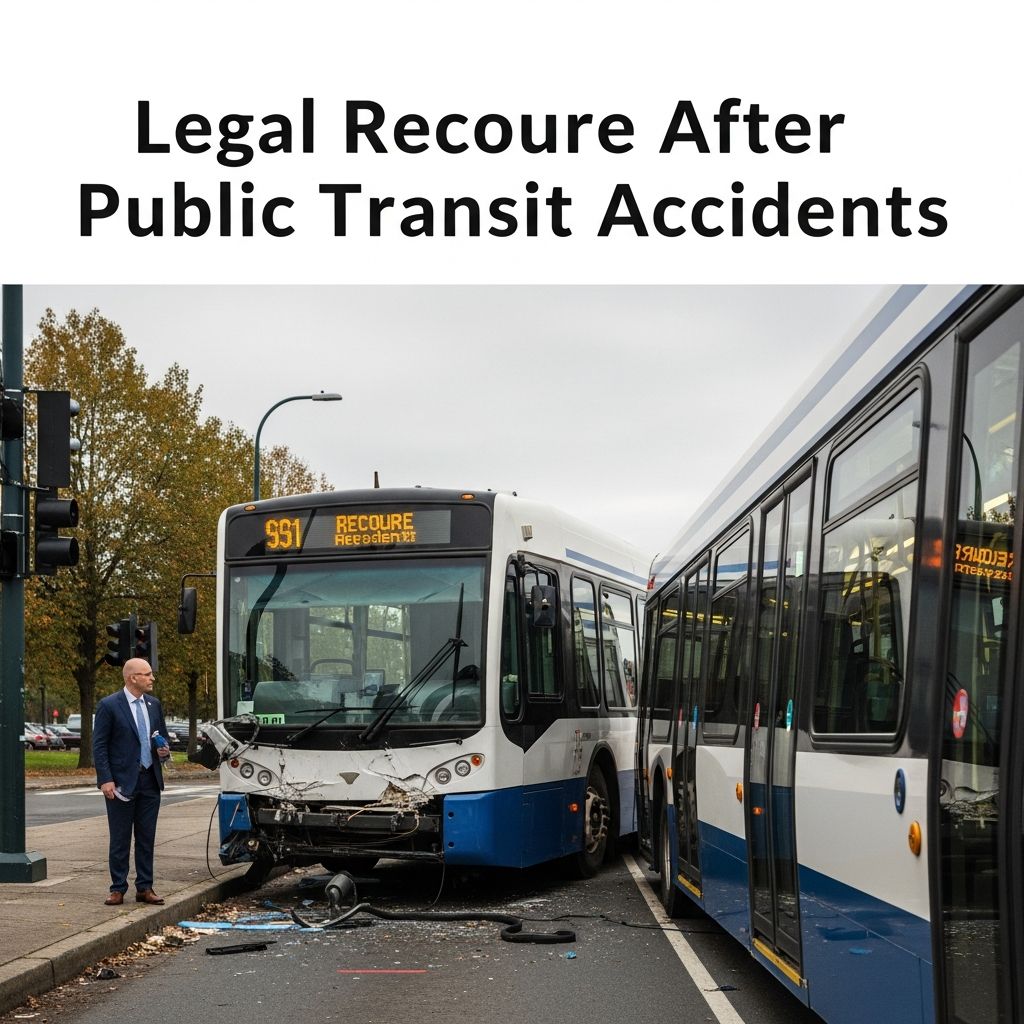
Understanding Your Rights After a Public Transit Accident
When an accident occurs on public transportation—whether involving a bus, train, or other transit vehicle—passengers often face significant physical injuries, emotional trauma, and financial losses. Unlike accidents on private property or with private vehicles, public transit incidents involve unique legal complexities because the responsible parties may include government agencies, private operators, or third-party contractors. Understanding whether you have the right to pursue legal action is the first critical step toward recovery.
The fundamental question many injured passengers ask is straightforward: can I sue for injuries sustained during a public transit accident? The answer is yes, but the process and your success depend on several factors, including the type of transit operator, applicable state laws, and the strength of evidence supporting negligence.
Determining Liability in Transit-Related Incidents
Establishing who bears legal responsibility for your injuries is essential to any successful claim. Public transit accidents can involve multiple liable parties, and identifying them requires careful investigation and legal analysis.
The primary entity involved is typically the transit operator—either a private company or government agency running the service. Bus drivers, train operators, and their employers can be held accountable if their negligent actions or omissions caused your injuries. This might include violations of traffic laws, failure to maintain safe vehicle conditions, or operating the vehicle recklessly.
Beyond the direct operator, third-party liability often comes into play. If another vehicle struck the transit vehicle, that driver’s insurance may be responsible. Contractors responsible for vehicle maintenance, road construction companies, or property owners whose conditions contributed to the accident may also bear liability.
Government agencies operating public transit systems present additional complexity. These entities often enjoy sovereign immunity protections that limit liability exposure, though most jurisdictions allow claims through specific procedures and with reduced liability caps.
Elements Required to Establish a Successful Claim
To win compensation in a public transit accident case, you must prove specific legal elements that together constitute negligence. These foundational components apply across most jurisdictions, though state-specific variations exist.
Duty of Care: Transit operators have a legal obligation to operate their vehicles safely and maintain their equipment in proper working condition. This includes hiring qualified drivers, providing adequate training, conducting regular inspections, and following traffic laws. Establishing this duty is typically straightforward because the operator’s responsibility to passengers is well-established in law.
Breach of Duty: You must demonstrate that the operator violated this duty through negligent conduct. Examples include excessive speed, failure to check mirrors before turning, inadequate vehicle maintenance, operating with faulty brakes, or allowing dangerous conditions to persist despite knowledge of risks. Evidence of policy violations or failure to follow safety protocols strengthens this element.
Causation: Proving causation requires showing that the operator’s negligent actions directly caused your injuries. This involves establishing both cause-in-fact—that the breach directly led to the accident—and proximate cause, meaning your injuries were a foreseeable result of the negligence. You cannot recover if intervening factors severed the connection between the breach and your harm.
Quantifiable Damages: You must suffer actual injuries or losses eligible for compensation. These include medical expenses, lost wages, pain and suffering, permanent disability, and reduced quality of life. Documentation of these losses through medical records, wage statements, and expert testimony becomes crucial during settlement negotiations or trial.
Critical Procedural Deadlines for Filing Claims
One of the most significant challenges in pursuing public transit accident claims involves meeting strict procedural deadlines. Missing these windows can permanently bar recovery, regardless of claim merit.
Government-operated transit systems typically impose notice requirements more restrictive than those for private operators. Many jurisdictions require formal notice of injury within six months of the accident, though some allow slightly longer periods. This notice must contain specific information: the date and time of the incident, detailed description of what occurred, the nature of injuries sustained, and damages claimed.
After providing the required notice, you must file an actual lawsuit within the statutory period. Most states establish a two-year statute of limitations for personal injury claims, though some jurisdictions allow three years. However, these timelines begin running from the accident date, not from when you file notice. Failing to file within this window results in dismissal of your case with prejudice, eliminating any possibility of recovery.
Special rules apply for minors and certain other circumstances. Typically, the statute of limitations clock does not begin running until a minor reaches the age of majority, potentially extending the filing deadline. The discovery rule in some jurisdictions allows an extended deadline if the injury was not immediately apparent, though this exception has strict limitations.
Comparative Fault and Reduced Recovery
Many transit accident cases involve some degree of contributory negligence by the passenger. Most states follow modified comparative negligence rules that allow recovery even when you bear partial fault, provided your responsibility remains below a threshold—commonly 50% or 51%.
Under these rules, if you are deemed 30% at fault for the accident while the transit operator is 70% responsible, you can recover 70% of your total damages. However, if your fault exceeds the threshold, recovery is barred entirely. Examples of passenger contributory negligence include failing to hold secure railings while standing, not paying attention while boarding or exiting, ignoring safety warnings, or standing in prohibited areas.
Transit authorities frequently rely on comparative negligence arguments to reduce their exposure. Demonstrating that a passenger engaged in unsafe behavior allows them to argue their responsibility is not absolute. This defense underscores the importance of witness testimony and surveillance footage that may contradict the operator’s version of events.
Insurance Coverage and Settlement Negotiations
Understanding available insurance coverage significantly affects settlement potential. Private transit operators typically carry substantial commercial liability policies designed to cover passenger injury claims. These policies often include high coverage limits because transit companies anticipate injuries from accidents.
Government-operated systems frequently carry different insurance arrangements. Rather than traditional policies, they may rely on self-insurance or government liability funds with statutory caps limiting recovery amounts. These caps vary by jurisdiction but often substantially restrict compensation compared to private operator coverage.
Third-party insurance becomes relevant when multiple parties contributed to the accident. If another vehicle caused the collision, that driver’s liability insurance may cover your injuries. In complex incidents, multiple insurance carriers might share responsibility, requiring coordinated negotiations.
Insurance companies approach these claims strategically, seeking to minimize payouts. They may challenge injury severity, dispute causation, or emphasize comparative fault. Having legal representation ensures your losses are fully documented and presented persuasively. Experienced attorneys understand settlement valuation and recognize when initial offers fall far short of fair compensation.
The Investigation and Evidence Gathering Process
Building a strong claim requires comprehensive evidence collection and investigation. This process should begin immediately after the accident and continue throughout the claim lifecycle.
Internal transit records prove invaluable. Maintenance logs reveal whether the vehicle received proper upkeep and whether known defects were addressed. Driver employment and training records show whether the operator possessed appropriate qualifications and certifications. Safety reports document past incidents and patterns of negligence. Obtaining these records requires formal discovery requests once litigation begins, though some may be accessible through public records requests before filing suit.
Surveillance footage and black box data provide objective evidence of what occurred. Transit vehicles and stations often have security cameras capturing incidents from multiple angles. Modern buses and trains contain electronic data recorders documenting speed, braking patterns, and operator actions preceding the accident. Accident reconstruction experts can analyze this data to determine causation and liability.
Witness statements provide crucial corroboration. Other passengers, pedestrians, and transit employees who witnessed the incident can testify about what they observed. Early interviews, while memories remain fresh, produce more reliable accounts than testimony given months or years later. Identifying and preserving witness information requires promptness before witnesses become difficult to locate.
Scene evidence includes photographs documenting vehicle damage, road conditions, visibility factors, and environmental circumstances at the time of the accident. Medical records establish injury severity and treatment necessity. Expert reports from physicians, rehabilitation specialists, or vocational experts quantify damages and prognosis.
Navigating the Claims and Litigation Process
The path from accident to resolution involves several sequential phases, each requiring strategic decision-making and documentation.
Initial Consultation and Evaluation: After consulting an attorney, your case undergoes evaluation based on liability strength, injury severity, and insurance coverage. This assessment determines whether settlement negotiations or litigation offers better prospects.
Pre-Litigation Demand: Your attorney typically sends a detailed demand letter to the responsible party or their insurance carrier. This letter presents evidence of negligence, documents your damages, and requests compensation. Many claims resolve at this stage if the evidence is compelling and damages reasonable.
Discovery and Investigation: If settlement negotiations stall, formal litigation begins. Discovery allows both sides to exchange relevant documents, obtain medical records, take depositions, and conduct interrogatories. This phase often reveals evidence forcing settlement reassessment.
Settlement Negotiations: Throughout litigation, settlement discussions continue. Most cases resolve without trial once both parties understand evidence strength and litigation costs.
Trial Preparation and Presentation: If settlement proves impossible, the case proceeds to trial. Attorneys prepare witnesses, coordinate expert testimony, develop legal arguments, and present evidence before a judge or jury. Trial preparation begins early, with every case investigation designed with trial viability in mind.
Calculating and Documenting Your Losses
Compensation in transit accident cases covers both economic and non-economic damages. Accurate calculation requires thorough documentation of all losses resulting from the incident.
Economic damages include quantifiable out-of-pocket expenses: medical treatment costs, surgical procedures, ongoing therapy, prescription medications, and future medical care. Lost wages from time unable to work, both temporary and permanent income reduction from disability, constitute significant economic losses. Transportation costs, home modifications for accessibility, and assistive device expenses may also be recoverable.
Non-economic damages address subjective suffering: physical pain, emotional distress, anxiety about future transit use, loss of enjoyment in activities previously enjoyed, and diminished quality of life. While more difficult to quantify, courts recognize these losses as legitimate compensable harm. Testimony describing daily suffering, lifestyle changes, and psychological impact helps juries understand non-economic loss magnitude.
Calculating future damages requires expert analysis. Life expectancy, medical cost inflation, wage earning capacity, and rehabilitation needs must be projected. Economists and medical experts provide testimony supporting reasonable future damage estimates.
Defenses Transit Operators Commonly Raise
Understanding likely defense arguments helps you anticipate challenges and develop counterarguments. Transit operators employ several common defensive strategies.
Lack of negligence claims assert that the operator followed all safety protocols, maintained vehicles properly, and operated within traffic laws. They may argue external factors—weather conditions, road defects, or third-party conduct—caused the accident beyond their control.
Failure to prove causation arguments challenge whether operator negligence actually caused the accident. They may suggest intervening factors broke the causal chain, such as the passenger’s own unsafe behavior or a completely unforeseeable event.
Comparative negligence defense attributes significant fault to the passenger, arguing unsafe conduct contributed substantially to injuries. They’ll present evidence suggesting the passenger failed to hold railings, wasn’t watching during boarding, or violated posted safety rules.
Sovereign immunity and statutory caps arguments are specific to government operators. They assert that government agencies enjoy legal protections limiting liability and capping damages, even when negligence exists.
Frequently Asked Questions About Public Transit Accident Claims
Q: How long do I have to file a lawsuit after a public transit accident?
A: The statute of limitations typically ranges from two to three years, depending on your jurisdiction. However, if the transit operator is a government agency, you must provide formal notice within six months before filing suit. Missing these deadlines can permanently bar your claim.
Q: Can I sue if the accident was partially my fault?
A: Yes, in most states with comparative negligence rules. You can recover damages proportional to the operator’s fault as long as your responsibility doesn’t exceed 50-51%, depending on your state’s specific rule.
Q: What if the bus driver worked for a private company rather than a government agency?
A: Private operators generally face fewer legal restrictions than government agencies and carry substantial commercial liability insurance. Your claim process is often simpler, though the fundamental negligence elements remain identical.
Q: What types of injuries qualify for compensation in transit accident cases?
A: Any injury resulting from the accident qualifies—from minor cuts and bruises to severe traumatic injuries. Additionally, emotional trauma and psychological injuries recognized by mental health professionals are compensable.
Q: Do I need an attorney to pursue a transit accident claim?
A: While not legally required, having attorney representation significantly increases claim value. Insurance companies often reduce settlement offers to unrepresented claimants, and procedural complexity makes professional guidance valuable.
Q: How much time does the entire claims process typically require?
A: Simple cases with clear liability may resolve within months through settlement. Complex cases involving multiple parties or litigation can extend two to three years or longer, though most settle before trial.
References
- Bus Accident Lawsuit: When Victims Can Take Legal Action — Ben Crump Law Firm. 2024. https://bencrump.com/bus-accident-lawsuit-when-victims-can-take-action/
- How Can Public Transit Authorities Defend Against Accident Claims? — Jack Shapiro Law. 2024. https://jackshapirolaw.com/blog/how-can-public-transit-authorities-defend-against-accident-claims/
- The Elements of a Bus Accident Lawsuit — Allen & Allen. 2024. https://www.allenandallen.com/blog/elements-of-bus-accident-lawsuit/
- What Is the Legal Process After a Bus Accident? — Matlin Injury Law. 2024. https://matlininjurylaw.com/faqs/what-is-the-legal-process-after-a-bus-accident/
- Can You Sue Public Transportation? — Angel Reyes & Associates. 2024. https://www.reyeslaw.com/blog/can-you-sue-public-transportation/
- What to Do After a Bus Accident — Ged Lawyers. 2024. https://www.gedlawyers.com/faqs/what-to-do-after-a-bus-accident/
- The Elements of a Bus Accident Lawsuit — Lorenz & Lorenz. 2024. https://www.lorenzandlorenz.com/blog/the-elements-of-a-bus-accident-lawsuit/
Similar Articles








Read full bio of medha deb


