
Protesters’ Rights: What To Do If Arrested During Any Protest
Understand your constitutional protections, police interactions, and post-arrest steps during demonstrations to safeguard your freedoms effectively.
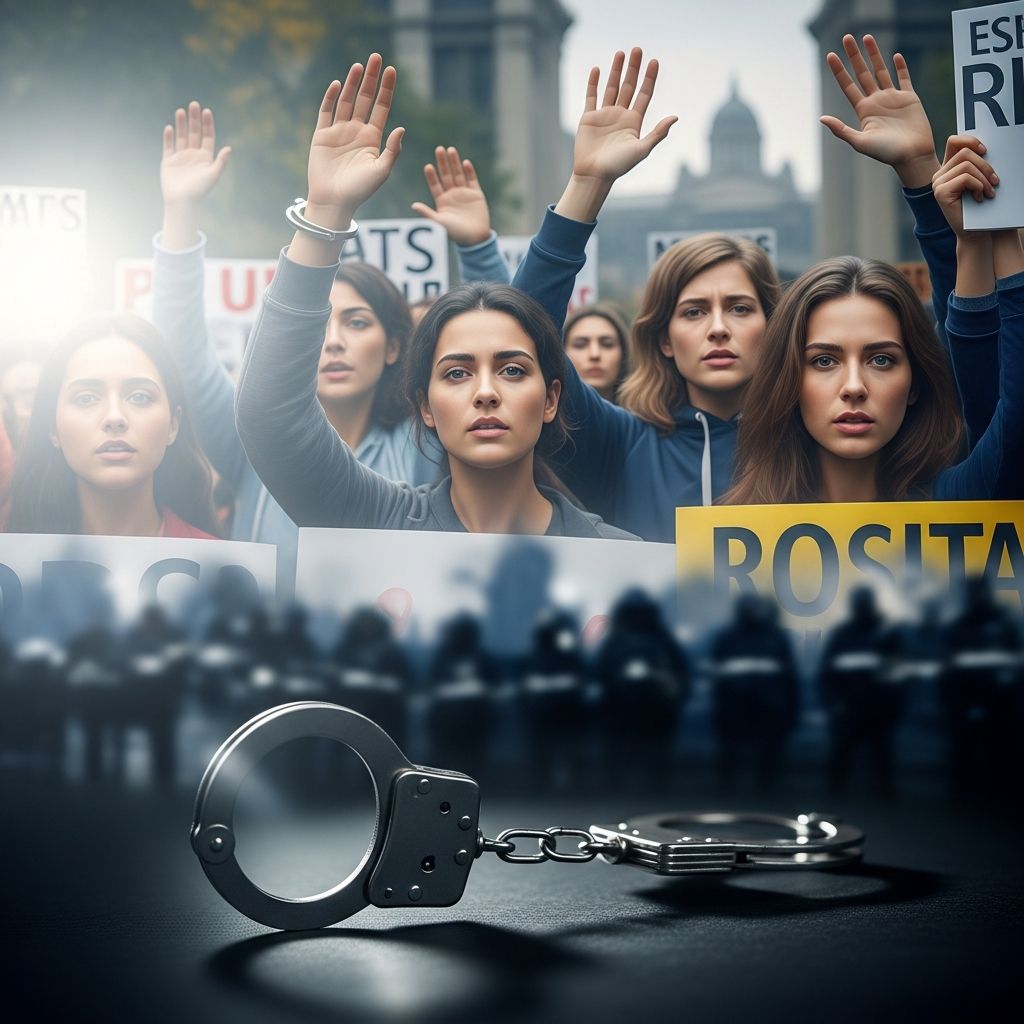
Participating in public demonstrations is a cornerstone of democratic expression, yet it carries risks of police intervention and arrest. This guide outlines your fundamental rights, practical steps for encounters with law enforcement, and strategies to protect yourself legally. Grounded in U.S. constitutional principles, it empowers protesters to exercise free speech confidently while minimizing legal repercussions.
Constitutional Foundations of Protest Participation
The
First Amendment
safeguards freedoms of speech, assembly, and petition, forming the bedrock for protests across America. These rights allow individuals to gather publicly, voice grievances, and seek governmental redress without prior approval in most cases. Courts have consistently upheld that peaceful gatherings in traditional public forums like streets, sidewalks, and parks are protected, provided they do not substantially disrupt traffic or public safety.However, these protections have boundaries. Governments may impose time, place, and manner restrictions that are content-neutral, narrowly tailored, and leave ample alternative channels for communication. For instance, permits might be required for large events blocking roadways, but spontaneous protests responding to breaking news often qualify for exceptions. Speech inciting imminent lawless action or true threats falls outside protection, as established in landmark cases like Brandenburg v. Ohio (1969).
- Peaceful expression, including symbolic acts like kneeling or holding signs, is shielded.
- Obstructing traffic or using amplified sound beyond permitted hours may invite restrictions.
- Private property owners, unlike public spaces, can limit protests on their premises.
Understanding these nuances prevents unnecessary escalation and positions you to challenge overreach effectively.
Navigating Police Presence at Gatherings
Police often monitor protests to ensure safety, but interactions can turn tense. Preparation is key: carry identification, know local laws, and designate legal observers if possible. Stay informed about event permits to discern lawful orders from improper commands.
Core strategies include:
- Observe from a distance if not actively participating to avoid guilt by association.
- Maintain composure; raised voices or physical posturing can be misinterpreted as aggression.
- Form buddy systems for mutual support and witness accounts.
Recording police activity is generally legal in public spaces under federal circuit precedents, as long as it does not interfere. Devices like smartphones provide crucial evidence; secure footage by uploading to cloud services promptly.
Responding to Initial Police Contact
When approached, clarity determines your status. Politely inquire: “Am I free to leave?” An affirmative answer means you can depart without further engagement. If detained, ask for the reason, but limit responses to basic identification—name, address, and date of birth in states requiring it.
| Scenario | Your Response | Legal Basis |
|---|---|---|
| Not detained | Leave calmly | Fourth Amendment (no seizure) |
| Questioned | “Am I free to leave?” Invoke silence | Fifth Amendment |
| Search requested | Decline unless probable cause | Fourth Amendment |
Never provide false information, as this constitutes a misdemeanor in many jurisdictions. Physical resistance, even to unlawful stops, risks additional charges like obstruction.
During an Arrest: Immediate Actions
If handcuffed or informed of arrest, compliance preserves options. Officers conduct pat-downs for weapons incident to arrest—a standard procedure upheld by law. Expect transport to a holding facility for booking, where fingerprints, photos, and charges are processed.
Key mantras post-arrest:
- Right to silence: Say, “I invoke my right to remain silent.” Anything else can be evidence.
- Right to counsel: Demand an attorney before questioning; interrogation must cease.
- Do not consent to searches of phones or bags.
Family or friends should be notified quickly; they can arrange bail and legal aid. Mass arrests may delay processing, so patience is vital.
Common Charges and Defenses
Protest-related arrests often stem from misdemeanor offenses, escalating based on context. Here’s a breakdown:
| Charge | Description | Potential Penalties | Common Defenses |
|---|---|---|---|
| Disorderly Conduct | Disrupting public peace | Fine, short jail | Protected speech |
| Failure to Disperse | Ignoring dispersal order | Fine, probation | Unlawful order |
| Assault on Officer | Physical contact | Jail, felony record | Self-defense, excessive force |
| Unlawful Assembly | Group declared illegal | Fine, arrest | Peaceful intent |
Defenses hinge on video evidence, witness statements, and proving lack of probable cause. Experienced counsel can move to suppress evidence from illegal stops or negotiate dismissals, especially for first-time offenders.
Long-Term Consequences and Mitigation
A conviction creates ripple effects: employment barriers via background checks, housing denials, and professional license issues. Felonies carry voting restrictions in some states until rights restoration.
Mitigation steps:
- Plea bargains for diversion programs avoiding records.
- Expungement eligibility after completion.
- Civil suits for false arrest under 42 U.S.C. § 1983 if rights violated.
Consult attorneys specializing in First Amendment litigation for tailored strategies.
Pursuing Remedies for Violations
Excessive force—beyond objective reasonableness—or warrantless arrests without cause open doors to federal claims. Document injuries, obtain medical records, and secure witnesses. Successful suits yield compensation for damages, attorney fees, and policy reforms.
Organizations like the ACLU offer pro bono support for meritorious cases, amplifying individual voices.
Preparation Checklist for Protesters
- Carry ID, emergency contacts, and attorney hotline.
- Wear identifiable clothing for group accountability.
- Charge devices; know passcode sharing risks.
- Research local curfew, permit rules.
- Avoid alcohol/drugs impairing judgment.
Frequently Asked Questions
Can I film police at a protest?
Yes, in public view, without interference. This right is affirmed across federal circuits.
What if I’m not protesting but nearby?
Proximity alone isn’t criminal; challenge arrests lacking specific probable cause.
Do I need a permit to protest?
Not always; small, spontaneous groups often don’t, but large events blocking paths may.
Can police seize my phone?
Only with warrant or consent post-arrest for evidence; otherwise, contest in court.
How soon after arrest can charges be dropped?
Prosecutors review quickly; weak cases may be dismissed at arraignment.
References
- What Are My Rights if Arrested During a Protest or Demonstration? — Hale Monico. 2026-02-02. https://www.halemonico.com/2026/02/02/what-are-my-rights-if-arrested-during-a-protest-or-demonstration/
- What to Know About Arrests for Protest and Civil Disobedience — Dickman Law Office. N/A. https://www.dickmanlawoffice.com/criminal-defense/what-to-know-about-arrests-for-protest-and-civil-disobedience/
- Arrested at a Protest? Here’s What to Expect and How to Protect Your Rights — Briglia & Hundley. N/A. https://brigliahundley.com/arrested-at-a-protest-heres-what-to-expect-and-how-to-protect-your-rights/
- Your Rights at Protests and Public Gatherings — Pajerski Law. N/A. https://www.pajerskilaw.com/articles/your-rights-at-protests-and-public-gatherings
- Know Your Rights – Lawyers’ Committee for Civil Rights — Lawyers’ Committee for Civil Rights. 2016-09-08. https://lawyerscommittee.org/wp-content/uploads/2016/09/KYR-DC-Brochure-80516-1.pdf
- Protesters’ Rights — American Civil Liberties Union. N/A. https://www.aclu.org/know-your-rights/protesters-rights
Similar Articles








Read full bio of Sneha Tete




