
Accident Benefits: 4 Key Types To Claim After A Crash Explained
Learn what accident-related insurance benefits can help with medical costs, income loss, and recovery after a crash.
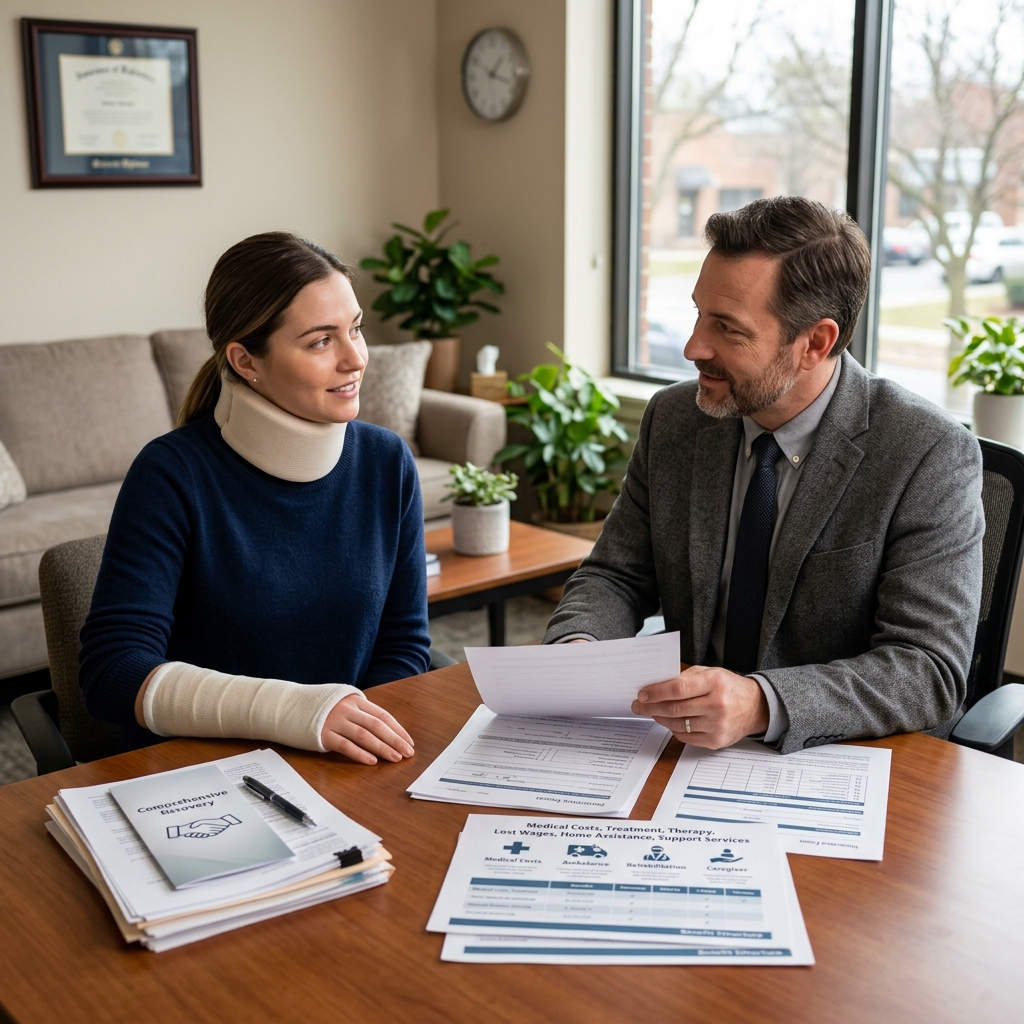
When someone is injured in a motor vehicle crash, insurance may provide important support for treatment, recovery, and income loss. In many Canadian provinces, accident victims can access no-fault or first-party benefits even when they were not the driver at fault, and in some cases even if they were partly responsible for what happened.
This article explains the main types of benefits that may be available, how they are commonly used, and what injured people should know when starting a claim. The exact rules depend on the province and the insurance policy involved, but the general idea is the same: accident insurance is designed to reduce the financial strain that follows an injury.
What accident-related insurance benefits are meant to do
Accident benefits are intended to help injured people pay for necessary care and stay financially stable while they recover. These benefits commonly cover medical treatment, rehabilitation services, and income replacement when injuries prevent a return to work.
Many systems also make benefits available regardless of fault. That means a person may still qualify even if they caused the collision, as long as they meet the policy rules and filing requirements.
Who can usually claim benefits
Eligibility depends on the jurisdiction, but coverage is often broader than many people expect. In some systems, the following people can make a claim:
- Drivers injured in a crash
- Passengers in a vehicle
- Cyclists struck by a vehicle
- Pedestrians injured by a vehicle
- People injured even if they were partly at fault
In Ontario-style accident benefit systems, an injured person usually starts by contacting their own insurer, or another insurer connected to the accident if their own policy does not apply.
In provinces with no-fault coverage built into standard auto insurance, such as British Columbia, Alberta, or Nova Scotia, the available benefits may be accessed through the injured person’s own policy or another applicable auto policy, depending on where the crash occurred and who is insured.
Common types of support after a crash
Although the wording differs from place to place, most accident benefit programs focus on a few major categories of support.
Medical and rehabilitation coverage
These benefits are meant to pay for necessary treatment related to the accident. That may include hospital care, prescription medication, physiotherapy, counselling, and other medically approved services.
Rehabilitation support matters because recovery after an accident is often not limited to one doctor’s visit or an emergency room assessment. Some injuries need weeks or months of follow-up care, and those costs can add up quickly without insurance support.
Income replacement
If an injury keeps a person from returning to work, accident benefits may replace part of lost earnings. The replacement amount and time limit vary, but examples in Canadian insurance systems include payments based on a percentage of net income or weekly limits set by the policy.
Disability-style coverage in Canada often replaces only part of a person’s income rather than the full amount, and it usually includes maximum benefit caps.
Housekeeping and home support
Some programs include help when an injured person can no longer manage ordinary household tasks. This may apply to someone who normally does the cleaning, meal preparation, or other unpaid duties in the home.
These benefits recognize that the impact of an injury is not limited to paid employment. Even moderate injuries can disrupt family routines and create extra expense for temporary help.
Death and funeral benefits
If an accident causes a fatal injury, some insurance systems provide funeral expenses and death benefits for surviving family members or dependants.
These benefits are usually limited and are set by regulation or policy language, but they can still help families deal with immediate costs during a difficult time.
How provincial plans can differ
Canada does not use a single accident benefits rulebook. Each province sets its own system, so the amount of coverage and the procedure for claiming benefits can vary significantly.
| Province example | Typical benefit themes |
|---|---|
| British Columbia | Enhanced accident benefits under basic auto insurance may cover medical care, recovery needs, and wage loss for injured people, including passengers, cyclists, and pedestrians. |
| Ontario | Statutory accident benefits can be available even where fault is disputed, with forms and timelines that must be followed carefully. |
| Nova Scotia | Section B benefits may cover medical and rehabilitation costs, income replacement, housekeeping assistance, and death benefits. |
| Alberta | Section B-style benefits can include medical coverage and disability payments under the standard auto policy. |
The exact numbers and deadlines are not the same across these systems, so the policy and province must be checked before assuming what is available.
What the claim process usually looks like
Even when the underlying injury is straightforward, the claim process can be paperwork-heavy. A typical claim begins with notice to the insurer, followed by completion of claim forms and submission of supporting documents such as medical records and income information.
Insurers often require specific forms before they will start paying certain benefits. For example, claim packages may ask for medical reports, employer confirmation of earnings, and election forms identifying which type of benefit the person wants to receive.
It is common for insurers to request receipts for treatment expenses so that they can reimburse eligible costs.
Deadlines matter
Accident benefit claims often have strict filing timelines. These deadlines can be short, and missing them can delay benefits or create disputes with the insurer.
Examples from Canadian accident benefit systems include notice deadlines measured in days or weeks after the crash, as well as separate deadlines for submitting complete application forms.
Because the rules differ by province and policy, injured people should review their insurer’s instructions as soon as possible after the collision. If injuries are serious, it may still be possible to explain why a deadline was missed, but that issue should not be left until much later.
Other insurance that may also help
Accident benefits are not always the only source of financial support. Some people also have private disability insurance through work or a personal policy, which may provide replacement income if they cannot work because of an injury.
Canadian disability insurance commonly replaces a percentage of income and may apply for a limited period or until the person can do some form of work again.
In some cases, benefits from one source may reduce benefits from another, so the total amount a person receives may be affected by offsets or coordination rules.
That makes it important to understand how different policies interact before assuming the full value of each benefit will be paid on top of every other benefit.
Practical steps after an accident
Although every claim is different, the following steps can help protect an injured person’s access to benefits:
- Report the crash and start the insurance claim as soon as possible
- Keep all medical records, receipts, and treatment plans
- Save proof of missed work and income details
- Follow insurer forms and filing instructions carefully
- Track symptoms, appointments, and recovery progress
- Ask for help quickly if the insurer requests documents you do not understand
These steps are useful because benefit programs usually require evidence that the injury is real, treatment is necessary, and the claimed expenses are connected to the accident.
When a claim becomes complicated
Some claims are simple, but others involve disputes over fault, the seriousness of the injury, whether treatment is medically necessary, or whether the claimant meets the policy definition for income replacement.
Problems can also arise when the insurer says a deadline was missed, a document is incomplete, or the treatment plan is too expensive.
In those situations, the person may need to provide more medical information or explain why the insurer’s decision should be reviewed. Keeping organized records from the beginning makes that process much easier.
Why these benefits matter
A serious injury affects more than physical health. It can interrupt work, create transportation challenges, require ongoing therapy, and place extra pressure on a household budget. Accident benefits are designed to soften that blow by covering the immediate and long-term costs tied to recovery.
For many families, the difference between receiving benefits and not receiving them can determine whether they are able to keep up with rent, medical bills, and other basic expenses while someone heals.
Frequently asked questions
Do I have to be the driver to qualify?
No. In many systems, passengers, cyclists, and pedestrians may also qualify if they were injured by a motor vehicle collision.
Can I receive benefits if I caused the crash?
Yes, in many no-fault or first-party benefit systems, benefits are available even if you were partly or fully responsible for the accident.
What kinds of treatment are commonly covered?
Typical coverage may include hospital care, prescription drugs, physiotherapy, counselling, and other approved recovery services.
Will accident benefits replace my full salary?
Usually not. Income replacement is commonly based on a percentage of income and subject to maximum limits.
What should I do if I missed a filing deadline?
Contact the insurer immediately and explain the reason for the delay. Some claims can still be reviewed, but delays should be addressed as soon as possible because deadlines are often strict.
Can I get help for household tasks if I am injured?
Some insurance programs include housekeeping or home support benefits when injuries prevent a person from managing regular domestic duties.
What to remember
Accident insurance is meant to help injured people manage treatment costs and lost income after a crash. The details depend on the province and the policy, but many programs offer medical coverage, rehabilitation support, wage loss benefits, and other forms of financial assistance.
The best way to protect those benefits is to report the accident quickly, keep thorough records, and follow the insurer’s claim requirements carefully.
References
- Insurance benefits for accident victims — People’s Law School. 2026. https://www.peopleslawschool.ca/insurance-benefits-for-accident-victims/
- Accident Benefits Claims — Howie Sacks & Henry LLP. 2026. https://hshlawyers.com/expertise/accident-benefits-claims/
- Section B Benefits in Nova Scotia — Preszler Injury Lawyers. 2026. https://www.preszlerlaw-ns.com/section-b-benefits/
- AB From Sea To Sea: A Look At Accident Benefits Across Canada — VLex. 2026. https://vlex.com/vid/ab-from-to-look-794354313
- Am I Entitled to Section B Benefits in Alberta? — Litco Law. 2026. https://www.litcolaw.com/faqs/what-are-section-b-benefits-and-why-do-i-need-them/
- Disability insurance — Financial Consumer Agency of Canada. 2026. https://www.canada.ca/en/financial-consumer-agency/services/insurance/disability.html
Similar Articles








Read full bio of Sneha Tete




