
The Intersection of Human Rights and Systemic Family Separation
Examining how racial disparities in the child welfare system have evolved into a critical international human rights crisis requiring urgent structural reform.
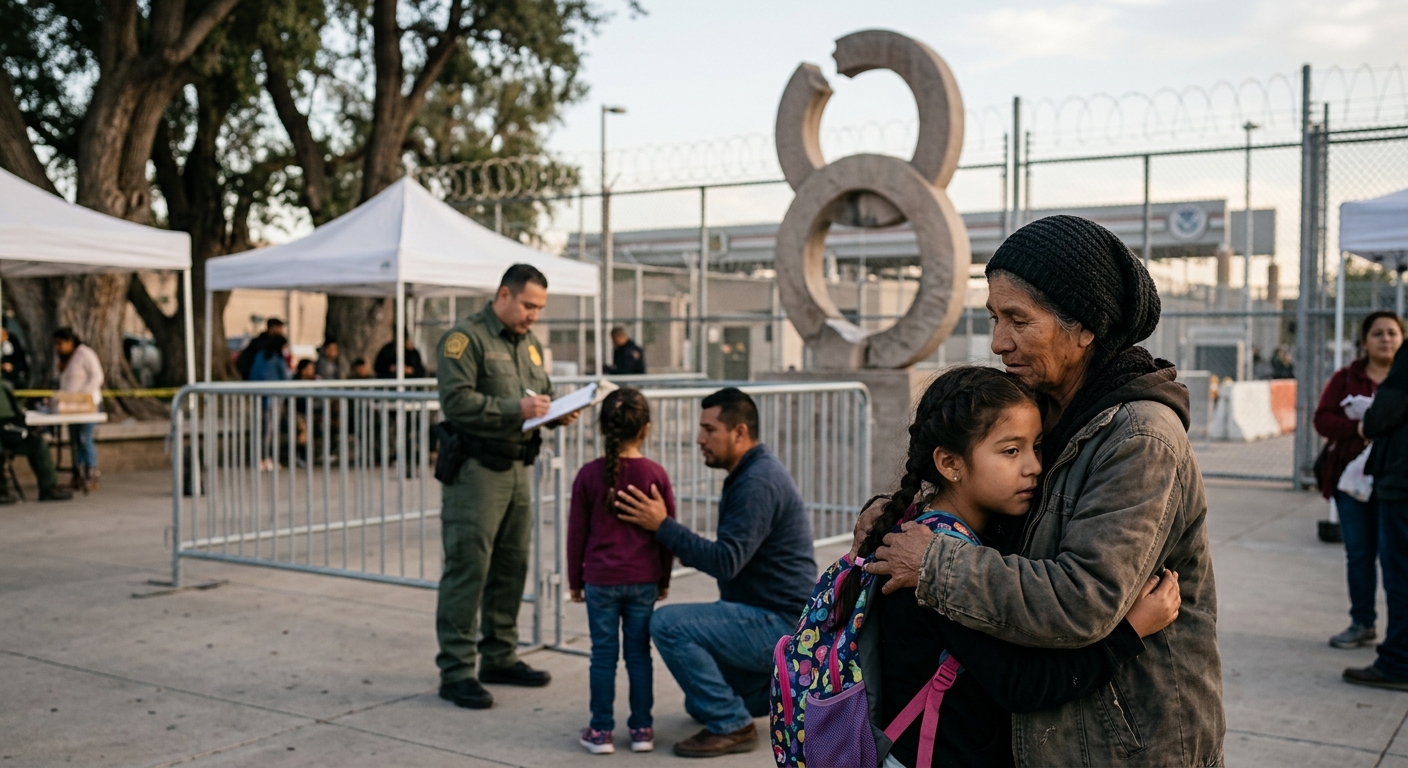
For decades, the child protection framework in the United States has operated under the nominal premise of prioritizing youth safety and wellbeing. However, beneath this administrative facade lies a deeply entrenched systemic crisis that disproportionately fractures marginalized communities. The conversation surrounding state intervention in family structures is undergoing a vital transformation, shifting from a strictly domestic policy issue to an urgent matter of international human rights. When state apparatuses disproportionately sever the familial bonds of minority populations, the issue transcends local bureaucracy and demands a rigorous global reckoning.
As legal scholars and civil rights advocates increasingly highlight, the mechanisms designed to protect vulnerable youth often act as agents of systemic destabilization. The unwarranted removal of children from their homes is not merely a bureaucratic misstep; it is a profound deprivation of fundamental human rights that inflicts lasting trauma. Recognizing this crisis requires a comprehensive examination of historical biases, the devastating psychological impacts of family separation, and the imperative for international accountability.
Understanding the Architecture of Inequality in Child Welfare
The contemporary landscape of child welfare cannot be accurately assessed without acknowledging the historical context that birthed its current structural flaws. Understanding the architecture of inequality within state-mandated child protection requires a critical examination of both historical precedent and modern statistical realities.
The Historical Context of Family Disruption
The legacy of family disruption in marginalized communities is not a modern phenomenon; it is deeply rooted in historical practices that have routinely devalued the sanctity of minority family units. From the tragic era of forced assimilation, wherein Indigenous children were systematically removed from their tribes and placed into boarding schools, to the historical subjugation and separation of Black families throughout early American history, the ideological underpinnings of family regulation have long been tainted by racial prejudice. These historical injustices laid the groundwork for a cultural and institutional tolerance of minority family disruption, creating an implicit bias that continues to permeate modern child welfare investigations and proceedings.
Statistical Realities: Who Bears the Burden?
Today, this historical legacy manifests as glaring statistical disproportionality within the child welfare system. Research analyzing child protective services data consistently reveals that Black and Indigenous youth are significantly overrepresented at nearly every decision point in the child welfare continuum . This disparity is evident from the initial maltreatment reports to formal investigations, out-of-home placements, and the devastating finality of parental rights termination.
This overrepresentation is rarely a reflection of actual higher maltreatment rates within these communities. Instead, it is highly indicative of systemic biases where poverty is routinely and tragically conflated with neglect. When a marginalized family experiences food insecurity, struggles to afford winter clothing, or faces housing instability, state mechanisms frequently respond with punitive family separation rather than supportive intervention. This approach effectively punishes families for systemic economic disadvantages, transforming financial hardship into a primary catalyst for family destruction.
International Human Rights Frameworks and Domestic Realities
The gravity and persistence of these racial disparities have rightfully drawn the focused attention of international human rights bodies. When domestic legal frameworks repeatedly fail to rectify systemic racial biases, the international community provides a critical mechanism for accountability and advocacy.
The UN Convention on the Elimination of All Forms of Racial Discrimination (CERD)
The United Nations Committee on the Elimination of Racial Discrimination (CERD) stands as the principal body of independent experts monitoring the implementation of the International Convention on the Elimination of All Forms of Racial Discrimination . This binding international treaty obligates member states to pursue policies that eliminate racial discrimination in all its forms and to guarantee the right of everyone to equality before the law.
Advocates argue that the disproportionate fracturing of minority families by state child welfare agencies constitutes a direct violation of these international obligations. By submitting evidence and comprehensive reports to CERD, human rights institutes and children’s advocacy groups are elevating the discourse, demanding that systemic biases in family regulation be recognized alongside other globally condemned forms of structural racism.
Holding Nations Accountable on the Global Stage
Elevating child welfare disparities to the level of an international human rights violation fundamentally alters the paradigm of legal advocacy. It reframes the unwarranted separation of Black and Indigenous families not as an isolated administrative failure, but as an institutional contravention of fundamental human rights. This international scrutiny demands that state parties look beyond their domestic borders and acknowledge the contemporary harms inflicted by their child regulation systems. It places immense pressure on governments to commit to immediate, measurable actions that combat the deep-seated prejudices leading to disproportionate familial separation.
The Human Toll: Beyond the Bureaucracy
Beyond the legal arguments and statistical analyses lies the profound and often invisible human toll of state-mandated family disruption. The psychological and developmental impacts on youth who are forcibly removed from their primary caregivers are devastating, pervasive, and intensely enduring.
Psychological Impact on Separated Youth
Developmental psychologists and child welfare researchers have extensively documented the trauma inherent in the removal process itself. In many cases, the act of severing a child from their parents inflicts deeper emotional and psychological scars than the environmental circumstances that initially prompted the state’s intervention . Children placed in out-of-home care frequently experience a debilitating psychological phenomenon known as “ambiguous loss.” This occurs when a loved one is physically absent but psychologically present, leading to unresolved grief that complicates a child’s sense of identity, belonging, and overall emotional security.
Furthermore, physiological research indicates that the acute distress induced by forced parental separation can lead to sustained elevations of stress hormones, such as cortisol . Prolonged exposure to these elevated hormones can fundamentally alter the architecture of developing brains and actively suppress immune system function. The state’s attempt to “rescue” these children frequently exposes them to the heightened instability of the foster care system, where multiple placement disruptions exacerbate attachment trauma and dramatically increase the likelihood of severe, long-term mental health challenges.
Generational Trauma and Community Erosion
The consequences of family separation extend far beyond the individual child; they ripple outward, inflicting generational trauma and eroding the social fabric of entire communities. When state systems routinely remove youth from specific neighborhoods, it deprives those communities of their future generation, disrupting cultural continuity and familial wealth building. This cyclical removal fosters deep-seated mistrust between marginalized communities and the very state institutions ostensibly designed to provide assistance, ensuring that vulnerable families are less likely to seek help during times of acute crisis.
The Economics of Systemic Intervention: Poverty vs. Neglect
To meaningfully dismantle the inequities embedded within the child welfare system, policymakers must confront the economic drivers that fuel systemic involvement. The intersection of race and class is undeniable in the context of state intervention. Families of color are disproportionately affected by systemic poverty, driven by decades of exclusionary housing policies, unequal educational opportunities, and employment discrimination.
In the eyes of many mandated reporters and social service investigators, the mere symptoms of poverty are habitually mischaracterized as willful parental neglect. This widespread conflation traps vulnerable families in a highly punitive cycle. Instead of providing the concrete, direct economic support that would swiftly stabilize the family unit—such as rent assistance, child care subsidies, or accessible healthcare—the state expends exponentially more resources funding the vast administrative infrastructure of foster care. The economic burden of removing a child, sustaining them in state-run facilities or foster homes, and endlessly managing their bureaucratic case far exceeds the relatively modest cost of targeted financial assistance that could safely keep the family intact. This glaring structural inefficiency highlights a system that is paradoxically more focused on policing marginalized populations than directly supporting their fundamental physiological and safety needs.
Legal and Policy Advocacy: Mandating Systemic Change
Addressing these deeply ingrained systemic issues requires rigorous legal and policy advocacy aimed at entirely restructuring how the state interacts with vulnerable families. Legal scholars emphasize the critical need to revise existing legal frameworks to ensure that courts are mandated to weigh the explicit, scientifically proven harm of removal against the perceived harm of leaving a child in their home environment . Currently, the child welfare system operates on a highly risk-averse model that assumes removal is an inherently neutral or safe action, completely ignoring the well-documented trauma it inflicts.
Advocates are also pushing for the implementation of procedural safeguards, such as “blind removals.” This policy requires that the demographic information of the family—including race and neighborhood—be completely obscured from the committee deciding whether to remove a child, compelling them to base their life-altering decisions solely on the objective facts of the case . While not a panacea, such legal interventions are crucial steps toward dismantling the implicit biases that drive disproportionate minority contact within the system.
Paradigm Shift: From Disruption to Support
Ultimately, addressing the racial injustices within child welfare demands a radical and comprehensive reimagining of the current paradigm. A deliberate transition from a punitive system of surveillance, regulation, and separation to a community-centric model of voluntary support and family preservation is desperately needed.
First and foremost, society must critically reevaluate mandated reporting laws. The current framework encourages an overly cautious “report first, ask questions later” mentality that disproportionately entangles minority families in prolonged, traumatic investigations over minor issues born of poverty. Professional training for educators, healthcare providers, and social workers must explicitly differentiate between systemic economic hardship and malicious parental neglect.
Furthermore, both state and federal funding priorities must be drastically redirected. Billions of dollars currently funneled into the administrative and enforcement mechanisms of foster care must be reallocated toward community-based infrastructures. By proactively investing in universal childcare, accessible mental health services, addiction treatment without the threat of family separation, and robust affordable housing initiatives, society can directly address the root causes of family instability. True, lasting reform will only be achieved when the preservation of the family unit, especially within marginalized and historically oppressed communities, is unequivocally recognized, fiercely defended, and materially supported as a non-negotiable human right.
Frequently Asked Questions (FAQs)
1. What is the UN Committee on the Elimination of Racial Discrimination (CERD)?
CERD is a body of independent experts established by the United Nations that monitors the implementation of the International Convention on the Elimination of All Forms of Racial Discrimination by its State parties. It evaluates whether nations are effectively combating systemic racism and holding them accountable to international human rights standards.
2. How does the child welfare system disproportionately affect minority families?
Statistical data consistently shows that Black and Indigenous children are overrepresented at every stage of the child welfare system, from initial maltreatment reports to out-of-home foster care placements. This disparity is largely driven by systemic biases and the conflation of poverty with neglect.
3. What is the difference between poverty and neglect in child welfare cases?
Poverty involves a lack of financial resources leading to issues like food insecurity or inadequate housing. Neglect legally implies a willful failure by a parent to provide care when they have the means to do so. Unfortunately, the child welfare system often punishes families for circumstances beyond their control by treating poverty-driven hardships as intentional neglect.
4. What are the long-term psychological impacts of foster care on youth?
Children removed from their homes often suffer from “ambiguous loss” and elevated stress hormones, which can negatively impact brain development. The instability of moving between foster placements frequently leads to severe attachment trauma, anxiety, depression, and long-term behavioral challenges.
References
- International Convention on the Elimination of All Forms of Racial Discrimination — Office of the High Commissioner for Human Rights (OHCHR). 1969-01-04. https://www.ohchr.org/en/instruments-mechanisms/instruments/international-convention-elimination-all-forms-racial
- Committee on the Elimination of Racial Discrimination — Office of the High Commissioner for Human Rights (OHCHR). 2025-12-05. https://www.ohchr.org/en/treaty-bodies/cerd
- The Harm of Child Removal — Trivedi, Shanta. ScholarWorks: UBalt Law. 2019. https://scholarworks.law.ubalt.edu/all_fac/1098/
- The Science of Family Separation and How It Can Harm Children — PolicyLab. 2018-07-05. https://policylab.chop.edu/blog/science-family-separation-and-how-it-can-harm-children
- Examining Racial Disproportionality in Child Protective Services Case Decisions — PubMed Central (PMC). 2011. https://www.ncbi.nlm.nih.gov/pmc/articles/PMC4160862/
Similar Articles








Read full bio of medha deb


