
HR Guide to Background Checks and Workplace Surveillance
A practical overview of lawful screening, monitoring, and privacy-aware hiring decisions for HR teams.
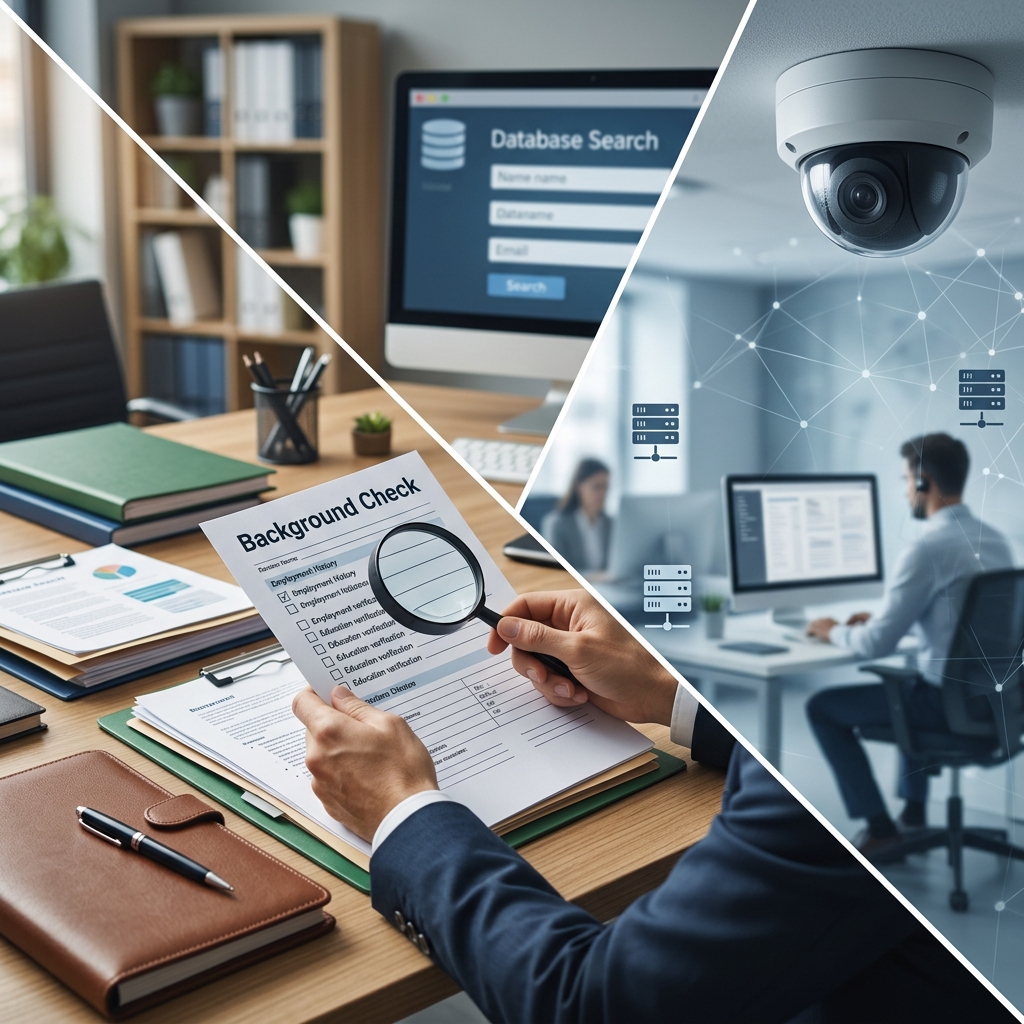
Hiring and employee oversight have become more complex as employers rely on screening tools, digital monitoring, and record checks to reduce risk. For HR teams, the challenge is not whether to use these tools, but how to use them in a way that is lawful, consistent, and respectful of privacy.
This guide explains the main legal and practical issues HR professionals should consider when using background checks and workplace surveillance. It focuses on how to build a process that supports better decisions without creating unnecessary compliance or trust problems.
Why HR teams use screening and monitoring tools
Background checks help employers verify identity, experience, and qualifications before making hiring decisions. In many roles, they also help identify risks that may be relevant to safety, compliance, finance, security, or customer trust.
Workplace monitoring serves a different purpose. Instead of looking backward at a candidate’s history, it looks at current or ongoing conduct after hiring. Employers may use monitoring to protect systems, safeguard confidential data, detect misconduct, or satisfy industry obligations.
- Screening supports better hiring decisions by verifying claims and identifying relevant concerns.
- Monitoring can help protect property, data, and people after employment begins.
- Both tools must be used carefully to avoid discrimination, privacy violations, and inconsistent treatment.
What counts as a background check
A background check is not one single report. It can include several types of verification depending on the role and the employer’s goals. Common components include criminal history searches, employment verification, education verification, identity confirmation, motor vehicle records, credit checks where allowed, and reference checks.
Not every position needs the same level of review. A well-designed screening program matches the scope of the check to the actual job duties. For example, a driving role may justify motor vehicle record review, while a finance role may justify stronger identity and credit screening if permitted by law.
| Screening type | Typical use | HR caution point |
|---|---|---|
| Criminal history | Assess role-related safety and trust risks | Use only relevant criteria and follow fair process |
| Employment verification | Confirm prior jobs and dates of service | Verify consistency with application materials |
| Education verification | Confirm degrees, licenses, or credentials | Check whether the credential matters for the job |
| Credit checks | Review financial responsibility in limited roles | Use only where law and job relevance support it |
| Motor vehicle records | Assess drivers or employees operating vehicles | Review in light of driving exposure and risk |
The legal framework HR cannot ignore
In the United States, background checks involving consumer reporting agencies are heavily shaped by the Fair Credit Reporting Act. The Equal Employment Opportunity Commission also warns employers not to use screening in a discriminatory way, especially when criminal records are involved. The EEOC’s guidance says employers should consider the nature of the offense, the time that has passed, and the relation between the conduct and the job before making an adverse decision.
When employers rely on third-party consumer reports, the FCRA requires a stand-alone disclosure and written authorization before the report is obtained. The employer must also certify compliance to the reporting company and provide pre-adverse and adverse action notices before rejecting or disciplining someone based on the report.
Public guidance also stresses that employers should use a structured, consistent screening policy, limit checks to role-relevant information, and protect sensitive applicant data with strong security controls.
Building a screening policy that holds up
HR teams should not treat background checks as an informal manager-by-manager decision. A written policy creates consistency and helps reduce legal risk. The policy should explain which positions are screened, what categories of checks are permitted, who approves them, how results are evaluated, and how disputes are handled.
Policy design should be tied to job risk. Positions that involve vulnerable populations, financial authority, confidential records, or public safety often require more careful review than low-risk roles. Even then, the employer should avoid over-screening simply because it is easier to administer.
- Define which roles require screening and why.
- Use the same criteria for similarly situated candidates.
- Document how the employer weighs relevant findings.
- Keep the process narrow enough to match business need.
Criminal record checks: relevance matters more than headlines
Criminal history checks create some of the highest legal and fairness risks. Best-practice guidance recommends that employers focus on convictions or other information that is actually relevant to the role, rather than using broad exclusions that automatically disqualify people for any record at all.
The practical point is simple: an old, unrelated offense may tell an employer very little about whether someone can perform a current job safely and responsibly. HR should consider the age of the offense, its seriousness, and whether the conduct is connected to the duties of the position. That approach is more defensible than a one-size-fits-all rule.
Many employers also use a “ban-the-box” style process, meaning they delay criminal-history inquiries until later in the hiring process. This helps ensure the applicant is initially evaluated on qualifications before the record is reviewed.
How to handle notice, consent, and adverse action
Many compliance errors happen because employers rush the paperwork. For reports covered by the FCRA, the applicant must receive a clear stand-alone disclosure and must give written permission before the report is ordered. If the employer wants continuing access to reports during employment, that authorization should say so clearly.
If the report may lead to a negative decision, the employer must give the person a copy of the report and a summary of rights before taking action. This pre-adverse step gives the applicant or employee time to review the information and challenge errors. Afterward, the employer must provide the final adverse-action notice required by law.
In practice, this process should be built into the hiring workflow so that managers do not skip steps when they are trying to fill a job quickly.
Workplace surveillance: where monitoring becomes sensitive
Workplace surveillance can include email review, internet-use monitoring, badge and location tracking, camera systems, keystroke or endpoint monitoring, GPS tools, and similar technologies. These tools may be justified for security, productivity, quality control, or regulatory reasons, but they can also create significant privacy concerns if used without restraint.
HR should understand that surveillance is not only a technology issue; it is also a labor-relations, culture, and legal-risk issue. Excessive monitoring can reduce trust, create morale problems, and invite complaints if employees believe they were watched without adequate notice.
- Use surveillance for a defined business purpose, not curiosity.
- Limit access to monitoring data to authorized personnel.
- Avoid collecting more information than the purpose requires.
- Tell employees what is monitored and why.
How to make monitoring more defensible
The strongest monitoring programs are transparent and limited. Employers should publish a clear policy that explains what systems may be monitored, whether personal use is permitted, how long data is retained, and who can review it. Employees should not be left to guess where the line is drawn.
As with background checks, relevance matters. A finance team may need stronger controls around document access and system activity than a role with little data exposure. A warehouse may justify camera coverage in safety-sensitive areas, but that does not automatically justify surveillance in restrooms, break areas, or other private spaces.
Security and privacy should work together. Monitoring data often contains sensitive personal information, so employers should use access controls, encryption, and retention limits that reduce the risk of misuse or exposure.
Fairness and consistency are essential
Even a technically lawful screening system can become problematic if it is applied unevenly. If one applicant is screened while another with similar duties is not, questions of bias and favoritism arise. The same principle applies to monitoring: if some workers are watched closely while others are not, the employer should be able to explain why.
Consistency also helps reduce discriminatory outcomes. The EEOC warns that employers should not use background information in a way that disproportionately excludes protected groups without a legitimate, job-related reason. That means HR should review both the screening criteria and the practical effect of those criteria over time.
Post-hire checks and continuous monitoring
Some employers do not stop screening after the hiring decision. They may conduct rechecks at fixed intervals or use continuous monitoring programs that flag new issues during employment. These approaches can be useful in heavily regulated industries or roles where employees must continuously meet trust or licensing requirements.
However, post-hire screening raises special concerns. Employees should know in advance that future checks may occur, and employers should be careful to define what triggers review, who sees the information, and how much time the employee has to respond to a potential issue.
Practical safeguards for HR teams
A compliant program is usually built on process discipline rather than legal jargon. HR teams can reduce risk by creating a repeatable workflow and training everyone involved in hiring or supervision.
- Keep a written policy and update it regularly.
- Use role-based screening standards rather than ad hoc decisions.
- Separate the decision-maker from the raw report when possible.
- Maintain confidential records and limit internal access.
- Train managers on what they may ask, review, and share.
- Allow candidates and employees a real chance to explain disputed information.
Common mistakes that create avoidable risk
Many employers get into trouble by overreaching. Common mistakes include using outdated forms, failing to obtain proper consent, relying on blanket exclusions, applying monitoring rules inconsistently, and storing sensitive data without adequate protection. Another frequent error is letting a third-party report become the final decision without any human review.
HR should also be careful not to treat a report as complete truth. Records can contain errors, incomplete data, or information that lacks context. A fair process should allow a person to clarify mismatches and challenge inaccurate results before the employer acts.
Frequently asked questions
Do all employees need the same background check?
No. Screening should match the risk and responsibilities of the role. A job involving children, driving, finance, or confidential systems may justify more extensive review than a low-risk position.
Can an employer run background checks after hiring?
Yes, if the employer has a lawful basis, gives proper notice, and follows any required consent or adverse-action steps. Continuous monitoring and rechecks should be clearly described in advance.
Is workplace monitoring always legal if employees are told about it?
Notice helps, but it is not the only issue. Employers still need a legitimate business purpose, a limited scope, and controls that protect privacy and data security.
What should HR do if a report appears inaccurate?
Pause the adverse decision process, give the person an opportunity to dispute the information, and confirm whether the report should be corrected before acting.
What a strong HR program looks like
The best programs are not the most aggressive ones. They are the ones that are transparent, proportionate, and consistently applied. HR should think of screening and surveillance as governance tools, not shortcuts. When they are carefully limited to business need, they can support safer hiring and better operations without eroding trust.
That balance is the main lesson for modern employers: use the tools, but design them around relevance, fairness, and clear communication.
References
- Background Checks: What Employers Need to Know — U.S. Equal Employment Opportunity Commission. 2024-01-01. https://www.eeoc.gov/laws/guidance/background-checks-what-employers-need-know
- Best Practice Standards: The Proper Use of Criminal Records in Hiring — Legal Action Center. 2010-01-01. https://www.lac.org/assets/files/Best_Practices_Standards_-_The_Proper_Use_of_Criminal_Records_in_Hiring.pdf
- A Guide for Employers to Implement a Continuous Screening Program — National Insider Threat Special Interest Group. 2024-01-01. https://www.nationalinsiderthreatsig.org/itrmresources/A%20Guide%20For%20Employers%20To%20Implement%20Continuous%20Screening%20Program.pdf
- Employer’s Guide to Background Screening — MyHRConcierge. 2026-03-05. https://myhrconcierge.com/2026/03/05/employers-guide-to-background-screening/
- Practical Background Check Considerations — Accurate. 2025-01-01. https://www.accurate.com/blog/practical-background-check-considerations/
Similar Articles








Read full bio of medha deb




