
How to File a Crime Victims’ Rights Complaint
A practical guide to understanding when victims can complain, what to include, and how the review process usually works.
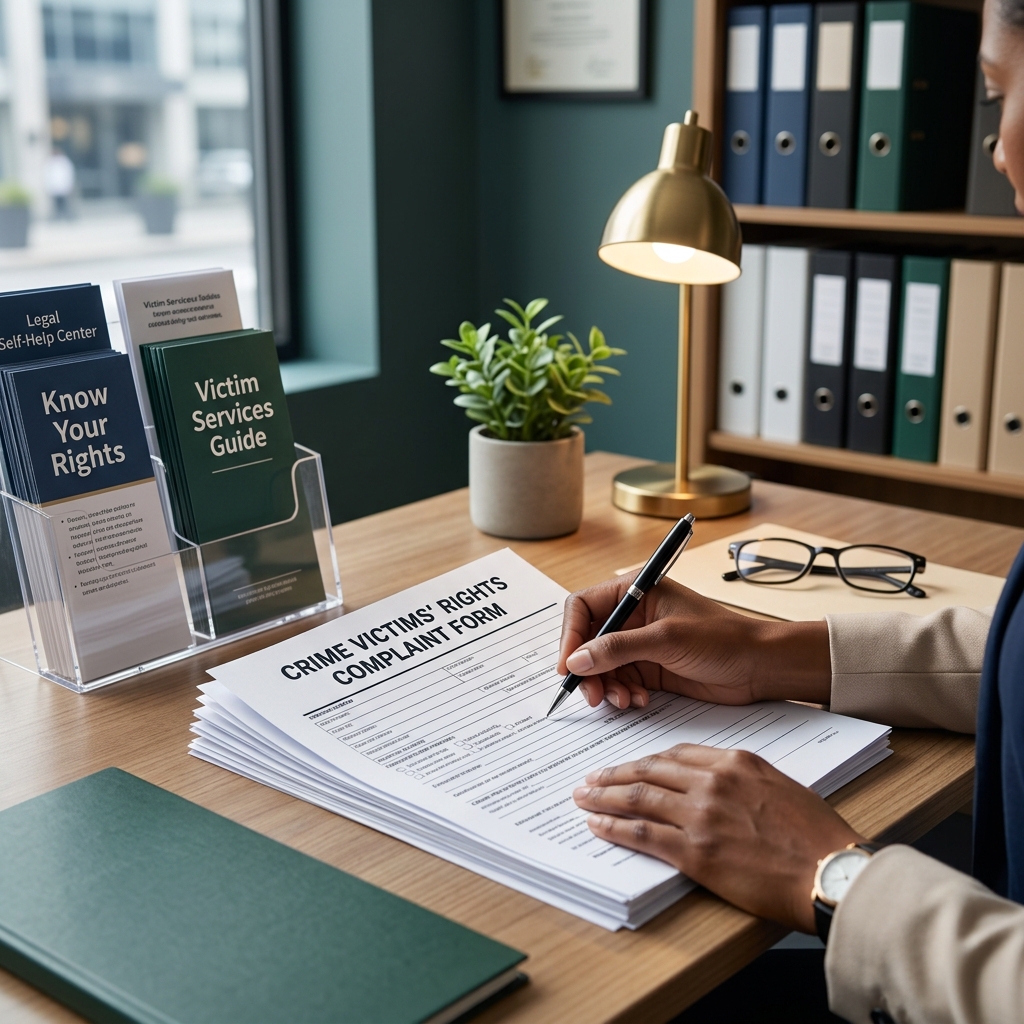
When a victim believes that required protections were ignored during a criminal case, a formal complaint can be an important way to ask for review and corrective action. These complaint systems are designed to give victims a structured path for describing what happened, identifying the agency involved, and requesting a response from the office responsible for oversight.
Although the details vary by jurisdiction, the basic idea is similar: the victim explains the alleged violation, submits the complaint through the correct office, and allows the agency to determine whether the claim falls within its authority. Some offices encourage people to try resolving the issue informally first, while others provide a direct complaint form that begins the review process immediately.
What a victims’ rights complaint is meant to do
A victims’ rights complaint is not simply a statement of frustration. It is a formal notice that a victim believes a right protected by law was not honored during the criminal justice process. Complaint systems can help government offices investigate whether an agency failed to provide notice, access, participation, or other protections that should have been available.
Depending on the state or federal system, the office reviewing the complaint may be able to recommend corrective action, ask an agency to respond, or help the parties resolve the issue without a lengthy dispute. In some programs, the purpose is also educational: the complaint process can reveal recurring problems and improve future handling of victim services.
Who usually has the right to file
Eligibility rules are specific, and they matter. In the federal system described by the Department of Justice, a complaint may be filed by an identified crime victim in a federal district court case, or by that person’s appropriate representative, if the victim has been directly and proximately harmed by the offense. State systems also allow filing by victims and, in some instances, by a parent or representative on a victim’s behalf.
What you can complain about also depends on the office. Some agencies handle complaints about prosecutors or other criminal justice agencies, while others limit review to Department of Justice employees or a particular state process. Before filing, it is important to confirm both who may submit the complaint and which office has authority to review it.
Common situations that may lead to a complaint
Victims may seek review for many reasons, but the most common concerns usually involve notice, participation, and respectful treatment. Examples found in official complaint materials include failures related to being told about hearings, being allowed to confer or provide input, receiving protection, or being informed about rights and available procedures.
- Not receiving timely notice of court proceedings or release decisions.
- Not being told how to assert victim rights or pursue relief.
- Feeling that the agency handling the case did not take victim safety into account.
- Believing that the victim was excluded from a process where participation should have been allowed.
- Experiencing delays or breakdowns in communication with the responsible office.
Not every bad outcome is a legal violation, and not every disappointment belongs in a complaint. The most useful filings focus on a specific act or omission, identify the responsible office, and explain why the conduct appears to conflict with a protected right.
How to prepare before you submit
The strongest complaints are organized, specific, and documented. Government forms commonly ask for the date of the alleged violation, the name of the person or office involved, the case number, and a detailed explanation of what happened. If you are missing some information, submit what you know and explain what remains uncertain.
Before completing a form, gather the following:
- The criminal case number, if available.
- The name of the defendant or accused person.
- The date or date range when the problem occurred.
- The name of the agency, prosecutor, court office, or employee involved.
- Any letters, emails, notices, or court papers that support your account.
Many complaint systems also invite attachments or additional pages, which can be helpful if the incident is complicated or involves more than one event. A clear timeline often makes the review easier.
Where complaints are usually sent
The correct filing point depends on the jurisdiction. In the federal system, the U.S. Department of Justice Office of the Victims’ Rights Ombudsman reviews certain complaints against DOJ employees involving rights protected by the Crime Victims’ Rights Act. In states, the complaint may go to an attorney general’s office, a victim services commission, a crime victim ombudsman, or a specialized review board.
Some offices accept an online form, while others offer a printable form for mailing or emailing. A few systems encourage a first attempt at local resolution before a formal complaint is opened. If you are unsure where to begin, the safest course is to review the official instructions for the jurisdiction where the case is being handled.
| Typical filing channel | What it usually means |
|---|---|
| Online form | Fastest option for many jurisdictions; often allows immediate submission. |
| Printable form by mail | Useful when signatures, attachments, or paper records are easier to organize. |
| Email or office contact | May be used for questions, clarification, or routing to the correct unit. |
Time limits matter
Most complaint systems require timely filing. One common standard in the materials reviewed is filing within sixty days of learning about the alleged rights violation and within one year of the violation itself. Missing these deadlines can result in the complaint being rejected, even when the underlying concern is serious.
If you are close to a deadline, submit the complaint as soon as possible and preserve proof of the filing date. If the office offers an online receipt, confirmation email, or printable submission record, keep a copy for your records.
What to write in the complaint
Good complaint narratives are concise but complete. The goal is to help the reviewer understand the event without forcing them to guess at important facts. Official guidance usually asks for enough detail to identify the right that was affected, the people involved, and the practical impact on the victim.
Include the following elements when possible:
- What happened and when it happened.
- Which right you believe was not honored.
- How the event affected your participation, safety, or understanding of the case.
- What steps you already took to resolve the matter.
- What outcome you want the office to consider.
If you are unsure whether a particular law applies, describe the facts first. The reviewing office can determine the legal classification later.
What usually happens after submission
After a complaint is filed, the office generally reviews whether the matter is within its authority and whether the complaint contains enough information to proceed. In the federal system, the Victims’ Rights Ombudsman reviews allegations and may contact the complainant in an effort to resolve the issue reasonably. Some state processes use staff review, informal investigation, mediation, or referral to the appropriate agency.
That review can lead to several possible outcomes. The office may dismiss the matter if it falls outside its authority, request more information, seek a response from the agency involved, or recommend corrective action. In many systems, the complaint process is intended to solve problems rather than punish people.
When informal resolution is available
Some states encourage victims to work through the issue at the local level before filing a formal complaint. This may include speaking with the agency, asking a supervisor for help, or contacting a victim advocate or ombudsman for guidance. Informal resolution can be helpful when the problem is a communication breakdown or an overlooked notice that may be corrected quickly.
Informal review does not mean the complaint is less serious. It simply offers a faster route to a solution when the facts are clear and the agency is willing to respond. If that approach fails, a formal complaint may still be available.
Practical tips for making a stronger complaint
Clarity is often more important than emotion. A complaint written in a calm, chronological manner is easier to evaluate than one that mixes several unrelated concerns. Stick to specific events, identify the records that support your account, and explain how the situation affected the rights you were trying to exercise.
- Use dates, names, and case numbers whenever possible.
- Explain the sequence of events in plain language.
- Attach documents only when they are relevant.
- Keep a copy of everything you submit.
- Write down the name of anyone you speak with about the complaint.
If a representative is filing for you, make sure the relationship and authority to act are explained clearly. This is especially important when the victim is a child, incapacitated, or otherwise unable to file personally.
How complaints fit into the larger victim rights system
A complaint process is only one part of a broader network of victim services. Official victim rights programs also include information, referrals, advocacy, and help understanding court events and available protections.[10] In many places, the complaint office is designed to connect victims with the right channel rather than replace other support systems.
That is why many official resources recommend reaching out early. A victim advocate, ombudsman, or rights specialist can often explain whether a concern belongs in a complaint, whether another remedy is better, or whether the issue can be fixed without formal escalation.
Frequently asked questions
Can I file if I am not sure a law was broken?
Yes. A complaint can still be useful when you believe something went wrong but are not certain of the exact legal label. The main goal is to describe the facts clearly so the office can determine whether the issue falls under its authority.
Do I need to prove everything before I file?
No. You should provide the best information you have, along with supporting documents if available. The reviewing office can ask follow-up questions or seek additional records during the review.
Will the complaint change the criminal case itself?
Not always. Some complaint systems focus on process correction, agency accountability, or communication fixes rather than changing court outcomes. The effect depends on the jurisdiction and the nature of the violation.
Can someone else file for the victim?
In many systems, yes, if that person is an appropriate representative and the rules allow it. Complaint materials may permit parents, guardians, or authorized representatives to act on behalf of the victim.
What if I miss the filing deadline?
If the deadline has passed, the office may refuse to review the complaint. Because many systems have strict time limits, it is important to file promptly once you suspect a violation.
Final advice before you submit
If you believe your rights were ignored, start by identifying the office responsible for the case and the complaint procedure that applies there. Then gather the dates, names, case information, and documents that explain what happened. The more precise your filing, the easier it is for the reviewing office to understand the issue and determine the next step.
For many victims, the complaint process is not just about one mistake. It is also about ensuring that future communication, protection, and participation are handled more carefully. A well-prepared complaint can help move that process forward and give the victim a clear record of what went wrong.
References
- CVR Complaint Form – Illinois Attorney General — Illinois Attorney General. 2026-? ??. https://illinoisattorneygeneral.gov/Page-Attachments/CrimeVictimsRightsComplaintForm.pdf
- Office of the Victims’ Rights Ombudsman — U.S. Department of Justice. 2026-? ??. https://www.justice.gov/usao/office-victims-rights-ombudsman
- Victim Complaints — Utah Commission on Criminal and Juvenile Justice. 2026-? ??. https://justice.utah.gov/divisions-and-offices/victim-services-commission/victim-complaints/
- Victims’ Rights Complaint Form — Arizona Attorney General. 2026-? ??. https://www.azag.gov/complaints/victims-rights
- OVP: Victim Rights Act Complaint Process — Colorado Division of Criminal Justice. 2026-? ??. https://dcj.colorado.gov/dcj-offices/ovp/vra-complaint-process
- Crime Victim Ombudsman — South Carolina Attorney General. 2026-? ??. https://www.scag.gov/inside-the-office/crime-victim-services-division/crime-victim-ombudsman/
- National Center for Victims of Crime — National Center for Victims of Crime. 2026-? ??. https://victimsofcrime.org/
Similar Articles








Read full bio of medha deb




