
Enforcing A Custody Order: Practical Steps And Remedies 2025
Practical legal strategies parents can use to respond when a custody or visitation order is ignored or violated.
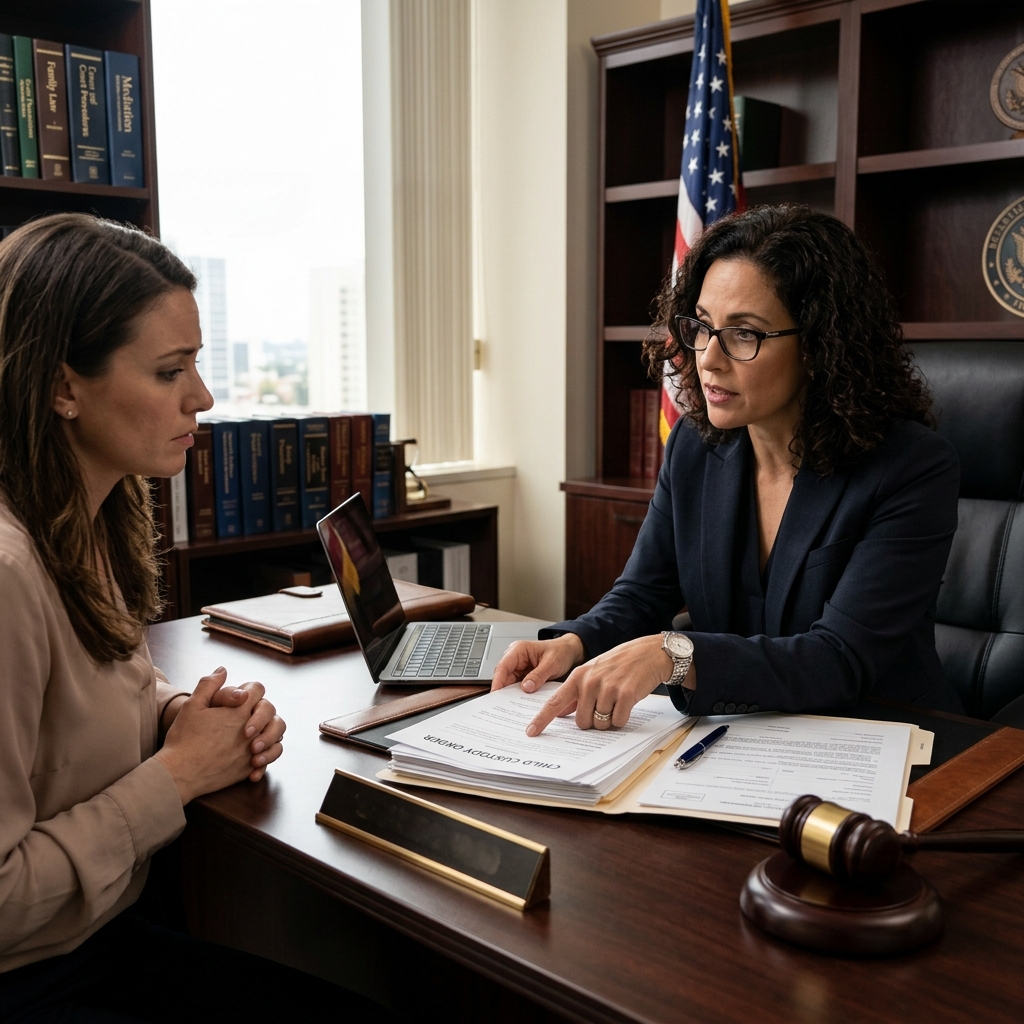
A court-ordered child custody arrangement is not a suggestion; it is a legally binding directive that both parents must follow. When one parent ignores the schedule, blocks visitation, or refuses to return the child, the other parent may need to take formal steps to enforce the order. This guide explains how enforcement works, what options exist before and after going to court, and which remedies judges commonly use to address violations of custody and parenting time.
Understanding What a Custody Order Requires
A child custody order typically spells out legal custody (decision-making authority) and physical custody or parenting time (where the child lives and when each parent has time with the child). Enforcement efforts start with the exact language of this order, because a judge can only enforce clearly stated obligations and rights.
Before taking action, review the current order carefully and note:
- Specific dates and times for exchanges and visitation.
- Locations where the child should be picked up or dropped off.
- Holiday and vacation provisions that may differ from the regular schedule.
- Transportation responsibilities, including who drives and whether third parties are allowed.
- Any conditions such as supervised visitation or requirements for communication about changes.
An order that is vague—such as stating only “reasonable visitation” without times or locations—can be harder to enforce, because it may be unclear what qualifies as a violation. In such cases, parents often need to request a modification to create a more detailed schedule before a court can meaningfully enforce it.
Recognizing Common Types of Custody Violations
Not every disagreement rises to the level of a serious violation, but patterns of interference can quickly harm the child and damage the co-parenting relationship. Some common problems that lead to enforcement actions include:
- Refusing to allow parenting time at court-ordered dates and times.
- Consistently returning the child late or picking up the child at unauthorized times.
- Failing to appear at exchange locations, leaving the other parent waiting.
- Taking the child out of state or out of the country without permission when the order restricts travel.
- Refusing to follow conditions such as supervised visitation or transportation terms.
- Interfering with communication between the child and the other parent during that parent’s scheduled time.
When violations are rare and minor, informal problem-solving might be enough. When they become frequent or intentional, enforcement measures are usually needed to restore stability and protect the child’s relationship with both parents.
Step One: Document Each Violation Thoroughly
Courts rely heavily on evidence. A parent seeking enforcement should keep careful records of every instance where the other parent fails to comply with the custody order, especially when seeking contempt or other serious remedies.
Useful documentation practices include:
- Maintain a written log: Record the date, time, and location of each missed or disrupted exchange, along with what happened and who was present.
- Save electronic communications: Keep text messages, emails, and call logs that show attempts to coordinate exchanges or refusal to comply.
- Use witnesses when appropriate: A neutral adult present at exchanges can later testify or provide a statement about what occurred.
- Preserve copies of the custody order: Bring an up-to-date version to any meeting with police, lawyers, or the court.
In many jurisdictions, a motion for enforcement or contempt must list the specific provisions violated and the exact dates and manner of each violation. A detailed journal makes it possible to meet these legal requirements.
Exploring Informal and Non-Court Options First
Not every case requires immediate court intervention. Sometimes, miscommunication, misunderstandings about the order, or temporary issues (such as illness or transportation problems) lead to missed exchanges. In those situations, it may be practical to try lower-conflict solutions before filing a formal enforcement action.
Direct Communication
When safety permits, a parent may contact the other parent directly to identify the problem and propose solutions. Written communication is often best because it creates a record of what was discussed.
- Ask for clarification on how each parent interprets the order.
- Point out specific missed visits and suggest make-up parenting time.
- Confirm any short-term changes in writing so both parents can reference them later.
Mediation and Co-Parenting Services
In some regions, courts or community programs offer mediation and co-parenting services that help parents resolve disputes without a formal hearing. A trained neutral helps both sides discuss the schedule, identify sources of conflict, and develop a practical plan for moving forward.
- Mediation can produce customized solutions, such as adjusted exchange times or clearer communication rules.
- Co-parenting classes or counseling can strengthen skills and reduce future conflict, which may make long-term enforcement less necessary.
If informal efforts fail or violations continue, approaching the court becomes the next step.
When and How Police or Prosecutors May Help
Law enforcement can sometimes assist in enforcing a custody order, especially when a parent refuses to return the child or relocates the child in violation of the order. However, police involvement depends on the clarity of the order and local practice.
Contacting Local Law Enforcement
When a custody order clearly states the time, place, and terms of possession, some police departments will help enforce it by locating the child or facilitating a return.
- Bring a certified copy of the current order when you contact law enforcement.
- Ask whether the department enforces civil custody orders or only criminal violations.
- Be prepared for the possibility that officers may tell you to return to family court rather than intervening directly.
In emergency situations or where a child’s safety is at risk, police involvement may be essential regardless of the enforcement process.
District Attorney or Prosecutor’s Offices
Some jurisdictions allow a district attorney or prosecutor to help enforce custody orders, particularly in cases of parental abduction or when a parent removes a child from the state or country contrary to the court’s order.
These offices may:
- Seek the child’s return through legal mechanisms available under state law.
- Coordinate with law enforcement across jurisdictions.
- Provide guidance to parents on what documentation is needed and what steps to take.
Filing a Motion to Enforce the Custody Order
When self-help and informal approaches fail, the primary tool for enforcement is a motion or petition for enforcement filed in the court that issued the original custody order. This motion asks the judge to find that a violation occurred and to order remedies that restore compliance and address harm caused by the violation.
Where to File
Enforcement actions are generally filed in the same court that entered the original custody judgment, often in the family or domestic relations division.
In some states, specific offices—such as a Friend of the Court or domestic relations office—assist in enforcing custody and parenting time orders and may guide parents through filing requirements.
What an Enforcement Motion Typically Includes
While exact requirements vary by jurisdiction, enforcement motions usually must be detailed and specific. For example, one state’s law requires that a motion to enforce visitation include the provision violated, the manner of noncompliance, and the relief requested.
In general, expect to include:
- Identification of the order being enforced (date and case number).
- Exact language of the relevant custody or visitation provisions.
- List of each violation with dates, times, locations, and a short description of what happened.
- Evidence references, such as logs, messages, police reports, or witness names.
- Requested remedies, including make-up time, fines, attorney’s fees, or modification of the order.
Serving the Other Parent
After filing, the parent seeking enforcement must ensure the other parent is properly served with the motion and notice of hearing. Courts generally require official service through a process server, sheriff, or other approved method. The clerk’s office can often explain local rules on service.
What Happens at an Enforcement Hearing
At a custody enforcement hearing, a judge reviews the court order, hears testimony, considers evidence, and decides whether the responding parent violated the order. If the judge finds a violation, they may order remedies designed to restore compliance and deter future problems.
| Issue | What the Court Considers |
|---|---|
| Validity of the order | Whether the existing custody order is still in effect and clearly sets out obligations. |
| Clarity of terms | Whether times, locations, and conditions are specific enough to enforce. |
| Evidence of violations | Logs, texts, emails, witness testimony, and police reports showing missed or obstructed parenting time. |
| Intent | Whether noncompliance appears willful, which is important for contempt. |
| Impact on the child | How repeated violations affect the child’s wellbeing and stability. |
Remedies Courts Commonly Use to Enforce Custody Orders
If a judge determines that a parent has violated a custody order, several remedies may be available. The choice depends on the severity of the violation, the parent’s history, and the child’s needs.
- Make-up parenting time: Courts may award additional visitation to compensate for missed time caused by the violation.
- Clarifying or adjusting the order: If ambiguity contributed to conflict, the judge may revise or clarify terms to reduce future disputes.
- Attorney’s fees and costs: A non-compliant parent may be ordered to reimburse the other parent’s reasonable legal expenses.
- Monetary sanctions or fines: Fines can deter repeated violations and underscore the seriousness of court orders.
- Requirements such as posting a bond: A parent may need to post a bond to guarantee future compliance.
- Modification of custody: In serious or recurring cases, persistent interference can lead the court to change legal custody or primary residence.
Contempt of Court for Willful Noncompliance
A powerful enforcement tool is a contempt of court action. Contempt arises when a parent willfully disobeys a valid, clear court order. Contempt can be civil (meant to compel compliance) or criminal (meant to punish past violations).
To find contempt, courts generally require proof that:
- The order was valid and in effect.
- The order clearly set out what the parent was required to do or not do.
- The parent knew about the order.
- The parent intentionally failed to comply without adequate justification.
Possible consequences of being found in contempt of a custody order include:
- Fines imposed by the court.
- Short jail terms for serious or repeated violations.
- Orders for make-up parenting time and compliance plans.
- Payment of the other parent’s attorney’s fees and costs.
When Modification May Be Better Than Repeated Enforcement
In some cases, the problem is not unwillingness but impracticality: life changes may make the existing schedule unworkable. If job schedules, school routines, or relocation prevent a parent from reasonably following the current order, the court may recommend seeking a modification rather than pursuing repeated enforcement actions.
A modification request is appropriate when:
- Both parents struggle to comply due to changed circumstances.
- The child’s needs have evolved, making a new schedule more appropriate.
- Enforcement actions are frequent but do not resolve the underlying problem.
Courts typically require proof of a material change in circumstances and evidence that a new plan would serve the child’s best interests.
Practical Tips to Strengthen Your Enforcement Case
Beyond formal legal requirements, certain practical steps can increase the chances that an enforcement motion will succeed and that the outcome will support the child’s wellbeing.
- Follow the order exactly: Show up at the correct place, on the correct date and time, even if you expect the other parent to violate the order.
- Stay child-focused: Frame your requests in terms of the child’s stability and relationships, not parental conflict.
- Avoid retaliatory conduct: Courts look unfavorably on parents who respond to violations by engaging in their own misconduct.
- Seek legal advice when possible: Many areas have legal aid or family law clinics that can explain options at low or no cost.
- Use support services: Hotlines, domestic relations offices, and self-help centers often provide forms and procedural guidance.
Frequently Asked Questions About Enforcing Custody Orders
Can I deny child support if the other parent denies visitation?
No. Child support and custody/visitation are separate legal obligations. A parent who is denied parenting time should seek enforcement or modification of the custody order, not stop paying support. Stopping support can create serious legal consequences, including wage garnishment, property liens, and license suspensions.
Do I have to call the police every time the other parent violates the order?
Not necessarily. Police involvement may be appropriate in emergencies or when a child is not returned, but many routine violations are better addressed through documentation and court procedures. Some departments do not enforce civil custody orders and may refer you to family court instead.
What if the custody order is unclear or outdated?
An unclear or outdated order is often difficult to enforce. In that situation, a parent may need to ask the court to clarify or modify the order so that schedules, locations, and responsibilities are specific. Once the order is precise, enforcement becomes more straightforward.
Can the court change custody because of repeated violations?
Yes. When violations are serious, intentional, and ongoing, courts may decide that a change in primary residence or legal custody is in the child’s best interests. Repeated interference with parenting time is often considered a significant factor in custody modifications.
Do I need a lawyer to file an enforcement motion?
While having a lawyer is usually helpful, many parents file enforcement actions on their own. Self-help centers, legal aid organizations, and domestic relations offices can often provide forms and guidance. However, complex cases or situations involving potential contempt and jail time warrant professional legal advice.
References
- Enforcing a Child Custody or Support Order — Justia. 2023-05-01. https://www.justia.com/family/child-custody-and-support/enforcing-a-child-custody-or-support-order/
- Enforcing A Child Custody Order — LouisianaLawHelp.org. 2022-02-15. https://louisianalawhelp.org/resource/enforcing-a-child-custody-order
- Enforce a custody order — California Courts Self-Help Guide. 2023-07-10. https://selfhelp.courts.ca.gov/child-custody/enforce
- How to Enforce a Visitation Order — TexasLawHelp.org. 2023-09-01. https://texaslawhelp.org/article/how-to-enforce-a-visitation-order
- Enforcing Orders for Custody, Parenting Time, and Child Support — Michigan Legal Help. 2022-11-20. https://michiganlegalhelp.org/resources/family/enforcing-orders-custody-parenting-time-and-child-support
- Enforcement of Visitation — Texas Access. 2021-06-30. https://txaccess.org/enforcement-visitation
- Texas Child Custody Enforcement Law — Onda Family Law. 2020-01-15. https://ondafamilylaw.com/child-custody-texas/enforcement/
Similar Articles








Read full bio of medha deb


