
DUI Traffic Stops: 5 Strategies To Suppress Evidence In 2025
Understand when a DUI traffic stop may be unlawful, how to challenge it in court, and what defenses a skilled attorney can use to protect your rights.
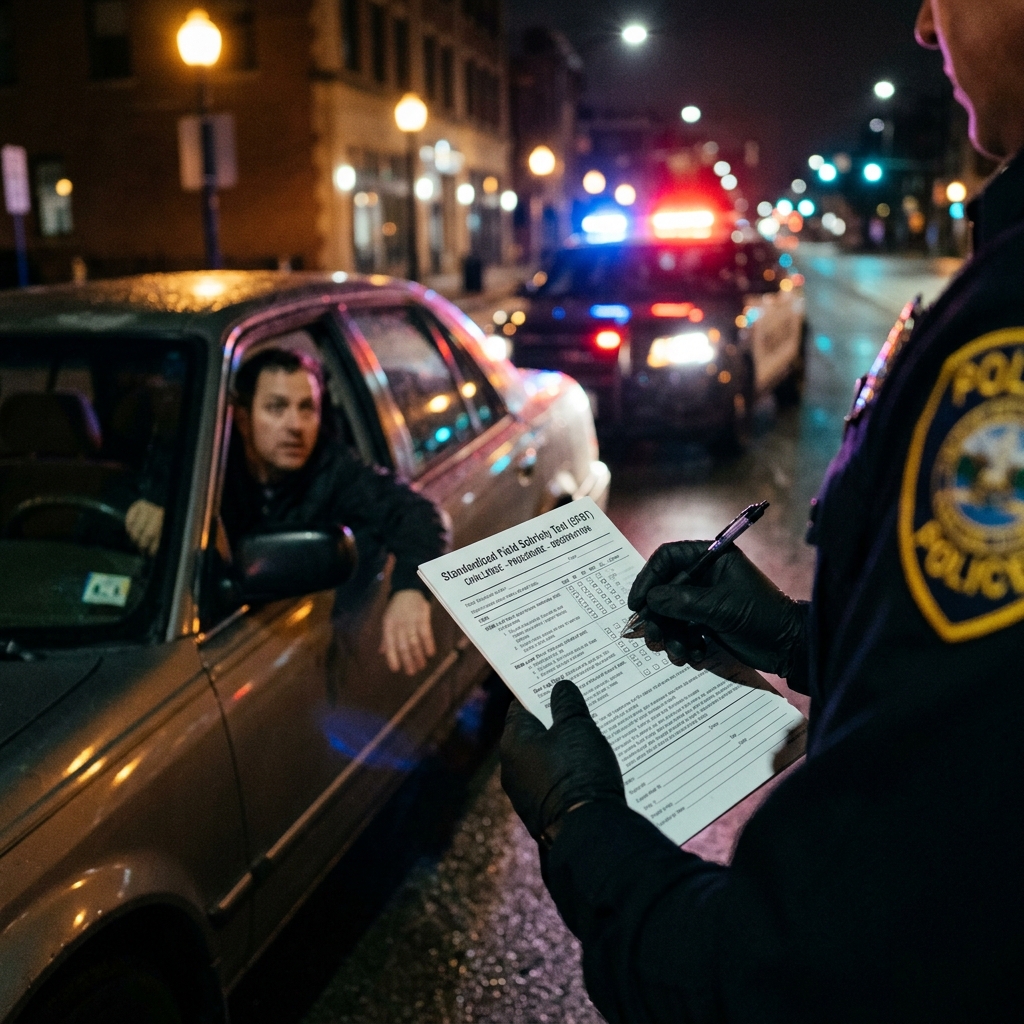
DUI charges often begin with a flashing light in the rear-view mirror. Yet the entire case can collapse if the traffic stop that started it all was unconstitutional. Under the Fourth Amendment, every traffic stop is considered a seizure, meaning an officer must have a legally valid reason to pull you over. If that requirement is not met, the evidence gathered after the stop may be thrown out, which can dramatically weaken or even end the prosecution.
This article explains how DUI traffic stops are evaluated by courts, what makes a stop lawful, common grounds for challenging a stop, and the key legal tools attorneys use to suppress evidence and protect a driver’s rights.
Why the Legality of the Traffic Stop Matters
The moment an officer activates emergency lights and you pull over, a legal analysis begins. The law asks a simple question: did the officer have a lawful basis to stop the vehicle?
- Traffic stops are seizures: Courts treat a traffic stop as a seizure under the Fourth Amendment, which guards against unreasonable searches and seizures.
- Evidence can be excluded: If the stop violated the Constitution, the exclusionary rule can prevent prosecutors from using evidence obtained as a result of that stop.
- Case outcomes can change: When breath tests, field sobriety tests, or officer observations are excluded, prosecutors may be forced to reduce or dismiss charges.
Because every DUI case builds on the initial stop, challenging its legality is often the first and most powerful line of defense.
Key Legal Standards: Reasonable Suspicion and Probable Cause
Courts analyze DUI traffic stops using two closely related standards: reasonable suspicion and probable cause.
| Standard | When It Applies | What It Requires |
|---|---|---|
| Reasonable suspicion | To justify the initial stop of the vehicle | Specific, articulable facts suggesting a traffic violation or criminal activity, not just a hunch. |
| Probable cause | To arrest a driver for DUI | Facts that would lead a reasonable person to believe the driver committed DUI, such as strong odor of alcohol, slurred speech, and failed field tests. |
An officer does not need proof beyond a reasonable doubt to stop or arrest a driver, but they must be able to explain what specific facts made the stop and arrest reasonable.
Common Reasons Officers Give for DUI Traffic Stops
In many DUI cases, officers will point to a traffic violation or unusual driving behavior to justify the stop. Typical reasons include:
- Speeding, running a red light, or failing to signal a lane change
- Weaving within a lane or crossing the center line
- Driving significantly below the speed limit in a way that impedes traffic
- Broken tail lights or expired registration tags
- Improper lane changes or failing to maintain a lane
Even minor violations can provide sufficient reasonable suspicion for a stop, but officers must still accurately describe what they observed and when.
When a DUI Traffic Stop May Be Improper
Not every traffic stop meets constitutional standards. An attorney will look closely at the facts to see whether the officer overstepped legal limits.
Lack of Reasonable Suspicion
If an officer cannot identify clear, objective reasons for stopping a vehicle, the stop may be unlawful. Examples include:
- Stopping a driver based solely on the time of night or the neighborhood
- Acting on an unsupported “gut feeling” rather than observable behavior
- Failing to document any specific traffic violation in reports or testimony
Courts have repeatedly held that generalized hunches do not meet the reasonable suspicion standard.
Pretextual DUI Stops
Sometimes officers use a minor traffic issue as a pretext to investigate a suspected DUI. Pretext stops are complex. As long as there is a genuine traffic violation, many courts will uphold them even if the officer was primarily looking for evidence of impaired driving.
However, a pretext stop may still be vulnerable if:
- The alleged traffic violation did not actually occur
- Dashcam or bodycam footage contradicts the officer’s description of events
- The officer’s explanation is vague or inconsistent across reports and testimony
Unlawful Expansion of the Stop
Even if the initial stop is valid, an officer can still violate the Fourth Amendment by extending the stop beyond its original purpose without adequate justification.
- Detaining the driver for an extended period after issuing a warning or citation
- Prolonging the stop to conduct a DUI investigation without additional evidence of impairment
- Requesting tests or searches unrelated to the reason for the stop without consent or legal grounds
If the stop is improperly prolonged, evidence obtained during the extended detention may be suppressed.
Evidence Used to Evaluate a DUI Traffic Stop
Courts do not accept an officer’s word at face value. They assess multiple sources of evidence to decide whether a DUI traffic stop was lawful.
- Dashcam and bodycam video: Footage can confirm or refute claims that a traffic violation occurred, how the stop unfolded, and how tests were administered.
- Police reports: Officers must document their reasons for the stop, observations of impairment, and steps taken during the investigation.
- Witness testimony: Passengers, bystanders, or nearby drivers may describe the driving behavior and officer conduct.
- Checkpoint records: For sobriety checkpoints, written procedures and logs show whether officers followed constitutional guidelines for neutral, non-discriminatory stops.
An experienced defense attorney will systematically compare these sources to identify inconsistencies or gaps that support a challenge.
The Exclusionary Rule: Suppressing DUI Evidence
When a DUI traffic stop violates the Fourth Amendment, the primary remedy is the exclusionary rule. This rule prevents the government from using evidence obtained through unconstitutional searches or seizures.
In DUI cases, evidence that may be suppressed includes:
- Breath, blood, or urine test results
- Field sobriety test performance
- Statements made to the officer during or after the stop
- Observations about odor of alcohol, slurred speech, or unsteady balance
If this evidence is excluded, prosecutors may be left with little or no proof of impairment, opening the door to dismissal or favorable plea negotiations.
How Attorneys Challenge a DUI Traffic Stop
DUI defense attorneys use a structured approach to evaluate and contest traffic stops. While every case is unique, several core strategies recur.
1. Detailed Review of the Stop
The first step is a comprehensive investigation of how the stop occurred.
- Requesting dashcam and bodycam footage from the law enforcement agency
- Obtaining police reports, dispatch logs, and notes from all involved officers
- Interviewing the driver, passengers, and any witnesses
- Identifying any discrepancies between the officer’s reports and video or witness accounts
2. Legal Analysis Under the Fourth Amendment
Once the facts are clear, counsel examines whether the officer complied with constitutional requirements.
- Was there a specific, objective traffic violation or behavior that justified the stop?
- Did the officer extend the stop for reasons unrelated to the original traffic issue?
- Did the officer have probable cause to transition from a stop to a DUI arrest?
3. Challenging Field Sobriety and Chemical Tests
Even if a stop is lawful, improperly conducted tests can be attacked on independent grounds.
- Field sobriety tests: Officers must follow standardized procedures; deviations can undermine the reliability of the results.
- Breath tests: Devices must be properly calibrated and maintained, and officers must follow strict protocols when administering tests.
- Blood tests: Chain-of-custody errors, improper storage, or laboratory mistakes may affect accuracy.
4. Filing a Motion to Suppress
The central procedural tool to challenge a DUI traffic stop is a motion to suppress. This is a formal written request asking the court to exclude evidence obtained through an unconstitutional stop or search.
In a suppression motion, the defense typically:
- Describes the events leading up to and during the stop
- Identifies the specific constitutional violations alleged
- Cites legal precedents supporting exclusion of the evidence
- Attaches supporting exhibits such as video, reports, and affidavits
5. Suppression Hearing and Judicial Ruling
Courts often hold a hearing where the defense and prosecution present evidence and legal arguments about the stop.
- The officer may testify about what led to the stop and how the investigation proceeded.
- The defense can cross-examine the officer and present conflicting evidence, such as video that shows no traffic violation.
- The judge then decides whether the stop and subsequent investigation met constitutional standards.
If the judge finds a violation, the court may suppress some or all of the prosecution’s evidence, significantly weakening the case.
Special Issues: Sobriety Checkpoints and Commercial Drivers
Some DUI traffic stops occur in specialized contexts that raise additional legal considerations.
Sobriety Checkpoints
Sobriety checkpoints, where officers stop vehicles according to a predetermined pattern, are treated differently than ordinary traffic stops. While the U.S. Supreme Court has permitted checkpoints under certain conditions, they must follow strict procedural safeguards.
- Stops must be based on neutral criteria, not officer discretion
- Advance notice to the public may be required under state law
- The checkpoint’s primary purpose must be roadway safety, not general crime control
- Officers must follow a written plan or clear policy to avoid arbitrary stops
If law enforcement fails to adhere to these standards, evidence from a checkpoint stop may be vulnerable to suppression.
Commercial Drivers and CDL DUI Stops
Commercial drivers face heightened stakes in DUI cases, including the risk of losing a commercial driver’s license (CDL) and livelihood. Courts examine stops of commercial vehicles using the same constitutional principles, but the professional context often means:
- Closer scrutiny of dashcam or bodycam footage because commercial vehicles are frequently monitored
- Potential involvement of federal regulations or employer policies
- Lower legal blood alcohol limits for CDL holders in many jurisdictions
Because of the serious career consequences, a flawed traffic stop in a CDL DUI case can be especially important to identify and challenge.
Beyond the Stop: Other DUI Defense Strategies
While the legality of the traffic stop is often central, it is not the only defense available in DUI cases. Depending on the facts, counsel may also consider:
- Rising BAC defense: Arguing that the driver’s blood alcohol concentration was below the legal limit while driving but increased by the time testing occurred.
- Medical or physical conditions: Certain conditions can mimic signs of impairment or affect field sobriety test performance.
- Failure to advise rights: In some situations, not advising a driver of certain rights can affect admissibility of statements or test results.
- Administrative challenges: Contesting license suspensions through separate administrative hearings, which may have different standards and deadlines.
These defenses often work in combination with a challenge to the traffic stop to create a comprehensive defense strategy.
Practical Tips if You Are Stopped on Suspicion of DUI
This article is informational and not legal advice, but several practical principles often help protect your rights if you are pulled over:
- Remain calm and polite; confrontational behavior can escalate the situation.
- Provide required documents such as your driver’s license, registration, and proof of insurance when requested.
- Know that you have the right to remain silent; you generally do not have to answer questions about where you have been or what you have had to drink.
- Understand that refusing a chemical test may carry automatic license consequences under implied consent laws, even if it may help the criminal case.
- As soon as reasonably possible, write down your recollection of events, including times, officer statements, and anything unusual about the stop.
- Consult a qualified DUI attorney promptly so important evidence such as video and dispatch logs can be requested before they are lost or overwritten.
Frequently Asked Questions About Challenging DUI Traffic Stops
Can a DUI charge be dismissed because of an improper traffic stop?
Yes. If a court finds the stop violated the Fourth Amendment, evidence obtained as a result of that stop may be suppressed under the exclusionary rule. Without breath tests, field sobriety results, or officer observations, prosecutors may have insufficient evidence to proceed and may dismiss or significantly reduce the charges.
Is it enough for an officer to say they “had a feeling” I was impaired?
No. Reasonable suspicion requires specific, articulable facts, not just a general sense that something was wrong. An officer should be able to point to particular driving behavior or observable violations that justified the stop.
What if I was stopped at a sobriety checkpoint?
Checkpoints must comply with constitutional guidelines and relevant state rules, including neutral selection of vehicles and adherence to a pre-established plan. If officers deviated from required procedures, your attorney may challenge the validity of the stop and seek to suppress resulting evidence.
Does the legality of the traffic stop matter if I failed the breath test?
Yes. Even strong test results can be excluded if they were obtained following an unconstitutional stop or unlawful extension of the detention. A flawed foundation can undermine the entire case.
Do I need a lawyer to challenge a DUI traffic stop?
While you have the right to represent yourself, DUI law combines complex constitutional principles, technical testing procedures, and strict deadlines. An attorney familiar with DUI defense can analyze the stop, obtain evidence, and present legal arguments through motions to suppress in ways that are difficult to manage alone.
References
- DUI Defense Strategies — FindLaw. 2024-01-15. https://www.findlaw.com/dui/cases/defenses-to-drunk-driving.html
- Can a DUI Charge Be Dismissed for an Improper Traffic Stop? — Worgul, Sarna & Ness, Criminal Defense Attorneys, LLC. 2023-06-20. https://wlpatlaw.com/blog/can-a-dui-charge-be-dismissed-for-an-improper-traffic-stop/
- Challenging Traffic Stops In CDL DUI Cases: What Courts Look At — Matthew T. Reid Law. 2024-02-05. https://www.mreidlaw.com/challenging-traffic-stops-in-cdl-dui-cases-what-courts-look-at/
- Challenging a DUI Charge — Ellis Law, LLC. 2023-09-18. https://ellislawupstate.com/blog/challenging-dui/
- Common DUIs in South Carolina – Why The Details Matter — Seibert Law Firm, LLC. 2025-11-10. https://www.seibertlawfirm.com/blog/2025/november/common-ways-driving-under-the-influence-dui-case/
Similar Articles








Read full bio of Sneha Tete




