
Avoid Probate: 6 Practical Strategies To Keep Assets Private
Practical estate planning tools that can keep assets out of probate and simplify transfers.
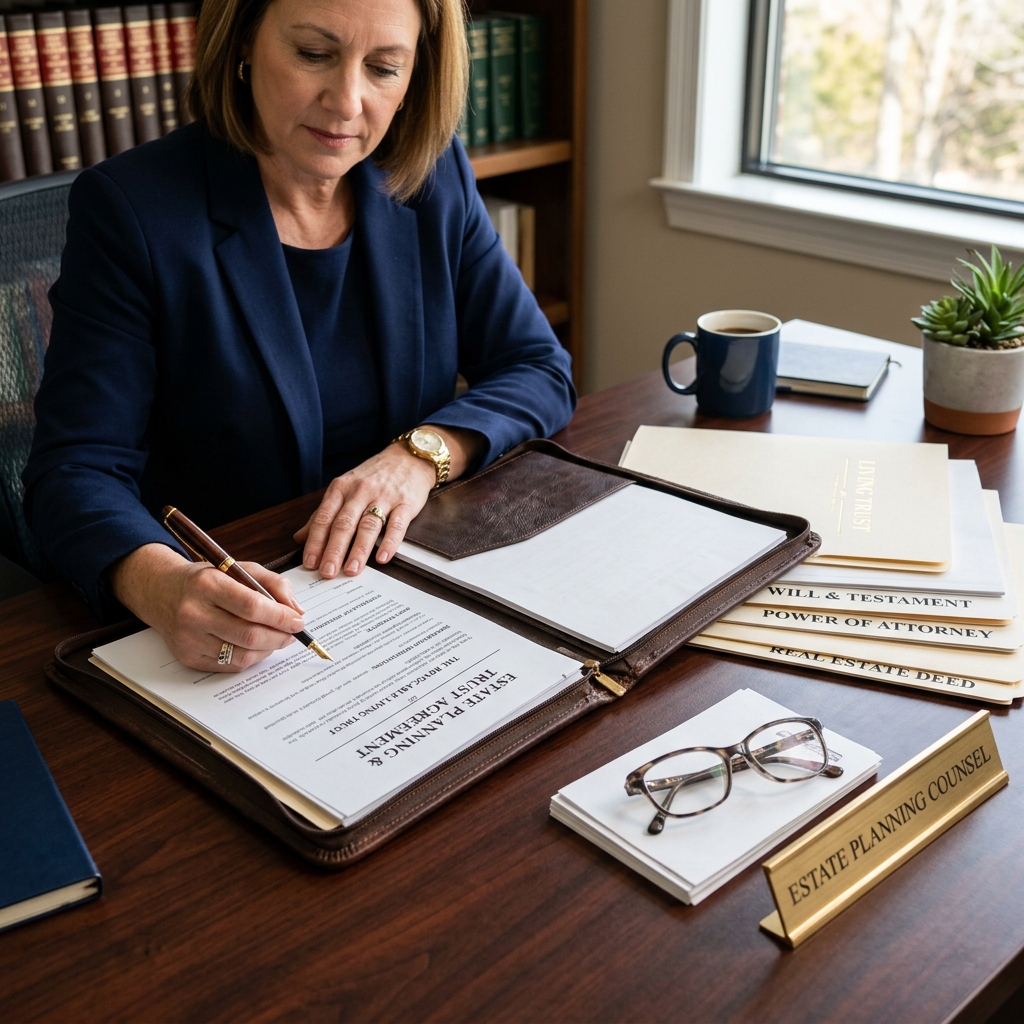
Probate is the court-supervised process used to validate a will, settle debts, and transfer property after someone dies. For many families, it is manageable but still time-consuming, public, and sometimes expensive. Estate planning can often reduce or eliminate the need for probate for at least some assets, which may make the transfer of property faster and simpler for the people left behind. Common tools include trusts, beneficiary designations, ownership arrangements with survivorship rights, and state-specific simplified procedures for small estates.
Why people try to keep assets out of probate
People usually think about probate avoidance for three reasons. First, probate can add delay before heirs receive property. Second, the process may involve filing fees, attorney time, and court oversight. Third, probate records are generally public, while many nonprobate transfers remain private. A well-built estate plan does not always eliminate probate completely, but it can reduce the number of assets that must pass through the court system.
It is also important to distinguish between probate avoidance and estate planning in general. A will alone does not avoid probate. Instead, a will usually directs the probate court on how property should be distributed. To move assets outside probate, ownership or beneficiary structure must be arranged in advance.
Use a revocable living trust for broad control
A revocable living trust is one of the most flexible probate-avoidance tools. You transfer selected assets into the trust during your lifetime, but you usually keep control as trustee or retain the power to amend or revoke the trust while you are alive. After death, the successor trustee can distribute trust assets without opening a probate case for those assets.
This approach works well when someone owns multiple asset types, especially real estate, brokerage accounts, and valuable personal property. It can also be useful for families that want more privacy or a staged distribution plan, such as delayed payouts for younger beneficiaries. The trust document can be customized to provide instructions that would be difficult to manage through a simple beneficiary form.
- Can hold many kinds of property.
- Can provide continuity if the owner becomes incapacitated.
- Can reduce the number of assets subject to probate.
- Requires proper funding, meaning assets must actually be titled in the trust’s name.
A trust is not automatic. If assets are never transferred into it, those assets may still go through probate. That is why funding the trust is just as important as signing the trust document itself.
Rely on beneficiary designations for financial accounts
Many accounts pass outside probate when they have a valid beneficiary designation. Retirement accounts, life insurance policies, annuities, and some bank or brokerage accounts can often name a beneficiary directly. When the owner dies, the asset is paid to the named person instead of becoming part of the probate estate.
This method is popular because it is simple and usually inexpensive. It also allows the owner to keep control during life. The main risk is outdated paperwork. If a beneficiary dies, a divorce occurs, or the form is never updated, the account may pass in a way the owner did not expect.
| Asset type | Typical nonprobate tool | Main advantage |
|---|---|---|
| Life insurance | Beneficiary designation | Direct payout to named person |
| 401(k) or IRA | Beneficiary designation | Quick transfer outside estate administration |
| Bank account | Payable-on-death instruction | Simplified cash transfer |
| Brokerage account | Transfer-on-death instruction | Can avoid court delay for securities |
Beneficiary forms should be reviewed carefully because they can override instructions in a will. If the goal is to keep an account out of probate, the account paperwork must be aligned with the rest of the estate plan.
Consider joint ownership with survivorship rights
Joint ownership can allow property to pass automatically when one owner dies, as long as the title includes survivorship language recognized by state law. In many states, that means holding property as joint tenants with right of survivorship or a similar form of ownership. When one co-owner dies, the survivor generally becomes the sole owner without probate.
This can work for real estate, bank accounts, and certain other assets. It can be convenient, but it is not always the best fit. Adding a child or relative as a joint owner may create unintended consequences, including exposure to that person’s creditors or conflicts among family members. It may also create tax or control issues if the new co-owner has equal legal rights to the asset while the original owner is still alive.
Because ownership form matters so much, people should not assume that simply adding a name to a deed or account automatically achieves the desired result. The legal wording must match state law and the owner’s plan.
Use transfer-on-death and payable-on-death designations where available
Transfer-on-death and payable-on-death arrangements are straightforward tools for transferring specific assets. A payable-on-death designation is commonly used for cash accounts, while transfer-on-death designations are often used for securities and, in some states, other property such as vehicles or real estate. These instructions let the owner keep full control during life while naming who receives the asset at death.
These designations are especially useful when a person wants a simple, low-cost method for one account or one asset category. They are usually easier to set up than a trust, but they are less flexible. They do not provide the same ability to manage long-term distributions, protect a beneficiary who is young or vulnerable, or coordinate several assets under one plan.
- POD is typically associated with bank accounts and cash holdings.
- TOD is typically associated with securities and similar assets.
- Availability depends on state law and the type of asset.
Make lifetime gifts when the transfer is simple and intentional
Some people reduce probate by giving assets away during life. Once an asset is no longer owned by the future decedent, it generally will not be part of the probate estate later. This can be an effective strategy for people who want to shrink the estate or pass certain items now rather than later.
Lifetime gifts should be used thoughtfully. Giving away property can affect financial security, taxes, and eligibility for needs-based benefits. It can also be emotionally complicated if the gift is not even-handed among family members. For these reasons, many people use gifting as one part of a broader plan rather than the only strategy.
A gift strategy is usually most effective when the donor understands the consequences and keeps careful records. The goal is not just to reduce probate, but to make sure the transfer is legally and financially sensible.
Look for small-estate procedures in your state
Some estates qualify for simplified transfer procedures instead of a full probate case. Depending on the state, these may be called small estate affidavits, voluntary administration, or summary administration. They are designed for estates below a set value threshold or for estates with limited property types.
These procedures do not eliminate probate law entirely, but they can significantly reduce cost and complexity. Beneficiaries usually provide documents such as a death certificate, proof of relationship, and an affidavit confirming their right to collect the property.
Because the threshold and process vary by state, families should not assume the same rule applies everywhere. An estate that qualifies in one state may not qualify in another.
How different strategies compare
| Strategy | Best for | Limitations |
|---|---|---|
| Revocable living trust | Multiple assets and more control | Must be funded and maintained |
| Beneficiary designation | Accounts with built-in transfer forms | Can become outdated |
| Joint ownership | Simple automatic transfer between co-owners | Can create ownership and creditor risks |
| POD/TOD forms | Single assets or accounts | Limited flexibility |
| Lifetime gifts | Reducing estate size | May have tax or family implications |
| Small-estate process | Lower-value estates | Depends on state-specific rules |
Build a plan that matches the assets you actually own
The best probate-avoidance strategy depends on the property involved. Real estate may call for a deed-based solution or trust ownership. Retirement accounts usually need beneficiary forms. Bank accounts may support POD instructions. Business interests may require separate agreements. A one-size-fits-all approach is often not enough.
It is useful to inventory every major asset and ask three questions: who owns it now, how does it transfer at death, and does that method match the overall plan? If the answer to any of those questions is unclear, the asset may need retitling or a new designation.
- Review account titles and deeds.
- Confirm all beneficiary forms are current.
- Check whether a trust is properly funded.
- Ask whether state law offers TOD or small-estate options.
- Update documents after marriage, divorce, relocation, or major financial changes.
Common mistakes that can bring assets back into probate
Even a well-planned estate can end up in probate if the documents are incomplete. Common mistakes include failing to retitle assets into a trust, forgetting to update beneficiaries, assuming a will controls accounts with beneficiary forms, or using ownership language that does not match state law. Another frequent issue is inconsistency: one document says one thing while another document says something different.
Because probate rules are state-specific, planning should be reviewed under the law where the property is located and where the owner lives. What works for one family or one state may not work for another.
Frequently asked questions
Does a will avoid probate? No. A will usually becomes effective through probate rather than bypassing it.
Is a trust always better than a will? Not always. A trust can avoid probate for assets titled in the trust, but it takes more setup and maintenance. For very simple estates, beneficiary forms or small-estate procedures may be enough.
Can I avoid probate for every asset? Sometimes, but not always. Some assets are hard to move outside probate, and state law may limit available tools. Many people aim to reduce probate rather than eliminate it entirely.
Do probate-avoidance tools need to be updated? Yes. Life events and asset changes can make an otherwise good plan obsolete. Regular review helps keep the plan effective.
Putting the right pieces together
A strong probate-avoidance plan usually combines more than one tool. A trust may hold major assets, beneficiary forms may direct retirement accounts, and transfer-on-death designations may handle a few specific accounts. When the documents work together, the transfer of property can be smoother and less dependent on court administration.
For many families, the best starting point is a clear inventory of property, followed by a review of how each asset is titled and who is named to receive it. That practical step often reveals which assets are already outside probate and which ones still need attention.
References
- How to Avoid Probate: 4 Legal Methods to Bypass the Lengthy Court Process — Heartland Estate Law. 2025. https://heartlandestatelaw.com/blog/how-to-avoid-probate-4-legal-methods-to-bypass-the-lengthy-court-process/
- Top Strategies to Avoid Probate — Fred E. Glickman, P.A. 2025. https://www.miamiestatelaw.com/blog/top-strategies-to-avoid-probate/
- How to Avoid Probate: Effective Strategies for a Seamless Transaction — Anne Schmidt Law. 2025-02. https://www.anneschmidtlaw.com/blog/2025/02/how-to-avoid-probate-effective-strategies-for-a-seamless-transaction/
- Top 6 Ways to Avoid Probate and How a Legal Professional Can Help — Khalifeh, Strupinsky & Kleiman, LLC. 2025. https://www.khalifehstrupinsky.com/top-6-ways-to-avoid-probate-and-how-a-legal-professional-can-help
- Avoiding Probate: Strategies for Effective Estate Planning — Private Client Law Office. 2025. https://www.privateclientlawoffice.com/blog/avoiding-probate-strategies-for-effective-estate-planning/
- How to Avoid Probate — Potential Legal Strategies — Justia. 2025. https://www.justia.com/estate-planning/probate/how-to-avoid-probate/
- Can You Avoid Probate? State-Specific Estate Planning Strategies — NBI-SEMS. 2025. https://nbi-sems.com/blogs/news/how-can-you-avoid-probate
- Benefits and Strategies to Avoid Probate — Cavitch Familo & Durkin. 2024-04. https://www.cavitch.com/blog/2024/04/benefits-and-strategies-to-avoid-probate/
Similar Articles








Read full bio of Sneha Tete


