
Hospital Charges for Uninsured Patients in California
Understanding what California hospitals can legally charge uninsured patients and how state protections, discounts, and billing rules affect your medical costs.
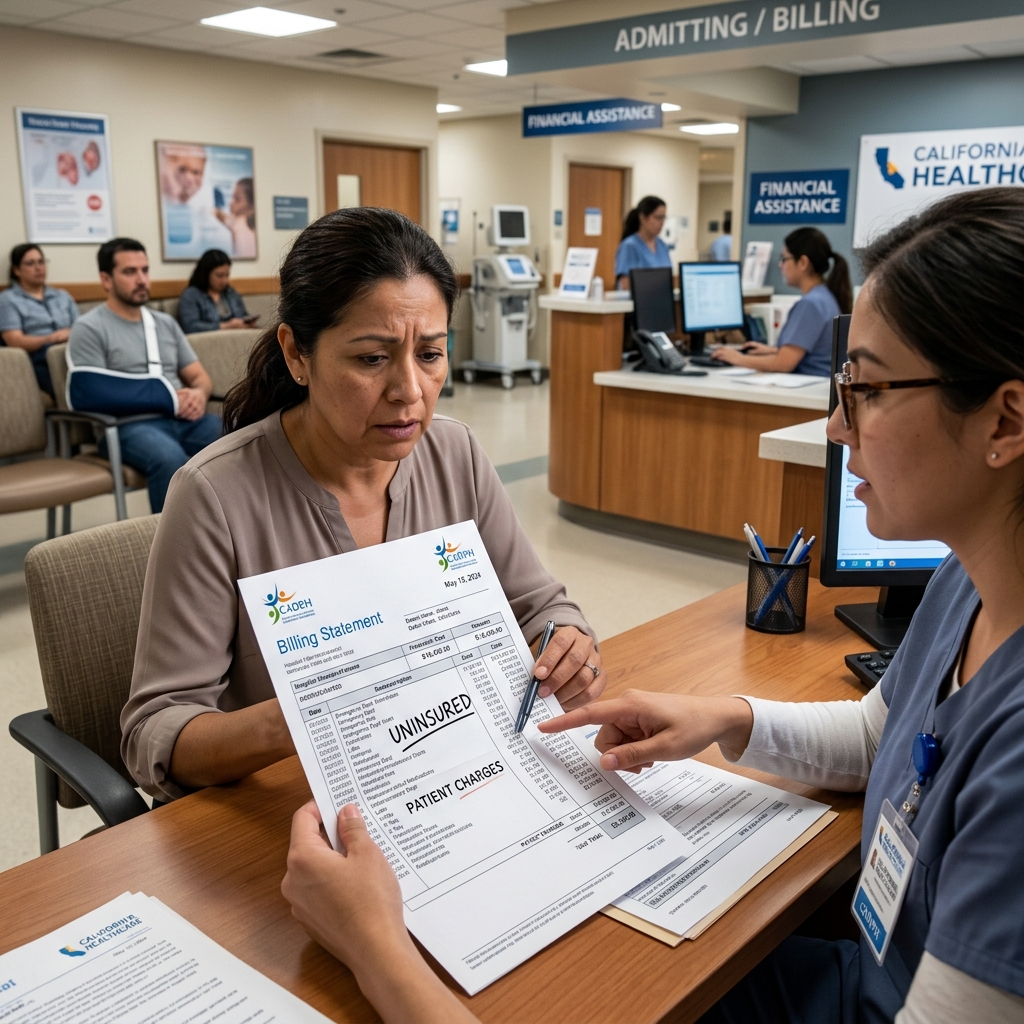
Facing a hospital stay without health insurance in California can be frightening, not only because of the medical emergency itself but because of the potential bill that follows. California has adopted several laws to prevent hospitals from charging uninsured patients unlimited or abusive prices, especially those with low or moderate incomes. This article explains how those rules work in practice, what hospitals can and cannot charge, and how uninsured patients can reduce and challenge their medical bills.
Why Hospital Charges Matter So Much for the Uninsured
Hospital billing in the United States is complex and often opaque. Hospitals maintain a list of standard prices known as a chargemaster, but few patients actually pay these sticker prices. Insurers and government programs negotiate substantial discounts, so insured patients usually pay much less than the posted rates. Uninsured patients, by contrast, historically were billed at or near full chargemaster prices, exposing them to extremely high charges.
Research has found that:
- Uninsured and self-pay patients were charged about 2.5 times more than those covered by insurance in many hospitals.
- At some hospitals, cash-paying patients have been billed more than triple the amounts paid by Medicare or Medicare Advantage plans for the same services.
- Class action litigation in California alleged that hospitals were price-gouging the uninsured and resulted in nearly $1 billion in refunds, adjustments, and reduced prices.
Because a single emergency room visit or surgery can generate a bill tens of thousands of dollars higher than what insured or government patients would pay, California stepped in with laws specifically targeting hospital pricing for uninsured individuals.
Core Legal Protections for Uninsured Patients in California
California does not impose a simple dollar cap on what hospitals may charge, but it does set rules that limit prices and require financial assistance for qualifying uninsured patients. The most important protections are:
Fair Pricing and Discount Payment Requirements
California’s fair pricing framework requires most hospitals to maintain written policies that offer discounted care and charity care to uninsured patients with low or moderate incomes. Under these rules:
- Hospitals must adopt charity care policies that forgive or substantially reduce bills for patients with very low incomes.
- Hospitals must have discount payment policies for uninsured or underinsured patients who earn below specified income thresholds, commonly tied to the federal poverty level.
- For many of these qualifying patients, the amount charged may not exceed what the hospital would be paid by Medicare, Medicaid (Medi-Cal), or other government programs for the same services.
In practical terms, this means eligible uninsured patients should not be billed the hospital’s highest list prices. Instead, they should pay amounts comparable to government reimbursement rates, which are usually far lower than chargemaster prices.
Price Estimate and Transparency Requirements
California also requires hospitals to provide written price estimates for uninsured patients who ask. These estimates must:
- Describe the approximate total amount the hospital expects the patient to pay, based on the diagnosis and typical length of stay.
- Include information about eligibility for charity care or discounts, and provide contact information for follow-up questions.
- Comply with rules that limit estimated charges for qualifying low- and moderate-income patients to no more than government payer rates.
Although studies have found significant problems with how hospitals respond to these requests—such as inconsistent estimates and poor comparability—these transparency laws still provide a formal right to ask for cost information before receiving care.
How Much Can Hospitals Legally Charge Uninsured Patients?
The maximum amount that a hospital can charge an uninsured patient in California depends on who the patient is and whether they qualify for discounts. There is no single statewide cap for all uninsured people, but there are clear limits for those with low to moderate incomes.
Charges for Low- and Moderate-Income Uninsured Patients
For uninsured patients whose household income falls below a specified multiple of the federal poverty level—often around 350%—California law restricts hospital charges to amounts comparable to what government programs would pay for the same services. This means:
- If you qualify under the income guidelines, a hospital cannot bill you more than its government reimbursement rate for equivalent services.
- Those rates are typically far below billed chargemaster prices and closer to what Medicare or Medi-Cal pays.
- Hospitals must reflect these limits in their discount payment and charity care policies and apply them to eligible uninsured patients.
These protections were designed specifically to prevent price discrimination against uninsured people with limited means and have been shown to reduce the fees paid by many uninsured Californians.
Charges for Higher-Income or Non-Qualifying Uninsured Patients
Uninsured patients who do not meet the income or eligibility criteria for discount programs face fewer legal protections. For these individuals:
- Hospitals may technically quote and bill closer to full chargemaster prices, although many institutions still offer some level of discount or payment plan.
- Actual charges can be several times what government programs or private insurers pay for the same procedures, especially for complex care like surgery or intensive care.
- Patients must rely more heavily on negotiation, hospital-specific financial assistance programs, and general consumer protections rather than automatic statutory discounts.
Therefore, being uninsured in California is significantly safer from a billing perspective if you qualify as low or moderate income under the law’s definitions.
Illustrative Comparison of Potential Charges
The table below illustrates typical relationships between different types of payers. It is not a precise billing schedule, but reflects patterns documented in research on hospital pricing.
| Patient Type | Typical Charge Level | Basis of Pricing |
|---|---|---|
| Medicare / Medi-Cal patient | Lowest tier | Government reimbursement rates, often heavily discounted relative to chargemaster. |
| Privately insured patient | Low to moderate | Negotiated rates between insurer and hospital, below list prices. |
| Uninsured patient, low/moderate income (qualifying) | Similar to government rates | California fair pricing laws limit charges to Medicare/Medi-Cal–like levels. |
| Uninsured patient, higher income (non-qualifying) | Highest tier | May be billed closer to full chargemaster prices, subject to any voluntary discounts. |
Practical Steps for Uninsured Patients Facing Hospital Care
Even with legal protections in place, navigating hospital bills as an uninsured patient can be challenging. The following steps can help you reduce costs and avoid overcharges:
1. Request a Written Price Estimate
If your care is non-emergency or scheduled in advance, you have the right to ask the hospital for a written estimate of your expected charges. When doing so:
- Specify that you are uninsured and request the estimated amount you will personally have to pay.
- Ask the hospital to disclose any available discounts or charity care options directly in the estimate.
- Keep a copy of the estimate; it can later be used to question bills that substantially exceed the stated amount.
2. Review the Hospital’s Financial Assistance Policies
California hospitals must maintain written charity care and discount payment policies and make them readily available to patients. To use these protections effectively:
- Ask for copies of the hospital’s charity care and discount policies in writing, or check the hospital’s website.
- Compare your household income and family size with the policy’s eligibility table and the federal poverty level thresholds mentioned.
- Submit documentation (such as pay stubs, tax returns, or benefit letters) promptly to demonstrate your eligibility for discounted rates.
Many hospitals also provide separate internal discount programs or basic financial assistance for uninsured patients. In California, some systems publicly list their direct-pay prices and ranges of discounted rates, especially in connection with broader transparency rules and federal protections like the No Surprises Act.
3. Compare Your Bill Against Government Rate Benchmarks
For qualifying patients, California law ties maximum charges to what government payers would reimburse for the same services. To ensure your bill complies:
- Ask the hospital’s billing office for an explanation of how your charges compare to Medicare or Medi-Cal rates for the same procedure.
- If you suspect you are being billed above those levels despite qualifying for discounts, request a review under the hospital’s fair pricing or charity care policies.
- Consider contacting a consumer health advocacy group or legal aid organization if the hospital refuses to adjust obviously excessive charges.
4. Negotiate and Set Up Payment Arrangements
Even when you do not qualify for legally mandated discounts, hospitals will often negotiate with uninsured patients to secure payment. Helpful strategies include:
- Requesting an uninsured or self-pay discount off the chargemaster rate.
- Asking for interest-free payment plans spread over many months or years.
- Clarifying which services were truly necessary and disputing charges for duplicative, erroneous, or unperformed services.
Documentation matters. Keep records of all communications, estimates, and policy documents so you can show if the hospital’s bill deviates from its own rules or California law.
Limitations and Ongoing Challenges with California’s Approach
California’s fair pricing, discount, and transparency laws have reduced charges for many uninsured patients, but they do not solve every problem. Researchers have identified several ongoing issues:
- Inconsistent compliance: Not all hospitals respond adequately to requests for price estimates, and some provide incomplete information or fail to make charity policies easy to access.
- Barriers to comparison shopping: Differences in how hospitals define and calculate estimates make it difficult for uninsured patients to meaningfully compare prices for planned services.
- Limited relief for higher-income uninsured: Patients who do not meet income criteria may still face very high bills, sometimes far above what insurers or government programs pay.
- Complex bills and add-on charges: Even when base rates are limited, hospital bills can include a variety of ancillary fees, making it hard to know whether the overall amount is fair.
Nevertheless, studies of California’s fair pricing initiatives show that most hospitals have implemented financial assistance policies and that the law has significantly reduced fees for the state’s uninsured population as a whole.
Frequently Asked Questions (FAQs)
Do California hospitals have a maximum legal price they can charge any uninsured patient?
No. California does not set a universal dollar cap for all uninsured patients. Instead, it requires hospitals to limit charges for low- and moderate-income patients to amounts comparable to government reimbursement rates and to maintain charity and discount policies for those individuals.
How do I know if I qualify for a discounted rate as an uninsured patient?
Eligibility typically depends on your household income and family size, measured against federal poverty level thresholds (commonly around 350% of the poverty line). You can check the hospital’s written charity care and discount payment policies or speak with the billing office to determine whether you qualify.
Can a hospital charge me more than the estimate they gave?
California requires hospitals to provide a good-faith estimate based on typical services and length of stay for your diagnosis. The law also limits charges for qualifying patients to government-like rates. If your final bill greatly exceeds the estimate, you can request a review and point to the estimate and applicable discount policies.
What if I am uninsured and earn too much to qualify for statutory discounts?
You may still be able to negotiate a lower rate or payment plan, but you will not have the same automatic legal protections that low- and moderate-income patients enjoy. In that case, carefully reviewing bills, asking for an uninsured discount, and considering consumer advocacy support become especially important.
Have California’s laws actually reduced what uninsured patients pay?
Yes. Analyses of California’s fair pricing and related laws show that most hospitals have adopted financial assistance policies and that the fees paid by uninsured patients—particularly those with limited incomes—have decreased compared with pre-law levels.
References
- Fair Pricing Law Prompts Most California Hospitals To Adopt Financial Assistance Policies — Health Affairs. 2012-03-01. https://www.healthaffairs.org/doi/10.1377/hlthaff.2012.0731
- Does Price Transparency Legislation Allow the Uninsured to Shop for Care? — Journal of General Internal Medicine / NIH (PMC). 2010-02-10. https://pmc.ncbi.nlm.nih.gov/articles/PMC2837489/
- Hospitals Charge Uninsured and “Self-Pay” Patients More than Double What Insured Patients Pay — Johns Hopkins Bloomberg School of Public Health. 2007-05-08. https://publichealth.jhu.edu/2007/anderson-hospital-charges
- California Uninsured Patient Hospital Pricing Litigation — Summary of litigation. 2008-01-01. https://en.wikipedia.org/wiki/California_Uninsured_Patient_Hospital_Pricing_Litigation
- California Hospital Law Has Cut Fees Paid by Uninsured — Medscape News. 2014-09-25. https://www.medscape.com/viewarticle/838015
- No Surprises Act: California Direct Pay Prices — Banner Health. 2023-01-01. https://www.bannerhealth.com/patients/billing/pricing-resources/no-surprises-act/california-hospital-inpatient-and-outpatient
- California AB 2297 (Introduced) — LegiScan / California Legislature. 2023-02-15. https://legiscan.com/CA/text/AB2297/id/2925366/California-2023-AB2297-Introduced.html
Similar Articles








Read full bio of Sneha Tete




