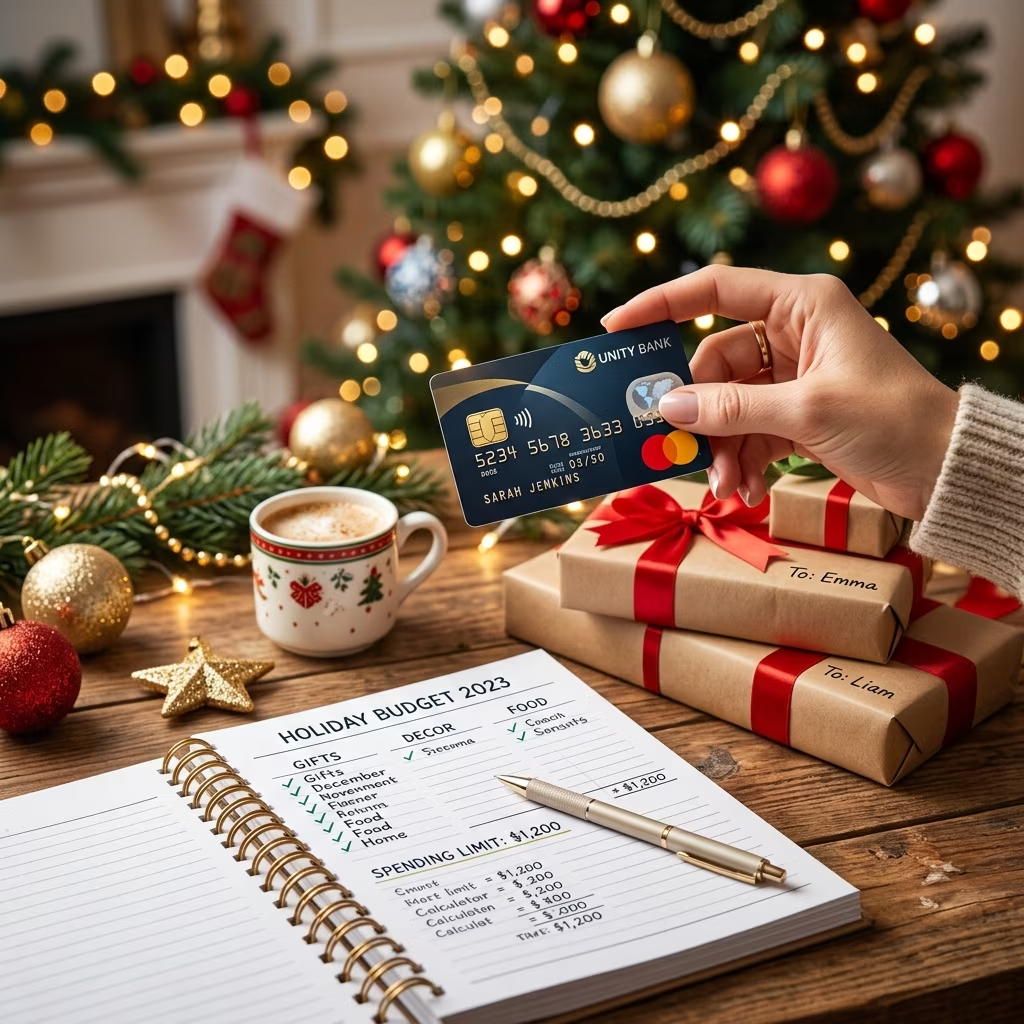
The holiday season often brings generosity, celebration, and special moments with family and friends. It can also bring crowded stores, endless online deals, and a real risk of overspending on credit cards. While a few extra purchases may feel harmless, unmanaged holiday debt can damage your credit score and affect your financial options for years to come.
This guide explains how holiday spending interacts with your credit profile and provides actionable strategies to protect your score, manage debt, and still enjoy the season. You will learn how to plan ahead, use credit cards strategically, spot fraud, and recover quickly if your spending goes too far.
Why Holiday Spending Can Harm Your Credit Score
Your credit score is a numerical summary of how you handle borrowed money. Among the most influential factors are your payment history and credit utilization ratio—the share of your available credit that you are currently using.
During the holidays, several risk factors tend to increase at the same time:
- Higher purchase volumes on credit cards.
- Impulsive shopping driven by emotions, sales, or social pressure.
- Frequent online transactions, which can raise exposure to fraud.
- Short-term focus on gifts rather than long-term repayment plans.
When your balances climb close to your credit limits, your utilization ratio increases. Experts commonly recommend keeping utilization below about 30% of your available credit to support a healthy score. Large holiday charges can easily push you above this threshold if they are not repaid quickly.
Key Credit Score Factors Affected by Holiday Spending
| Factor | What It Means | Holiday Risk |
|---|---|---|
| Payment history | Whether you pay bills on time. | Missed or late payments after the holidays can significantly lower your score. |
| Credit utilization | Percentage of total available credit you are using. | Large holiday balances raise utilization and may hurt your score. |
| New credit | Recent credit inquiries and new accounts. | Multiple store cards and new credit lines can signal risk and shorten average account age. |
| Credit mix & history length | Types of credit used and how long accounts have been open. | Closing old accounts or opening many new ones during the holidays can affect this component. |
Step 1: Build a Realistic Holiday Budget Before You Spend
A well-thought-out budget is your most powerful tool for preventing holiday debt from harming your credit. Regulatory and consumer education agencies consistently stress the importance of planning how much you can afford to spend before you start shopping.
How to Design a Practical Holiday Budget
- Review your regular monthly obligations. Start with rent or mortgage, utilities, groceries, transportation, insurance, and minimum debt payments. Ensure these essentials are fully covered.
- Determine a fixed holiday spending cap. Decide how much total you can spend on gifts, travel, food, decorations, and charitable giving without needing to carry long-term credit card balances.
- Create detailed categories. Assign clear amounts for each area, such as gifts for family, work events, travel, and donations.
- Include repayment timing. Estimate how long it will take to pay off your holiday charges at your current income and expense levels.
Tracking your expenses against this budget while you shop—using an app, spreadsheet, or notebook—helps prevent costly surprises when your card statements arrive.
Simple Budgeting Table Example
| Category | Planned Amount | Actual Spending |
|---|---|---|
| Family gifts | $300 | $280 |
| Work gifts & events | $100 | $95 |
| Travel | $250 | $265 |
| Food & entertaining | $200 | $190 |
| Charitable giving | $75 | $70 |
This kind of table can be adapted to your situation and helps you see where you may need to cut back before overuse of credit occurs.
Step 2: Use Credit Cards Strategically During the Holidays
Credit cards can be a useful tool for rewards, purchase protection, and convenience. At the same time, poor use of credit can lead to persistent debt and a lower credit score. The goal is to leverage the benefits without letting balances spiral out of control.
Smart Credit Card Practices for Holiday Shopping
- Know your limits. Review each card’s credit limit and current balance before shopping. Plan not to exceed roughly 30% of the limit on any single card where possible.
- Spread purchases carefully. If you hold multiple cards, distributing spending among them can help keep utilization low on each one.
- Pay more than once a month. Making multiple payments—rather than waiting for the due date—can keep reported balances lower and reduce interest charges.
- Avoid unnecessary new cards. Seasonal store card offers can be tempting, but opening many new accounts raises the number of hard inquiries and may hurt your score.
- Protect older accounts. Long-standing credit lines contribute to the length of your credit history. Keeping these accounts open and in good standing can help support your score.
Balancing Rewards and Responsibility
Many cards offer cashback or points on holiday categories such as travel, groceries, or online shopping. These can reduce net costs, but only if you also maintain disciplined repayment behavior:
- Redeem rewards to offset holiday purchases where possible.
- Avoid treating reward points as an excuse to overspend.
- Use rewards for practical needs—like gift cards or travel credits—rather than impulse buys.
Step 3: Protect Yourself from Fraud and Identity Theft
Holiday shopping often involves frequent online transactions and crowded stores. This environment can increase vulnerability to credit card fraud and identity theft. Major credit bureaus urge consumers to monitor accounts and statements closely during this period.
Practical Fraud Prevention Tips
- Enable account alerts. Turn on automatic notifications for purchases, international transactions, or online charges. Quick alerts help you detect suspicious activity in real time.
- Use trusted websites only. Shop with reputable retailers and confirm URLs before entering card details, particularly on mobile devices.
- Avoid public Wi-Fi for purchases. When shopping online or banking, use secure networks or cellular data rather than public Wi-Fi hotspots, which are easier for attackers to exploit.
- Review statements regularly. During and after the holidays, check each credit card and bank statement for unfamiliar charges and dispute them promptly.
- Check your credit reports. You can obtain credit reports from major bureaus and use them to spot unauthorized accounts or inquiries.
Responding quickly to fraud helps limit financial losses and reduces the risk of long-term damage to your credit profile.
Step 4: Manage and Pay Down Holiday Debt Quickly
Even with careful planning, it is common to end the holidays with larger balances than usual. The way you handle this debt in the first few months of the new year can determine its long-term impact on your credit score.
Building a Post-Holiday Repayment Plan
- List all debts and interest rates. Write down balances, interest rates, and minimum payments for each credit card and personal loan.
- Prioritize high-cost debt. Consider focusing extra payments on cards with the highest interest rates to reduce total finance charges.
- Pay more than the minimum. Making only minimum payments can prolong debt. Even modest extra payments each month significantly accelerate payoff.
- Consider consolidation if appropriate. For some borrowers, combining higher-interest debts into a single lower-rate loan can simplify payments and reduce charges.
- Avoid adding new holiday-related charges. Put cards away or “freeze” them—physically or via digital tools—if you are tempted to continue spending while you are still paying off existing balances.
Credit Score Recovery After Overspending
Overusing credit during the holidays does not have to result in permanent damage. Consistent on-time payments, reduction of balances, and avoidance of new debt applications typically help scores recover over time.
- Focus on paying all bills by their due dates to maintain a strong payment history.
- Gradually reduce balances to bring utilization below 30%, and preferably lower.
- Keep older accounts open and in good standing to support the length of your credit history.
- Check for errors on credit reports and dispute inaccuracies that may be affecting your score.
Step 5: Establish Healthier Financial Habits for Future Holidays
Each holiday season is an opportunity to strengthen long-term financial habits. By learning from past spending and planning in advance, you can make future celebrations more affordable and less stressful.
Habits That Support Holiday Financial Health
- Save throughout the year. Set up automatic transfers to a separate holiday savings fund so that you rely less on credit when the season arrives.
- Track spending all year. Use budgeting tools to monitor how much you spend on discretionary items, including gifts, entertainment, and travel.
- Review last year’s costs. Look at prior statements to understand where overspending occurred and adjust your plans accordingly.
- Discuss expectations with family and friends. Open conversations about spending limits, group gifts, or more modest celebrations can relieve pressure and reduce the need for borrowing.
Frequently Asked Questions About Holiday Spending and Credit Scores
Does using credit cards for holiday gifts always hurt my credit score?
No. Using credit cards responsibly—keeping balances low relative to limits, paying on time, and avoiding unnecessary new accounts—can allow you to earn rewards without harming your score. Problems arise when utilization climbs too high or payments are missed.
How quickly can my credit score recover after holiday overspending?
Recovery speed depends on your starting score, total debt, and repayment behavior. If you avoid late payments and reduce utilization over several months, scores can improve as credit reports reflect lower balances and steady payment history.
Is it a good idea to open store cards for holiday discounts?
Store cards sometimes offer immediate discounts, but they also add new accounts and hard inquiries to your credit file, and they may carry higher interest rates. Credit experts recommend thinking carefully before opening these cards and considering long-term effects alongside short-term savings.
What utilization level should I aim for during the holidays?
Many financial institutions suggest keeping utilization below about 30% of your available credit to help maintain a healthy score, and lower is generally better. This applies both per card and across your total credit lines.
How can I tell if my holiday spending has led to fraud or identity theft?
Signs include unfamiliar charges on card statements, new accounts you did not open, or unexpected changes to available credit. Monitoring statements and credit reports regularly, enabling transaction alerts, and contacting card issuers about suspicious activity are key steps in detection and response.
References
- Holiday Shopping Tips to Help Protect Yourself — Equifax. 2023-11-01. https://www.equifax.com/personal/education/credit/report/articles/-/learn/tips-protect-credit-history-during-holidays/
- Deck the Halls and Build Your Credit: Holiday Spending Tips — Academy Bank. 2023-11-15. https://www.academybank.com/article/deck-the-halls-and-build-your-credit-holiday-spending-tips
- 10 Ways to Keep Your Credit Score Healthy During the Holidays — Waukesha State Bank. 2022-12-05. https://www.waukeshabank.com/10-ways-to-keep-your-credit-score-healthy-during-the-holidays
- How to Boost Credit Score after Holiday Overspending? — CRIF High Mark. 2023-12-20. https://www.crifhighmark.com/blog/holiday-overspending-credit-score-recovery
- Tips To Help You Manage Holiday Debt — OneMain Financial. 2023-12-01. https://www.onemainfinancial.com/personal-loans/resources/5-strategies-to-help-you-manage-holiday-debt
- 3 Tips for Managing Your Credit Cards this Holiday Season — Spring Bank. 2022-11-29. https://www.spring.bank/3-tips-for-managing-your-credit-cards-this-holiday-season/
- Tackle Credit Card Debt Before the Holidays — Ohio Department of Commerce. 2023-10-10. https://com.ohio.gov/wps/portal/gov/com/about-us/media-center/news/tackle-credit-card-debt-before-holidays