
Handling Workplace Sexual Harassment: Rights, Remedies, and Recovery
A practical legal and personal guide to recognizing, documenting, reporting, and recovering from workplace sexual harassment and related misconduct.
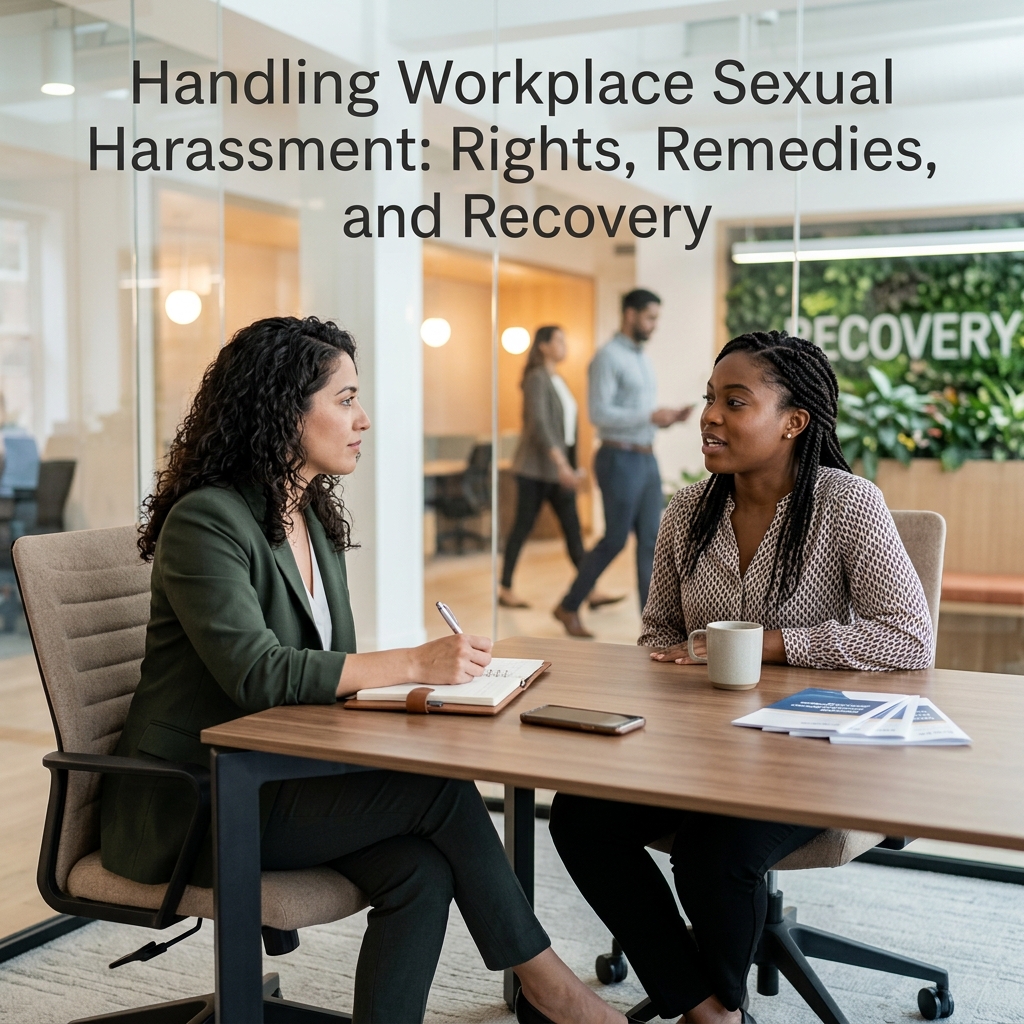
Workplace sexual harassment is not just uncomfortable or inappropriate behavior; it is a form of illegal sex discrimination under United States federal law and many state laws. Understanding what qualifies as harassment, knowing your rights, and having a clear plan of action can help you protect your safety, your livelihood, and your dignity.
This article provides a comprehensive, step-by-step guide to recognizing sexual harassment, responding safely, documenting incidents, reporting internally and externally, and seeking both legal and emotional support. While it focuses on U.S. law and agencies, many principles apply more broadly to other jurisdictions.
1. What Counts as Workplace Sexual Harassment?
Under Title VII of the Civil Rights Act of 1964, it is unlawful to harass an employee or job applicant because of their sex, including harassment of a sexual nature. Sexual harassment can be committed by supervisors, coworkers, customers, or even non-employees, and any person—regardless of gender or sexual orientation—can be a victim or a harasser.
1.1 Typical Behaviors That May Constitute Sexual Harassment
Sexual harassment includes a wide range of behaviors. Some may be overt and obvious, while others are subtle but persistent. Courts and enforcement agencies have recognized conduct such as:
- Unwelcome sexual advances or requests for sexual favors
- Unwanted touching, hugging, kissing, groping, or fondling
- Threats of sexual violence or coercive behavior tied to job benefits
- Offensive jokes or comments about women, men, or people of a particular sex
- Lewd gestures, sexualized remarks, or discussions about sexual fantasies
- Stalking, repeated unsolicited messages, or persistent invitations after refusal
- Spreading rumors about an employee’s sexuality or sex life
Harassment can occur in person, via email, text, chat, video conference, or on workplace social media channels. It does not need to be physical to be illegal; a hostile verbal or visual environment can also violate the law if it is severe or pervasive.
1.2 Two Common Legal Categories: Quid Pro Quo and Hostile Environment
| Type of harassment | Key features | Example scenario |
|---|---|---|
| Quid pro quo | Employment benefits or opportunities are conditioned on submitting to sexual conduct. | A supervisor suggests a promotion is more likely if you go on a date or “be more friendly” in a sexual way. |
| Hostile work environment | Severe or pervasive sexual conduct makes the workplace intimidating, hostile, or abusive. | Recurring sexual jokes, explicit images, or unwanted touching that continue despite objections. |
Both types are illegal if they meet legal thresholds. Even a single incident may be enough if it is particularly serious (for example, sexual assault or threats of sexual violence).
2. Your Core Legal Rights in the Workplace
In the United States, federal law and many state laws offer strong protections against workplace sexual harassment. Title VII, enforced by the U.S. Equal Employment Opportunity Commission (EEOC), prohibits sexual harassment by covered employers. Many states provide additional protections and enforcement mechanisms.
2.1 Protection Against Harassment and Discrimination
- The right to a workplace free from sexual harassment and sex-based discrimination.
- Coverage typically includes employers with a certain number of employees (often 15 or more under Title VII), though some state laws apply at smaller thresholds.
- Protection extends to employees, job applicants, and, in many cases, temporary workers and contractors.
2.2 Protection Against Retaliation
It is illegal for an employer to retaliate against you because you:
- Report sexual harassment internally
- File a charge with the EEOC or a state civil rights agency
- Participate in an investigation or lawsuit as a witness or complainant
Retaliation can include termination, demotion, reduced hours, undesirable assignments, or other adverse actions. Title VII specifically prohibits retaliation for opposing unlawful practices or participating in processes under the statute.
3. Immediate Safety and Emotional Support
If harassment escalates into sexual assault or threats of violence, immediate safety comes first. Government guidance recommends taking urgent steps such as contacting law enforcement or emergency services when necessary.
3.1 Emergency Measures for Sexual Assault or Threats
- Call emergency services (911 in the U.S.) if you are in immediate danger.
- Seek medical attention as soon as possible to address injuries and preserve forensic evidence.
- Report the incident to local police if you wish to pursue criminal charges.
- Reach out to a crisis hotline, such as national sexual assault hotlines, for confidential support.
3.2 Emotional Support and Confidential Resources
Experiencing harassment or assault can be psychologically overwhelming. Consider accessing:
- Employee assistance programs (EAPs) that offer confidential counseling
- Community counseling centers or therapists experienced in trauma
- Support groups for survivors of sexual harassment or assault
- Trusted friends or family who can help you feel less isolated
Emotional support does not replace legal action, but it can help you decide what steps feel right and sustain you through any reporting or investigation process.
4. Recognizing Patterns and Deciding How to Respond
When harassment occurs, you have options. Some people choose to confront the behavior directly; others prefer to go straight to formal reporting channels. The best approach depends on the severity of the conduct, your safety, and your comfort level.
4.1 Assessing the Situation
Ask yourself:
- Is this a one-off comment or a pattern of behavior?
- Does the harasser have power over my job, pay, or promotion?
- Do I feel safe confronting the person directly?
- Is there a written policy at my workplace addressing harassment?
Severe incidents (such as sexual assault, threats, or explicit quid pro quo demands) usually warrant immediate reporting rather than informal discussion. Repeated lower-level behaviors may sometimes be addressed initially by making your boundaries clear, if you feel safe doing so.
4.2 Communicating That the Conduct Is Unwanted
Many legal resources recommend, where safe, clearly communicating that the behavior must stop. Doing so can:
- Eliminate claims that the conduct was welcomed or misunderstood
- Sometimes stop the behavior without further escalation
- Provide a clear reference point for later documentation and complaints
You might say, for example:
- “I find those comments inappropriate and want them to stop.”
- “Do not touch me. This is not acceptable.”
- “Please keep our interactions professional and work-related.”
Never feel obligated to confront the harasser if you believe it would endanger you or worsen the situation. Choosing another strategy, such as going directly to HR or a supervisor, is also valid.
5. Meticulous Documentation: Your Personal Evidence File
Whether or not you decide to report immediately, thorough documentation is one of the most powerful tools you have. Legal and advocacy organizations strongly advise recording each incident in detail.
5.1 What to Record
For each incident, write down:
- Date and time of the incident
- Location (e.g., office, break room, video meeting)
- Names and job titles of everyone involved
- Exact words and actions that occurred
- Witnesses who saw or heard anything
- How you responded (ignored, objected, left the room, etc.)
- Any messages or physical evidence (emails, text messages, screenshots, photos)
Keep copies of your notes and evidence in a secure location outside your workplace, such as a personal email account or a physical notebook kept at home.
5.2 Why Documentation Matters
- Helps you remember details accurately over time
- Supports internal HR investigations
- Strengthens external complaints to agencies like the EEOC
- Provides key evidence if you later pursue legal action
Even if you are unsure whether the conduct is legally actionable, documenting early gives you more flexibility if the pattern escalates.
6. Using Internal Workplace Procedures
Most employers have written policies and procedures for handling harassment complaints. These policies are often found in employee handbooks, codes of conduct, or intranet portals.
6.1 Finding and Understanding the Policy
Steps to take:
- Locate your employer’s harassment or anti-discrimination policy.
- Identify who you are instructed to report to (HR, supervisor, designated officer).
- Review timelines, confidentiality provisions, and investigation procedures.
- Note any requirements to report through specific channels or forms.
Following the policy can sometimes be important for preserving certain legal rights or demonstrating that the employer was put on notice of the problem.
6.2 Making an Internal Complaint
When you are ready to report internally:
- Submit the complaint in writing (email or letter), summarizing key incidents.
- Attach relevant documentation (dates, witnesses, copies of communications).
- Keep copies of everything you send and receive.
- Record the date you made the complaint and to whom.
Employers are generally required to take complaints seriously and conduct prompt, appropriate investigations into alleged harassment. They may interview you, the alleged harasser, and witnesses, and review documents and electronic records.
6.3 What to Expect from an Internal Investigation
While procedures vary, an effective investigation should:
- Be timely and impartial
- Give you an opportunity to explain your concerns fully
- Maintain appropriate confidentiality while still gathering evidence
- Result in findings and, where appropriate, corrective actions
Corrective actions might include discipline up to termination of the harasser, workplace restructuring, training, or changes to reporting lines. Keep notes about how the investigation is conducted and any results communicated to you.
7. Filing External Complaints with Government Agencies
If internal processes are ineffective, biased, or nonexistent—or if you simply prefer to go outside the organization—you can file a formal complaint with government agencies. In the U.S., the EEOC is the primary federal agency responsible for enforcing anti-harassment laws. Many states also maintain civil rights or fair employment agencies.
7.1 EEOC Complaints
The EEOC investigates charges of sexual harassment and other discrimination. Key points include:
- You can file a charge online, by mail, or in person at an EEOC field office.
- There are legal deadlines (often 180 or 300 days from the last incident) to file, depending on whether state laws also apply.
- You do not need a lawyer to submit an EEOC charge, though legal advice can be helpful.
- After investigation, the EEOC may seek mediation, issue findings, or provide a “right-to-sue” notice that allows you to pursue a lawsuit in court.
7.2 State and Local Civil Rights Agencies
Many states have agencies parallel to the EEOC—for example, civil rights departments or human relations commissions—that enforce state-level protections. These agencies may:
- Offer longer filing deadlines than federal law
- Provide additional remedies or procedural options
- Coordinate with the EEOC so that one filing is “cross-filed” with both authorities
Consult the official website of your state’s civil rights or fair employment agency to learn about specific procedures, deadlines, and available remedies.
8. Working with Lawyers and Legal Aid Organizations
While you can take many steps on your own, specialized legal advice is often crucial, especially if the harassment is serious, your job is at risk, or you are considering litigation.
8.1 When to Seek Legal Counsel
Consider contacting an employment lawyer or legal aid organization if:
- You have experienced severe harassment or sexual assault
- Internal complaints have been ignored or mishandled
- You suspect retaliation, such as demotion or dismissal, after reporting
- You are contemplating a lawsuit or negotiating a settlement
Legal advocates can help you evaluate your options, draft complaints, interact with agencies, and navigate deadlines and procedural requirements.
9. Preserving Your Career and Well-Being
Addressing sexual harassment is not only about stopping the misconduct and obtaining legal remedies; it is also about safeguarding your career path and mental health. Many people worry about how reporting may affect their professional reputation, future references, or psychological resilience.
9.1 Career Planning During and After Harassment
- Document performance reviews and achievements so your work record remains clear.
- Consider whether transfers or role changes might improve your environment.
- Maintain professional networks outside your current employer for future opportunities.
- Seek mentors or allies who support a respectful workplace culture.
9.2 Long-Term Emotional Recovery
Recovery from harassment or assault can be a long process. Helpful strategies include:
- Regular therapy or counseling with trauma-informed professionals
- Support groups that validate your experiences and reduce isolation
- Self-care practices such as exercise, sleep routines, and mindfulness
- Creative outlets (writing, art, music) to process emotions
Remember that choosing whether to report, how far to pursue legal remedies, or whether to stay with an employer is your decision. Advocacy organizations emphasize that doing nothing is also a valid choice if it feels safest or most manageable for you at a given time.
10. Frequently Asked Questions
10.1 Do I have to report harassment to my boss before going to an agency?
Not always, but many legal experts recommend using internal procedures where feasible, especially if your employer’s policy directs you to do so. Some courts consider whether the employer had an opportunity to address the problem, although severe cases may justify going directly to external authorities.
10.2 What if the harasser is the person I am supposed to report to?
If the harasser is your direct supervisor or designated contact, look for alternative reporting options in the policy—such as HR, another manager, or an ethics hotline. You can also go directly to a government agency or consult a lawyer if internal options feel unsafe.
10.3 Can I be fired for reporting sexual harassment?
Retaliation for reporting or participating in a harassment complaint is illegal. If you are fired, demoted, or otherwise penalized after reporting, this may amount to a separate legal violation, and you can include those facts in any charge filed with the EEOC or state agency.
10.4 What if I am unsure whether what happened is legally “harassment”?
Harassment law can be complex, and borderline cases do exist. However, if conduct makes you uncomfortable, fearful, or threatened, you can still document the behavior, review your employer’s policy, and seek confidential advice from a lawyer, legal aid organization, or government agency. You do not need to be certain before asking questions or requesting help.
10.5 Can men experience workplace sexual harassment too?
Yes. Any person, regardless of sex or sexual orientation, can be a victim or a harasser. The law protects individuals of all genders from sexual harassment and sex-based hostile work environments.
11. Building Safer Workplaces: Beyond Individual Cases
While this guide focuses on individual responses, lasting change requires organizational and cultural transformation. Employers can reduce the prevalence of harassment and improve responses by:
- Implementing clear, comprehensive anti-harassment policies
- Providing regular training on sexual harassment, bystander intervention, and diversity and inclusion
- Conducting climate surveys to understand employees’ experiences and concerns
- Ensuring prompt, fair investigations and transparent follow-up
- Holding everyone, including senior leaders, accountable for misconduct
As employees become more informed about their rights and as organizations take proactive steps, the goal is not only to respond to harassment but to prevent it, creating workplaces where respect and equity are the norm.
References
- What You Should Know About Sexual Harassment in the Workplace — U.S. Department of Justice, Civil Rights Division. 2022-05-18. https://www.justice.gov/crt/what-you-should-know-about-sexual-harassment-workplace
- Sexual Harassment — U.S. Equal Employment Opportunity Commission. 2023-06-21. https://www.eeoc.gov/sexual-harassment
- Harassment — U.S. Equal Employment Opportunity Commission. 2023-06-21. https://www.eeoc.gov/harassment
- Workplace Sexual Harassment — California Department of Justice. 2023-01-10. https://oag.ca.gov/workplace-sexual-harassment
- Sexual Harassment in the Workplace — Neighborhood Legal Services Association (Pennsylvania). 2022-09-01. https://nlsa.us/legal-resources/employment/sexual-harassment-in-the-workplace/
- Know Your Rights: Experiencing Sexual Harassment at Work — National Partnership for Women & Families. 2022-11-15. https://nationalpartnership.org/wp-content/uploads/2023/02/know-your-rights-sexual-harassment-in-the-workplace.pdf
- Brief: Sexual Harassment in the Workplace — National Conference of State Legislatures. 2021-08-01. https://www.ncsl.org/labor-and-employment/sexual-harassment-in-the-workplace
Similar Articles








Read full bio of Sneha Tete




