
Guarding Your Wallet From Solar Panel Scams
Learn how to spot deceptive solar offers, verify incentives, and choose a trustworthy installer before you sign a long-term contract.
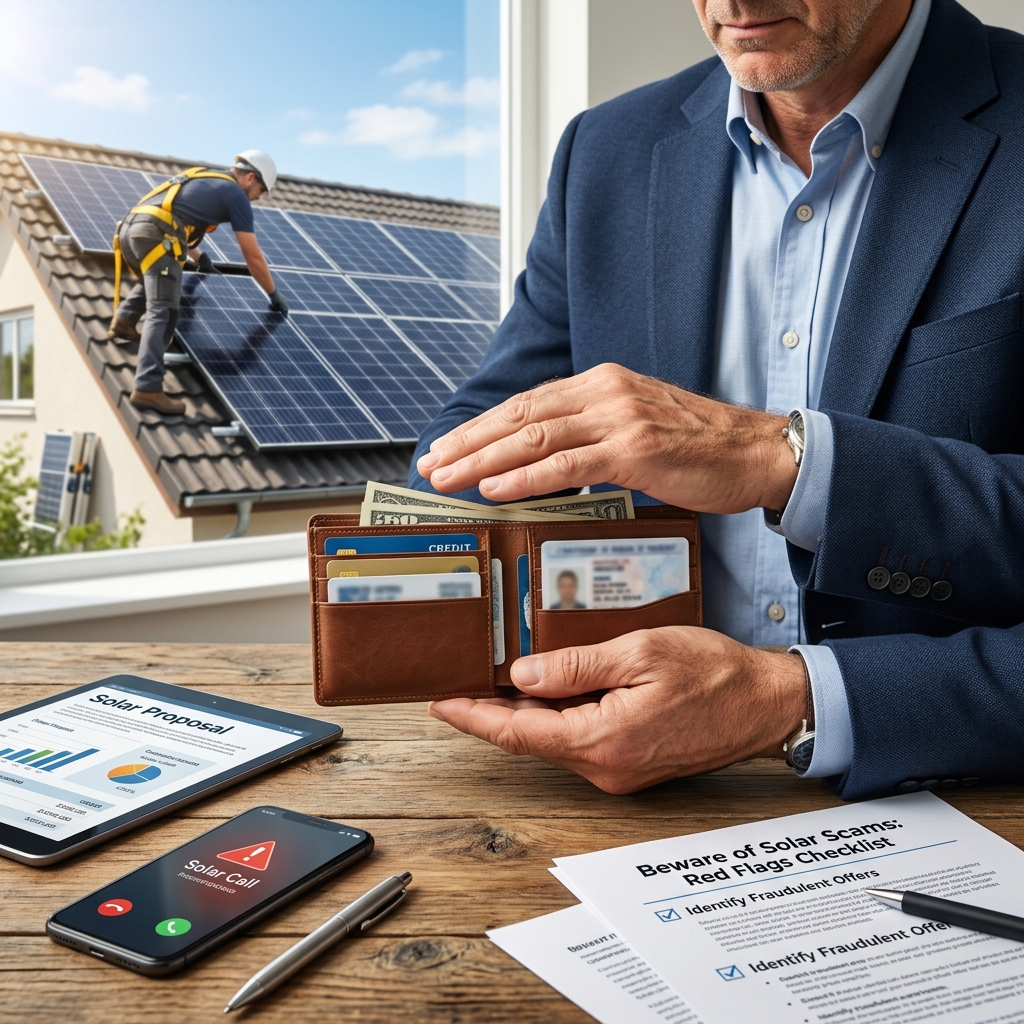
Solar energy can dramatically cut utility bills and reduce your carbon footprint, but the growing demand for rooftop panels has also attracted scammers. Deceptive solar offers now target homeowners by promising huge savings, “free” systems, or government-sponsored programs that don’t exist, sometimes leading to tens of thousands of dollars in losses. Homeowners who understand how legitimate solar programs work are far better equipped to avoid these traps and choose reputable installers instead.
Why Solar Scams Are Spreading So Quickly
The rapid expansion of the clean energy market and real government incentives have created fertile ground for dishonest actors. As more households explore solar options, scammers lean on confusion about tax credits, rebates, and financing to sell predatory deals or collect personal data. Understanding the basic landscape is the first line of defense.
- High demand: Solar installations are increasing, giving scammers a larger pool of potential victims.
- Complex incentives: Real tax credits and rebates are often complicated, making it easy for fraudsters to misrepresent them.
- Door-to-door sales and telemarketing: Unsolicited pitches allow scammers to reach homeowners who may not have researched solar yet.
- Long-term contracts: Legitimate leases and power purchase agreements (PPAs) can span 20–25 years, and scammers exploit this complexity.
Legitimate Solar Offers vs. Scam Tactics
Recognizing the difference between a genuine proposal and a scam hinges on how the offer is presented, how the company behaves, and whether the financial terms align with industry norms. Many problematic pitches use some version of “free” or “no cost” solar, which rarely means what it sounds like.
| Feature | Legitimate Solar Offer | Common Scam Pattern |
|---|---|---|
| Claimed Cost | Explains equipment price, installation, and total long-term cost in writing. | Advertises “free” or “no-cost” panels but hides payments in fine print. |
| Government Role | References official tax credits or rebates and encourages you to verify them yourself. | Claims the government or utility will install panels for free or send cash rebates directly. |
| Sales Pressure | Allows time to compare quotes and read contracts thoroughly. | Insists you must sign immediately or lose a once-in-a-lifetime deal. |
| Payment Methods | Uses standard payment options and doesn’t demand unconventional methods. | Demands payment via wire transfer, gift cards, payment apps, or cryptocurrency. |
| Personal Data | Requests information after you initiate contact and offers clear privacy policies. | Cold-calls or messages you online to “see if you qualify,” then harvests your data. |
The Myth of “Free” Solar Panels
One of the most pervasive solar pitches is the promise of “free” panels or a “zero-cost” system. In reality, these offers almost always involve leases, PPAs, or financing that requires monthly payments over decades. While some contracts are legitimate and can be beneficial, scam operations misrepresent the financial obligations and exaggerate savings.
Key things to remember about so-called free solar:
- Nothing is truly free: Equipment, labor, and permitting all have real costs. Those costs typically show up as lease payments, PPA rates, or loan installments.
- Long-term commitment: Contracts often run 20–25 years and may include escalator clauses that increase payments annually.
- Ownership and tax benefits: With many leases and PPAs, the company—not the homeowner—owns the system and claims tax credits.
- Hidden fees: Poorly disclosed maintenance fees, early termination charges, or transfer penalties can make these deals expensive in the long run.
How Scammers Misuse Government Incentives
Government incentives for clean energy are real, but scams often twist or invent programs to sound more generous than they are. Fraudulent callers and door-to-door salespeople may claim to represent federal agencies, promising rebates, grants, or fully paid installations if you “sign up” immediately.
In reality:
- Federal tax credits are not cash rebates: U.S. federal incentives for residential solar typically reduce the tax you owe; they are not direct cash payments from installers.
- Government doesn’t cold-call homeowners: Official agencies do not contact you out of the blue to sell or install solar panels.
- Incentives must be verified: Genuine programs are documented on government websites like the Department of Energy and the Department of the Treasury.
To confirm whether a solar incentive is genuine, search for it directly on official government or state energy office websites rather than relying on a salesperson’s description.
Red Flags That Signal a Solar Scam
While scam strategies vary, many share easily recognizable warning signs. If you encounter any of the behaviors below, proceed with extreme caution or end the conversation.
- Unsolicited contact: Unexpected phone calls, text messages, or social media outreach offering solar deals, especially if you never requested quotes.
- Impersonating officials: Salespeople claiming to be from your utility company, the federal government, or a state agency without verifiable credentials.
- Pressure to act immediately: Pitches that insist the offer expires today or that you must sign on the spot.
- Focus on monthly payment only: Representatives who avoid discussing total cost, interest rates, or the full length of the contract.
- Requests for unusual payments: Demands for cash, gift cards, wire transfers, payment apps, or cryptocurrency, rather than standard invoices.
- Vague or missing paperwork: Contracts that are hard to read, incomplete, or not provided until the last possible moment.
- Refusal to explain terms: Sales agents who cannot clearly explain escalator clauses, termination fees, or who owns the system.
Practical Steps to Safely Evaluate Solar Offers
Even though scams are common, many reputable solar installers provide excellent service and honest pricing. The key is to approach every offer methodically and compare options before signing anything.
1. Start With Independent Research
Before responding to any advertisement or knock on your door, learn the basics of solar technology, local incentives, and utility policies. The U.S. Department of Energy provides homeowner guides that explain how solar works, how systems are sized, and what kinds of incentives may apply in different regions.
- Review official energy agency resources on residential solar.
- Check your utility’s website for net metering rules and interconnection requirements.
- Look up state-level programs through your state energy office or public utilities commission.
2. Get Multiple Quotes
One of the most effective ways to spot unrealistic offers is to compare quotes from several companies. When you have at least three proposals, outliers in price, savings projections, or contract length become much easier to identify.
- Ask each installer for a detailed written proposal, including equipment specs and total cost.
- Compare expected energy production, warranty terms, and the structure of payments.
- Be wary of any company significantly cheaper or far more optimistic than others without solid justification.
3. Read Contracts Slowly and Carefully
Solar contracts can be long, but every page matters. You should understand who owns the system, what your payments will be, how they could change over time, and what happens if you sell your home.
- Look for escalator clauses that raise payments each year.
- Identify termination fees and transfer conditions if you move.
- Confirm warranty coverage for equipment, workmanship, and performance.
- Check whether you or the installer claims tax credits and rebates.
4. Verify Company Credentials
Legitimate installers are usually licensed, insured, and registered with state or local authorities. Many also carry certifications from recognized industry organizations.
- Check licensing through your state contractor board or public utilities commission.
- Confirm that the business is in good standing and has a physical address.
- Review independent customer feedback from multiple sources, not just the company’s website.
5. Protect Your Personal Information
Scam operations sometimes target personal data rather than solar sales, using fake qualification forms to collect names, addresses, and financial details. Treat unsolicited requests for sensitive information with skepticism.
- Do not share Social Security numbers, bank details, or full birthdates with unknown callers or online forms.
- Decline to provide data unless you initiated contact and have verified the company.
- Use official reporting channels if you suspect identity theft attempts.
What To Do If You Suspect a Solar Scam
If you believe you have been targeted by a fraudulent solar offer—or have already signed a problematic agreement—acting quickly can limit financial damage and help protect others from the same scheme.
- Document the interaction: Save emails, text messages, business cards, and copies of contracts or advertisements.
- Contact local authorities: Report suspected fraud to your local police or consumer protection office.
- Reach out to your state Attorney General: Many Attorneys General have units dedicated to consumer scams and can advise on next steps.
- Notify the Federal Trade Commission (FTC): The FTC collects reports of clean energy scams and uses them for enforcement actions.
- Consult an attorney: If you have signed a contract under deceptive circumstances, legal counsel can help you understand your options.
FAQ: Common Questions About Solar Panel Scams
Are all door-to-door solar offers scams?
No. Some legitimate companies use door-to-door sales, but this approach is heavily used by scammers. If a salesperson appears at your door, verify their identity, research the company independently, and never sign a contract on the same day.
Is “no money down” solar automatically fraudulent?
Not necessarily. Many legitimate solar loans and leases have little or no upfront cost. The risk arises when representatives hide the total long-term obligation or falsely promise dramatically lower bills without explaining payments, interest, or escalator clauses.
How can I check if a solar incentive is real?
Use official sources such as federal, state, or local government websites to confirm any incentive. The FTC recommends consulting the Department of Energy’s homeowner resources or the Department of the Treasury’s clean energy guidance rather than relying solely on a salesperson’s claims.
What is the safest way to start exploring solar?
Begin by educating yourself through credible resources, then request quotes from established local installers rather than responding to unsolicited offers. Compare several proposals, review contracts in detail, and verify incentive information directly on government sites.
Can I trust online ads that promise government-backed solar programs?
Treat such ads with caution. Scams frequently use phrases like “government-sponsored” or “federally funded” to sound official. Click through only if you can verify the program on an official domain (such as .gov), and never provide personal information before confirming legitimacy.
References
- How to avoid getting burned by solar or clean energy scams — Federal Trade Commission. 2024-08-14. https://consumer.ftc.gov/consumer-alerts/2024/08/how-avoid-getting-burned-solar-or-clean-energy-scams
- Major Solar Panel Scams to Watch Out for in 2026 — EcoFlow. 2026-01-10. https://energy.ecoflow.com/us/blog/solar-panel-scams
- The Hot Topic of Solar Panel Scams — Transaction Network Services (TNS). 2024-03-21. https://tnsi.com/resource/com/the-hot-topic-of-solar-panel-scams-blog/
- Solar energy is rising in popularity. So are the scams. — San Joaquin County District Attorney. 2024-09-27. https://sjcda.org/home/consumer-alerts/2024/09/27/solar-energy-is-rising-in-popularity.-so-are-the-scams
- Free Solar Panels: Are They Really Free? — ConsumerAffairs. 2026-02-05. https://www.consumeraffairs.com/solar-energy/free-solar-panels.html
Similar Articles








Read full bio of Sneha Tete




