
Florida Workers’ Compensation: What Employers And Workers Need
Understand who is covered, what benefits exist, and how Florida workers’ comp claims move through the system.
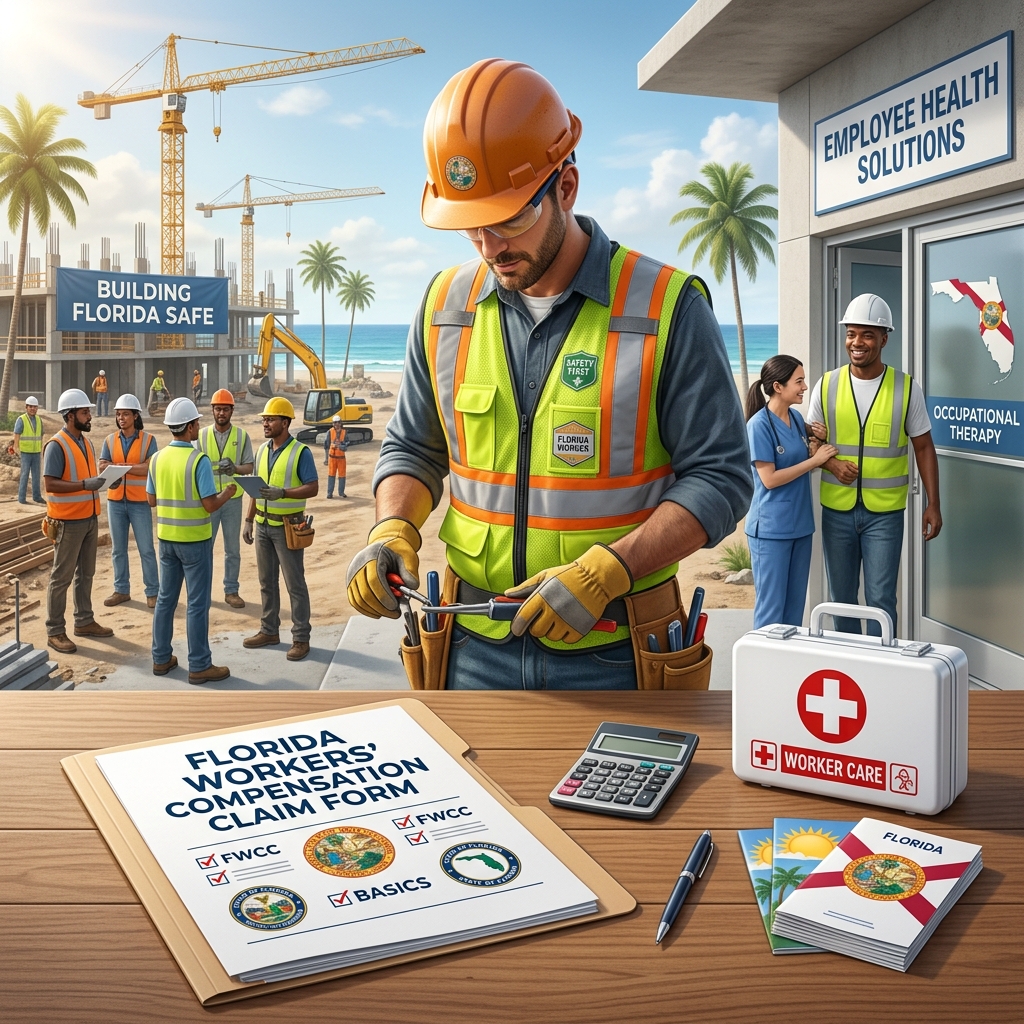
Florida’s workers’ compensation system is designed to provide medical and wage-related benefits after a job-related injury or illness without requiring the injured worker to prove fault in the same way as a civil lawsuit. In exchange for this no-fault system, most employers that meet the statutory coverage rules must carry insurance or otherwise secure benefits for their employees.
The law is detailed because coverage depends on the type of business, the number of workers, and whether a person qualifies as an employee or falls into a special exempt category. For that reason, both workers and employers benefit from understanding the basic structure of the system before a claim or coverage dispute arises.
How the Florida system works
Florida workers’ compensation law is built around the idea that work injuries should be handled through an administrative insurance system rather than a traditional lawsuit. If a covered employee is injured in the course and scope of employment, the employer must furnish the benefits required by law, and the worker generally gives up certain common-law remedies against the employer.
This arrangement is intended to create a faster path to medical care and wage support while limiting the uncertainty of litigation. The system also places rules on reporting, authorized medical treatment, and benefit calculation so that claims can be processed in a predictable way.
Which employers must provide coverage?
In many Florida businesses, the coverage trigger is the number of employees. Non-construction employers commonly must secure workers’ compensation when they have four or more employees, including full-time, part-time, and seasonal workers. The worker count can include officers or owners in some business forms, depending on the circumstances and the way the entity is organized.
Construction is treated more strictly. A construction employer generally needs coverage from the first employee, so even a very small construction business can be subject to the law. Agricultural employers follow a different rule as well, with coverage obligations tied to a larger employee threshold and, in some cases, the number and duration of seasonal workers.
Out-of-state employers are not exempt simply because their main office is elsewhere. If they have workers performing covered work in Florida, they may need a Florida-compliant workers’ compensation policy or comparable authorized coverage.
| Business type | Common coverage trigger | Practical note |
|---|---|---|
| Non-construction business | 4 or more employees | Count can include part-time and seasonal workers |
| Construction business | At least 1 employee | Coverage applies very early in growth |
| Agricultural business | Higher employee thresholds | Seasonal staffing can affect the analysis |
| Out-of-state employer with Florida workers | Depends on Florida work activity | Florida work may still require local coverage |
Who may be outside the usual coverage rules?
Not every person doing work in Florida is automatically covered under the standard state system. Independent contractors are often excluded, although classification disputes can arise when a business labels a worker as a contractor but controls the person like an employee. That issue is especially important in construction, where misclassification can lead to serious exposure for an employer.
Sole proprietors and business partners may be able to choose whether to include themselves, depending on the entity and the election made. Some domestic workers, casual workers, and other special categories may also fall outside standard coverage unless the employer has chosen to include them or the law specifically requires otherwise.
Some workers are covered under separate federal systems rather than Florida’s state program. Federal employees, railroad workers, and longshore or maritime workers often fall into that category. The key question is not simply whether someone was hurt at work, but which legal system governs the relationship.
What injuries and conditions can qualify?
Florida workers’ compensation is not limited to dramatic accidents. A claim may involve a single incident, a repetitive stress condition, or an occupational disease if the worker can connect the condition to the job. The injury must arise out of employment and occur in the course and scope of work.
For many claims, the connection between work and injury must be supported by medical evidence. Florida law requires proof to a reasonable degree of medical certainty, and the work accident or occupational cause must be the major contributing cause of the resulting condition in many situations. This means that an existing medical problem does not automatically defeat a claim, but the work-related event must be a substantial driver of the disability or need for care.
Mental or nervous injuries can be especially difficult to prove and are subject to specific limits. In general, these claims are handled more narrowly than straightforward physical injuries, so the facts and medical records matter a great deal.
Benefits available under workers’ compensation
The system typically provides two broad types of benefits: medical care and wage-related or impairment-related benefits. Medical treatment is meant to address the injury itself, while wage benefits are meant to reduce the financial harm caused by time away from work or lasting impairment.
Medical benefits can include authorized doctor visits, diagnostic testing, surgery, prescriptions, therapy, and other medically necessary treatment. In a properly handled claim, the injured worker should not have to pay ordinary out-of-pocket costs for covered treatment that has been authorized under the system.
Wage benefits vary by the worker’s status and the stage of recovery. Temporary total disability benefits may apply when the worker cannot work at all for a period of time. Temporary partial disability benefits may apply when the worker can return in a limited capacity but earns less than before. In more serious cases, permanent impairment or permanent disability benefits may be available.
In cases involving a fatal work injury, the system can also address death-related benefits, including support for eligible dependents and certain burial or funeral-related expenses, subject to the law’s limits.
How the claim process usually begins
The first step is notice. Injured workers are expected to report the injury to the employer promptly, and Florida generally uses a 30-day notice period for many accidental injuries. For some occupational diseases or repetitive trauma claims, the reporting timeline can differ, so the specific facts matter.
After the employer receives notice, the employer or its insurer typically begins the claims process and directs the worker to authorized medical care. The worker should follow the claim instructions closely, attend appointments, and keep records of treatment, missed work, and communication with the employer and insurer.
Employers are also required to move quickly. They must report the injury to the carrier within the applicable time frame, and the insurer then investigates whether the claim should be accepted or denied. If the claim is accepted, treatment and wage benefits can begin. If the claim is disputed, the worker may need to challenge the denial through the administrative process.
Deadlines that can affect a claim
Deadlines matter in Florida workers’ compensation. A worker who waits too long to report an injury can lose the right to benefits, even if the injury is otherwise valid. The reporting deadline is one of the most common reasons a claim becomes contested.
There are also time limits related to filing formal petitions, requesting hearings, and disputing benefit decisions. These deadlines are important because the administrative system moves on its own schedule, and missed dates can limit the ability to recover benefits. The same is true for employers, who must keep coverage active and respond correctly to claims reporting obligations.
When an injury is subtle, such as an occupational exposure or a gradual-onset condition, timing becomes even more important. Workers should not assume the clock starts only when they receive a diagnosis; the relevant trigger may come earlier depending on the facts and the legal theory involved.
Common disputes in Florida claims
Many Florida workers’ compensation disputes involve the same recurring issues. The insurer may argue that the injury was not work-related, that the worker failed to give timely notice, that medical treatment was not authorized, or that the condition is not supported by adequate medical proof. Coverage disputes also arise when an employer believes a worker was misclassified or was not on the payroll structure that triggers coverage.
Another common issue is whether the worker has reached maximum medical improvement, often called MMI. That point matters because it can affect the type and amount of benefits available, as well as the course of ongoing treatment. Once a worker reaches MMI, the claim often shifts from active healing toward permanent impairment evaluation or closure issues.
Disputes can also arise over whether the treatment plan is reasonable and medically necessary. Because the insurance carrier controls much of the authorization process, injured workers often need to document their symptoms carefully and stay engaged with the treating physician and the claim file.
Practical steps after a work injury
Immediately reporting the injury is one of the most important steps a worker can take. A clear report creates a record, helps trigger the claim process, and reduces the chance that the employer or insurer will say the injury was never reported. Written notice is often helpful because it leaves a paper trail.
Workers should also seek the appropriate medical treatment as soon as the claim process allows and should avoid using unauthorized providers if the law or insurer requires an approved doctor. Keeping copies of medical notes, work restrictions, mileage records, and wage information can also be helpful if the claim becomes disputed.
Employers should maintain an active policy, understand when coverage begins, and train supervisors on how to respond when an injury is reported. Quick response can reduce claim confusion and may also improve the worker’s recovery experience.
Frequently asked questions
Does Florida workers’ compensation require fault? No. The system generally provides benefits without requiring the worker to prove that the employer caused the accident, although the injury still must be work-related and meet statutory requirements.
Can an independent contractor file a claim? Sometimes, but the answer depends on whether the person is truly a contractor or was functioning as an employee under Florida law. Misclassification disputes are common.
What if I reported my injury late? A late report can jeopardize benefits. The insurer or employer may argue that the claim should be denied because the statutory notice period was missed.
What if the insurer denies the claim? A denial does not always end the matter. Injured workers may be able to challenge the decision through the administrative process and present medical and factual evidence supporting coverage.
Do all employers need workers’ compensation insurance? No. Coverage depends on the size and type of business, with construction and some other industries subject to stricter rules than standard non-construction businesses.
Why the rules matter for both sides
For workers, the system can be the difference between receiving treatment and facing unpaid medical bills after an injury. For employers, compliance helps avoid penalties, stop-work consequences, and coverage disputes that can become expensive quickly. Florida also imposes meaningful consequences on employers that fail to secure required coverage, which makes accurate classification and policy maintenance essential.
Because the rules vary by industry, business structure, and worker status, a small mistake can change the outcome of a claim. A business that assumes it is exempt may actually need coverage, and a worker who assumes a claim is automatic may miss a reporting deadline or medical authorization requirement. Careful attention to the statute and the facts of the employment relationship remains the safest approach.
References
References
- The 2025 Florida Statutes, Chapter 440 — Florida Legislature. 2025-01-01. https://www.leg.state.fl.us/statutes/index.cfm?App_mode=Display_Statute&URL=0400-0499/0440/0440.html
- Workers’ Compensation Insurance — Florida Office of Insurance Regulation. 2026-01-01. https://floir.gov/property-casualty/workers-compensation-insurance
- Workers’ Compensation — Florida Department of Financial Services. 2026-01-01. https://www.myfloridacfo.com/division/wc/home
- Florida Workers’ Compensation Law — The Hartford. 2026-01-01. https://www.thehartford.com/workers-compensation/florida
- Florida Workers’ Compensation Laws — Berlin Law Firm. 2026-01-01. https://berlinlawfirm.com/florida-workers-compensation-lawyer/applicable-laws/
Similar Articles








Read full bio of Sneha Tete




