
How Fraud Cases Are Prosecuted In Maryland: 5 Key Defense Tips
Understand how Maryland fraud cases are built and what defenses may weaken the government’s case.
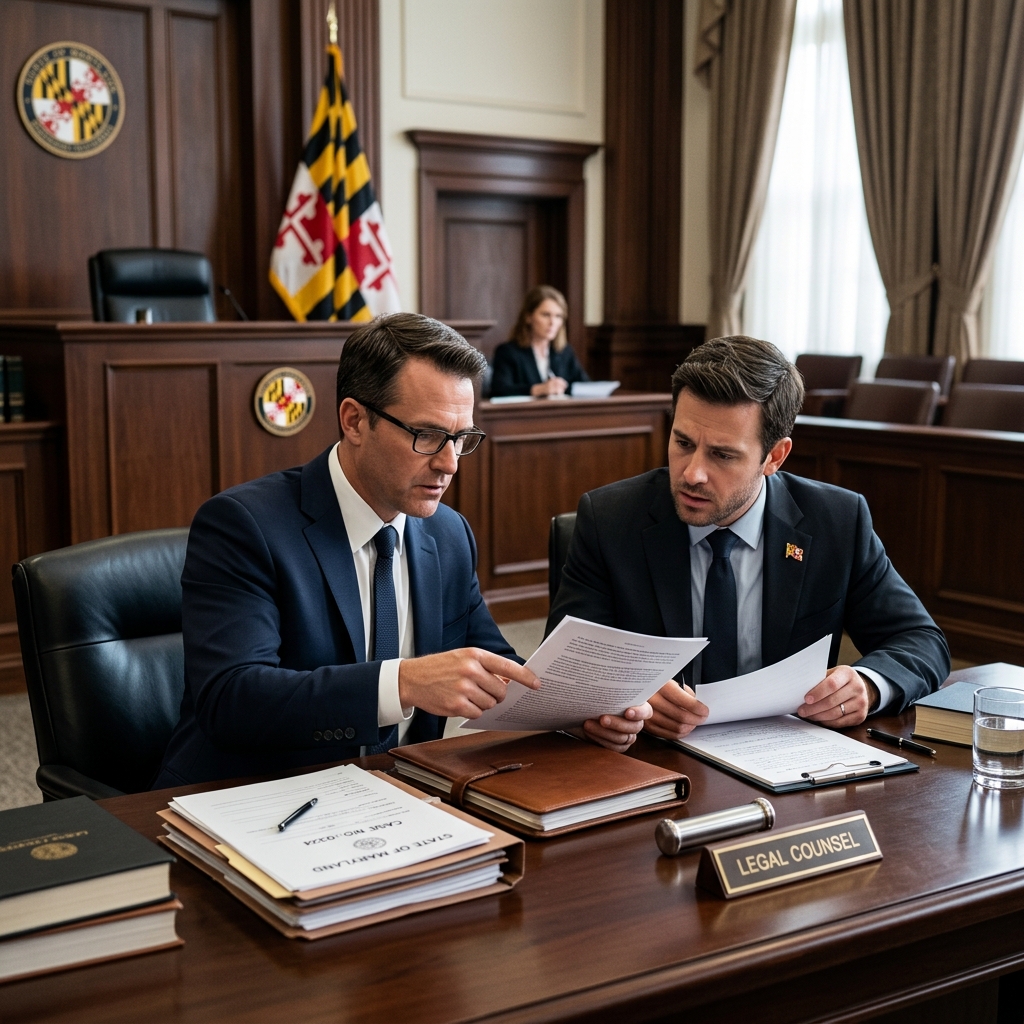
How Fraud Cases Are Prosecuted in Maryland
Fraud cases in Maryland often turn on a narrow question: what did the accused person know, and what did they intend to do? Unlike many violent offenses, fraud allegations usually depend on documents, emails, transaction records, and witness testimony rather than a single dramatic event. That means the state or federal government must connect the accused to a misleading act and then prove that the act was done deliberately for gain or to cause someone else a loss.
Because of that structure, a fraud charge is rarely just about a bad result or a business disagreement. Prosecutors generally need evidence showing deception, reliance, and a financial or property-related harm. In many cases, the defense strategy focuses on showing the absence of intent, the existence of a misunderstanding, or weaknesses in the paper trail the government is relying on.
What Usually Sits at the Center of the Allegation
Most fraud cases are built around the claim that a person knowingly used false statements, concealment, or some other deceptive method to obtain money, services, property, or a benefit. That can happen in a workplace setting, through a business transaction, in an insurance claim, in a benefits application, or in identity-related conduct.
In practical terms, the prosecution often tries to show three things:
- There was a false statement, omission, or deceptive act.
- The accused understood the statement or act was misleading.
- The deception was tied to some financial advantage or other unlawful gain.
If any one of those elements is weak, the defense may have room to challenge the charge. For example, a statement can be inaccurate without being fraudulent if it was made based on bad information, a bookkeeping error, or a sincere misunderstanding.
Why Intent Matters More Than Most People Expect
Intent is often the most important part of a fraud case. Prosecutors usually have to prove more than carelessness. They must show a knowing and purposeful effort to deceive. That distinction can make a major difference where records are messy or where the accused relied on information from someone else.
Defense counsel may look for evidence that the accused believed the statement was true, had a legitimate explanation for the transaction, or lacked any plan to mislead anyone. In a commercial or employment setting, the defense may also show that the conduct at issue was part of an ordinary business judgment rather than a scheme to defraud.
Common Types of Evidence in a Fraud Case
Fraud investigations typically involve a broad sweep of documents and digital records. The government may review bank statements, internal messages, contracts, invoices, tax filings, phone records, and account histories. Investigators may also interview coworkers, customers, vendors, and alleged victims.
Defense attorneys often examine whether the evidence really says what prosecutors claim it says. A suspicious payment, for example, may have a legitimate business explanation. A confusing email thread may show poor communication rather than a criminal plan. The defense may also challenge whether the government has connected the defendant personally to the key decisions and whether any loss was actually caused by the alleged deception.
| Evidence Type | What Prosecutors Try to Show | Possible Defense Angle |
|---|---|---|
| Emails and messages | Knowledge and planning | Context, incomplete threads, or innocent interpretation |
| Financial records | Money flow and benefit | Alternative explanations for transfers or payments |
| Witness statements | Deception and reliance | Bias, confusion, memory gaps, or inconsistency |
| Business records | False entries or concealment | Clerical error, delegation, or shared responsibility |
Defense Strategies That May Be Available
No single defense works in every fraud case. The right approach depends on the charge, the documents, the witnesses, and the theory the prosecution is using. Still, several themes come up frequently in Maryland fraud defense.
1. Showing there was no intent to deceive
This is one of the strongest defenses when the facts support it. If the accused acted in good faith, misunderstood a requirement, or relied on inaccurate information from another person, the state may struggle to prove fraudulent intent. Good-faith conduct can be especially important in cases involving business operations, reimbursements, or paperwork-heavy transactions.
2. Challenging the government’s version of the facts
Fraud cases often rely on selective documents or a narrative built after the fact. A defense lawyer may identify missing records, contradictory entries, or a timeline that does not hold up. If the government cannot reconstruct the alleged scheme clearly, the case may become much harder to prove.
3. Arguing that the accused was not the decision-maker
In larger organizations, many people may touch the same file, invoice, claim, or account. A defense may show that the accused lacked authority, was following instructions, or did not know the final submission contained false information. That distinction matters because criminal liability usually requires personal participation or knowing assistance.
4. Questioning whether there was actual loss or reliance
Some fraud theories require proof that someone relied on the misinformation and suffered harm. If no one was misled, or if the loss came from another cause, the case may weaken. Even when there was a mistake, the defense may argue that the conduct did not amount to the kind of deception the law punishes.
5. Attacking search methods and record collection
In white collar investigations, the way evidence is collected can matter as much as what the evidence says. If records were seized improperly, if a warrant was overbroad, or if digital data was handled carelessly, suppression issues may arise. That can change the entire balance of the case.
When Fraud Allegations Move Beyond State Court
Some fraud matters remain in Maryland state court, but others can become federal cases depending on the facts. Federal fraud allegations often involve mail, wire communications, financial institutions, health care programs, tax issues, or other connections to federal law. When a case moves into federal court, the stakes can rise quickly because federal sentencing rules, investigative resources, and charging practices may differ from state practice.
That shift also affects defense planning. Counsel may need to review broader records, work through parallel investigations, and evaluate whether the conduct is being characterized as a single event or as part of a larger scheme.
Why Early Action Can Change the Outcome
The earlier a person responds to a fraud allegation, the more options usually remain. Waiting can allow investigators to gather more records, interview more witnesses, and shape a one-sided version of events. Prompt legal counsel can help preserve documents, prevent damaging statements, and identify whether the matter is civil, administrative, or criminal before it escalates.
It is also important not to assume that cooperation alone will solve the problem. Speaking too freely to investigators can create new issues if statements are taken out of context or if the person guesses about facts that should have been confirmed first. A careful response is often better than a rushed explanation.
Practical Steps to Take After a Fraud Accusation
People facing fraud allegations often feel pressure to fix the problem immediately. In many cases, the better first move is to slow down and protect the defense record.
- Preserve emails, contracts, receipts, invoices, and other relevant records.
- Avoid deleting messages or modifying documents.
- Do not give a detailed statement to investigators without counsel.
- Identify everyone who may have had access to the records or accounts involved.
- Create a timeline while the details are still fresh.
- Review whether any insurance, employment, licensing, or civil consequences may also apply.
These steps do not replace legal advice, but they can help prevent mistakes that make a defense harder later.
Possible Outcomes Beyond Trial
Not every fraud case ends in a conviction after trial. Some cases are resolved through dismissal, plea negotiations, restitution discussions, or reduced charges. In others, the prosecution may agree to a more limited resolution once weaknesses in the evidence become clear.
The best outcome depends on the facts and on how quickly the defense identifies pressure points in the case. Where the records are incomplete or the intent evidence is weak, a negotiated resolution may be possible. Where the government’s case depends heavily on witness credibility, trial preparation may become more important.
Questions People Often Ask About Maryland Fraud Charges
Can a fraud case be based on a mistake?
A mistake by itself is not the same as fraud. Prosecutors usually need evidence of knowing deception, so a genuine error or misunderstanding can be an important defense.
Do all fraud cases involve large sums of money?
No. Some charges involve smaller amounts, documents, or benefit applications. The size of the amount may affect the seriousness of the charge, but small cases can still create major criminal exposure.
What if the accusation comes from a business dispute?
Business conflicts can look suspicious without being criminal. A defense may show that the dispute is really about performance, accounting, contract interpretation, or a failed transaction rather than a scheme to defraud.
Can digital records help the defense?
Yes. Messages, metadata, calendar entries, and account logs can sometimes support the defense by showing timing, context, or lack of knowledge. The same records can also be used by the prosecution, so careful review is essential.
Why Fraud Defense Requires a Detailed Factual Review
Fraud charges are rarely resolved by broad arguments alone. The defense has to dig into dates, account activity, document versions, decision chains, and communications between the people involved. Small details often determine whether conduct looks criminal, careless, or simply misunderstood.
That is why a strong defense usually depends on reconstructing the full sequence of events and testing every piece of the government’s theory. When the accused can show a lawful purpose, a lack of intent, or a break in the chain of proof, the case may become much more difficult for prosecutors to sustain.
References
- How To Fight Fraud Charges in Maryland — Super Lawyers. 2025-01-01. https://www.superlawyers.com/resources/white-collar-crimes/maryland/how-to-fight-fraud-charges-in-maryland/
- Maryland Fraud Lawyers | Identity Theft Defense Attorneys in MD — Maronick Law LLC. 2025-01-01. https://www.maronicklaw.com/criminal-defense/white-collar-crimes/fraud/
- Maryland Fraud Lawyer | Criminal Defense Attorney — Criminal Lawyer Maryland. 2025-01-01. https://criminallawyermaryland.net/maryland-fraud-lawyer/
- Fraud Penalties in Maryland | Consequences for a Fraud Offense — Maryland Criminal Lawyer. 2025-01-01. https://maryland-criminallawyer.com/maryland-fraud-lawyer/penalties/
- Project SAFE (Stop Adult Financial Exploitation) — Maryland Department of Human Services. 2025-01-01. https://dhs.maryland.gov/office-of-adult-services/project-safe/
Similar Articles








Read full bio of medha deb


