
Essential Car Essentials for Safety and Readiness
Discover must-have items for your vehicle to handle emergencies, legal needs, and daily preparedness effectively.
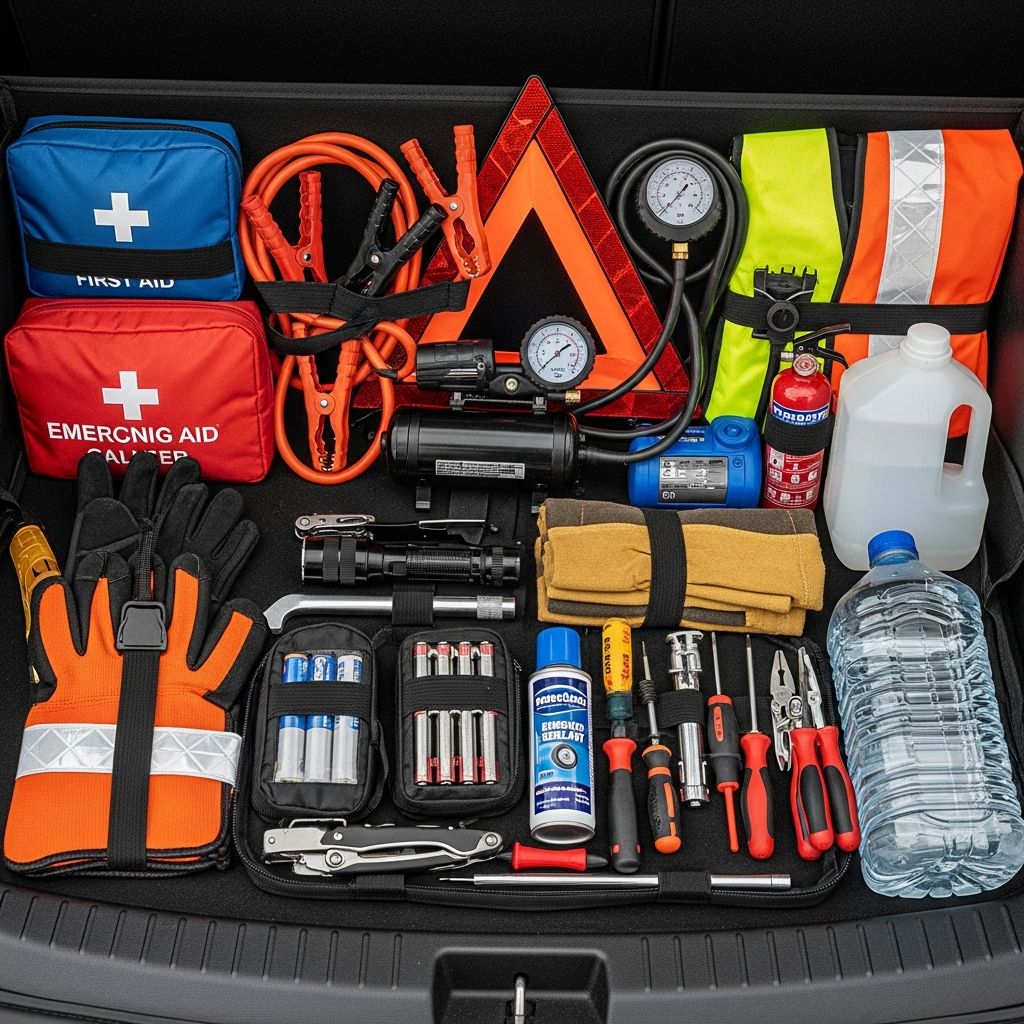
Your vehicle serves as more than just transportation; it is a mobile hub that requires thoughtful preparation to manage breakdowns, legal checks, medical issues, or harsh weather. Maintaining a well-stocked car minimizes risks and boosts confidence on the road. This guide outlines key categories of items to keep onboard, drawing from best practices for legal, mechanical, health, and survival needs.
Legal Documents: Staying Compliant on the Road
Carrying proper paperwork prevents fines, delays during stops, and complications in accidents. State laws mandate certain documents, and having them accessible demonstrates responsibility.
- Vehicle Registration: This DMV-issued card confirms your car’s road legality and renewal status. Renew annually or biennially per state rules, and keep it in the glove compartment.
- Proof of Insurance: Display your current insurance ID card with policy details, dates, and contact info. Digital versions via apps are accepted in most states—verify locally.
- Inspection Certificates: Safety and emissions stickers or certificates prove compliance. Retain records for at least two years; upload digitally for backups.
- Driver’s License Copy: While not always required in the car, a photocopy aids identity verification without risking your original.
Store originals securely at home in fireproof safes, but keep vehicle copies handy. Digital tools like apps streamline access and reminders for expirations.
Emergency Roadside Tools: Handling Breakdowns
Mechanical failures happen unexpectedly. A basic toolkit empowers quick fixes or signals for help, potentially averting dangers like standing on busy highways.
| Tool | Purpose | Why Essential |
|---|---|---|
| Jack and Lug Wrench | Change flat tires | Standard equipment; practice use beforehand |
| Jumper Cables | Jump-start dead batteries | Thick-gauge cables work faster; store coiled |
| Tire Pressure Gauge | Monitor tire health | Prevents blowouts; check monthly |
| Screwdrivers and Pliers | Minor repairs | Multi-tool versions save space |
| Duct Tape and Zip Ties | Temporary fixes | Versatile for hoses, wires, or panels |
Organize tools in a durable box under the seat or trunk. Pair with a flashlight featuring a red strobe for visibility.
First Aid and Health Supplies: Medical Preparedness
Injuries from minor crashes or sudden illnesses require immediate response. A compact kit bridges the gap until professionals arrive.
- Basic Kit Items: Bandages, antiseptic wipes, tweezers, scissors, gloves, pain relievers, and allergy meds.
- Prescription Copies: List of medications and dosages for emergencies.
- Thermal Blankets: Mylar sheets retain body heat in cold stalls.
- Hand Sanitizer and Masks: Infection control post-2020 standards.
Tailor kits for passengers, like child meds or pet supplies. Check expiration dates biannually and restock promptly.
Weather and Survival Gear: Adapting to Elements
Extreme conditions—blizzards, heatwaves, or floods—can strand drivers. Multi-season gear ensures endurance.
- Winter Kit: Ice scraper, snow brush, sand or cat litter for traction, heavy gloves.
- Summer Kit: Water bottles, cooling towels, sunscreen.
- All-Season: Non-perishable snacks (energy bars, nuts), multi-tool knife, poncho, road flares or LED beacons.
- Comfort Items: Blankets, extra clothing layers, portable charger.
A “get home bag” with 72-hour supplies covers prolonged waits. Rotate perishables seasonally.
Communication and Technology: Staying Connected
Isolation amplifies roadside risks. Reliable tech facilitates rescue.
- Phone Charger: Car adapter or power bank with solar option.
- Emergency Whistle and Signal Mirror: Low-tech alerts.
- Paper Maps: GPS failures covered.
- CB Radio or Apps: Truckers’ channels or roadside apps like Waze.
Program ICE (In Case of Emergency) contacts. Test devices regularly.
Vehicle Maintenance Records: Tracking History
Beyond tools, records validate upkeep during inspections or sales.
- Service Receipts: Oil changes, brakes, tires—keep two years.
- Warranty Papers: Manufacturer details for claims.
- Recall Notices: Completion proofs.
Digital hubs organize VIN-linked files with reminders.
Purchase and Financial Papers: Ownership Proof
For financed vehicles, retain lien details.
- Bill of Sale/Title: Ownership evidence; lender holds liens.
- Loan Docs: Payment proofs.
Scan and store digitally; originals home-secured.
Organizing Your Car Kit Efficiently
Dedicate spaces: glove box for docs, trunk for tools, seatback for first aid. Use waterproof bags. Inventory checklist:
- Monthly: Check fluids, tires, battery.
- Quarterly: Rotate food/water, test gear.
- Annually: Full restock, digital backups.
Customize by region—snow in North, hurricanes in South.
Frequently Asked Questions (FAQs)
Q: What documents must I carry while driving?
A: Primarily registration, insurance proof, and inspection stickers. Digital OK in most states.
Q: Can I keep my original title in the car?
A: No, store at home securely; photocopy if needed.
Q: How often should I update my emergency kit?
A: Check monthly, refresh perishables every 6 months.
Q: Are digital documents legally sufficient?
A: Yes in 45+ states; confirm local DMV rules.
Q: What if I have pets or kids?
A: Add leashes, carriers, child meds, diapers to kits.
Conclusion: Drive Prepared, Arrive Safe
Assembling these essentials takes minimal effort but yields maximum protection. A prepared car turns potential crises into manageable pauses, safeguarding you, passengers, and wallet. Start stocking today for peace of mind tomorrow.
References
- Essential Car Documents You Need in 2026 — Hubmee. 2026. https://hubmee.com/blog/essential-car-documents-you-need-in-2026-and-where-to-keep-them
- Buying A Car: Documents To Bring — Crossroads Ford of Henderson. N/A. https://www.crossroadsfordhenderson.com/what-do-you-need-to-buy-a-car-6-documents-to-bring
- What to Bring When Buying a Car: A Quick Checklist — Toyota Vacaville. N/A. https://tt-blogs.dealerfire.com/toyotavacaville/what-to-bring-when-buying-a-car-a-quick-checklist/
- Essential Paperwork You Need To Bring When Buying A Used Car — Autokings. N/A. https://www.autokings.com/blogs/6671/essential-paperwork-you-need-to-bring-when-buying-a-used-car
- Stay Prepared: What Documents Should I Keep in My Car? — CARSTAR. N/A. https://www.carstar.com/blog/stay-prepared-what-documents-should-i-keep-in-my-car/
- What To Bring When Buying a Car — Progressive. N/A. https://www.progressive.com/answers/documents-for-buying-a-car/
- Documents You Should and Shouldn’t Keep in Your Car — Capital One. N/A. https://www.capitalone.com/cars/learn/finding-the-right-car/documents-you-should-and-shouldnt-keep-in-your-car/3008
Similar Articles








Read full bio of medha deb


