The Defense of Marriage Act (DOMA) Historically, marriage in the United States was regulated primarily by states, with each state determining who could marry and under what conditions. For much of U.S. history, those state laws recognized only opposite-sex couples and were often intertwined with religious and cultural views of marriage. When states began to consider or recognize same-sex marriages and domestic partnerships, questions emerged about how those relationships would be treated under federal law. Federal statutes rely heavily on marital status to allocate rights and benefits, including: DOMA emerged in this context, as Congress sought to control how marriage—especially same-sex marriage—would be treated for federal purposes and across state lines. DOMA contained two major components that reshaped the legal definition and recognition of marriage. By codifying these rules, DOMA ensured that even couples legally married under state law would be treated as unmarried strangers by the federal government, with significant practical consequences. For same-sex couples, the effect of DOMA was wide-ranging, touching more than a thousand discrete federal provisions that rely on marital status. These disparities created a two-tier system: opposite-sex couples enjoyed full recognition and benefits from both state and federal governments, while same-sex couples had, at best, partial recognition depending on where they lived and which level of government was involved. After DOMA’s enactment, some advocates argued that statutory protections would not be enough to preserve a traditional, opposite-sex definition of marriage. They promoted the idea of a Federal Marriage Amendment, which would embed a restrictive definition of marriage directly in the U.S. Constitution. This push for an amendment rested on several claims: Supporters framed the amendment as necessary to “defend” marriage and protect religious or moral views about family structure. Opponents countered that such an amendment would, for the first time, embed explicit discrimination against a particular group into the Constitution, undermining principles of equal protection and liberty. DOMA soon faced litigation from couples and surviving spouses who were denied federal benefits despite being legally married under state law. One of the most consequential cases was United States v. Windsor, involving a surviving spouse who was assessed a large federal estate tax bill because her same-sex marriage was not recognized. The Windsor case raised constitutional arguments under the Fifth Amendment, focusing on: On June 26, 2013, the Supreme Court struck down DOMA’s Section 3, holding that the federal government could not deny recognition to lawful same-sex marriages for purposes of federal benefits. The Court emphasized that DOMA’s effect was to “disparage and injure” couples whom states had chosen to protect and recognize, finding no sufficient justification to override constitutional guarantees of liberty. Although Windsor addressed federal recognition, it did not immediately require all states to allow or recognize same-sex marriage. Many states continued to ban such marriages or refused to recognize them when performed elsewhere. Further litigation culminated in the Supreme Court’s 2015 decision in Obergefell v. Hodges, which addressed both the right to marry and recognition across state lines. The Court held that same-sex couples have a constitutional right to marry and to have those marriages recognized in every state, grounded in the Fourteenth Amendment’s guarantees of due process and equal protection. Obergefell had two major effects: This decision effectively neutralized DOMA’s Section 2, which had allowed states to deny recognition to out-of-state same-sex marriages. More than a quarter-century after DOMA’s passage, Congress enacted the Respect for Marriage Act, formally repealing DOMA and providing statutory protections for marriage recognition. The Respect for Marriage Act: By codifying these protections, Congress created a legislative backstop for marriage rights, intended to function even if future Supreme Court decisions were to narrow or reinterpret constitutional protections recognized in Obergefell. The controversy around DOMA and the proposed constitutional amendment exposed deep divisions over how marriage should be defined and who should decide its meaning. Common arguments included: Today, the combination of Supreme Court rulings and federal legislation has largely reversed DOMA’s effects. Same-sex couples who marry in any U.S. state are entitled to both state and federal recognition of their marriages. Key practical takeaways for individuals and families include: No. DOMA’s key provisions were first neutralized by Supreme Court decisions and later formally repealed by the Respect for Marriage Act, which replaced its definitions with inclusive rules requiring recognition of valid marriages. The Supreme Court’s decision in United States v. Windsor struck down DOMA’s Section 3, eliminating the federal non-recognition of same-sex marriages. Later, Obergefell v. Hodges ensured that states could not prohibit or refuse to recognize same-sex marriages. Congress subsequently repealed DOMA and codified recognition rules in the Respect for Marriage Act. The proposed amendment was a constitutional measure intended to define marriage nationwide as the union of one man and one woman and to prevent any court or legislature from expanding marriage rights beyond that definition. It was debated but never adopted. No. Under both Supreme Court precedent and the Respect for Marriage Act, states must recognize lawful same-sex marriages performed in other states, and the federal government must treat those marriages as valid for all federal law purposes. Federal recognition determines eligibility for numerous key protections and benefits, from Social Security and tax status to immigration rights and access to federal employee benefits. Without such recognition, couples and their children can face financial insecurity, legal uncertainty, and loss of important family protections.Background: Marriage, Federal Law, and Why DOMA Mattered
The Core Provisions of the Defense of Marriage Act
DOMA Provision What It Did Section 2 Allowed states to refuse to recognize same-sex marriages performed in other states, effectively creating a carve-out from the usual expectation that states honor each other’s marriage laws. Section 3 Defined “marriage” for all federal law purposes as a legal union between one man and one woman, and “spouse” as an opposite-sex partner, denying federal marital benefits to same-sex couples. Practical Impact: Rights and Benefits Denied Under DOMA
The Political Response: Calls for a Constitutional Marriage Amendment
Legal Challenges and the Road to United States v. Windsor
Beyond Windsor: Obergefell v. Hodges and Nationwide Marriage Equality
The Respect for Marriage Act: Repealing DOMA and Securing Recognition
DOMA and the Amendment Debate: Key Arguments For and Against
Arguments Supporting DOMA and a Marriage Amendment
Arguments Opposing DOMA and a Marriage Amendment
Current Legal Landscape and Practical Takeaways
Frequently Asked Questions (FAQs)
Is DOMA still in effect?
Did the Supreme Court rulings alone end DOMA?
What was the proposed Federal Marriage Amendment?
Can a state now refuse to recognize a same-sex marriage from another state?
Why does federal recognition of marriage matter for families?
References
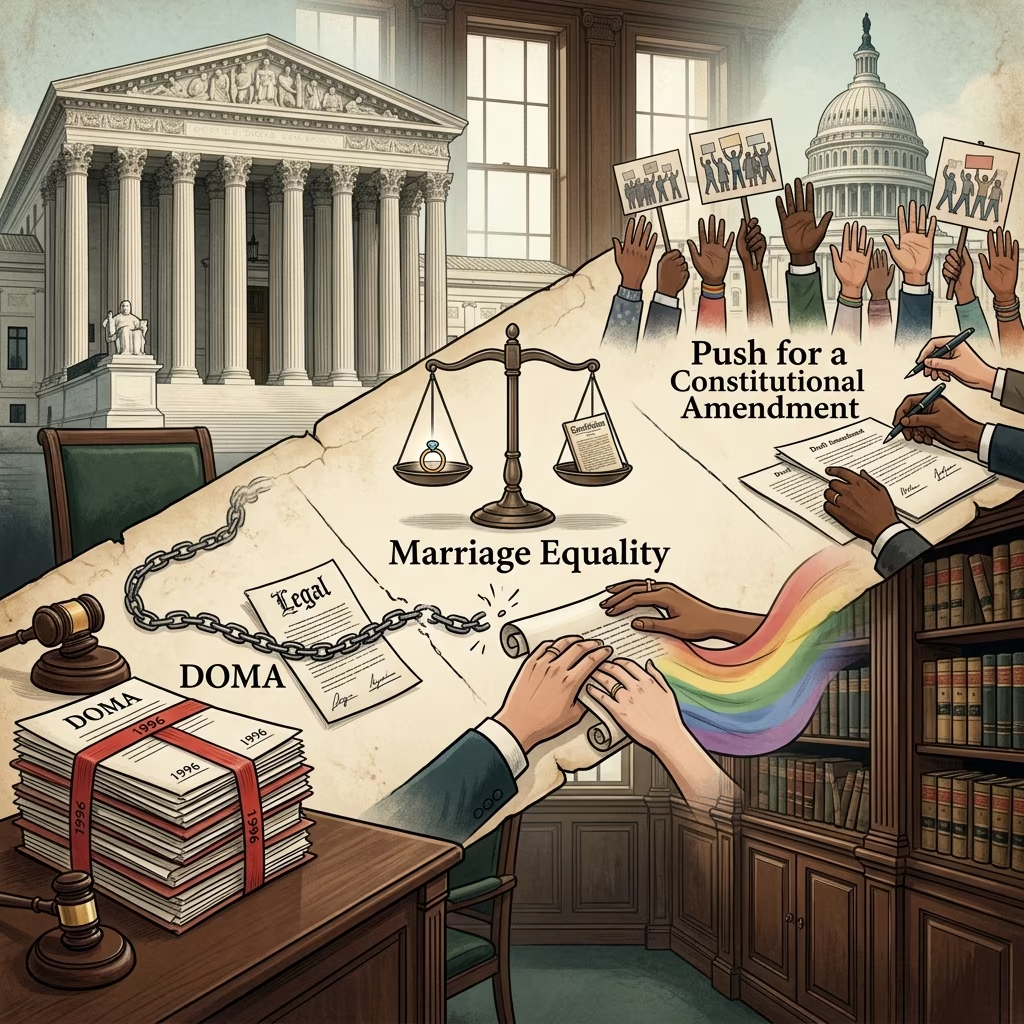
DOMA, Marriage Equality, and the Push for a Constitutional Amendment
How the Defense of Marriage Act shaped federal marriage law, triggered constitutional debates, and led to nationwide marriage equality.
General information, not legal advice. Laws differ by state and change over time. For advice on your situation, talk to a licensed attorney.