
Property Title Search: 4-Step Guide To Find Records Online Free
Learn practical, step‑by‑step methods to investigate ownership, liens, and recorded rights on a property using free public records and online tools.
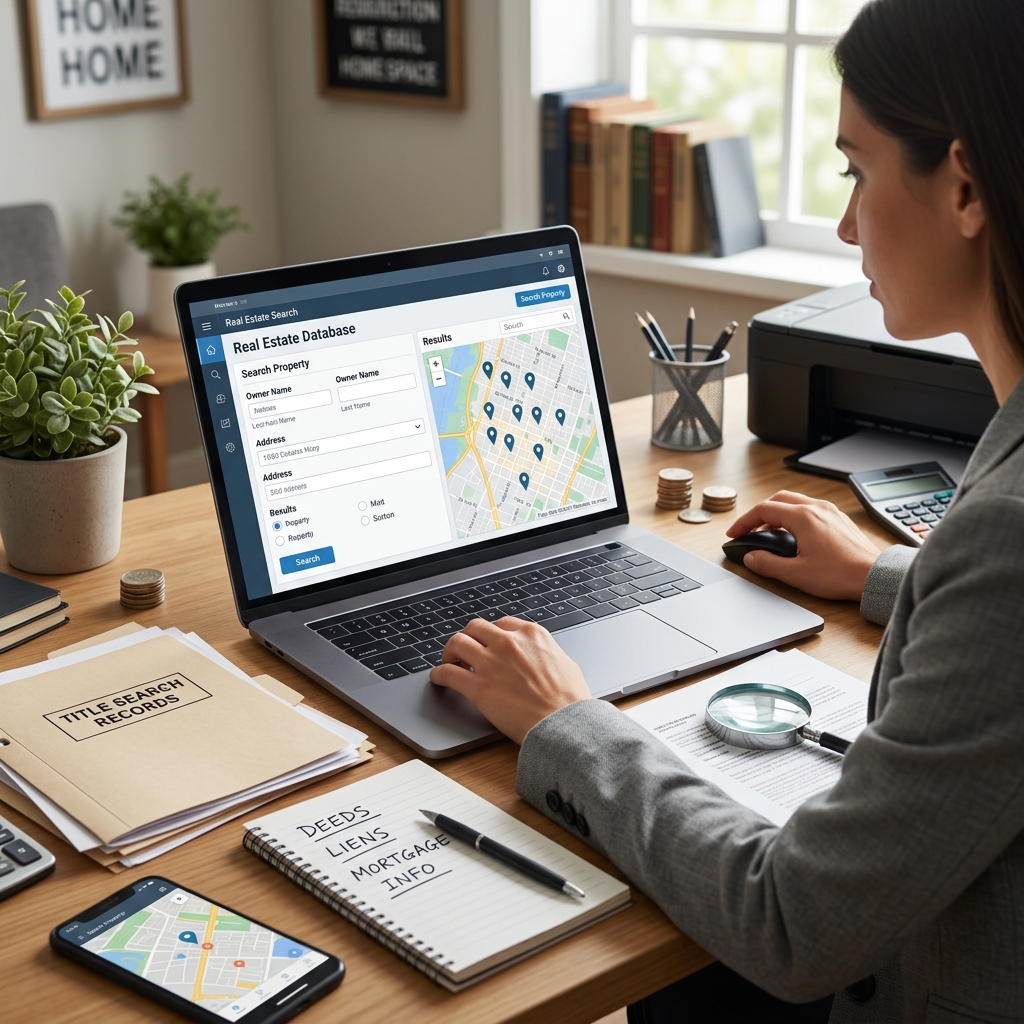
Before committing to buy or sell real estate, it is essential to understand exactly who owns the property, what legal rights come with it, and whether any hidden claims could affect your plans. A property title search is the process of reviewing public records to uncover this information, and in many places it can be done at little or no cost using government resources and online tools.
This guide explains how to investigate property records for free, what information you can realistically obtain on your own, and when it makes sense to involve a professional title company despite the availability of free resources. It is designed for homebuyers, sellers, and anyone wanting to verify the status of a parcel of real estate.
Why a Property Title Search Matters
A title represents the bundle of legal rights attached to a piece of real estate. Reviewing the history of that title helps you confirm that the seller can legally transfer ownership and that no undisclosed interests or debts will follow you after closing.
Key problems a title search can reveal
- Ownership issues — For example, an unresolved inheritance, missing signature from a co-owner, or a prior deed that conflicts with the current seller’s claim.
- Liens and mortgages — Recorded debts such as unpaid mortgages, tax liens, mechanics liens, or judgments that attach to the property and may need to be paid before clear title is delivered.
- Easements and rights of way — Recorded rights allowing utilities, neighbors, or the public to use part of the land, which can limit how you build or use the property.
- Restrictions or covenants — Rules imposed by prior owners or community associations that control activities such as home businesses, exterior design, or property subdivision.
Identifying these items early can prevent costly surprises, delays, or legal disputes after you move in.
What Information Title Records Typically Include
Property records are usually maintained by a local government office, which can vary by state or county. Common offices include the county recorder, register of deeds, clerk-recorder, assessor, and tax collector. These offices keep documents that show how ownership and rights have changed over time.
Typical data you may see
- Legal owner — The name or names of the individuals, business entities, or trusts that own the property.
- Street address and legal description — The physical location plus detailed boundaries, lot number, or parcel number used for legal purposes.
- Transfer history — Deeds showing sales, gifts, foreclosures, or other transfers of ownership over time.
- Mortgages and deeds of trust — Security instruments recorded when a lender finances the property.
- Liens — Recorded claims by creditors, contractors, or government authorities against the property.
- Easements — Agreements granting others limited rights to use the land, such as utility corridors or shared driveways.
It’s important to remember that not every agreement or dispute is reflected in the public index. Some rights may exist through unrecorded contracts or longstanding use that never appeared in official records. A free search is useful, but not foolproof.
Preparing for Your Title Search
Making your search efficient starts with gathering basic details about the property and understanding which office holds the records in that area.
Essential information to collect first
- Street address of the property (including unit or lot number if applicable).
- Current owner’s full name as it appears on recent documents.
- Parcel number or assessor’s identification number from tax bills or local assessor websites.
- Local jurisdiction — City, county, and state where the property is located, so you can identify the correct recorder or assessor office.
In some planned communities or new developments, the land may be part of a larger parcel that has not been fully subdivided. In such cases, searching by the developer’s name or the master parcel can help locate relevant documents.
Where to Find Property Records for Free
Public real estate records are generally considered open to inspection, with most states allowing broad access either online or in person. However, availability and level of detail can vary significantly by location.
Common sources of free records
- County recorder or register of deeds websites — Many counties offer online search portals that let you view indexed information and, in some cases, images of documents at no cost.
- Assessor databases — Assessor sites usually provide property characteristics, assessed value, tax information, and parcel numbers; some link to recorded documents.
- In-person courthouse or city hall access — Jurisdictions without full online access often maintain public computer terminals at government offices for searching records free of charge.
- Statewide search tools — A few states aggregate property records across all counties into a single system, though not every state offers this service.
Even when viewing is free, some offices charge per page for printed or certified copies of documents. These copy fees do not affect your ability to inspect the records but are relevant if you need official documentation for a loan or legal proceeding.
Example: Online access in California
| County | Main tools | Notes |
|---|---|---|
| Los Angeles County | Assessor property search; recorder office for copies | Detailed assessment information is online; deed copies may require in-person or phone requests. |
| Orange County | RecorderWorks grantor/grantee index; property document services | Records can be viewed online at no charge; printed copies cost per page. |
| San Diego County | Assessor-Recorder-County Clerk document search | Combined portal for assessment and recorded document search, with online viewing in many cases. |
These examples illustrate how local practices differ, even within a single state. Always check with the specific county or city where your property is located to confirm what is available.
Step-by-Step: Conducting a Free Title Search Online
While interfaces vary, most online systems follow a similar pattern. The process below outlines how you can use typical county or recorder portals to review property records without paying for a commercial report.
1. Identify the correct search portal
- Use the official county or city website and look for links labeled Recorder, Register of Deeds, Clerk-Recorder, or Property Records.
- Verify that you are on an official government domain (such as .gov or a known county site) rather than a private service with paid reports.
- If unsure, call the recorder or clerk’s office and ask which online tool they maintain for public document search.
2. Choose your search method
- By owner name — Enter the current owner’s last name and first name as they appear on tax records or prior documents.
- By street address — Some portals allow direct address search; others require a parcel number obtained from assessor data.
- By parcel number — Using the assessor’s identification or parcel number can be the most precise way to locate all documents for a specific property.
3. Review the search results
- Look for the most recent deed to confirm who currently owns the property and how their ownership is described (individual, joint tenants, trust, etc.).
- Identify older deeds to understand the chain of title over time, especially if there were foreclosures, transfers to entities, or estate settlements.
- Locate mortgage documents (often called deeds of trust) and check whether they appear to be paid off or replaced by subsequent loans.
- Scan for liens, judgments, and tax documents that may indicate unpaid debts or issues with property taxes.
- Note any easement or right-of-way documents that could affect access, utility placement, or future construction plans.
4. Open and read relevant documents
- Many systems allow you to click on the document number to view an image of the recorded paperwork.
- Pay attention to the recording date and document type, which help you understand the sequence of events.
- Look for references to other documents, such as prior deeds or agreements, which may require you to search additional instrument numbers.
- For complicated histories, keep notes or create a timeline of transfers and key events.
Doing a Free Title Search in Person
In areas without complete online records, or where older documents are only indexed on physical microfilm or local terminals, you may need to visit the recorder, courthouse, or city hall in person. Although this can be time consuming, access to view records is generally free.
How to search on-site
- Confirm the office hours and whether appointments are required, especially in busy jurisdictions.
- Bring the property’s address, parcel number, and owner name to help staff quickly locate the correct index.
- Use public computer terminals or index books to look up documents by name, address, or parcel number.
- Request assistance from clerks or document examiners if you are unsure how to navigate the system; many offices provide guidance at no charge.
- Inspect documents on screen or microfilm and write down any document numbers you might want copies of later.
You can usually view documents free of charge, but printed copies or certified versions will involve per-page fees and potential waiting time.
Limits of a Free, Do-It-Yourself Title Search
While public records offer a wealth of information, there are important limitations to what a non-professional search can reliably uncover.
Information that may not appear clearly
- Unrecorded agreements — Private contracts, informal easements, or long-standing neighbor arrangements that were never officially recorded can be legally significant but invisible in the index.
- Errors or omissions in recording — Missing files, incorrect names, or mis-indexed documents can prevent you from finding everything relevant.
- Complex legal issues — Matters like boundary disputes, adverse possession, or ambiguous deed language usually require legal interpretation beyond a simple record search.
Professional title companies use trained examiners, standardized procedures, and sometimes additional databases to investigate these risks. Their detailed search is typically required when issuing title insurance for a mortgage or sale.
When you still need a professional
- When a lender or buyer requires title insurance, which almost always depends on a formal title search and underwriting process.
- If you encounter conflicting ownership claims, such as two different deeds purporting to transfer the same property.
- When there are numerous liens or complex entity structures, making it difficult to track who has priority and whether debts were properly satisfied.
- If you are purchasing high-value property or land intended for development, where minor defects could have outsized consequences.
In such situations, a free search is still valuable as a first step, but should be followed by professional confirmation.
Practical Tips to Improve Your Search
- Check both name and parcel — Searching by the owner’s name and by parcel number helps catch documents that might be mis-indexed under one method.
- Search past owners — Looking up prior owners can reveal older easements or liens that still affect the property even if they do not appear under the current owner’s name.
- Verify tax status — Use assessor or tax collector sites to confirm property tax payments, exemptions, and any tax liens or delinquency notices.
- Watch recording dates — Understanding the chronology of deeds, mortgages, and releases helps you evaluate whether debts were properly cleared.
- Keep written notes — Summarize each significant document you review, including its date, parties, and apparent effect on title, to avoid confusion later.
Frequently Asked Questions
Is it really possible to do a title search for free?
In many jurisdictions, yes. The underlying records are public and can be viewed at no cost online or at local government offices. However, you may have to pay for printed or certified copies, and a free search does not include the professional analysis or insurance that come with a paid title service.
Does a free search guarantee the title is clear?
No. A do-it-yourself search can reveal obvious issues such as recorded liens or mortgages, but it may miss unrecorded agreements, indexing errors, or complex legal defects. Clear title for purposes of a loan or sale usually depends on a professional examination and, often, title insurance.
What if I cannot find any record for a property?
Missing records can result from recording mistakes, unusual ownership structures, or searches using incomplete information. Lack of records does not automatically mean there are no claims against the property. In such cases, contacting the recorder’s office for assistance or consulting a title company or real estate attorney is advisable.
Are all liens and easements recorded?
Not necessarily. Many significant liens and easements are recorded, but some rights and obligations can arise through contracts, court orders, or long-term use without a clear recorded document. This is one reason why a free record search should be treated as an initial risk check rather than a definitive guarantee.
Do I need a lawyer to read property records?
You do not need a lawyer to view property records, and many people review deeds and liens on their own. However, if you encounter unclear language, conflicting information, or potential legal disputes, seeking advice from a real estate attorney or experienced title professional is strongly recommended.
References
- How To Do a Property Title Search for Free — Rocket Lawyer. 2023-08-01. https://www.rocketlawyer.com/real-estate/home-ownership/buy-or-sell-property/legal-guide/how-to-do-a-property-title-search-for-free
- U.S. Title Records: Nationwide Property Records & Title Search — U.S. Title Records. 2023-06-15. https://www.ustitlerecords.com/
- California Property Records – Search Documents — California Official Records. 2024-02-10. https://propertyrecords.californiaofficialrecords.com/
- RecorderWorks Internet Portal — Orange County Clerk-Recorder. 2024-01-05. https://cr.occlerkrecorder.gov/RecorderWorksInternet/
- Real Estate Records: General Information — Los Angeles County Registrar-Recorder/County Clerk. 2023-11-20. https://www.lavote.gov/home/recorder/real-estate-records/general-info
- Property Search — Los Angeles County Assessor. 2024-03-18. https://assessor.lacounty.gov/homeowners/property-search
- Property Documents and Recording Services — Orange County Clerk-Recorder Department. 2023-09-12. https://ocrecorder.com/recorder-services/property-documentsdocument-recording-services
Similar Articles








Read full bio of Sneha Tete


