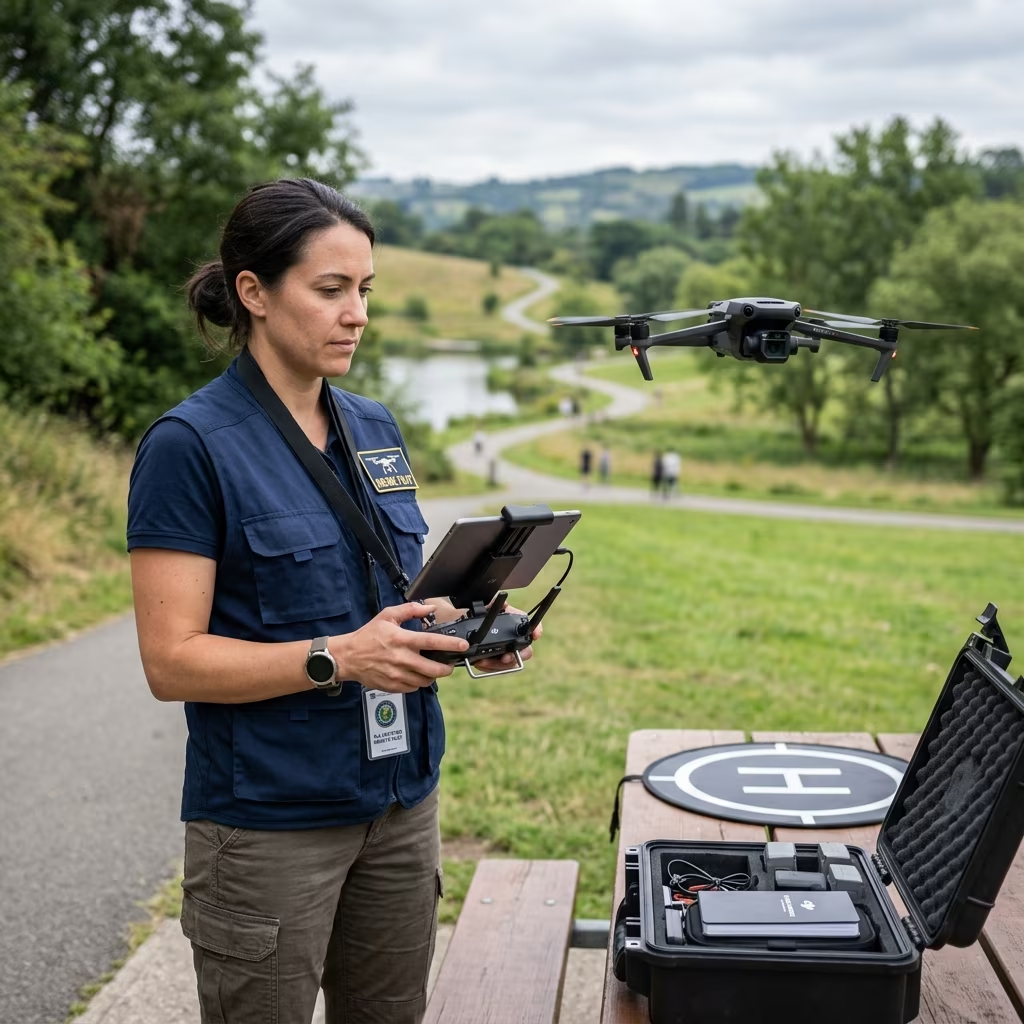
Do You Need a Pilot License to Fly a Drone?
In the United States, you do not need a traditional airplane pilot license just to fly most drones, but you may need FAA certification depending on how you use the aircraft. The key divide is between recreational flying and operations that are commercial or otherwise non-recreational, because the FAA treats those categories differently.
For casual flying, the rules are simpler: follow the recreational safety framework, complete the required safety test, and meet registration and airspace rules when applicable. For business use, paid work, or any activity that is not purely for personal enjoyment, the FAA generally requires a remote pilot certificate under Part 107.
How the FAA Separates Hobby Flying from Work
The most important question is not whether you call yourself a pilot, but why the drone is being flown. Recreational flying is for personal enjoyment, while operations that support a job, earn money, or serve a business purpose generally fall under Part 107.
That distinction matters because the FAA’s rules for non-recreational operations are more demanding. Under Part 107, the person operating the drone’s controls must hold a remote pilot certificate with a small UAS rating, unless the flight is under the direct supervision of someone who does hold that certificate.
In practice, this means a person who buys a drone for fun usually follows the recreational rules, but a person who uses the same drone for real estate photography, inspections, mapping, marketing, or similar work will usually need Part 107 certification.
What Counts as Recreational Drone Flying?
Recreational flying is limited to personal enjoyment. The FAA instructs recreational flyers to follow community-based safety guidelines, keep the drone within visual line of sight, yield to other aircraft, and stay within the altitude and airspace limits that apply to the flight location.
Recreational operators must also take the TRUST test, which is the FAA’s free recreational safety exam, and carry proof that they passed. If the drone must be registered, the registration number must appear on the outside of the aircraft, and the pilot should keep proof of registration available during the flight.
These rules are designed to keep even casual drone use compatible with the larger airspace system. The FAA emphasizes that drone safety is not optional; it is part of lawful operation.
When Part 107 Certification Becomes Necessary
Part 107 is the core federal rule set for most non-recreational small drone operations. The FAA states that to operate the controls of a drone under Part 107, a person needs a remote pilot certificate with a small UAS rating or direct supervision by a certificated remote pilot.
To qualify, an applicant must be at least 16 years old and either pass the FAA’s initial aeronautical knowledge test or, if already holding a Part 61 pilot certificate, complete the FAA’s required small UAS training course and meet the recent flight review requirement.
This certificate is often described as a drone license, but it is more accurate to call it a remote pilot certificate. The label matters less than the legal function: it proves the operator has met FAA knowledge and eligibility requirements for non-recreational drone work.
Registration: When Your Drone Must Be Listed with the FAA
Certification is only part of the picture. Many drones must also be registered with the FAA. According to FAA guidance, recreational flyers must register drones that weigh more than 0.55 pounds, and Part 107 operators also register drones used for commercial purposes.
Registration is not the same as licensing. A registration number identifies the aircraft, while a remote pilot certificate identifies the operator’s qualifications. Many drone owners need both.
The FAA also expects pilots to keep the registration current and to mark the registration number on the exterior of the drone. That requirement helps law enforcement and regulators link a drone to its registered owner if a problem occurs.
Core Safety Rules That Apply to Most Flights
Whether a drone flight is recreational or conducted under Part 107, several baseline safety rules remain central to legal operation. The FAA says pilots must avoid careless or reckless operation, maintain visual line of sight, and give way to manned aircraft.
Other common limitations include staying at or below 400 feet above ground level unless an FAA exception applies, and obtaining authorization before flying in controlled airspace such as Class B, Class C, Class D, and certain Class E airspace.
These rules are not minor technicalities. They are the operational boundaries that keep drones separated from helicopters, airplanes, airports, and emergency response activity.
| Topic | Recreational flying | Part 107 flying |
|---|---|---|
| Primary purpose | Personal enjoyment | Business or other non-recreational use |
| FAA test | TRUST | Part 107 knowledge test or qualifying training path |
| Certificate needed | Usually no remote pilot certificate | Remote pilot certificate required |
| Registration | Required for many drones over 0.55 lb | Required for covered operations |
| Airspace authorization | Needed in controlled airspace | Needed in controlled airspace |
Why “Pilot License” Is a Misleading Phrase
People often ask whether they need a pilot license because that is the familiar term for aircraft operation. But drones are regulated differently from crewed aircraft, and the FAA’s terminology reflects that difference.
For many drone users, the relevant legal question is whether they need a remote pilot certificate, not a conventional pilot license. The answer depends on the intended use of the drone and the rules that apply to the operation.
That distinction is important because a person can be fully legal flying a drone without holding a traditional pilot license, but still be required to meet FAA drone-specific requirements such as TRUST, registration, or Part 107 certification.
Common Situations That Often Trigger Part 107
Many routine drone tasks move a flight out of the recreational category. The FAA’s commercial framework commonly applies when the drone is used for paid photography, real estate listings, construction documentation, inspection work, mapping, or similar services.
Even if money does not change hands directly, the flight may still be non-recreational if it supports a business or provides a practical benefit rather than personal enjoyment.
- Paid aerial photography or videography
- Property or infrastructure inspection
- Surveying or mapping for work purposes
- Marketing content for a business
- Any flight tied to employment or commercial gain
Airspace, Visibility, and Other Operational Limits
Drone pilots also need to pay attention to where they fly, not just why they fly. FAA rules and guidance stress that drones should remain within visual line of sight and avoid interfering with other aircraft.
Controlled airspace requires prior authorization, often through the FAA’s authorization systems, while uncontrolled airspace generally allows flight up to the applicable altitude limit if all other rules are followed.
In addition, the FAA warns against flying in a way that endangers the national airspace system. That broad safety standard gives regulators room to address behavior that may not fit neatly into a single checklist but still creates risk.
What Happens if You Ignore the Rules?
Failure to follow federal drone rules can create more than a simple warning. Unregistered flights, unauthorized commercial use, or unsafe operations can lead to FAA enforcement action, including civil penalties.
Because drone activity can affect aircraft safety, airport operations, and public security, the FAA treats compliance seriously. That is why the agency repeatedly emphasizes registration, testing, airspace awareness, and responsible operation.
For anyone unsure about a specific flight, the safest legal assumption is that business-related use likely requires Part 107, while recreational use still requires compliance with the FAA’s recreational rules.
Practical Checklist Before You Take Off
A quick preflight review can prevent legal trouble and reduce safety risks. Before flying, confirm the purpose of the flight, check whether the drone must be registered, and verify whether you need Part 107 certification or only recreational compliance.
- Confirm whether the flight is recreational or non-recreational
- Take TRUST if flying for personal enjoyment
- Obtain Part 107 certification if the flight is for business or other non-recreational use
- Register the drone when registration is required
- Check the airspace and seek authorization if needed
- Keep the drone within visual line of sight
- Yield to manned aircraft and avoid reckless operation
Those steps do not replace the FAA rules, but they help pilots avoid the most common mistakes. For most owners, the real compliance challenge is not just operating the drone safely, but matching the paperwork and permissions to the way the drone is actually being used.
Frequently Asked Questions
Do I need a pilot license to fly a drone for fun? No traditional pilot license is required for recreational use, but you must follow FAA recreational rules, including TRUST, registration when required, and airspace restrictions.
Do I need Part 107 if I make money with my drone? In most cases, yes. The FAA requires a remote pilot certificate for non-recreational operations, which includes most paid or business-related drone work.
Is drone registration the same as a license? No. Registration identifies the aircraft, while Part 107 certification qualifies the operator to conduct certain non-recreational flights.
How high can I fly a drone? The common limit is 400 feet above ground level, unless an FAA rule or authorization allows something different.
Can I fly in any airspace I want? No. Controlled airspace requires authorization, and all flights must comply with applicable airspace restrictions and safety rules.
References
- Small Unmanned Aircraft Systems (UAS) Regulations (Part 107) — Federal Aviation Administration. 2024-12-03. https://www.faa.gov/newsroom/small-unmanned-aircraft-systems-uas-regulations-part-107
- FAA Drone Regulations for Commercial Drone Use — DARTdrones. 2025-01-01. https://www.dartdrones.com/faa-drone-regulations-commercial-drone-use/
- Federal Drone Laws in the United States (FAA) — Pilot Institute. 2025-01-01. https://pilotinstitute.com/drones/
- Recreational Flyers & Community-Based Organizations — Federal Aviation Administration. 2024-11-20. https://www.faa.gov/uas/recreational_flyers
- Unmanned Aircraft Systems (UAS) — Federal Aviation Administration. 2024-11-20. https://www.faa.gov/uas