
Landlord Privacy Policy: Practical Guide For Small Landlords
A clear guide to tenant data, privacy notices, and what landlords must disclose.
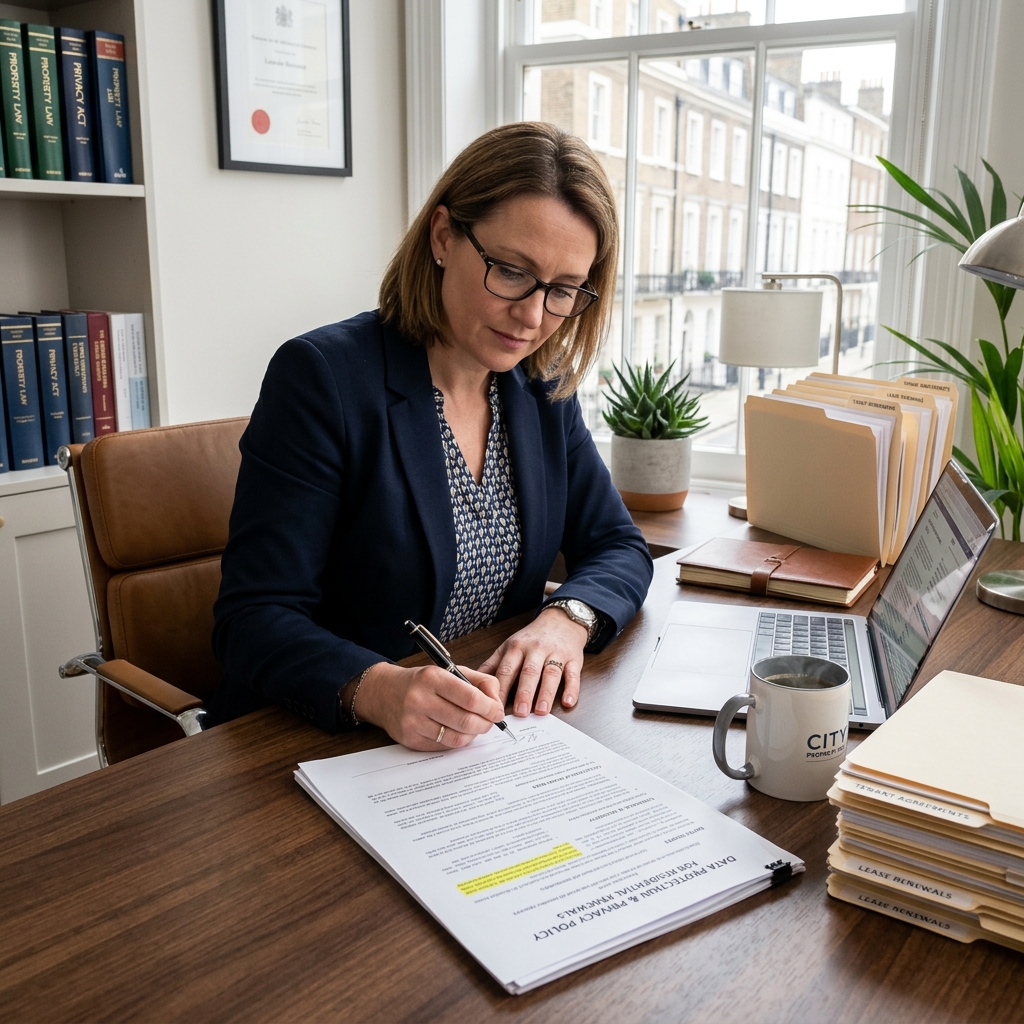
Landlords often collect more personal information than they realize. Rental applications, background checks, emergency contacts, payment records, maintenance requests, and even smart-home systems can all involve tenant data. In many situations, that means a landlord should provide a privacy notice or policy that explains what information is collected, why it is collected, and how it is protected.
The exact legal requirement depends on where the property is located and how the landlord operates, but the broader principle is consistent: if you handle tenant personal data, you need to be transparent and responsible about it. Privacy obligations are especially important when records are stored electronically, shared with third parties, or collected through online portals, mobile apps, smart devices, or access systems.
Why Tenant Privacy Matters
A rental relationship is not just about rent and repairs. It also involves trust. Tenants typically provide sensitive details before and during a tenancy, including identity information, financial history, family composition, and contact information. If that data is handled carelessly, the consequences can include legal complaints, regulatory penalties, damaged tenant relationships, and reputational harm.
Privacy compliance also helps a landlord set clear expectations. When tenants know what information is collected and how it is used, they are better able to understand the landlord’s process and exercise their rights when necessary.
When a Privacy Policy Is Usually Needed
Most landlords should assume they need some kind of written privacy notice or policy if they collect personal information in the ordinary course of leasing a home. This is especially true when information is stored on a computer, phone, cloud service, tenant portal, or any other digital system.
In practical terms, a privacy policy becomes important whenever a landlord:
- Collects applications, screening reports, or identification documents
- Keeps lease records or rent history in electronic form
- Uses online payments or digital communication tools
- Shares information with agents, contractors, reference services, or deposit providers
- Operates smart locks, smart thermostats, cameras, or other connected devices
- Tracks access to the property through a smart access system or app
Even a small landlord with only one property may have privacy duties if they process tenant data electronically.
What the Policy Should Explain
A good landlord privacy policy should be easy to read and specific to the actual data practices used in the rental business. It should not be a generic document copied from another source. Tenants should be able to see what is happening with their information without guessing.
At a minimum, the policy should explain the following:
| Topic | What to cover |
|---|---|
| Identity | Who the landlord is and how they can be contacted as the data controller or responsible party |
| Data collected | What personal information is collected, such as names, IDs, payments, references, and maintenance details |
| Purpose | Why the information is collected and used |
| Legal basis | The lawful reason for processing the data, where required by law |
| Sharing | Who receives the information, such as screening services, contractors, insurers, or government bodies |
| Retention | How long records are kept and when they are deleted or anonymized |
| Security | How the landlord protects the information from loss, misuse, or unauthorized access |
| Rights | What rights tenants have over their information and how to exercise them |
Official guidance in Canada and the United Kingdom both emphasize transparency, purpose limitation, access rights, and safeguards for tenant information.
Common Data Landlords Collect
Landlords may collect different categories of tenant data at different stages of the relationship. Some of this information is obvious, while other details are collected in the background through service providers or technology tools.
Typical examples include:
- Names, phone numbers, email addresses, and current address
- Government identification and proof of income
- Application details and screening results
- Emergency contacts and occupant information
- Lease terms, payment history, and deposit records
- Maintenance requests and communication logs
- Security access records, device logs, or smart-home data
Some data is collected because the landlord needs it to evaluate a rental application or manage the tenancy. Other data is collected because laws, insurers, or property-management systems require it. The privacy policy should distinguish these purposes clearly.
How Landlords Should Use Tenant Information
Tenant data should be used only for a legitimate and disclosed purpose. That means a landlord should not gather information for one reason and then reuse it for something unrelated without proper notice or permission. Privacy laws commonly require that personal information be used in a way that is consistent with the original purpose of collection.
Examples of appropriate uses include:
- Evaluating a rental application
- Processing rent payments
- Managing repairs and maintenance
- Contacting the tenant about the lease
- Meeting legal, tax, insurance, or safety obligations
- Operating authorized security or access tools
Landlords should be careful about secondary uses such as marketing, tenant profiling, or broad data sharing. If a landlord plans to use tenant data in a new way, the privacy notice should be updated and the change should be clearly communicated.
Sharing Data With Third Parties
Landlords often rely on outside vendors to run parts of the rental process. That can include reference-check services, payment processors, repair contractors, bookkeeping providers, property managers, and deposit administrators. Sharing information is sometimes necessary, but it should be limited and disclosed.
A privacy policy should identify the categories of third parties that may receive tenant information and explain why. It is usually better to describe the type of recipient rather than list every possible business by name, unless the business relationship is narrow and fixed.
Tenants are more likely to trust a landlord who explains not just that data may be shared, but why it is shared and what safeguards apply. For example, if a contractor needs access to a phone number to schedule a repair, that is very different from broad, unrestricted disclosure of a tenant’s file.
Smart Devices and Digital Access Systems
Technology can make property management easier, but it can also create privacy risk. Smart locks, access-control systems, cameras, motion sensors, and connected home devices may collect personal or behavioral information about tenants or visitors.
Where these tools are used, landlords should be especially clear about what is being captured, whether consent is required, and who can see the data. In New York City, for example, the tenant data privacy law includes strict rules for certain smart access systems, including express consent requirements for collecting reference data through those systems.
For a landlord, the practical rule is straightforward: if a device or app can record, track, or identify people, the privacy policy should describe it in plain language and the landlord should make sure the data practice is lawful before activation.
How to Make the Policy Practical
A privacy policy only helps if tenants can actually understand and use it. Dense legal language can create confusion and may fail to meet transparency goals. The best policies are written in ordinary language and presented at the start of the tenancy, not buried in a pile of lease paperwork.
Helpful drafting practices include:
- Use short sections with clear headings
- Describe real practices instead of abstract legal terms
- Avoid overpromising if data is actually shared with vendors
- Update the policy when technology or processes change
- Keep a copy with the lease and tenant records
- Give it to every new tenant at move-in
Many landlord guidance sources also recommend keeping the policy available for later review, especially if the tenant wants to ask questions or exercise a privacy right.
Tenant Rights That Should Be Mentioned
Privacy notices are not only about what the landlord does. They should also explain what tenants can do. Depending on the jurisdiction, tenants may have rights to access their information, ask for corrections, object to certain uses, or complain to a regulator.
Common rights to describe include:
- Requesting a copy of personal data held by the landlord
- Asking for inaccurate details to be corrected
- Objecting to marketing or unrelated uses
- Requesting deletion where retention is no longer required
- Filing a complaint with the appropriate privacy authority
In Canada, landlords must provide access to personal information and allow challenges to accuracy under PIPEDA, subject to legal limits. In the United Kingdom, a landlord privacy notice should tell tenants how to complain both to the landlord and to the ICO.
Security and Recordkeeping Expectations
Once tenant data is collected, the landlord has a responsibility to protect it. That means using reasonable safeguards, limiting access to the people who need it, and avoiding careless storage practices.
Basic security steps can include password protection, secure cloud storage, encrypted payment tools, restricted paper files, and deletion schedules for old records. If records are kept on a personal phone or laptop, those devices should also be protected. A landlord who cannot explain how records are secured may not be taking privacy obligations seriously enough.
What Happens If a Landlord Ignores Privacy Duties
Failure to address privacy can lead to practical and legal problems. Depending on the location, a landlord may face tenant complaints, investigation by a regulator, or enforcement action if data is mishandled or collected without proper notice and consent.
Ignoring privacy also creates avoidable disputes. Tenants may become reluctant to share necessary information, or they may lose confidence in the landlord’s professionalism. In a rental business, that loss of trust can be costly even when no formal complaint is filed.
Sample Approach for Small Landlords
Small landlords sometimes assume privacy compliance is only for large companies, but that is not true. If a landlord keeps applications, payment history, ID documents, or communications electronically, a simple written notice is still useful and often necessary.
A practical approach for a small landlord is to create a short but complete notice that covers the essentials:
- What data is collected
- Why it is collected
- Whether it is shared with vendors
- How long it is retained
- How tenants can ask questions or make requests
This kind of notice does not need to be long to be effective. It needs to be accurate.
FAQs
Do all landlords need a privacy policy?
Not every jurisdiction uses the phrase “privacy policy,” but landlords who collect and store tenant personal information generally need some form of written privacy notice or disclosure. The need becomes stronger when data is held electronically.
Is a lease agreement enough by itself?
Usually not. A lease explains the tenancy. A privacy notice explains how personal information is handled. Those are related but different documents.
Should landlords give the privacy notice before signing?
Yes, the best practice is to provide it before or at the start of the tenancy so the tenant knows how their information will be used from the beginning.
Do smart locks or cameras change the analysis?
Yes. Technology that records or tracks tenant activity can create additional notice, consent, and data-handling obligations. The privacy policy should address those systems specifically.
Can a tenant ask to see their file?
In many jurisdictions, yes. For example, Canadian privacy law gives tenants access rights to personal information held about them, and UK guidance says landlords should explain how tenants can make requests and complaints.
Final Practical Takeaway
A landlord privacy policy is more than a formality. It is a clear statement of how tenant information is collected, used, shared, and protected. For most landlords, especially those using digital records or connected property tools, a written privacy notice is a smart and often necessary part of lawful rental management.
The strongest policies are specific, easy to understand, and matched to real business practices. They help landlords comply with privacy rules, reduce confusion, and show tenants that personal information is handled with care.
References
- Tenant Data Privacy Law — NYC.gov / HPD. 2026-05. https://www.nyc.gov/site/hpd/services-and-information/tenant-data-privacy-law.page
- GDPR for Landlords: Data Protection Rules and Privacy Notices — LettingaProperty.com. 2026. https://www.lettingaproperty.com/landlord/blog/gdpr-for-landlords/
- Privacy in the landlord and tenant relationship — Office of the Privacy Commissioner of Canada. 2024-09-27. https://www.priv.gc.ca/en/privacy-topics/landlords-and-tenants/privacy-in-the-landlord-and-tenant-relationship/
- Example of Landlord Data Protection Notice for Tenants — The Independent Landlord. 2026. https://theindependentlandlord.com/data-protection-notice/
- Housing — Privacy Rights Clearinghouse. 2026. https://privacyrights.org/housing
Similar Articles








Read full bio of medha deb


