
Do I Need a Lawyer if I’m Charged With a Crime?
Understand when criminal charges require a defense lawyer, what they actually do for you, and how early legal help can change the outcome.
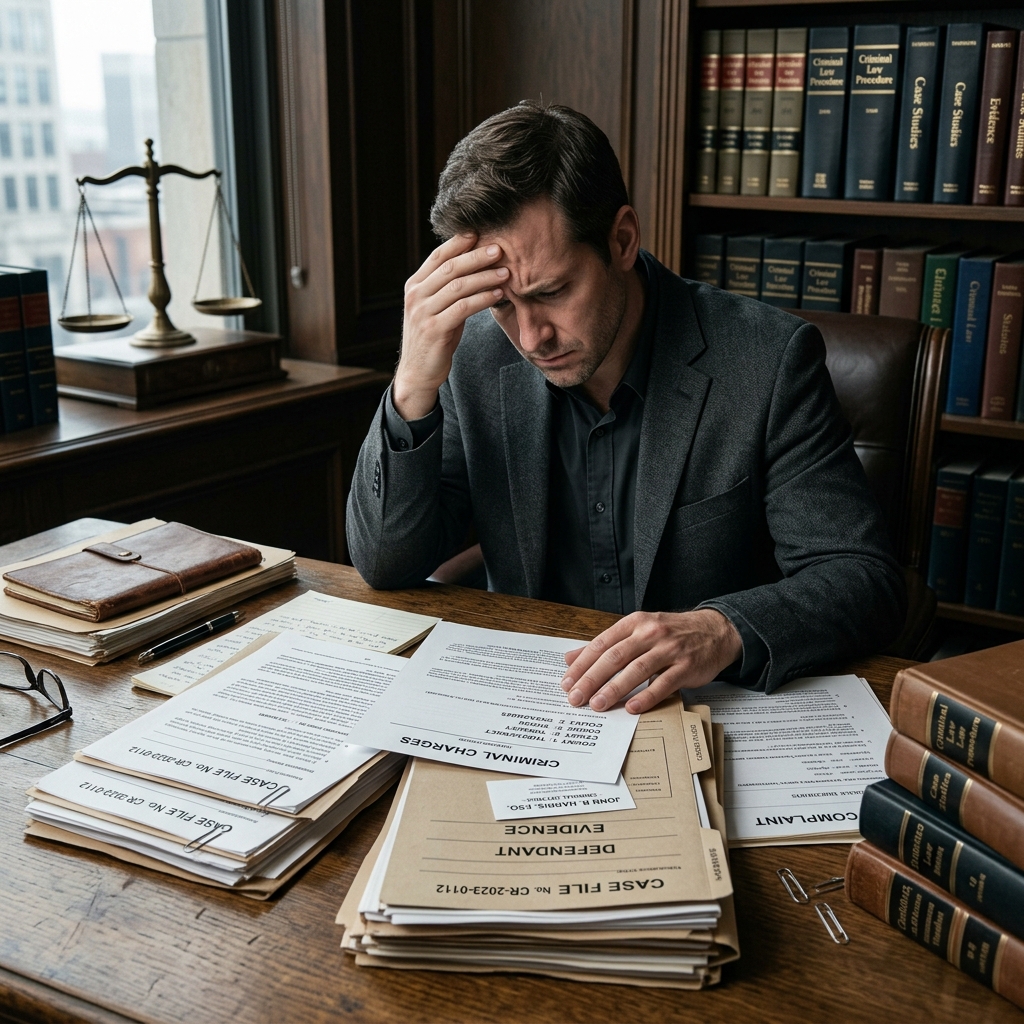
Facing a criminal charge is one of the most stressful situations a person can experience. Your job, family, reputation, and even your freedom can be affected by what happens in the hours and days after you first learn that you are under investigation or have been arrested. In almost every situation, getting guidance from a criminal defense lawyer as early as possible can dramatically influence the outcome of your case.
This article explains when you should seek legal help, what a defense attorney actually does, how the criminal process works, and how to decide between a private lawyer and a public defender. It is written for people who have been charged with a crime, believe they might be charged, or have a family member in that position.
1. Why Timing Matters: The Earlier You Call, the Better
Many people mistakenly wait until their first court date—or even until trial—to contact a lawyer. By that point, critical decisions may already have been made by police and prosecutors. Most experienced criminal defense attorneys recommend contacting counsel as soon as you learn you are being investigated or questioned, even if no charges are filed yet.
1.1 Key moments when you should call a lawyer immediately
- Police have contacted you for an interview or questioning.
- You have been arrested or taken into custody.
- You receive a summons, citation, or notice to appear in court.
- You learn that you are a “target” or “person of interest” in an investigation.
- Police ask for consent to search your home, car, phone, or other property.
- You discover there is a warrant for your arrest or search of your property.
At each of these stages, a lawyer can advise you on whether to speak, what to say, and how to protect your rights before evidence is gathered and statements are recorded.
1.2 Why waiting can hurt your case
The criminal process moves quickly after an arrest. Evidence is collected, witnesses are interviewed, and prosecutors begin building a case. Without counsel, you might:
- Accidentally say something that can be used against you later.
- Consent to searches that reveal evidence the state would not otherwise obtain.
- Miss opportunities to challenge how evidence was obtained.
- Agree to a plea deal without understanding long-term consequences, such as immigration issues or professional licensing problems.
Early involvement of a defense lawyer can sometimes lead to reduced charges, diversion programs, or even a decision not to file charges at all.
2. What a Criminal Defense Lawyer Actually Does
Criminal defense attorneys are more than just courtroom advocates. From the first phone call, their job is to protect your constitutional rights, evaluate the government’s evidence, and work toward the best possible outcome under the circumstances.
2.1 Core responsibilities of a defense lawyer
- Advising you on your rights, including your right to remain silent and your right to counsel.
- Communicating with police and prosecutors so you do not have to speak directly with them.
- Investigating the facts, interviewing witnesses, and gathering defense evidence.
- Reviewing police reports and discovery to identify weaknesses in the prosecution’s case.
- Filing motions to suppress illegally obtained evidence or to dismiss charges when legally appropriate.
- Negotiating plea agreements that may reduce charges, minimize penalties, or avoid jail time.
- Representing you at trial, presenting evidence, questioning witnesses, and arguing your case to a judge or jury.
- Advising you on collateral consequences, such as immigration, housing, employment, or professional licensing impacts.
2.2 How a lawyer protects you during police contact
One of the most important roles of a defense attorney is to act as a buffer between you and law enforcement. Once you invoke your right to a lawyer, police must stop questioning until an attorney is present. This protects you from unintentionally providing information that can be used against you later.
3. Your Constitutional Right to a Lawyer
In the United States, the Sixth Amendment to the Constitution guarantees the right to assistance of counsel in criminal prosecutions. For many offenses, this right applies once formal charges are brought and generally continues through trial and appeal.
3.1 The right to counsel and public defenders
In Gideon v. Wainwright, the U.S. Supreme Court held that people facing felony charges who cannot afford an attorney have the right to a court-appointed lawyer. This led to the widespread creation of public defender offices and other appointed-counsel systems across the country.
If you are charged with a crime that carries a potential jail sentence and you cannot afford a private attorney, you can usually request a public defender or appointed counsel at your first court appearance. The court may ask you to complete a financial affidavit to determine eligibility.
3.2 When the right to a lawyer applies
The right to counsel does not necessarily attach to every interaction with law enforcement. Instead, it is generally triggered by “critical stages” of the prosecution.
| Stage of Case | Does the right to a lawyer normally apply? |
|---|---|
| Informal questioning before arrest | Not automatically, but you can choose to hire and consult a lawyer at any time. |
| Custodial interrogation (in police custody) | You have the right to remain silent and to request an attorney before questioning continues. |
| Initial court appearance / arraignment | Right to counsel typically applies; a lawyer may be appointed if you qualify. |
| Plea negotiations and hearings | Right to counsel applies; legal advice is critical before accepting any plea. |
| Trial | Right to counsel applies; you may represent yourself but courts strongly discourage it. |
| Sentencing | Right to counsel applies, as sentencing is a critical stage affecting your liberty. |
| Direct appeal | In many cases, you also have the right to counsel for your first appeal as of right. |
4. Stages of a Criminal Case and Where a Lawyer Helps
Criminal cases differ across states and between state and federal systems, but most follow a similar sequence of events. Having a lawyer at each stage helps ensure that your rights are protected and that strategic decisions are made with full information.
4.1 Investigation and pre-charge phase
During the investigation stage, police and prosecutors are gathering evidence to decide whether to file charges. You may not see what is happening behind the scenes, but your actions now are crucial.
- A lawyer can advise you whether to speak with investigators at all.
- Your attorney can negotiate conditions if police intend to execute a search warrant.
- In some cases, your lawyer can present evidence or legal arguments that persuade prosecutors not to file charges or to file less serious charges.
4.2 Arrest, booking, and bail
If you are arrested, you will typically be taken to a police station for booking, and you may appear before a judge for a bail or bond hearing.
- At the bail hearing, a lawyer can argue for release on your own recognizance or for lower bail based on your ties to the community and lack of flight risk.
- Your attorney can challenge improper probable-cause determinations and push for your prompt release if legal standards are not met.
4.3 Arraignment and entering a plea
The arraignment is usually your first formal court appearance, where you are informed of the charges and asked to enter a plea (often “not guilty” at this stage). A defense attorney will:
- Explain the charges and potential penalties in plain language.
- Ensure you do not plead guilty before reviewing the evidence.
- Raise initial objections to bail conditions or release terms if they are unreasonable.
4.4 Discovery, motions, and plea negotiations
After arraignment, the case moves into a period where both sides exchange information (discovery) and file motions.
- Your lawyer reviews police reports, videos, lab results, and other evidence.
- They may file motions to suppress evidence obtained in violation of your rights, such as an illegal search or a coerced confession.
- Plea discussions may occur, where the prosecutor offers to reduce charges or recommend a lighter sentence in exchange for a guilty plea.
This is often the phase where a skilled defense lawyer provides the greatest value by identifying legal weaknesses, negotiating favorable agreements, or advising you to proceed to trial if the evidence is insufficient.
4.5 Trial and sentencing
If your case goes to trial, your lawyer will select a jury (if applicable), cross-examine witnesses, present evidence, and argue why the prosecution has not met its burden of proof beyond a reasonable doubt.
If you are convicted or plead guilty, the case moves to sentencing. A defense attorney can present mitigating factors, such as lack of prior record, family responsibilities, employment history, or rehabilitation efforts, to argue for a reduced sentence, alternatives to incarceration, or treatment-based options.
5. Public Defender vs. Private Lawyer: What’s the Difference?
Many people assume that hiring a private lawyer is always better than having a public defender. In reality, both systems include highly skilled and deeply experienced attorneys. The main differences often relate to cost, caseload, and how much time the lawyer can devote to your case.
5.1 Public defenders
- Provided when you cannot afford an attorney and meet the court’s financial criteria.
- Usually handle only criminal cases and often have extensive courtroom experience.
- May carry heavy caseloads, which can limit the amount of individual attention they can give each case.
5.2 Private criminal defense attorneys
- Chosen and paid by you, sometimes with flat fees and sometimes with hourly rates.
- May have more flexibility in the time and resources they can devote to your matter.
- Can sometimes bring in specialized experts or investigators, depending on your budget.
5.3 Factors to consider when choosing
- The seriousness of the charges and potential penalties.
- Your financial situation and eligibility for a public defender.
- The lawyer’s experience with similar cases (e.g., DUI, drug crimes, white-collar offenses, violent crimes).
- Your comfort level communicating with the attorney and understanding their explanations.
6. When People Try to Represent Themselves—and Why It’s Risky
Some defendants consider representing themselves, especially in misdemeanor cases or when they believe the facts are simple. Courts may allow this, but judges often warn defendants that they will be held to the same legal standards as trained attorneys. Criminal procedure, evidentiary rules, and sentencing laws are complex, and mistakes can have lifelong consequences.
Self-representation is especially risky when:
- The charge carries potential jail or prison time.
- Your immigration status could be affected.
- You hold a professional license (such as nursing, teaching, or law).
- You are accused of a felony or a violent crime.
7. Practical Steps to Take if You’re Charged With a Crime
Knowing what to do in the first hours and days can help your lawyer protect you more effectively. Defense attorneys frequently recommend the following practical steps when you are charged or fear charges are coming.
7.1 Immediate actions
- Stay calm and avoid arguing with police or court staff.
- Do not discuss your case with anyone other than your lawyer, including friends, cellmates, or on social media.
- Clearly invoke your rights by stating that you wish to remain silent and want to speak to an attorney before answering questions.
- Contact a trusted person who can help you find a lawyer and keep track of court dates if you are taken into custody.
7.2 Organizing information for your lawyer
Once you are able to consult counsel, being organized helps them quickly understand your situation and identify possible defenses.
- Write down a timeline of events while your memory is fresh.
- Gather documents, messages, photos, or other materials that might be relevant.
- Make a list of potential witnesses who can support your version of events.
- Keep copies of any paperwork you receive from police or the court.
8. Frequently Asked Questions
8.1 Do I need a lawyer if I’m only being questioned and not charged yet?
Yes, it is wise to consult a criminal defense lawyer if police want to question you in connection with a possible crime, even if they say you are not a suspect. Anything you say can later be used against you if charges are filed, and having counsel can prevent misunderstandings and protect your rights.
8.2 Will asking for a lawyer make me look guilty?
Asserting your constitutional rights does not legally count against you. Courts recognize that people have the right to remain silent and to consult counsel. Judges and juries are typically not allowed to treat the request for a lawyer as evidence of guilt.
8.3 What if I cannot afford a lawyer?
If you face charges that could result in jail time and you cannot afford to hire a private attorney, you can request that the court appoint a lawyer for you, usually a public defender. This right to appointed counsel in serious criminal cases comes from the U.S. Constitution and Supreme Court decisions like Gideon v. Wainwright.
8.4 Can a lawyer really get my charges dismissed?
No lawyer can guarantee a dismissal, but early legal intervention can uncover problems with the way evidence was collected, show that the evidence is too weak to prove the case, or reveal defenses that make prosecution unlikely to succeed. Sometimes this results in dismissal or significantly reduced charges, especially when legal rights were violated.
8.5 Is it ever safe to go to court without a lawyer?
There are minor situations—such as some traffic infractions—that people sometimes handle without counsel. However, if there is any possibility of jail, a criminal record, immigration consequences, or impact on your job or license, speaking with a defense attorney before your first appearance is the safest approach.
8.6 How do I find a qualified criminal defense attorney?
You can start by checking state or local bar association referral services, legal aid organizations, or public defender offices, all of which typically maintain lists of attorneys who handle criminal cases. Many jurisdictions also offer online directories of licensed attorneys and may provide information about their disciplinary history.
References
- When Should I Hire a Criminal Defense Attorney? — Super Lawyers. 2023-05-10. https://www.superlawyers.com/resources/criminal-defense/when-should-i-hire-a-criminal-defense-attorney/
- Gideon v. Wainwright, 372 U.S. 335 — Supreme Court of the United States. 1963-03-18. https://supreme.justia.com/cases/federal/us/372/335/
- When Should You Hire a Criminal Defense Lawyer? — NextLaw PLLC. 2024-02-01. https://calldannext.com/faqs/when-should-you-hire-a-criminal-defense-lawyer/
- Criminal Justice Standards for the Defense Function — American Bar Association. 2017-02-14. https://www.americanbar.org/groups/criminal_justice/standards/DefenseFunctionFourthEdition/
- Understanding the Federal Courts — Administrative Office of the U.S. Courts. 2023-01-01. https://www.uscourts.gov/about-federal-courts/educational-resources/overview-federal-courts
Similar Articles








Read full bio of medha deb




